What a Bullmastiff Judge Puts a Hand On First
A Bullmastiff can look impressive standing still, but a judge is assessing much more than size and presence. If you’re new to conformation shows, it can be hard to tell why a judge reaches for the head, checks the bite, or runs a hand along the dog’s body. This guide explains what judges examine first, what they’re looking for, and how to prepare your Bullmastiff calmly.
What a Bullmastiff Judge Usually Examines First
The judge starts by looking at the whole dog
Before touching a Bullmastiff, a judge usually takes in the dog’s overall outline: its balance, proportions, posture, and condition. The sequence varies by judge and show, so there isn’t a guaranteed first touch. But the visual assessment gives the judge a useful starting point before the hands-on examination begins.
A Bullmastiff should look powerful and substantial without appearing clumsy. The judge considers whether the dog’s parts fit together: a broad, muscular body; a strong neck; a large, square head; and a firm, balanced stance. A dog may have an impressive head or heavy bone, but those qualities need to work as part of a harmonious whole. The breed’s appearance is not just a checklist of large features.
The dog’s attitude matters, too. Judges look for a confident, alert animal that can stand and move without looking frightened or out of control. That doesn’t mean a Bullmastiff must perform like a machine. A little ring-day uncertainty is understandable, especially for a young dog. What helps is a dog that can settle enough for the judge to assess it safely and fairly.
The hands-on examination often begins at the head
Once the judge approaches, they commonly examine the head and mouth early in the hands-on assessment. The Bullmastiff’s head is one of its defining features, so the judge may feel the skull, check the breadth and depth of the muzzle, and assess the stop and overall shape. Visual impression matters, but a careful examination helps the judge evaluate structure beneath the coat and skin.
The mouth check allows the judge to assess the bite and teeth. Depending on the dog and the judge’s approach, the handler may be asked to show the bite or the judge may lift the lips to inspect it. Bullmastiff standards allow a level or slightly undershot bite, but a handler should be ready to present the mouth calmly and safely. If you’re working on the details, What a Bullmastiff's Bite Should Be covers the feature in more depth.
A judge may also assess the eyes, ears, and expression. The goal is not to reward a dog for looking stern or imposing; it is to evaluate whether its features fit the breed’s expected type. For example, ear placement contributes to the head’s outline, while the eyes should suit the Bullmastiff’s characteristic expression. You can read more about How a Bullmastiff's Ears Should Sit and How Broad a Bullmastiff's Skull Should Be.
What the Judge Checks From Head to Tail
The neck, shoulders, chest, and front assembly
After the head, the judge may move along the neck and front of the dog, feeling for strength and muscle while assessing how the shoulders and chest are put together. The neck should look strong and fit the body rather than appear weak, excessively long, or lost in heavy folds. A judge may use their hands to feel where the shoulder lies and how the dog’s front is constructed.
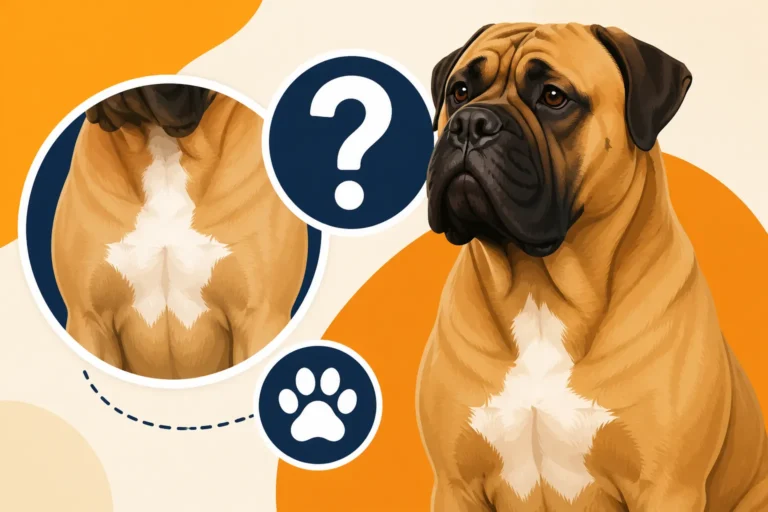
The chest is another area where appearance and structure meet. A Bullmastiff should have a broad, deep chest, but the judge is also considering how the front assembly supports movement. A dog that is very wide in front but restricted in its stride may not be as well balanced as its stationary appearance suggests. For more detail about this part of the outline, see What a Bullmastiff's Chest Should Be Like.
Handling should allow the judge to examine the dog without the handler crowding the space or repeatedly repositioning it. If your dog shifts its feet, calmly reset its stance and give the judge room. It’s understandable to feel tempted to fix every tiny movement, especially when the ring feels quiet and everyone seems to be watching. But frantic adjustments can make a dog more unsettled and make the examination harder.
The topline, ribs, hindquarters, and tail
A judge may run a hand along the topline and body to assess firmness, muscle, and proportion. The back should appear strong and straight, and the loin should be broad and muscular. The ribcage, body depth, and overall length contribute to the dog’s silhouette. The judge is checking how those elements fit together, not simply rewarding the heaviest or broadest dog in the class.
The hindquarters are assessed for strength and muscular development, as well as their relationship to the front. Judges may feel the thighs and examine the rear angulation. A Bullmastiff needs powerful hindquarters to move with drive, but exaggerated construction is not the goal. The dog should be able to use its body efficiently, not just pose impressively.
The tail can be assessed for set, shape, and carriage. Its position contributes to the outline, and the judge may feel its base as part of the overall examination. The details of carriage are discussed in How a Bullmastiff's Tail Should Be Carried. Depending on the dog’s sex, the judge may also check that the testicles are present in a male. This is a routine part of many conformation examinations, not a judgment about the dog’s temperament.
| Area examined | What the judge may assess | What helps the handler |
|---|---|---|
| Overall outline | Balance, proportions, posture, and condition | Stand the dog naturally and avoid constant repositioning |
| Head and muzzle | Shape, breadth, depth, and breed type | Practice calm head handling before show day |
| Mouth | Bite and teeth | Teach the dog to accept a brief, gentle mouth check |
| Front assembly | Neck, shoulders, chest, and forelegs | Keep the lead steady without pulling the dog out of shape |
| Body and rear | Topline, muscle, ribs, loin, and hindquarters | Let the judge move around the dog without obstruction |
| Tail and sex-specific check | Tail set and, where applicable, testicles | Stay composed and follow the judge’s instructions |
Why Movement Matters After the Hands-On Check
The judge watches the dog move away and back
The hands-on examination is only part of the evaluation. Judges typically ask handlers to move the dog so they can see how it travels from the front, rear, or side. The exact pattern depends on the show and the judge’s instructions. Movement can reveal whether the dog’s structure works as well as it appears when standing.
A Bullmastiff should move smoothly and powerfully, with a stride that looks free rather than forced. The judge watches for balance, coordination, and how the legs track. A dog that looks impressive while stacked may show restricted movement, uneven action, or a lack of drive when asked to walk or trot. Conversely, a dog that is not perfectly posed may reveal sound, comfortable movement once it gets going.
Handlers sometimes rush because they’re nervous, or move too slowly because they’re trying to keep the dog perfectly collected. Follow the judge’s direction and use a pace that lets your dog move naturally. A lead pulled too tightly can affect the dog’s head carriage and stride, while an erratic pace can make it difficult to assess the movement clearly.
Stacking and presentation should show the dog, not disguise it
A stack is the dog’s standing presentation in the ring. It helps the judge assess the outline and individual features, but it should not turn into a wrestling match. The handler’s job is to present the dog clearly while keeping it comfortable and responsive. A natural stance is often more useful than a strained pose that the dog cannot hold.
Practice short, positive sessions at home. Start with brief moments of standing still, then gradually add gentle handling around the head, shoulders, body, and legs. Reward relaxed cooperation. If your Bullmastiff finds the mouth check or unfamiliar touch stressful, work on it gradually and consider guidance from a qualified, humane trainer or experienced show handler.
The breed’s head and muzzle attract attention, but every feature has to fit the whole dog. For related detail, see How Long a Bullmastiff's Muzzle Should Be and What a Bullmastiff's Chest Should Be Like. If you’re comparing dogs from different countries or show traditions, How the British and American Bullmastiff Differ can provide helpful background on variation in presentation and type.
Preparing Your Bullmastiff for a Judge’s Examination
Make handling familiar before entering the ring
A dog that has only ever been touched during routine grooming or veterinary visits may be surprised when a stranger examines its head, mouth, or body. Practice with people your dog knows first, then gradually introduce calm handling by other trusted adults. Keep sessions short and end before the dog becomes overwhelmed. The point is to build comfort, not to force the dog to tolerate prolonged restraint.
Teach a simple routine: stand, allow a brief touch, show the teeth if appropriate, then relax and receive praise or a reward. Ask your helper to approach in a steady, unhurried way. If the dog turns away or becomes tense, pause and make the next attempt easier. A Bullmastiff’s size makes early, thoughtful practice especially valuable; it is much easier to teach calm cooperation before an adult dog can lean its full weight away from the examination.
You can also practice the basic movements used in the ring: standing for a few seconds, walking on a loose lead, and stopping without bumping into the handler. Keep the setting low-pressure at first. A quiet driveway or a familiar patch of grass may be more useful than trying to rehearse every show-ring detail in a busy place.
Keep grooming practical and comfortable
A clean, comfortable dog is easier to present, but show preparation does not need to become an elaborate production. Keep the coat tidy, check the nails and ears, and make sure the face is clean and dry. If you’re missing basic grooming supplies, pet retailers such as Chewy can be one place to look for brushes, nail-care tools, or gentle cleaning items. Choose supplies suited to your dog and follow veterinary advice if your Bullmastiff has sensitive skin or a recurring skin problem.
For nail care, gradual handling can make a major difference. Touch the paws briefly during relaxed moments, then build up to examining the nails and using a grooming tool. Chewy may also carry general nail-care supplies, but the most important part is choosing a method your dog accepts and using it safely. If your dog struggles, stop and ask a veterinarian or experienced groomer for help rather than turning nail care into a stressful contest.
Rewards can help make the examination feel predictable. Small treats can be useful when practicing a stand, a brief mouth check, or calm acceptance of touch; you can find treat options through retailers such as Chewy. Keep rewards modest and use them as part of training, not as a substitute for teaching the dog what to expect. In the ring, follow the show’s rules about food and bait, and avoid distracting other dogs or handlers.
Most of all, remember that judges vary in their exact sequence and handling style. Your best preparation is a dog that is healthy, comfortable with ordinary examination, and able to move naturally. A judge’s first touch may be at the head, but the decision reflects the Bullmastiff as a whole: its structure, breed type, condition, temperament, and movement.
Disclaimer
This article is for general informational purposes only and does not constitute professional advice. Laws, prices and regulations vary by location and change over time. Consult a qualified professional for guidance on your specific situation.