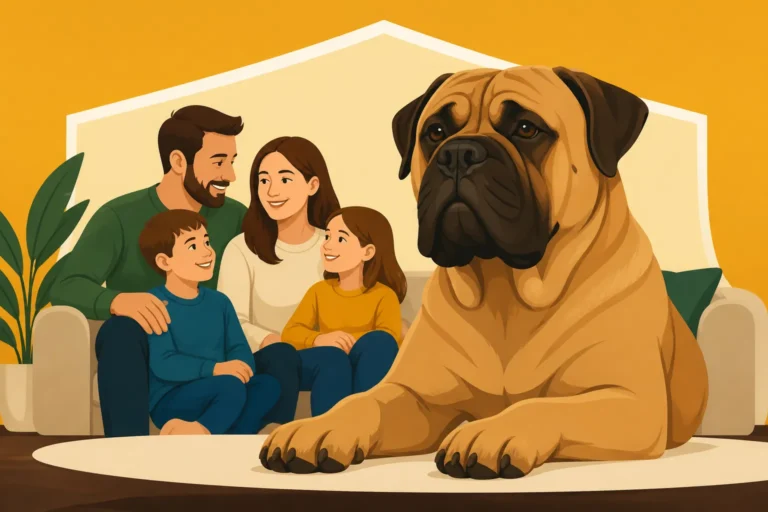
Whether Coat Color Predicts a Bullmastiff’s Temperament
A fawn, red, or brindle Bullmastiff can look strikingly different from another dog of the same breed, which naturally makes people wonder whether color hints at personality. It doesn’t offer a dependable temperament forecast. This guide explains what coat color can tell you, what it cannot, and how to assess the traits that matter more when choosing or understanding a Bullmastiff.
Does a Bullmastiff’s coat color predict temperament
Color is an appearance trait, not a personality test
Bullmastiffs are commonly fawn, red, or brindle, and those colors can make two dogs look quite different at a glance. But coat color alone is not a reliable way to predict whether a particular dog will be relaxed, confident, wary, sociable, or stubborn. A brindle dog is not automatically more serious or protective than a fawn dog, and a red coat does not signal a gentler nature.
That distinction matters when you’re choosing a puppy. It’s easy to remember a striking color and start filling in the personality around it. If a puppy has a dark brindle coat, someone might assume it is naturally more suited to guarding; if another puppy is pale fawn, they might expect it to be softer. Those are impressions, not sound ways to judge the individual dog.
The breed’s accepted colors are appearance characteristics, not temperament categories. If you want a closer look at the options, Which Colors a Bullmastiff Comes In describes the usual color range, while Fawn, Red or Brindle: the Only Colors a Bullmastiff Comes In explores the familiar variations. Neither color tells you how a particular dog will behave with visitors, children, or other dogs.
Why color-based assumptions can feel convincing
People often connect a dog’s looks with a story about its character. A dark, heavily masked face may seem more imposing, while a lighter coat may appear friendlier to a person meeting the dog for the first time. Those first impressions can influence how people approach and respond to the dog, but they don’t reveal the dog’s underlying temperament.
The Bullmastiff’s black mask is a recognizable feature of the breed, and it can make the face look especially bold. That visual effect is not evidence that the dog is more aggressive or more protective. The Black Mask Every Bullmastiff Must Have explains the feature as part of the breed’s appearance; it should not be treated as a behavioral label.
History can also create confusion. Brindle coats have been associated with the breed’s working past, when a darker coat could blend into shadows. A coat that was useful for concealment does not mean a modern brindle Bullmastiff has stronger guarding instincts. The connection is about appearance and historical function, not a color-linked personality switch. For more on that background, see Why Brindle Was the Original Bullmastiff Color.
What shapes a Bullmastiff’s temperament instead
Inherited traits come from more than coat color
A Bullmastiff’s temperament develops through a mix of inherited characteristics, early experiences, health, and learning. A puppy may inherit tendencies from its parents, but coat color is not a useful shortcut for assessing those tendencies. The breeder’s attention to stable, sound temperaments and the puppy’s early environment are far more relevant than whether its coat is red or brindle.
When asking about a litter, look beyond photographs and color descriptions. Ask how the adult dogs behave in everyday situations: how they respond to a visitor, recover after a surprising noise, or settle when activity winds down. A parent’s behavior cannot guarantee what a puppy will become, but thoughtful discussion of temperament gives you more useful information than choosing by coat alone.
A Bullmastiff is a powerful dog, so it’s especially helpful to understand the breed’s general behavioral tendencies before bringing one home. The Bullmastiff That Pauses to Decide Whether You Are Worth It discusses the breed’s thoughtful, sometimes deliberate style. Individual dogs still vary, and no single description replaces meeting the puppy and learning about its family and upbringing.
Socialization, training, and daily life matter
A puppy’s experiences help shape how it handles the world. Gentle, positive introductions to different people, places, sounds, surfaces, and everyday routines can help a young dog learn that unfamiliar things are not automatically frightening. Socialization doesn’t mean forcing a puppy into every situation; it means offering manageable experiences and giving the dog time to respond.
Training matters too. A dog that learns clear household rules and is rewarded for calm, appropriate behavior has a better chance of becoming a manageable companion than one left to work everything out for itself. Consistency is especially useful with a large, strong breed: everyday skills such as waiting at a door, walking politely, and settling on cue make a real difference. Training a Bullmastiff That Weighs More Than You Do offers more on training before size becomes difficult to manage.
The family’s routines also affect what behavior looks like. A dog with regular rest, suitable exercise, and predictable interactions may behave differently from one that is overtired, uncomfortable, or constantly overstimulated. If you’re preparing for a puppy, The First Year With a Bullmastiff Puppy can help you think through the early months. For a practical way to make training rewarding, owners sometimes look at treat and toy options on Chewy, choosing items suited to the dog’s age and size rather than assuming a particular coat color calls for different training.
Health and discomfort can change behavior
Temperament is not fixed in a way that makes health irrelevant. A Bullmastiff who is uncomfortable, frightened, overheated, or in pain may be less patient or more withdrawn than usual. That change should not be blamed on a coat color or casually dismissed as a personality quirk.
Pay attention to changes from the dog’s normal behavior. A usually sociable dog that begins avoiding touch, resists getting up, or reacts sharply when handled may need a veterinary assessment. The same is true of a puppy that seems persistently fearful or unusually difficult to engage. Color provides no explanation for these changes; the dog’s physical condition and recent experiences deserve closer attention.
How to assess a Bullmastiff beyond its color
Observe the dog in ordinary situations
If you’re meeting a puppy or adult Bullmastiff, watch how it behaves rather than relying on a single dramatic moment. Notice whether it can recover after a mild surprise, explore at its own pace, and settle after excitement. Does it approach people readily, hang back briefly, or look to its handler for reassurance? None of those observations on its own predicts the dog’s entire future, but together they can offer a more realistic picture than appearance.
Ask to see the dog in a familiar setting, where its behavior is less likely to be overwhelmed by travel, noise, or a crowd of strangers. A puppy that is quiet in one moment may simply be tired; one that is boisterous may be excited by visitors. Context matters, so take time to observe rather than deciding from a brief first impression.
If you’re meeting a breeder, discuss the parents’ behavior and how puppies are raised. Ask what the breeder has noticed about each puppy’s confidence, recovery, and comfort with handling. A responsible conversation should leave room for individual differences and should not promise that a specific color will produce a specific personality. What Nobody Tells You Before Buying a Bullmastiff covers other practical considerations to weigh before choosing the breed.
Separate appearance preferences from temperament priorities
It is perfectly reasonable to have a color preference. You may love the look of a red coat or find brindle markings especially appealing. The key is to treat color as one preference among many, not as evidence that a puppy will suit your household better.
Before deciding, write down the qualities you need in a companion. Perhaps you want a dog that can settle calmly in a family home, tolerate routine handling, or coexist with another pet. Then ask how the breeder evaluates those qualities and what support they offer as the puppy grows. An attractive coat can catch your eye, but the fit between the dog’s needs and your household is what will shape daily life.
| What you notice | What it can tell you | What it cannot reliably tell you |
|---|---|---|
| Fawn, red, or brindle coat | The dog’s appearance and color pattern | Whether the dog is calm, bold, gentle, or protective |
| Black mask | A familiar Bullmastiff feature | Whether the dog is more aggressive or more confident |
| A puppy hanging back briefly | How it is responding in that moment | Its permanent adult temperament |
| The parents’ behavior | Useful context about the family line | A guarantee of how an individual puppy will behave |
| The puppy’s response across several situations | Clues about confidence and recovery | A complete prediction of future behavior |
For everyday preparation, focus on useful basics: a comfortable resting place, appropriate grooming tools, and rewards for training. Some owners browse Chewy when comparing routine supplies, but the important choice is whether an item fits the dog’s actual needs—not whether it matches a belief about coat color.
Common myths about Bullmastiff color and behavior
“Brindle Bullmastiffs are more protective”
This idea may sound plausible because brindle is associated with the breed’s older working image, and a dark coat can look imposing. But historical camouflage and present-day behavior are separate matters. A brindle Bullmastiff is not automatically more protective, suspicious, or difficult to manage than a fawn or red one.
Protective behavior is influenced by the individual dog, its breeding, socialization, training, and experiences. It should never be encouraged or assumed based on coat pattern. In a family home, calm handling, good management, and reliable everyday cues are more useful goals than trying to make a dog behave like a stereotype.
“A lighter coat means a softer personality”
A lighter-colored dog may seem less imposing to a person looking at it, but that reaction belongs to the observer. It does not establish that the dog is more affectionate or less wary. A fawn Bullmastiff can be confident and reserved; a red or brindle dog can be gentle and easygoing. Individuals vary within every accepted color.
The same caution applies to descriptions such as “the calm color” or “the tough color.” These labels can nudge families toward a puppy for reasons that don’t reflect the dog’s actual needs. Spend time learning about the individual puppy, its parents, its early environment, and the breeder’s approach instead.
“Color tells you how much grooming or care a dog needs”
Coat color does not determine a Bullmastiff’s personality, and it is not a useful guide to the dog’s basic care needs either. A Bullmastiff’s short coat still benefits from routine grooming, while skin, ears, nails, teeth, exercise, and weight need attention regardless of whether the dog is fawn, red, or brindle.
If you’re gathering supplies, it can be practical to compare brushes, grooming products, and training rewards through retailers such as Chewy. Choose based on the dog’s coat condition, sensitivities, size, and preferences, and ask a veterinarian if you notice persistent itching, irritation, or other skin concerns. A color-based assumption should never take the place of observing the dog in front of you.
A Bullmastiff’s coat can be beautiful, distinctive, and part of what draws you to the breed. It simply can’t tell you who that dog will become. Look at the individual, ask informed questions, and pay attention to the experiences and care that shape behavior over time.
Disclaimer
This article is for general informational purposes only and does not constitute professional advice. Laws, prices and regulations vary by location and change over time. Consult a qualified professional for guidance on your specific situation.