Whether a Bullmastiff Is Related to the Boxer
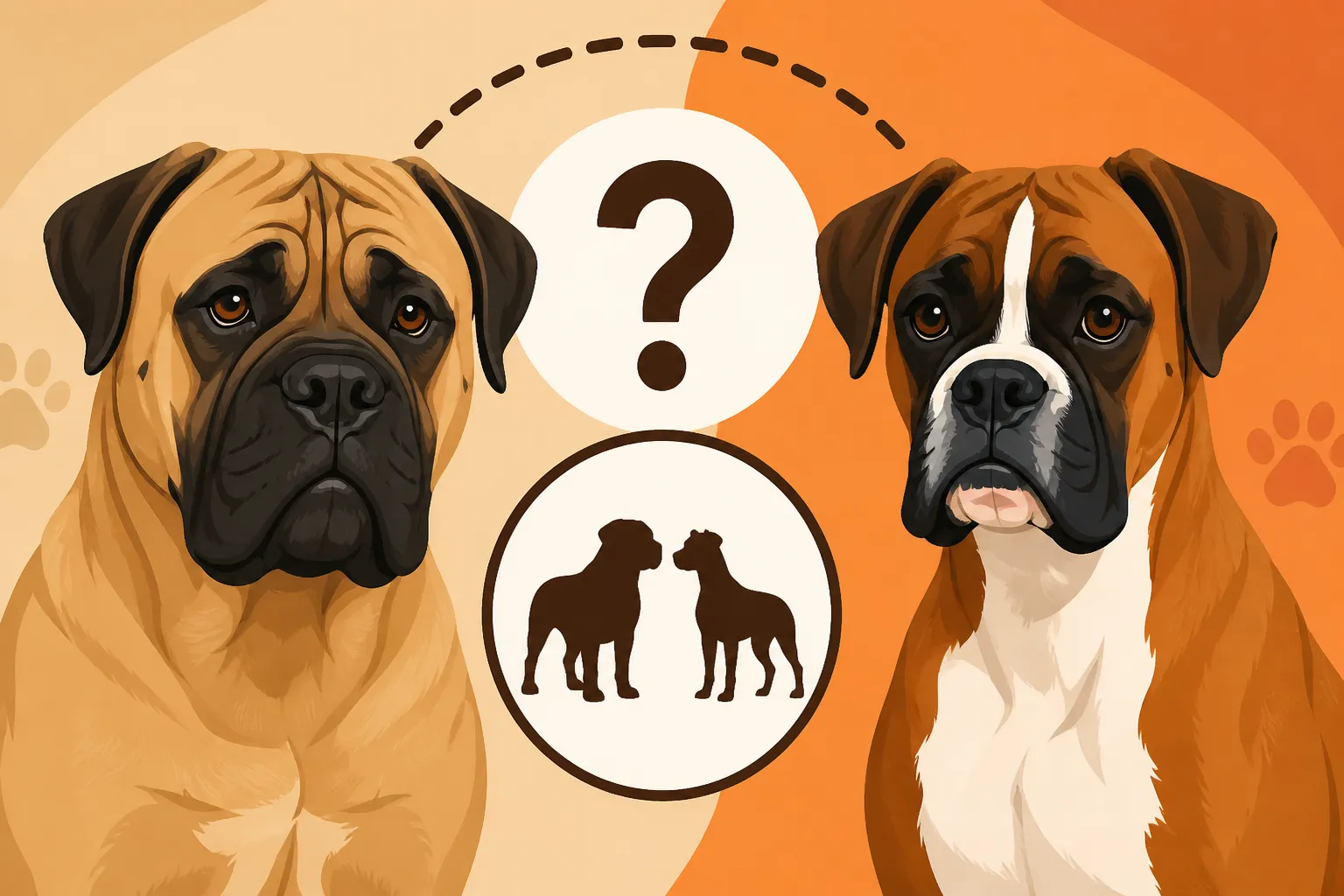
If you have heard that the Bullmastiff is related to the Boxer, the confusion makes sense: both are muscular, broad-headed dogs with a bulldog-like look. But the Boxer is not generally considered one of the Bullmastiff’s founding breeds. Their histories overlap in a broader way, including shared bulldog ancestry and similarities in body type, rather than through a direct parent-and-descendant relationship.
Is the Bullmastiff related to the Boxer
The short answer on their ancestry
The Bullmastiff and Boxer are separate breeds with different documented origins. The Bullmastiff was developed in Britain from Mastiff-type dogs and Bulldogs. The Boxer was developed in Germany from the now-extinct Bullenbeisser, with Bulldog ancestry also playing a part in its development.
That shared Bulldog connection is the main reason people sometimes assume one breed came from the other. But sharing an ancestor somewhere in a breed’s history does not make two breeds direct relatives in the way that a crossbred dog might be related to both of its parent breeds. The Boxer was not a standard ingredient in the Bullmastiff’s development, and the Bullmastiff was not a foundational breed for the Boxer.
There is also a difference between a breed’s documented foundation and the many possible influences in its distant past. Older breeding records are not always complete, and breed histories can involve regional dogs whose names and pedigrees were never recorded in a modern way. That makes it sensible to avoid claims that a breed’s ancestry is perfectly tidy. Still, the established histories point to distinct development paths, not a Bullmastiff-Boxer origin story.
If you want to untangle the Bullmastiff side of that history, Which breeds went into the Bullmastiff and Where the Bullmastiff's Sixty Forty Formula Came From offer useful background. The familiar “sixty-forty” description is a shorthand for the breed’s Mastiff and Bulldog influence, not evidence that every Bullmastiff has a precisely measured percentage of either ancestry.
Why they can look related
Both breeds have substantial, muscular bodies, wide heads, short coats, and a strong presence. Those features can make them look like close cousins in photographs, especially when the dogs are young or shown from an angle that emphasizes the head and chest. Their shared Bulldog influence helps explain some resemblance, but appearance alone cannot establish a direct breed relationship.
Their differences are just as noticeable once you look beyond the broad outline. A Bullmastiff is generally heavier and more massive, with a characteristic dark mask and a build shaped by its history as a powerful estate guard dog. A Boxer is usually more athletic in outline, with a distinctively square profile and a shorter muzzle. Individual dogs vary, of course, and not every dog will match a breed stereotype perfectly.
The names can add to the mix-up, too. “Bullmastiff” contains “Bull,” while “Boxer” may bring to mind the dog’s energetic, springy way of moving. Neither name is a reliable guide to ancestry. The Bullmastiff’s name reflects its historic Mastiff and Bulldog combination; it does not point to the Boxer.
Here is a quick comparison:
| Feature | Bullmastiff | Boxer |
|---|---|---|
| Main breed-development background | Mastiff-type dogs and Bulldogs | Bullenbeisser and Bulldog ancestry |
| Is it considered a founding breed of the other? | No | No |
| Shared historical connection | Bulldog influence and broad molosser-type background | Bulldog influence and broad molosser-type background |
| Typical overall impression | Heavy, powerful, substantial | Muscular, athletic, more springy |
| Does similar appearance prove close ancestry? | No | No |
The table describes general breed tendencies, not a promise about any one dog. If you are comparing dogs because you are considering one as a companion, pay attention to the individual animal’s health, temperament, and needs—not just the outline of its head or body.
How their breed histories overlap and diverge
The Bullmastiff’s path
The Bullmastiff was developed in Britain for estate work, where a dog needed strength, steadiness, and the ability to deter or hold a trespasser. The breed is often described through the combination of Mastiff and Bulldog qualities: the Mastiff side contributing size and power, and Bulldog influence contributing a compact, determined type. That description is helpful as a broad account, but it should not be treated as a mathematical recipe followed identically by every breeder.
The Bullmastiff’s working purpose helps explain its physical character. A dog expected to move across an estate and restrain a person needed to be strong and capable, but also functional enough to move. The modern breed is not simply a larger Boxer or a Boxer with a different coat; it was shaped for a different role and developed along a different path.
People sometimes take the old “sixty-forty” phrase too literally, as if it were a written formula that can be applied to every individual dog’s genetic makeup. In reality, it is a historical shorthand, not a DNA report. For a closer look at the limitations of that neat description, read Whether the Bullmastiff Formula Was Ever Written Down.
The Boxer’s path
The Boxer developed in Germany from the Bullenbeisser, a type of dog used for hunting large game, with Bulldog ancestry also associated with its development. Over time, breeders shaped the Boxer into a distinct breed with its own recognizable structure and temperament. It became known for an athletic build and an animated, expressive way of moving.
That history differs from the Bullmastiff’s estate-guarding background. The two breeds may share traits that make them look related, but their roles, breeding histories, and modern breed types are not interchangeable. A Boxer’s lively, athletic presentation is not evidence that it is a Bullmastiff ancestor; likewise, the Bullmastiff’s heavier build does not make it an older version of a Boxer.
It can help to think of breed relationships as a family tree with many branches. Two breeds may share a distant influence or belong to a broad group of similar dogs without one descending from the other. The Bullmastiff and Boxer have points of historical overlap, but their distinct development is the important answer to the relationship question.
What “Molosser” does and does not mean
Both breeds are often discussed within the broad molosser-type grouping, a category associated with powerful, substantial dogs. That label can be useful when comparing general body type and historical function, but it is not the same thing as saying two breeds are close relatives. A broad group can include many breeds with separate origins and different working histories.
This distinction matters because casual descriptions sometimes use terms like “mastiff type,” “bulldog type,” and “molosser” as if they all meant the same thing. They do not. “Molosser” is a broad classification; “Mastiff” can refer to a particular breed or a type of dog, depending on context; and “Bulldog” can refer to a breed or historical influence. Similar labels do not prove that the Boxer was used to create the Bullmastiff.
If you want to understand that broader classification, Whether the Bullmastiff Is a Molosser explores what the term means. And if the Bullmastiff’s Mastiff ancestry is the part that’s unclear, How the Bullmastiff Differs From a Mastiff helps separate the related names and types.
What the relationship means for owners and future adopters
Similar looks do not guarantee similar needs
A Bullmastiff and a Boxer may both need thoughtful training, regular exercise, and a home that can handle a large, strong dog. But their needs should be considered breed by breed and dog by dog. Size, energy level, heat tolerance, health history, and individual temperament all affect daily care. It is risky to assume that because two dogs look alike, they will behave alike or suit the same household equally well.
For example, a family might meet a playful Boxer and assume a Bullmastiff puppy will bring the same kind of lively, bouncy energy. Or someone may see a calm adult Bullmastiff and expect every Boxer to settle into the same routine. Neither assumption is fair to the dog. Ask about the individual dog’s behavior and needs, and prepare for the practical realities of the breed you are considering.
A Bullmastiff’s weight and strength make early manners especially important. Comfortable leash walking, calm greetings, and cooperative handling are useful skills long before a puppy is large enough to pull an adult off balance. A sturdy, properly fitted harness may help with everyday walks, but equipment does not replace training. If you are gathering supplies, Chewy is one place owners may look for basics such as leads, harnesses, and grooming items; fit and suitability still matter more than the retailer.
How to check a dog’s actual ancestry
If you are asking because you have a dog that looks like a Bullmastiff-Boxer mix, appearance can suggest possibilities but cannot confirm parentage. A broad head or muscular body may occur in many breeds and mixes. Coat color, facial shape, and size are clues at best, not a dependable family record.
Start with what you know: adoption paperwork, breeder records, or information from the previous owner. If a dog came from a shelter or rescue, staff may have a best estimate based on appearance, but visual breed labels are not the same as verified ancestry. A DNA test may provide additional clues, though results should be understood as estimates rather than a replacement for reliable pedigree records.
If the practical question is whether a dog will grow large, need special equipment, or have breed-associated health considerations, discuss the dog with a veterinarian. A vet can assess current condition and help plan care without relying on a guess about breed. For a new Bullmastiff or a dog with a similar build, making a comfortable home setup may also mean planning ahead for a roomy resting place and easy access to food and water. Chewy may be one source for comparing beds or bowls, but choose based on the dog’s measurements and needs rather than a breed label alone.
What to ask a breeder or rescue
If you are considering a Bullmastiff, ask about the dog’s parents, health screening, and temperament. A responsible breeder should be able to explain the dog’s pedigree and discuss health concerns relevant to the breed. If someone tells you a Bullmastiff is “part Boxer” as a selling point, ask for clear documentation rather than relying on the claim or on a resemblance in photos.
With a rescue dog, ask what is known and what is uncertain. Find out how the dog behaves around people and other animals, what medical care has already been provided, and whether the rescue has observed any handling or mobility concerns. A dog does not need a perfectly documented pedigree to become a wonderful companion, but honest information helps you make realistic plans.
When buying or adopting, keep the decision focused on fit, health, and responsible care—not on an appealing story about a breed’s lineage. If the dog is a mixed breed, that does not make it less deserving of careful health care or training. And if you are preparing for a Bullmastiff specifically, How a Bullmastiff Differs From a Boxer can help clarify why the two breeds should not be treated as interchangeable. For broader questions about mixed ancestry, Whether a Bullmastiff Mix Is Healthier is also relevant; a mix is not automatically healthier simply because it has more than one breed in its background.
The practical takeaway is simple: Bullmastiffs and Boxers share some bulldog-related history and can look alike in broad strokes, but the Boxer is not generally recognized as a founding breed of the Bullmastiff. If your question comes from choosing a dog or identifying a mix, rely on records, individual behavior, and veterinary guidance rather than appearance alone. For everyday care supplies, Chewy can be one option to browse, but the dog’s actual size, comfort, and health needs should guide what you choose.
Disclaimer
This article is for general informational purposes only and does not constitute professional advice. Laws, prices and regulations vary by location and change over time. Consult a qualified professional for guidance on your specific situation.