Whether a Bullmastiff Is Too Much Dog for Most Homes
A Bullmastiff can be calm, affectionate, and surprisingly happy to lounge at home—but living with a dog this powerful is not effortless. The real question is whether your space, routine, budget, and ability to handle a large dog fit the breed’s needs. This guide walks through the everyday realities, so you can judge whether a Bullmastiff would suit your household.
What makes a Bullmastiff a lot of dog
Size changes ordinary household routines
A Bullmastiff’s size affects much more than how much room the dog takes up on the sofa. A quick turn in a narrow hallway can knock into a child or send a lamp wobbling. A friendly greeting can feel like a shove if the dog leans its weight against a visitor. Even basic tasks—getting into a car, visiting the vet, or helping the dog stand when it is unwell—can take planning.
That doesn’t mean you need a mansion. Many Bullmastiffs are relatively quiet and do not need acres of land. What matters more is having clear pathways, secure outdoor access, and enough room for the dog to lie down without being stepped over constantly. Think about the awkward spots in your home: the staircase, the kitchen entrance, the narrow space between the bed and the wall. If your dog blocks one of these, can everyone still move around safely?
The dog’s physical presence is also a factor when guests arrive. A Bullmastiff may simply want to investigate a new person, but a large dog standing close can be intimidating even when it is being friendly. You’ll need a reliable plan for door greetings, such as teaching the dog to settle on a mat or keeping it behind a gate while visitors come inside. For more on the family side of that decision, see Whether a Bullmastiff Suits a Family.
Strength means training has to start early
A Bullmastiff that pulls on leash is difficult to manage if its handler is not prepared. A dog that lunges toward another dog, refuses to move, or plants itself on a busy sidewalk can turn an ordinary walk into a stressful negotiation. That is why leash manners and calm handling are not optional finishing touches; they are important safety skills.
Training does not need to be harsh or complicated, but it does need to be consistent. Teach the puppy to walk without dragging you, wait at doors, accept being handled, and settle when asked. Reward-based practice in short sessions is often more productive than trying to physically overpower a dog that is stronger than you. If you are unsure how you would manage the dog’s strength, How to Walk a Bullmastiff That Outweighs You can help you think through leash handling.
Consider who will actually do the training and walks. If one adult is confident with a large, strong dog but another household member is nervous or physically unable to hold the leash, the dog’s routine may depend too heavily on one person. It is worth practising handling skills before the dog is full-grown, and getting qualified training support if pulling or reactivity starts to develop.
Does your home and daily life fit
Space matters, but layout matters more
A small home is not automatically unsuitable, and a large yard does not solve every problem. A Bullmastiff can spend much of the day indoors, but the home needs to work for a dog that takes up real floor space and may move slowly through tight areas. Slippery floors, steep stairs, and cramped doorways can make everyday movement harder, especially for a puppy growing rapidly or an older dog with stiff joints.
Before bringing one home, picture the practical routine. Where will the dog sleep? Can it reach that spot without squeezing past people? Is there a quiet place to rest when the household is busy? Can you get outside for bathroom breaks without navigating a difficult flight of stairs? If you rent, check the lease and any building rules instead of assuming that a landlord or condo association will accept a giant breed.
Apartments can work for some Bullmastiffs if the household can provide regular walks, manage shared hallways and elevators, and prevent the dog from becoming a nuisance to neighbors. But close quarters make good manners particularly important. A dog that blocks a lift, barks at every passing dog, or cannot settle while people walk by may make apartment life difficult. See Whether a Bullmastiff Suits an Apartment for a closer look at those tradeoffs.
A yard is useful, but it is not a substitute for care
A securely fenced yard can make bathroom breaks and relaxed outdoor time easier. It does not replace walking, social exposure, training, or supervision. Nor is it a safe place to leave a Bullmastiff outside for long periods in uncomfortable weather. These dogs need a comfortable indoor environment and sensible management of heat, particularly during warm, humid conditions.
A yard also needs to be genuinely secure. A fence that looks sturdy to a person may not hold up if a large dog leans against it, finds a loose board, or decides to follow something interesting beyond it. Check gates and latches, and supervise outdoor time rather than relying on the fence alone.
Daily exercise is usually more about steady, manageable activity than exhausting the dog. Walks, sniffing time, and brief training or enrichment can help meet the dog’s needs without turning every day into a strenuous workout. A Bullmastiff is not a breed to acquire because you want an athletic running partner, and puppies in particular should not be pushed into repetitive, high-impact exercise. The right routine depends on the individual dog’s age, health, and fitness.
Household members need a shared plan
A calm Bullmastiff can be a loving companion, but a dog’s temperament does not make supervision unnecessary. Children need to learn not to climb on, startle, or disturb a resting dog, and adults must actively supervise interactions. Even a gentle dog can accidentally knock over a small child while turning around or trying to join the action.
Think about the whole household, not just the person most excited about getting a dog. Are there people who are uncomfortable around large dogs? Does anyone have mobility concerns? Are there cats, small dogs, or other animals whose safety and space need to be considered? Introducing a Bullmastiff to existing pets calls for thoughtful management, not an assumption that they will sort things out by themselves.
A Bullmastiff’s quiet nature can also be misleading. Some are content to nap for much of the day, but they still need social contact and appropriate activity. If everyone is away for long stretches, decide in advance how the dog will get bathroom breaks and company. For a new owner, it is useful to weigh this alongside the breed’s strength and training needs; Whether a Bullmastiff Suits a First Time Owner explores that question.
The practical demands many people underestimate
Drool, shedding, and furniture are part of the deal
Bullmastiffs are short-coated, but short hair does not mean no shedding. Hair can show up on clothes, upholstery, and car seats, and regular brushing helps keep loose coat under control. Their facial folds and lips may need routine attention, especially if moisture or food collects there. Some dogs drool more after drinking, eating, or getting excited, so a towel near the water bowl can become a household fixture.
It helps to be honest about your tolerance for mess. If you want a dog that leaves the couch pristine, stays dry after drinking, and never sheds on dark clothing, a Bullmastiff may test your patience. You can make cleanup easier with washable blankets, a regular grooming routine, and a designated resting area, but you cannot train away the breed’s basic physical traits.
Big-dog equipment also needs to fit the dog and your home. Beds should provide enough room to stretch out, while bowls and harnesses should suit the individual dog rather than being chosen by guesswork. Chewy can be one place to compare large-dog beds and everyday supplies, but check dimensions carefully and confirm that an item is suitable for your dog’s size and chewing habits. A product labeled “large” may still be too small for a Bullmastiff.
Costs include more than food
A Bullmastiff eats more than a small dog, but food is only one part of ownership. Routine veterinary care, medications, boarding, grooming supplies, training, and appropriately sized equipment can all cost more when the dog is large. If the dog needs help into a vehicle or cannot safely manage stairs later in life, you may also need to adapt your home or transportation routine.
Before committing, make a realistic household budget that includes both predictable expenses and emergencies. Ask local veterinary practices how they handle appointments for giant breeds and whether they have the equipment to manage a very large dog. Consider how you would transport the dog if it were injured or too unwell to climb into your vehicle independently.
Insurance and savings are personal choices, but either way, plan for veterinary care before you need it. It can be hard to make calm decisions when a dog is sick and the options feel urgent. A little preparation—knowing which clinic you would call, how you would get there, and what financial resources are available—can reduce some of that pressure. For food, bedding, cleaning products, and other routine needs, Chewy may make it convenient to compare options, but include the ongoing cost of supplies in your budget rather than focusing only on the puppy’s initial expenses.
Heat and physical comfort need attention
A Bullmastiff’s short muzzle can make cooling down less efficient than it is for some longer-muzzled dogs. Hot weather, humidity, intense exercise, and a parked car can create serious risks. Choose cooler times for walks, provide access to shade and fresh water, and bring outdoor activity to a stop if the dog seems distressed. Do not assume that a dog who wants to keep following you is safe to keep exercising.
The breed’s weight and build also make traction and comfortable resting places important. On slippery floors, a dog may struggle to get up or turn confidently. Rugs or nonslip mats can help in high-traffic areas, while a supportive bed can provide a more comfortable place to rest. These small adjustments matter even more as the dog ages.
Think about how you would handle a dog that cannot walk on its own. A Bullmastiff is not easy to lift, so having a plan for veterinary transport and home mobility is sensible even when the dog is young and healthy. This is not a reason to expect the worst; it is simply part of responsibly caring for a large animal.
A realistic fit check before you decide
Use the everyday test, not the idealized picture
It is easy to imagine a Bullmastiff snoozing peacefully beside the sofa. It is more useful to imagine the ordinary inconveniences: wiping drool from the floor, stepping around a dog stretched across the hallway, changing plans because the weather is too hot for a walk, and finding a suitable place to board a large, strong dog.
The following checklist can help you evaluate the fit:
| Question | A promising answer | A reason to pause |
|---|---|---|
| Can you safely manage a strong dog on leash? | You are ready to train early and practise handling consistently. | You expect the dog to remain easy to control without training. |
| Does your home have enough usable space? | The dog can rest comfortably and move through the home safely. | Narrow passages, slippery floors, or steep stairs will be difficult to manage. |
| Can you budget for a giant breed? | You have considered food, veterinary care, equipment, and emergencies. | The budget covers only the purchase or adoption cost. |
| Is the household prepared? | Everyone agrees on supervision, rules, and care responsibilities. | Someone is afraid of large dogs or expects the dog to be “someone else’s job.” |
| Can you manage weather and transport? | You have a cool indoor space and a plan for getting the dog to care. | The dog would be left outside in heat or would be impossible to transport in an emergency. |
| Do you accept the mess? | Shedding, drool, and regular cleaning are manageable to you. | A tidy, nearly hair-free home is a firm requirement. |
If several answers fall into the “reason to pause” column, that does not make you a bad dog person. It may mean the timing, household setup, or breed is not right. Choosing a dog whose needs fit your life is kinder than hoping everyone will adjust after the dog arrives.
Decide whether the tradeoffs are worth it to you
For the right person, the Bullmastiff’s affectionate, steady companionship can make the practical work feel worthwhile. Many owners enjoy having a dog who is close to the family and does not need constant high-intensity activity. But those appealing qualities do not erase the breed’s size, strength, care requirements, or impact on a home.
If you are uncertain, spend time with adult Bullmastiffs rather than relying only on puppy visits or breed descriptions. Ask owners about the unglamorous details: how they handle car travel, what their cleaning routine looks like, how they manage visitors, and what happens when the dog is ill. Meeting the breed in a home setting may reveal more than seeing one briefly at a public event.
You can also speak with a responsible breeder or rescue about the specific dog you are considering. Ask about temperament, health, previous experiences, and what support is available if the placement does not work out. Browse gear thoughtfully—Chewy can help you compare the sizes and types of everyday supplies you might need—but remember that buying equipment is the easy part. The bigger commitment is shaping your routines around a powerful, affectionate dog for the long term.
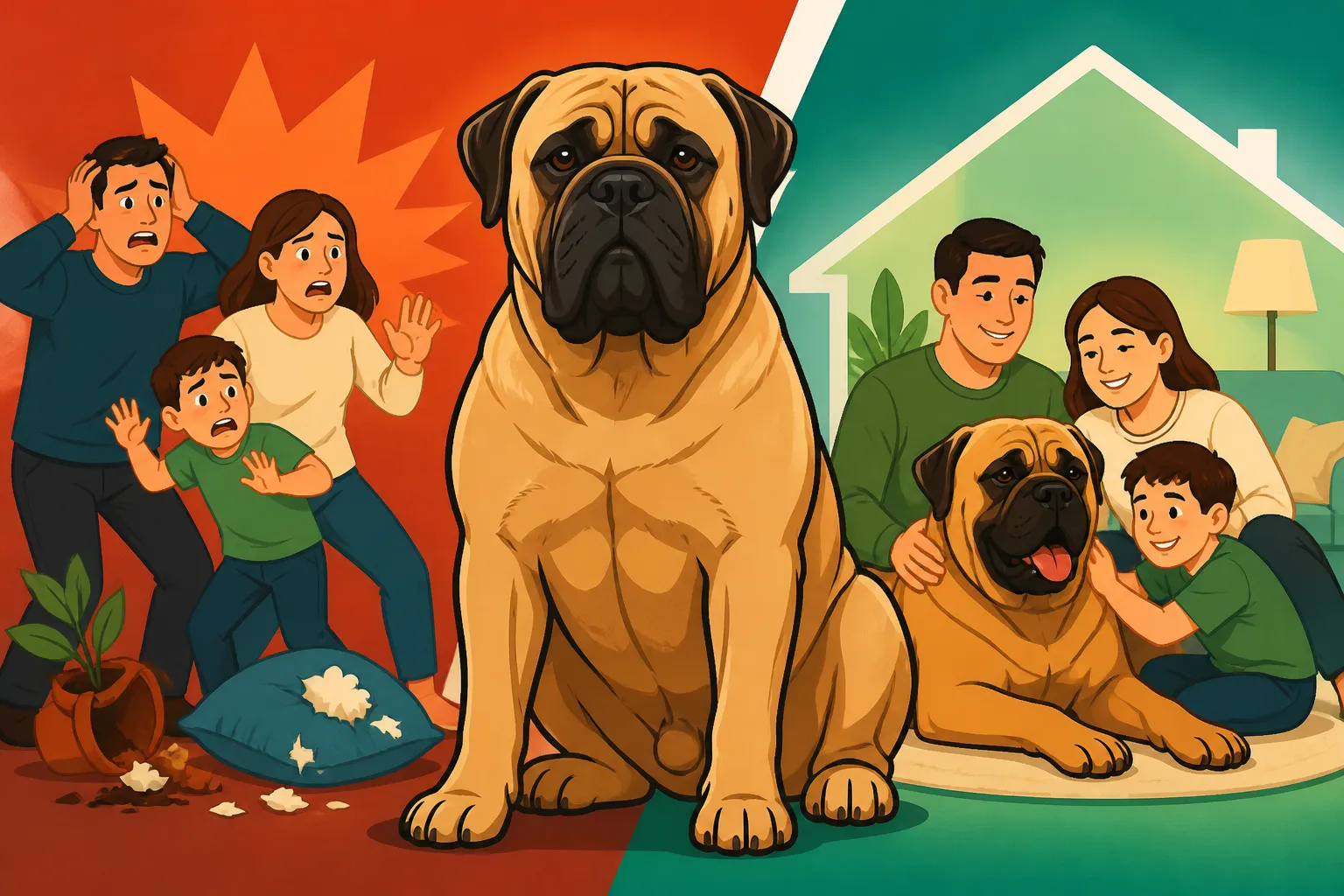
A Bullmastiff is too much dog for a household that cannot safely manage its strength, make room for its needs, or plan for the costs and mess. For a prepared home, that same size and presence may be exactly what makes the dog such a beloved companion. The best answer depends less on the square footage of your home than on whether your day-to-day life can comfortably include this particular kind of dog.
Disclaimer
This article is for general informational purposes only and does not constitute professional advice. Laws, prices and regulations vary by location and change over time. Consult a qualified professional for guidance on your specific situation.