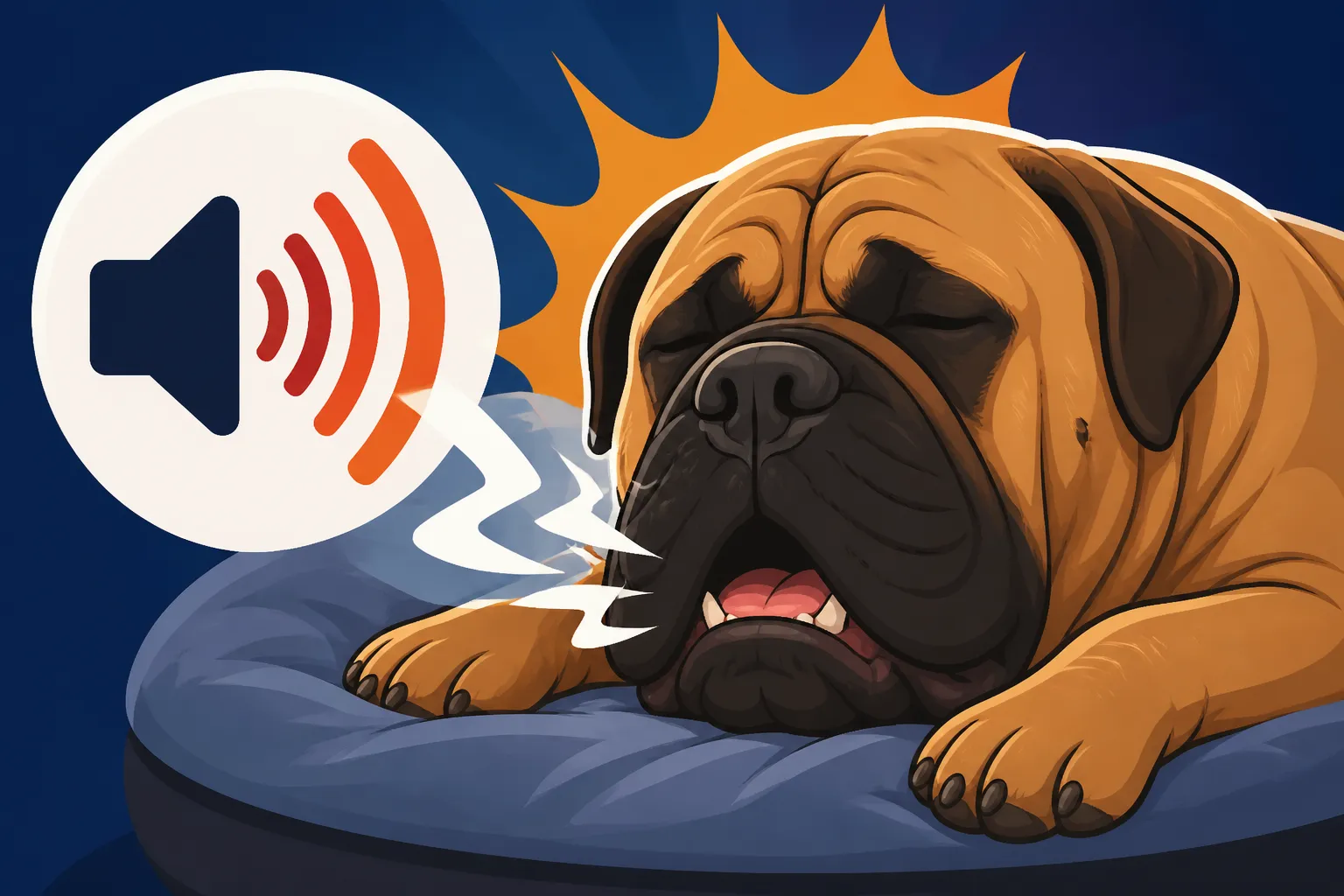
How Loudly a Bullmastiff Snores
Oh, the symphony of a sleeping Bullmastiff! If you're wondering how loudly these magnificent, jowly giants can snore, you're not alone. Many a Bullmastiff owner has found themselves contemplating earplugs or even relocating their own sleeping quarters, all thanks to the rumbling, snorting, and outright roaring emanating from their beloved canine companion. This guide will dive deep into why Bullmastiffs are such prolific snorers, just how thunderous those nighttime noises can get, and what you can actually do to bring a little more peace to your household.
Why Bullmastiffs Are Prone to Snoring Loudly
It’s not just your Bullmastiff being dramatic, I promise. There are very real, anatomical reasons why these dogs often sound like a small engine struggling to start or a tractor idling in the hallway. Understanding these underlying causes is the first step to truly appreciating (or at least tolerating!) their nightly serenade.
Brachycephalic Anatomy and Airway Obstruction
The number one culprit behind a Bullmastiff's impressive snoring is their "brachycephalic" or "short-nosed" head structure. While they might not have the extreme flatness of some other brachycephalic breeds, their distinctive facial features still create a perfect storm for noisy breathing. Think about it: they've got a lot of tissue packed into a comparatively shorter space.
This often means they have narrowed nostrils (stenotic nares), an elongated soft palate that can partially block the airway, and sometimes a larger-than-average tongue for the size of their mouth. When your Bullmastiff breathes, especially during sleep when muscles relax, these anatomical quirks can vibrate and flutter, creating all those wonderful snorts, grunts, and snores. It’s like trying to draw air through a partially blocked hose – it takes more effort and makes more noise. This isn't just about snoring; these same anatomical features can contribute to other issues, which is why it's crucial to understand Whether a Bullmastiff Has Breathing Problems even when they're awake.
General Factors That Worsen Snoring
Beyond their inherent facial structure, several other factors can turn a moderate snore into a full-blown nocturnal earthquake. These are often things we, as owners, can influence, which offers a glimmer of hope for a quieter night.
Firstly, weight plays a huge role. An overweight Bullmastiff carries extra tissue, not just on their body, but around their neck and throat. This excess tissue can further narrow the airway, making those vibrations even more pronounced and the snoring significantly louder. Keeping your Bullmastiff lean isn't just good for their joints and overall health; it can literally make a difference in the decibel level of their sleep. We often talk about Keeping a Bullmastiff Lean Is the Best Thing You Can Do for their longevity, and reducing snoring is yet another benefit.
Secondly, allergies or environmental irritants can cause inflammation and swelling in the nasal passages and throat, leading to increased snoring. If your Bullmastiff is sensitive to pollen, dust mites, or even certain household cleaners, their airways might be perpetually a bit constricted. Lastly, their sleeping position can also influence the volume. Just like humans, dogs who sleep on their backs are more likely to snore loudly because gravity pulls their soft palate and tongue further back into their throat, creating more obstruction. A Bullmastiff sprawled out on their back, limbs akimbo, is often a prime candidate for a really deep snore.
How Loud Can a Bullmastiff's Snoring Really Get?
So, you're mentally bracing yourself for the sounds. But how loud is loud when it comes to a Bullmastiff's snoring? Let me tell you, it can be truly astounding. Many owners describe it not as a gentle hum, but as something far more substantial, echoing through the house and sometimes, even beyond.
The Spectrum of Bullmastiff Snores
Bullmastiff snores aren't a one-size-fits-all phenomenon. There's a whole spectrum of sounds they can produce. You might have the occasional soft rumble, a low growl that just barely reaches your ears from the next room, which is often quite endearing. Then there’s the more common "heavy breathing with a bit of a buzz" that many large breeds exhibit.
But where Bullmastiffs really shine (or roar, as it were) is in their capacity for what I affectionately call the "freight train" snore. This is the one that sounds like a large vehicle is idling just outside your bedroom door, or perhaps a small, very disgruntled outboard motor has been left running in the living room. It can involve snorts, whistles, gurgles, and even sudden stops and starts that might make you rush over to check if they're still breathing (they usually are, just taking a dramatic pause). I've heard stories of Bullmastiffs that could rattle windows with their snoring, and honestly, I believe every single one of them. It's often the same sort of deep, resonant sound you might hear when they're making a fuss at the door, which reminds me of How a Bullmastiff Behaves at a Front Door, though perhaps less aggressive and more just… loud.
Measuring the Roar: Decibel Levels and Impact
While I don't walk around with a decibel meter pointed at my sleeping dog (though I've certainly been tempted!), the sound levels a Bullmastiff can reach are often comparable to significant household noises. A normal human conversation usually hovers around 60 decibels. A vacuum cleaner might be around 70-75 decibels. Well, some Bullmastiffs have been known to hit or even exceed these levels with their snoring! Imagine trying to sleep with a vacuum cleaner running intermittently through the night. That's the reality for some Bullmastiff owners.
The impact of this can be profound, not just on your sleep, but on the overall peace and quiet of your home. It can disrupt sleep cycles, lead to irritability, and even cause you to consider separate sleeping arrangements for yourself or your dog. It's a real issue for many, and it often goes unmentioned when you're first falling in love with these gentle giants.
Here's a little table to help put those nighttime noises into perspective:
| Sound Source | Approximate Decibel Level | Bullmastiff Snore Comparison |
|---|---|---|
| Whispering | 30 dB | Rarely this quiet, unless they're just breathing. |
| Normal Conversation | 60 dB | A common baseline for a Bullmastiff's average snore. |
| Vacuum Cleaner / Washing Machine | 70-75 dB | The "freight train" snore can easily hit this level. |
| Heavy City Traffic | 85 dB | For the truly prodigious snorers, not an impossible comparison. |
| Alarm Clock | 80 dB | Can often feel as jarring as a sudden alarm. |
Strategies to Reduce the Snoring Volume (and Improve Sleep for Everyone)
Okay, so we've established that Bullmastiffs can be incredibly loud snorers. Now for the good news: there are often things you can do to help reduce the volume, or at least manage the impact, making for a more peaceful night for both you and your beloved companion.
Lifestyle Adjustments and Environmental Changes
Sometimes, the simplest changes can make a world of difference. The first thing to really focus on, as mentioned earlier, is weight management. Ensuring your Bullmastiff maintains a lean, healthy weight is probably the single most effective thing you can do to reduce snoring caused by excess tissue in the airway. This means careful portion control and consistent, moderate exercise. A well-exercised Bullmastiff is also a more tired Bullmastiff, often leading to deeper, albeit still potentially noisy, sleep. Regular walks and mental stimulation, like those suggested by resources like BAXTER & Bella, can contribute to overall well-being and a healthier lifestyle.
Consider their sleeping environment. Sometimes, simply elevating their head slightly can help prevent the soft palate from collapsing as much. You can try a specialized orthopedic dog bed designed with a headrest or even place a firm pillow under their existing bed's head end. When looking for a quality bed, Which Bed a Bullmastiff Needs is a vital consideration for their joint health anyway, so look for one that might offer some head support.
Improving air quality in your home can also help. If your Bullmastiff suffers from allergies, dust mites, pollen, or other airborne irritants can exacerbate swelling in their nasal passages. A good air purifier in the room where they sleep can filter out these irritants. You might also consider a humidifier if the air is very dry, as dry air can irritate airways. Products for improving air quality and orthopedic beds are widely available on platforms like Amazon, making it easy to find options that fit your needs.
Veterinary Consultations and Medical Solutions
If your Bullmastiff's snoring is new, suddenly much louder, accompanied by daytime snorting or struggling to breathe, or if they seem restless and uncomfortable during sleep, it's absolutely time for a veterinary check-up. These can be signs of something more serious than just typical brachycephalic snoring.
Your vet will conduct a thorough examination, listening to their breathing and checking for any obvious obstructions. They might look for dental issues, polyps, or other growths that could be blocking the airway. In some cases, allergies might be suspected, and your vet could recommend dietary changes or allergy medications to reduce inflammation.
For severe cases, especially if breathing is significantly compromised (not just noisy), surgical intervention might be discussed. Procedures like soft palate resection (trimming the elongated soft palate) or stenotic nares correction (widening the nostrils) can dramatically improve airflow and reduce snoring. Of course, any surgery involves anesthesia, and it's always good to be informed about Whether a Bullmastiff Tolerates Anesthesia given their breed-specific considerations. It's also worth remembering that because of their short muzzles, Bullmastiffs can struggle in the heat, which is another reason why their breathing needs to be monitored, as explained in Why a Bullmastiff's Short Muzzle Cannot Cool It.
Products and Aids to Consider
Beyond the broader lifestyle and medical interventions, there are some practical products that can help both your Bullmastiff and you cope with the snoring.
For your Bullmastiff, as mentioned, an orthopedic bed that offers head support can encourage better alignment of the airway. Some owners even use a simple, small pillow for their dog to rest their head on, gently coaxing them into a side-sleeping position. Remember, comfort is key for these big dogs, and a good bed is essential anyway.
For you, the human trying to sleep through the serenade, there are plenty of options. High-quality earplugs are a simple, cost-effective solution. Many people find white noise machines or apps incredibly helpful. The steady, soothing sound of a fan or gentle static can mask the disruptive peaks and valleys of a Bullmastiff’s snoring, allowing you to drift off more easily. You can find a wide array of options for sound machines and comfortable earplugs on Amazon, making it easy to experiment and find what works for your particular household noise level.
Living with a Snoring Bullmastiff
Let's be real: some level of snoring is simply part and parcel of owning a Bullmastiff. Even with all the best efforts, you might not eliminate it entirely, but you can certainly make it more manageable.
Embracing the "Bullmastiff Soundtrack"
For many, the snoring just becomes part of the Bullmastiff's charm. It’s their unique soundtrack, a comforting sign that they’re deeply asleep and secure. New owners often experience a bit of a shock, as What Nobody Tells You Before Buying a Bullmastiff definitely includes the volume of their snores! Over time, though, that rumbling sound can actually become a background noise that you grow accustomed to, perhaps even missing it on the rare occasion your Bullmastiff sleeps silently. It’s a testament to the love we have for these dogs that we learn to live with, and even love, their quirky habits. After all, if they sleep for How Much a Bullmastiff Sleeps, that's a lot of potential snoring time!
Tips for Human Sleepers
If you find yourself struggling to adjust, don't feel guilty about taking measures for your own sleep hygiene. Quality sleep is crucial for your health and well-being. Earplugs, as mentioned, are a lifesaver for many. Noise-canceling headphones can also work wonders if you prefer something less invasive than earplugs.
Another common solution, especially for those with exceptionally loud snorers, is simply establishing separate sleeping arrangements. This doesn't mean banishing your beloved Bullmastiff to the cold outdoors! It might mean setting up a luxurious, orthopedic dog bed for them in another room, like a den or a spare bedroom, where their nightly concert won't directly interfere with your sleep. You can still have plenty of snuggle time with your Bullmastiff during the day, ensuring they feel loved and included. This is especially important if you live in close quarters, like an apartment or a home with thin walls, where Whether a Bullmastiff Suits a Shared Wall can become a very real concern for neighbors!
Ultimately, owning a Bullmastiff is an incredible experience, filled with love, loyalty, and yes, often a fair bit of noise. By understanding why they snore, and what steps you can take to mitigate it, you can ensure a happier, more rested household for everyone involved.
Disclaimer
This article is for general informational purposes only and does not constitute professional advice. Laws, prices and regulations vary by location and change over time. Consult a qualified professional for guidance on your specific situation.