Whether Puzzle Toys Satisfy a Bullmastiff
One of the biggest challenges for Bullmastiff owners, especially those with an intelligent and energetic younger dog, is finding ways to keep their big brains busy. You’ve probably seen the signs: bored chewing, restless pacing, or just a general air of "what now?" even after a good walk. It’s easy to think a giant breed only needs physical exercise, but often, it's mental stimulation that truly satisfies them. This guide will dive deep into whether puzzle toys can genuinely satisfy a Bullmastiff's intellectual needs and how to pick the best ones for your magnificent companion.
The Bullmastiff Mind: More Than Just a Gentle Giant
When you look at a Bullmastiff, it’s easy to be struck by their impressive size and calm demeanor. They often seem like couch potatoes, content to nap the day away. But beneath that placid exterior lies a highly intelligent and thoughtful dog with a rich history that demanded mental prowess. Ignoring this aspect of their nature can lead to frustration for both you and your dog.
The Working Dog Heritage
Let's remember why Bullmastiffs were originally bred. They weren't just big, strong dogs; they were the "Gamekeeper's Night Dog," tasked with catching and holding poachers on large estates. This wasn't a job for a mindless brawler. It required immense intelligence, a keen ability to track, observe, and make independent decisions, often in the dark. A Bullmastiff needed to assess a situation, discern a threat from a non-threat, and then hold a person without causing serious injury – a nuanced and challenging role. This history means your Bullmastiff comes hardwired with a desire to problem-solve and use their brain. They are incredibly observant and often pause to assess a situation before acting, a trait directly linked to their heritage. This inherent intelligence means they truly thrive when given opportunities to think, figure things out, and feel like they’re working. What a Bullmastiff Was Bred to Do to a Poacher highlights just how clever these dogs had to be.
Why Physical Exercise Isn't Always Enough
It's a common misconception that if you just walk your Bullmastiff enough, they'll be content. While physical exercise is absolutely crucial for their physical health and to burn off some of their boundless puppy energy (even if they mature slowly, sometimes not fully settling until age three!), it rarely addresses their mental needs entirely. A Bullmastiff, even after a decent walk, can still come home and feel under-stimulated, leading to classic signs of boredom. Think of it like a person who works out but never reads a book or engages in a hobby – physically tired, but mentally restless. Their bodies might be relaxed, but their minds are still buzzing, looking for something to do. For a breed that was once tasked with complex "seek and hold" operations, simply trotting around the block isn't going to cut it in terms of mental engagement.
Signs of a Bored Bullmastiff
A bored Bullmastiff isn't always obvious. They aren't usually the type to bounce off the walls or bark incessantly like some other breeds. Instead, their boredom can manifest in more subtle, yet equally frustrating, ways. You might notice them getting into mischief you thought they were past, like digging in the yard, counter-surfing for snacks, or, most commonly, engaging in destructive chewing. They might mouth at furniture, destroy their beds, or even start to fixate on things they shouldn't. Some Bullmastiffs become lethargic, seeming almost depressed, lying around more than usual and showing less interest in interaction. Others might develop unwanted habits like excessive drooling when anxious or becoming more "stubborn" and less responsive to commands. If your Bullmastiff is displaying any of these behaviors, it’s a strong signal that their brilliant mind isn't being adequately challenged. What a Bullmastiff Chews can give you more insights into their chewing habits.
Understanding Puzzle Toys and Their Benefits
So, if a good walk isn't the whole answer, what is? Enter puzzle toys. These aren't just fancy chew toys; they're designed to make your dog think to earn a reward, often food. They tap into a Bullmastiff's natural intelligence and problem-solving drive, turning mealtime or treat time into an engaging mental workout.
What Exactly Are Puzzle Toys?
Puzzle toys come in a fascinating variety, each designed to engage your dog's brain in a different way.
- Food Dispensing Toys: These are probably the most common. Think of classic Kongs, where you stuff treats or peanut butter inside, or toys that release kibble as your dog nudges, rolls, or shakes them. They range from simple rubber shapes to more intricate designs with multiple compartments or levers.
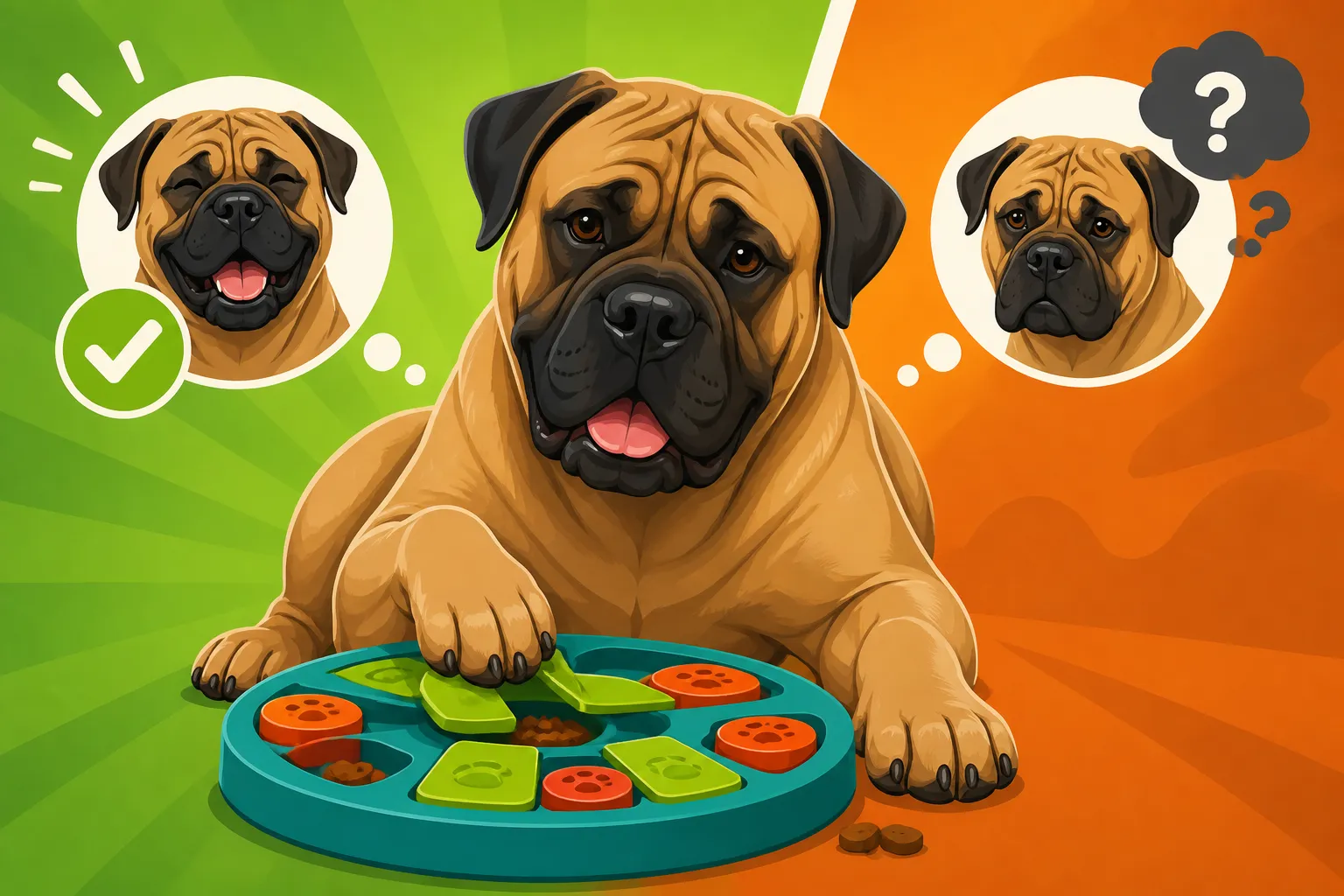
- Interactive Puzzle Feeders: These often involve sliding panels, lifting flaps, or pushing buttons to reveal hidden compartments of food. They require a bit more dexterity and sequential thinking. Some even mimic game-board scenarios for dogs.
- Snuffle Mats: While not strictly a "toy," these fabric mats with various folds and pockets are excellent for hiding dry kibble or small treats, encouraging your Bullmastiff to use their nose and "forage" for their meal. They slow down eating and provide great scent work.
- Automatic or Electronic Puzzles: These are newer on the market and can be quite sophisticated, sometimes involving buttons that dispense food when pressed or even app-controlled features.
The key across all types is that the reward (usually food) isn't immediately accessible. Your Bullmastiff has to engage with the toy in some way – lick, nudge, paw, roll, or manipulate – to get their prize. This process of trial and error, followed by success, is immensely satisfying for their intelligent brains.
The Mental Workout They Provide
Puzzle toys offer a genuine mental workout that goes far beyond simply chewing on a bone. They force your Bullmastiff to use their cognitive skills, memory, and even fine motor control (with their nose and paws) to achieve a goal. This is incredibly stimulating. When your dog is working on a puzzle, they're engaging parts of their brain that might otherwise lie dormant, especially during those long stretches of downtime. This type of engagement can actually tire a dog out just as much, if not more, than physical exercise.
Consider the satisfaction your Bullmastiff gets from figuring out how to get that last bit of kibble out of a tricky dispenser. That moment of success triggers positive feelings and reinforces their problem-solving abilities. It mimics the satisfaction a working dog would get from successfully completing a task. It's not just busy work; it's meaningful engagement that satisfies their innate desire to think and achieve. What Mental Work a Bullmastiff Needs truly emphasizes the importance of this kind of activity.
Beyond Entertainment: Practical Benefits
While mental stimulation is the primary benefit, puzzle toys offer several practical advantages for Bullmastiff owners:
- Slowing Down Fast Eaters: If your Bullmastiff inhales their food in seconds, a puzzle feeder can turn mealtime into a 15-20 minute activity, improving digestion and reducing the risk factors associated with bloat. This is a critical consideration for large, deep-chested breeds like Bullmastiffs.
- Combating Separation Anxiety: When you need to leave your Bullmastiff alone, a well-stuffed puzzle toy can provide a positive distraction, helping them associate your departure with something enjoyable. This can ease the stress of being left alone for short periods. How Long a Bullmastiff Copes Alone provides more context on this common challenge.
- Redirecting Destructive Behavior: If your Bullmastiff is prone to chewing inappropriate items, offering a challenging puzzle toy can redirect that oral fixation to an acceptable outlet. Instead of tearing up a couch cushion, they're happily working on extracting a treat from a durable toy.
- Reinforcing Positive Training: Puzzle toys can be integrated into training sessions, especially for dogs who are highly food-motivated. They can be used as a reward for complex tasks or simply to reinforce the idea that good things come from thinking and working. Online training platforms, like those offered by BAXTER & Bella, often advocate for using puzzle toys as part of a holistic training and enrichment program, understanding that a well-rounded dog needs mental challenges just as much as obedience.
Choosing the Right Puzzle Toy for Your Bullmastiff
Selecting the perfect puzzle toy isn't just about picking the cutest one on the shelf. For a Bullmastiff, there are specific considerations to ensure safety, effectiveness, and longevity. Their size, strength, and individual personality all play a role in finding the right fit.
Durability is Non-Negotiable
This cannot be stressed enough: durability is paramount when it comes to puzzle toys for a Bullmastiff. These dogs have powerful jaws and an incredible chew drive. A toy that might last weeks for a smaller breed could be annihilated in minutes by a determined Bullmastiff. Always look for toys made from heavy-duty rubber, hard plastics designed for power chewers, or solid wood if appropriate. Avoid flimsy materials, small parts that could break off, or toys with soft seams that can be easily ripped apart.
When browsing online retailers like Amazon, pay close attention to reviews from owners of large or giant breeds. Look for terms like "indestructible," "heavy-duty," or "power chewer approved." It’s often worth investing in a higher-quality, more expensive toy upfront if it means it will last and be safe for your Bullmastiff. Imagine the frustration and potential danger of your Bullmastiff swallowing pieces of a broken toy – it’s simply not worth the risk. Many owners find that certain brands specialize in durable toys, which can be a good starting point for your search.
Gradual Difficulty Levels
Just like humans learning a new skill, dogs need to start with something manageable and gradually increase the challenge. Don't throw a super complex puzzle toy at your Bullmastiff if they've never encountered one before. This can lead to frustration, disinterest, or even destructive behavior if they try to "solve" it by simply tearing it apart.
Start with simple food-dispensing toys that have large openings or are easy to roll. Once they master that, move to slightly more complex designs, perhaps with smaller treat openings or basic sliding mechanisms. The goal is to build their confidence and problem-solving skills, making the experience rewarding rather than frustrating. Observe your Bullmastiff's interaction: if they seem overly stressed or give up quickly, the toy might be too hard. If they solve it instantly every time, it's time to level up.
Here’s a simplified progression:
| Difficulty Level | Toy Type Examples | Bullmastiff Engagement |
|---|---|---|
| Beginner | Open-ended Kong, snuffle mat, large treat ball | Easy to sniff out, lick, or nudge treats. Immediate gratification. |
| Intermediate | Classic Kong (stuffed), wobbling treat dispenser, basic slider puzzle | Requires more sustained effort, licking, pawing, or simple manipulation to release food. |
| Advanced | Multi-step interactive puzzles, custom-stuffed Kongs, complex treat mazes | Involves sequential actions, deeper problem-solving, and sustained focus for delayed rewards. |
Remember, even an "advanced" Bullmastiff will enjoy a simpler toy sometimes, especially if they're tired or you want a quick mental break.
Variety is the Spice of Life (and Mental Stimulation)
Imagine eating the same meal every day, or solving the same crossword puzzle over and over. You'd get bored quickly, right? Your Bullmastiff is no different. Once they've mastered a particular puzzle toy, it loses some of its novelty and challenge. To keep them engaged and their brains stimulated, it's essential to offer a variety of puzzle toys and rotate them regularly.
Having a selection of 3-5 different puzzle toys that you can swap out every few days prevents boredom and keeps your Bullmastiff guessing. One day it might be a stuffed Kong, the next a snuffle mat, and the day after an interactive slider puzzle. This keeps the challenge fresh and encourages them to use different problem-solving strategies. You don't have to buy them all at once, but gradually building a collection will benefit your Bullmastiff immensely.
Integrating Puzzle Toys into Your Bullmastiff's Routine
Puzzle toys are a fantastic tool, but they work best when thoughtfully incorporated into your Bullmastiff's daily life. It's not just about tossing a toy their way; it's about making it a positive, enriching, and safe experience.
When and How to Introduce Them
The best time to introduce a puzzle toy is when your Bullmastiff is relatively calm and receptive, not over-excited. Often, using a puzzle toy during regular meal times, replacing a bowl entirely, is a great strategy. Start with the easiest option and only put a few high-value treats or a small portion of their kibble inside. Don't just hand it to them and walk away.
Sit with your Bullmastiff and show them how the toy works (or at least encourage them to interact with it). Nudge it, roll it, or show them where the treats come out. Once they get the hang of it, you can leave them to it, but always supervise their first few interactions to ensure they understand the concept and aren't trying to chew through it instead of solving it. As they get better, you can increase the amount of food and the difficulty. Remember, consistency is key, and making it a routine part of their day will help them look forward to this mental enrichment. Even as puppies, platforms like BAXTER & Bella emphasize early enrichment, and puzzle toys are a perfect fit for engaging young, developing Bullmastiff minds. What a Bullmastiff Puppy Is Like at Nine Months highlights their curiosity at that stage.
Supervision and Safety First
Even with the most durable toys, supervision is always crucial, especially for a powerful chewer like a Bullmastiff.
- Choking Hazards: Always check puzzle toys for signs of wear and tear, especially if pieces could break off and be swallowed. If a toy is damaged, discard it immediately.
- Frustration vs. Fun: Some Bullmastiffs might get overly frustrated with a toy that's too difficult. If you see signs of aggression towards the toy, excessive drooling from stress, or frantic attempts to destroy it, intervene. Make the toy easier or put it away and try a simpler one next time.
- Resource Guarding: If your Bullmastiff has any tendencies towards Whether a Bullmastiff Guards Its Food or resources, introduce puzzle toys carefully. Supervise closely and ensure they feel safe and comfortable enjoying their prize without pressure. It’s important that puzzle toys are a source of joy, not stress.
Beyond the Toy: Other Mental Enrichment
While puzzle toys are fantastic, they are just one piece of the mental enrichment puzzle for your Bullmastiff. A truly satisfied Bullmastiff thrives on a varied routine that includes:
- Training Sessions: Short, engaging training sessions, even just 5-10 minutes a day, can work wonders for their minds. Teaching new tricks, reinforcing obedience commands, or practicing advanced skills keeps their brains active.
- Scent Games: Hiding treats around the house or yard and encouraging them to "find it" taps into their natural scenting abilities and is incredibly enriching.
- Socialization: Controlled, positive interactions with other dogs and people help keep their social intelligence sharp and prevent boredom-induced anxiety.
- New Experiences: Safely exploring new environments, sounds, and smells on walks or outings provides a wealth of sensory stimulation.
Puzzle toys, used correctly and as part of a broader enrichment strategy, absolutely can satisfy a Bullmastiff's intelligent mind. They provide a constructive outlet for their natural drives, reduce boredom, and contribute significantly to their overall well-being. Investing in a few high-quality, durable puzzle toys and rotating them regularly will make a world of difference for your thoughtful, gentle giant. What a Bullmastiff Does All Day covers the kind of activities that truly fulfill them.
Disclaimer
This article is for general informational purposes only and does not constitute professional advice. Laws, prices and regulations vary by location and change over time. Consult a qualified professional for guidance on your specific situation.