Kidney Disease in a Bullmastiff
Kidney disease in Bullmastiffs causes subtle symptoms, filtering waste, maintaining blood pressure, and affecting overall health.
Know what to watch for.
Breed-specific conditions, screening and DNA tests, what surgery actually costs, and the daily habits that stretch a healthy lifespan.
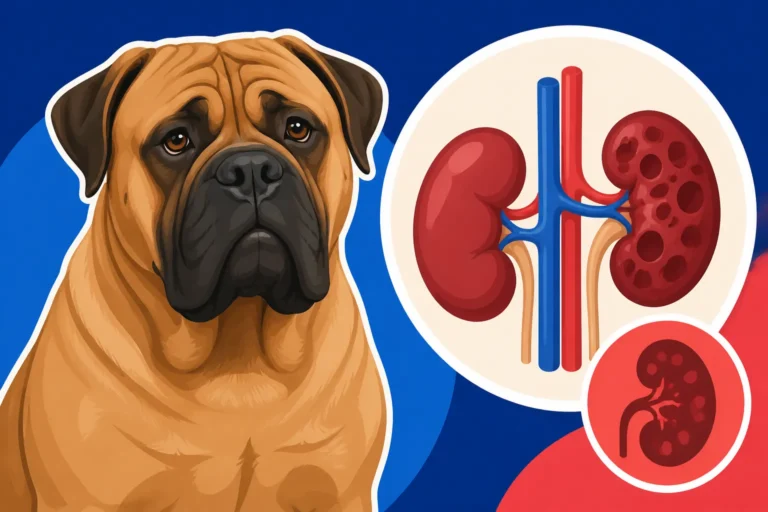
Kidney disease in Bullmastiffs causes subtle symptoms, filtering waste, maintaining blood pressure, and affecting overall health.
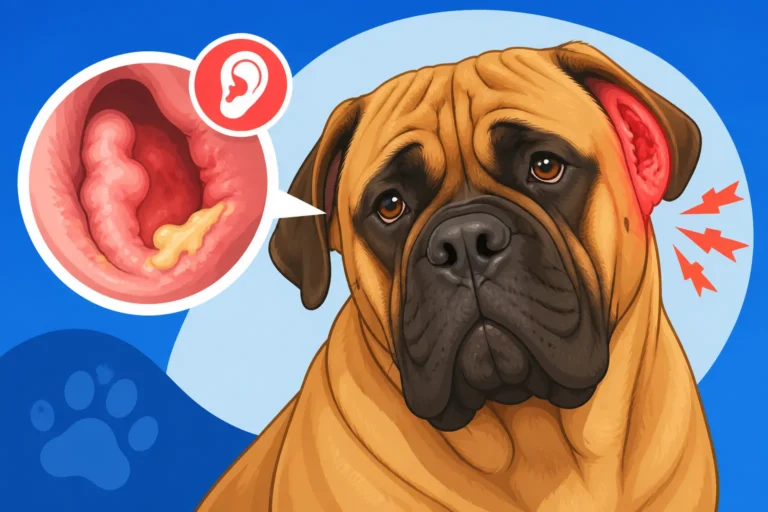
Bullmastiff ear infections stem from dropped ears and allergies, explaining how to spot signs, treat the condition, and prevent recurrence.
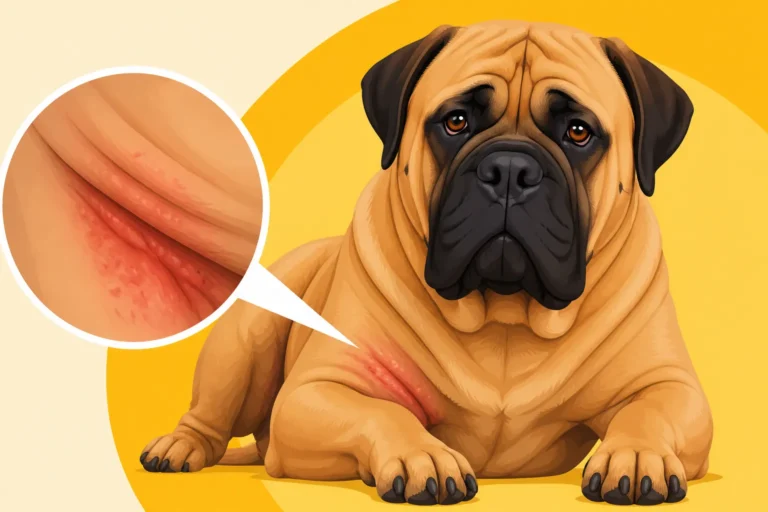
Bullmastiff skin fold infections cause redness and odor. Learn the causes, symptoms, and treatments for facial and lip pyoderma.
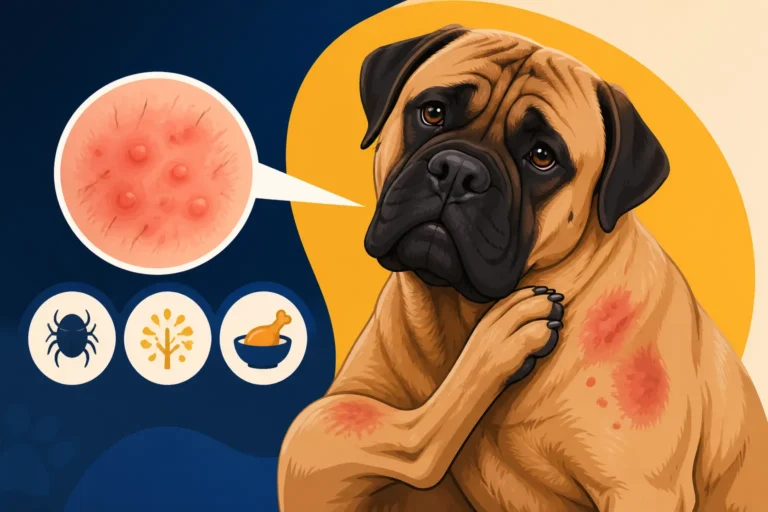
Bullmastiff skin allergy signs include persistent scratching, paw chewing, redness, rashes, and recurring secondary infections.
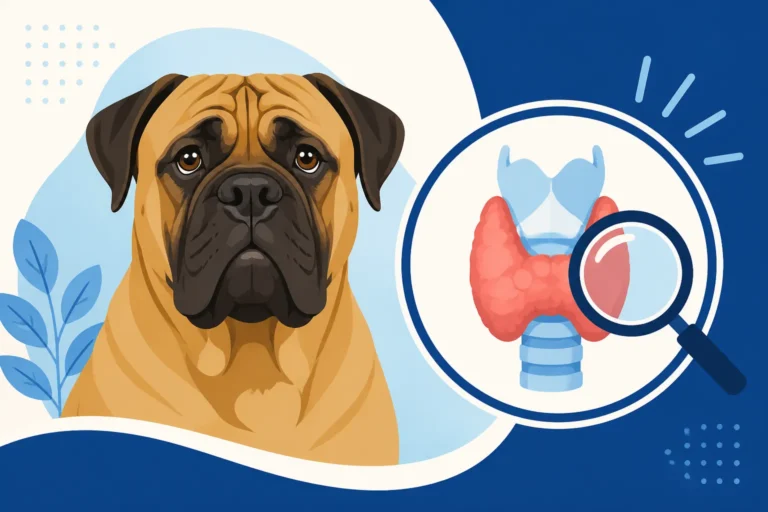
Bullmastiff hypothyroidism causes lower energy and weight gain. This explains when to test T3 and T4 thyroid hormone levels.
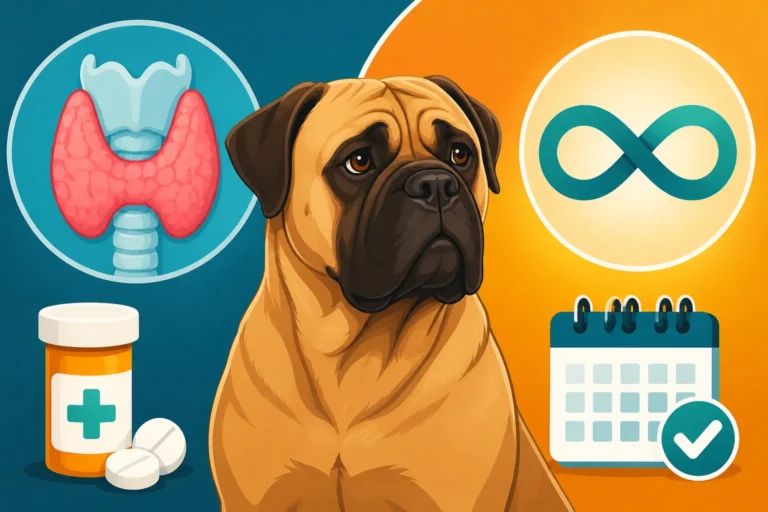
Thyroid medication for a Bullmastiff with hypothyroidism is a lifelong treatment replacing hormones the damaged gland cannot produce.
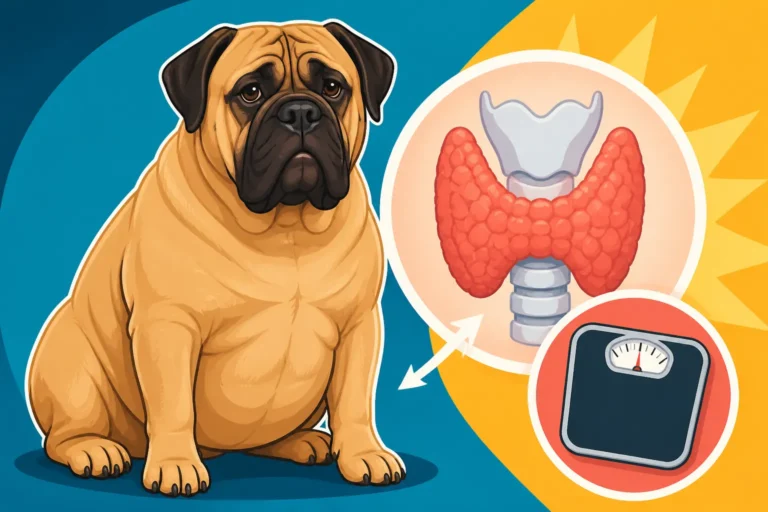
Hypothyroidism lowers thyroid hormones in Bullmastiffs, slowing metabolism and causing unexpected weight gain, lethargy, and dry coat changes.
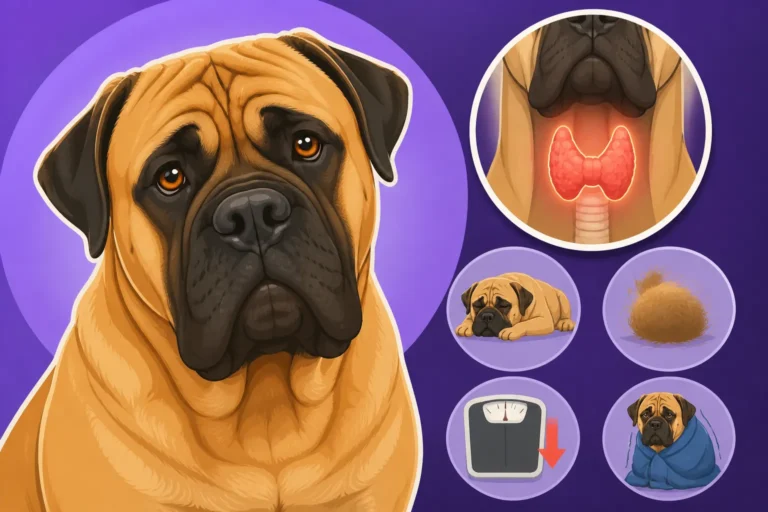
Hypothyroidism symptoms in Bullmastiffs include lower energy, dull coats, and skin changes caused by hormone deficiencies.
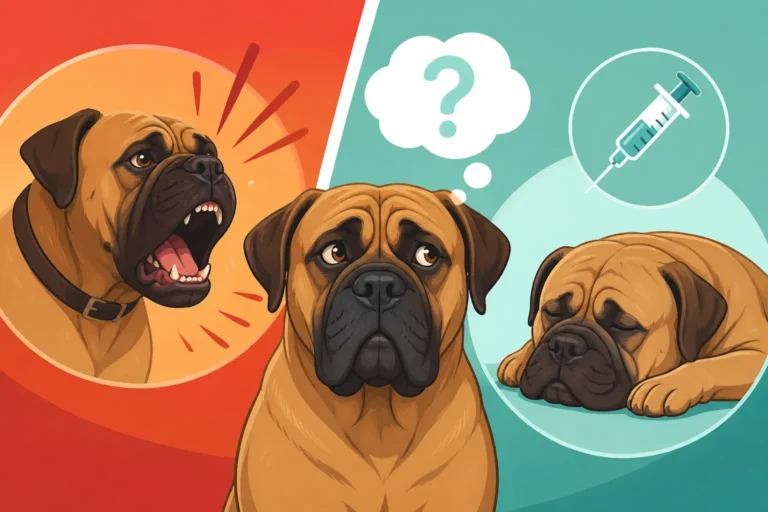
Bullmastiff sedation and anesthesia details, including unique breed traits, airway risks, and veterinary safety precautions.
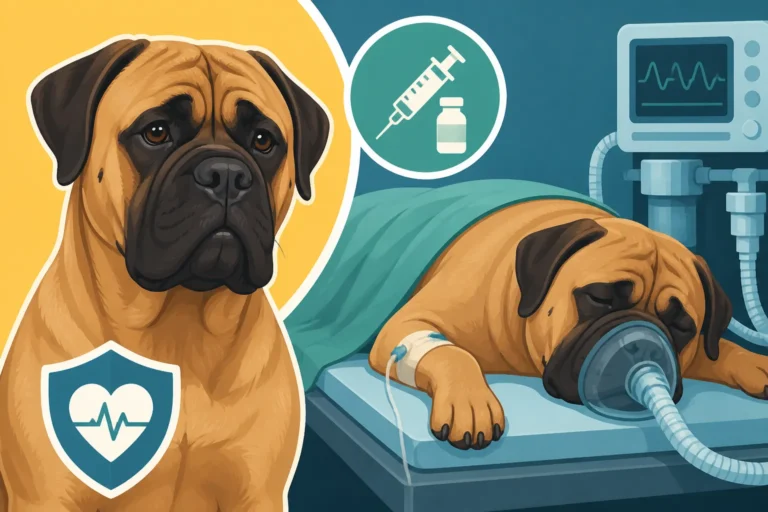
Bullmastiff anesthesia safety depends on managing brachycephalic airway challenges, giant breed metabolism, and pre-anesthetic screening.