Whether a Bullmastiff Comes on Limited Registration
When you’re bringing a magnificent Bullmastiff into your home, the paperwork can sometimes feel a bit overwhelming. One common point of confusion for new owners is the concept of "limited registration" with organizations like the American Kennel Club (AKC). This guide is here to demystify what limited registration means for your gentle giant, why breeders often use it, and how it impacts your Bullmastiff's life with you.
Understanding AKC Registration for Bullmastiffs
Navigating the world of purebred dog registration can feel like learning a new language, especially when you're excitedly anticipating the arrival of your new Bullmastiff puppy. Most people think "AKC registered" means one thing, but there are actually two distinct types of registration that carry very different implications for your dog's future, and for your aspirations as an owner. Understanding these distinctions from the outset is crucial, whether you dream of showing your dog or simply want a beloved family companion.
Full vs. Limited Registration: What's the Difference?
At its core, AKC registration provides a record of your Bullmastiff's pedigree, tracing their lineage back through generations of registered purebred dogs. This is vital for maintaining breed integrity and health records. However, the type of registration certificate you receive dictates certain rights and restrictions.
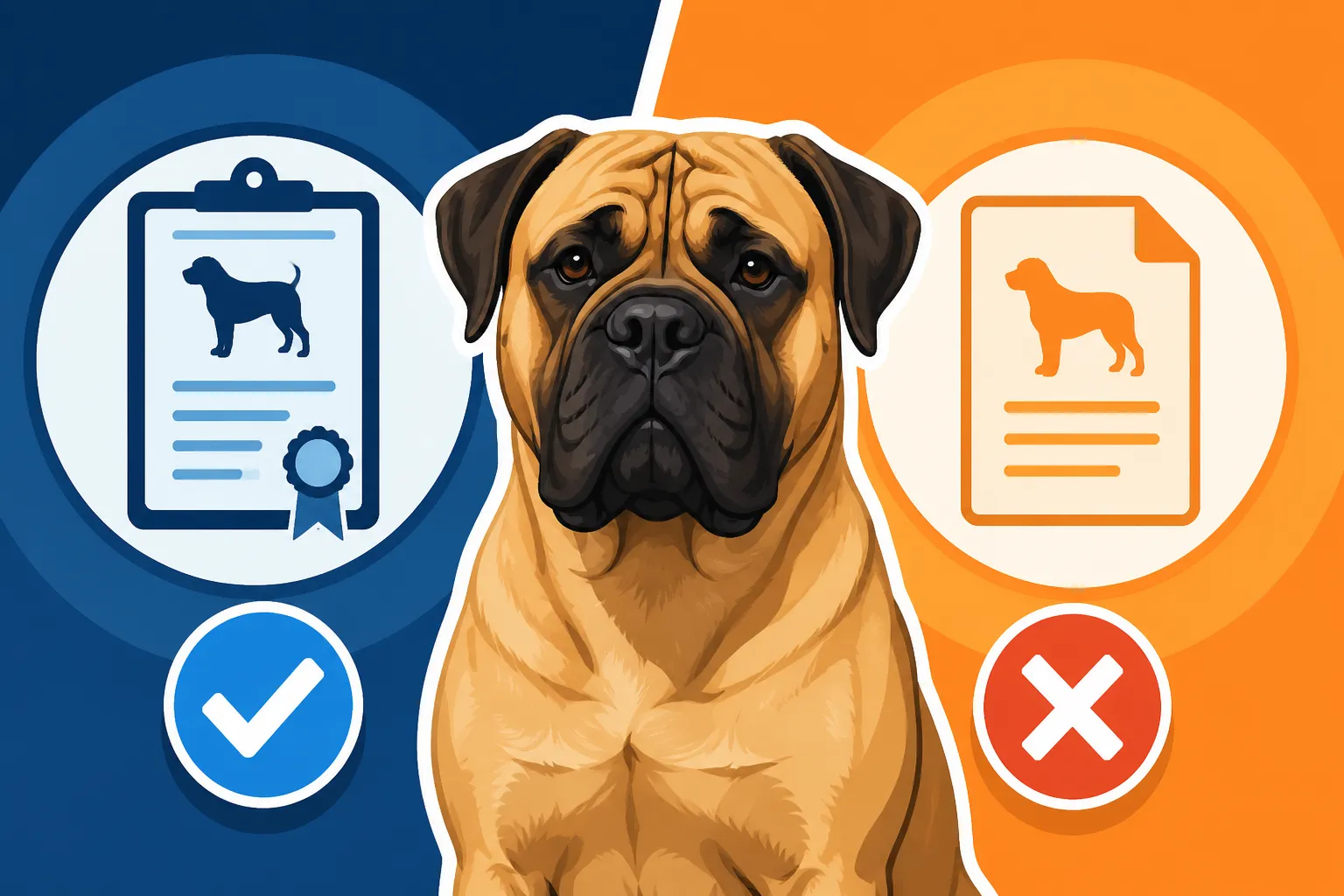
Full registration, often simply referred to as "AKC registration" without any qualifiers, means that your Bullmastiff is eligible to compete in all AKC-licensed events, including conformation shows where dogs are judged against the breed standard. Crucially, full registration also means that any puppies your Bullmastiff produces can be registered with the AKC. This is the pathway for breeders who intend to continue and develop their bloodlines, and for owners who aspire to breed their Bullmastiff ethically and responsibly. A Bullmastiff on full registration typically comes from a breeder who has carefully vetted their health, temperament, and adherence to the breed standard, ensuring they contribute positively to the breed's future.
Limited registration, on the other hand, is a common practice among responsible breeders and serves a very specific purpose. A Bullmastiff with limited registration is still a purebred dog, still has a verifiable pedigree, and can still participate in most AKC-licensed events. They can compete in obedience trials, agility competitions, rally events, dock diving, tracking, and even serve as therapy dogs or in scent work. The key difference, the "limit," is twofold: a Bullmastiff on limited registration cannot be entered in conformation shows, and, most importantly, any offspring they produce are not eligible for AKC registration. This restriction is a powerful tool for breeders to manage their lines and ensure that only dogs carefully selected for health, temperament, and conformation are used for breeding.
Why Breeders Choose Limited Registration for Bullmastiffs
The decision to place a Bullmastiff puppy on limited registration isn't arbitrary; it's a thoughtful, often ethical choice made by dedicated breeders. For a breed like the Bullmastiff, known for its specific health considerations and powerful protective instincts, responsible breeding is paramount. Breeders invest countless hours, significant financial resources, and emotional energy into their breeding programs, conducting extensive health screenings like those for Subaortic Stenosis Is There Before a Bullmastiff's First Birthday and Hips and Elbows Under a Hundred and Thirty Pound Bullmastiff, researching pedigrees, and raising puppies with the best possible start. They want to ensure their efforts contribute positively to the breed.
Limited registration acts as a safeguard against accidental or indiscriminate breeding. A breeder might place a puppy on limited registration if, while a wonderful companion, the puppy has a minor fault that disqualifies them from the conformation ring, or if they simply don't possess the outstanding qualities a breeder seeks to pass on to the next generation. It’s not a reflection of the puppy’s worth as a pet but a professional assessment of its potential as a breeding animal. This practice helps maintain the health and quality of the breed by discouraging breeding from individuals who haven't met the rigorous standards required for improving the breed. It ensures that the Bullmastiff population remains as healthy and true to its origins as possible, rather than being diluted by unplanned or unvetted litters.
Furthermore, many breeders of Bullmastiffs are deeply committed to placing their puppies in loving "pet homes" where the primary focus is companionship. They understand that most families aren't looking to become breeders or show in conformation, and limited registration helps ensure that these puppies are enjoyed for their inherent qualities rather than seen as breeding stock. It simplifies the process for the new owner, too, as they don't have the added pressure or responsibility of contemplating breeding down the line. It's a clear signal from the breeder: "This dog is intended to be a cherished family member, not part of a breeding program."
Navigating the Bullmastiff Puppy Purchase with Limited Registration
So, you’ve found your perfect Bullmastiff puppy, and the breeder has indicated they come with limited registration. What does this actually mean for you as the proud new owner? It's important to understand the practicalities, particularly what will be outlined in your contract and how it shapes your Bullmastiff's future activities. Reputable breeders are always transparent about this, but knowing what to look for and ask about will make the process smoother and ensure there are no surprises down the road.
What to Expect in a Bullmastiff Puppy Contract
A well-written puppy contract from a responsible Bullmastiff breeder is a comprehensive document designed to protect both you and the puppy, as well as the integrity of the breed. When a puppy is placed on limited registration, the contract will explicitly state this, often specifying that the AKC papers provided will reflect this status.
Beyond the registration type, you'll almost certainly find clauses relating to spaying or neutering. Many breeders require that limited registration puppies be spayed or neutered by a certain age (e.g., 18-24 months) and provide proof to the breeder. This aligns with the breeder’s goal of preventing unintended litters and ensuring the dog remains a pet. The contract might also outline health guarantees, often contingent on you providing proper care, nutrition (perhaps even recommending specific large-breed formulas from trusted brands like Chewy or Ollie), and adhering to veterinary schedules. For instance, the guarantee might cover conditions like Lymphoma Kills More Bullmastiffs Than Anything Else or Subaortic Stenosis Is There Before a Bullmastiff's First Birthday for a specified period, emphasizing the breeder’s commitment to healthy lineage. Always read these documents carefully, ask questions, and make sure you understand every aspect before signing. This contract isn't just a formality; it's a blueprint for your responsibilities as a Bullmastiff owner and the breeder's ongoing support.
The Impact on Your Bullmastiff's Activities and Future
For most Bullmastiff owners, limited registration has virtually no impact on their daily lives or their dog's well-being. Your Bullmastiff is still 100% purebred, still eligible for pet insurance from providers like Healthy Paws, and still possesses all the wonderful traits that make Bullmastiffs such beloved companions. You can still participate in a vast array of dog sports and activities. Imagine your Bullmastiff earning titles in obedience, demonstrating their calm demeanor in rally, or even becoming a certified therapy dog, bringing comfort to those in need. These are all avenues wide open to a limited-registered Bullmastiff.
The primary activities off-limits are conformation showing (where dogs are judged on their physical adherence to the breed standard) and, as mentioned, the ability to register any puppies your dog might produce. If your dream is to actively show your dog in conformation or to start your own breeding program, then limited registration would indeed be a significant barrier. However, if your vision for your Bullmastiff involves long walks, cuddling on the couch, basic obedience, potentially dabbling in agility for fun, or visiting hospitals as a therapy dog, limited registration won't hold you back in the slightest. It merely ensures that the breed's future breeding decisions are left to those specifically dedicated and prepared for that complex undertaking.
When Limited Registration Makes Sense for a Bullmastiff Owner
It's easy to get caught up in the idea of "full" registration feeling like a superior status, but for the vast majority of Bullmastiff owners, limited registration isn't just acceptable—it's often the most appropriate and beneficial choice. Understanding why it makes sense can help alleviate any lingering concerns and reinforce the decision to welcome a limited-registered Bullmastiff into your home.
For the Companion Home
Let's be honest: most of us who open our homes and hearts to a Bullmastiff are doing so because we want a loyal, protective, and affectionate companion. We're not necessarily planning a career in the dog show ring or dreaming of becoming a breeder. For these "companion homes," limited registration is a perfect fit. It signifies that your Bullmastiff puppy comes from a reputable breeder who has carefully considered their placement and prioritizes their role as a family member above all else. You get all the benefits of a well-bred Bullmastiff – good health, stable temperament, predictable breed traits – without the potential complexities or responsibilities associated with breeding.
This means you can focus entirely on training, socialization, and bonding with your new family member. You can explore dog parks, enroll in fun agility classes, take long hikes, and simply enjoy their presence. The emphasis is on their quality of life as a cherished pet. For instance, you can buy their food from Chewy, their chew toys from Ollie, or ensure they're covered by Healthy Paws insurance, all without any impact from their limited registration status. You're still investing in a purebred Bullmastiff with a documented pedigree; the "limited" aspect just clarifies their role in the bigger picture of the breed's future. It often offers peace of mind, knowing that your breeder is committed to preventing accidental breedings that could compromise the health and welfare of the Bullmastiff.
Ethical Considerations and Breeder-Owner Partnership
Limited registration isn't just a bureaucratic step; it's a testament to the ethical commitment of a responsible Bullmastiff breeder and forms the foundation of a valuable partnership between breeder and owner. Reputable breeders dedicate years to understanding genetics, health clearances (like those for The Median Bullmastiff Lives Eight and a Half Years and What a Bullmastiff Breeder Should Have Screened), temperament assessment, and the intricate details of the Bullmastiff breed standard. They invest heavily to produce healthy, sound puppies with stable temperaments.
By placing a puppy on limited registration, the breeder is essentially entrusting you with the care of one of their carefully planned offspring, with the understanding that you will provide a loving pet home and not contribute to the gene pool without their guidance and the appropriate qualifications. This practice helps ensure that only individuals who are fully educated, prepared, and committed to advancing the breed are involved in breeding. It protects the breed from common pitfalls of backyard breeding, such as passing on genetic conditions, producing puppies with unpredictable temperaments, or contributing to overpopulation. It fosters a responsible pet ownership ethos, where the focus is on the welfare of the individual dog rather than on its potential for reproduction. This breeder-owner partnership often means ongoing support from your breeder throughout your Bullmastiff’s life, a resource invaluable to any first-time or experienced Bullmastiff owner.
What to Do if You Want to Breed or Show Conformation
While limited registration is perfect for most pet owners, what if your passion extends to the show ring or the idea of responsibly breeding Bullmastiffs? It's a noble aspiration, but one that requires a different approach from the very beginning.
Communicating Your Intent with a Reputable Breeder
If your goal is to show a Bullmastiff in conformation or to eventually engage in ethical breeding, the absolute first step is open and honest communication with any potential breeder. You need to express these intentions upfront, even before you start looking at specific puppies. Reputable Bullmastiff breeders have a clear vision for each puppy they produce and where they believe that puppy will thrive. They typically reserve full registration for puppies that they assess as having exceptional qualities that meet or exceed the breed standard, making them ideal candidates for conformation competition and, subsequently, for a carefully planned breeding program.
These breeders will also want to assess you. They'll want to know about your experience in the dog world, your understanding of genetics, your commitment to health testing, and your overall philosophy on breeding. They might require that you mentor under an experienced breeder, or achieve specific titles with your dog before ever considering a full registration. It's a rigorous process, and rightfully so, as the future of their lines and the breed as a whole depends on these careful decisions. Attempting to get full registration for a Bullmastiff meant for a pet home often signals to a breeder that you might not fully understand the responsibilities involved, which could damage your chances of acquiring a well-bred puppy at all.
Potential Paths to Full Registration (and Their Rarity for Pet Homes)
It's important to understand that while theoretically possible, upgrading a Bullmastiff from limited to full registration is a rare occurrence for a dog initially sold as a companion animal. This possibility is almost always at the sole discretion of the original breeder and would be outlined in the initial contract, if it exists at all. The conditions for such an upgrade are usually incredibly stringent.
For example, a breeder might agree to upgrade the registration if the dog achieves a certain number of conformation championship points, passes all required health clearances (hips, elbows, heart, thyroid, eyes, as listed in Which Health Tests a Bullmastiff Breeder Should Run), and if the owner demonstrates a deep commitment to ethical breeding practices under the breeder's mentorship. This isn't a casual undertaking; it often involves years of dedication, significant financial investment, and a proven track record within the dog fancy. For the vast majority of Bullmastiff owners, limited registration is a permanent status that ensures their dog remains a beloved pet. If breeding or showing conformation is a serious aspiration, it's far more practical and responsible to seek a puppy specifically designated for full registration from the outset, understanding that these puppies often come with a higher price tag and stricter placement criteria due to their potential contribution to the breed.
Here's a quick overview of the differences between full and limited AKC registration:
| Feature | Full AKC Registration | Limited AKC Registration |
|---|---|---|
| Eligibility for Breeding | Yes, offspring can be AKC registered | No, offspring cannot be AKC registered |
| Conformation Shows | Yes, eligible to compete and earn championship points | No, not eligible for conformation classes |
| Performance Events | Yes, eligible to compete and earn titles | Yes, eligible to compete and earn titles |
| Obedience/Agility | Yes | Yes |
| Therapy Dog Work | Yes | Yes |
| Primary Intent | Breeding, conformation showing, or specific working roles | Companion pet, performance sports, therapy work |
| Availability | Less common for pet homes, reserved for proven programs | More common for pet homes |
| Price Point | Often higher due to breeding potential | Typically standard pet price |
What a Bullmastiff Breeder Should Have Screened is another crucial read for those looking for a truly responsible breeder, regardless of registration type. Understanding the health issues prevalent in Bullmastiffs, such as Why a Bullmastiff's Lymphoma Risk Is Five Times a Mixed Breed's or Mast Cell Tumors and the Lumps on a Bullmastiff, underscores the importance of a breeder's commitment to careful selection and health testing, which limited registration supports by guiding breeding decisions. If you're looking to understand the full financial commitment, Eight and a Half Years of a Bullmastiff, Priced Out can give you a clear picture of the costs involved, with or without full registration.
Disclaimer
This article is for general informational purposes only and does not constitute professional advice. Laws, prices and regulations vary by location and change over time. Consult a qualified professional for guidance on your specific situation.