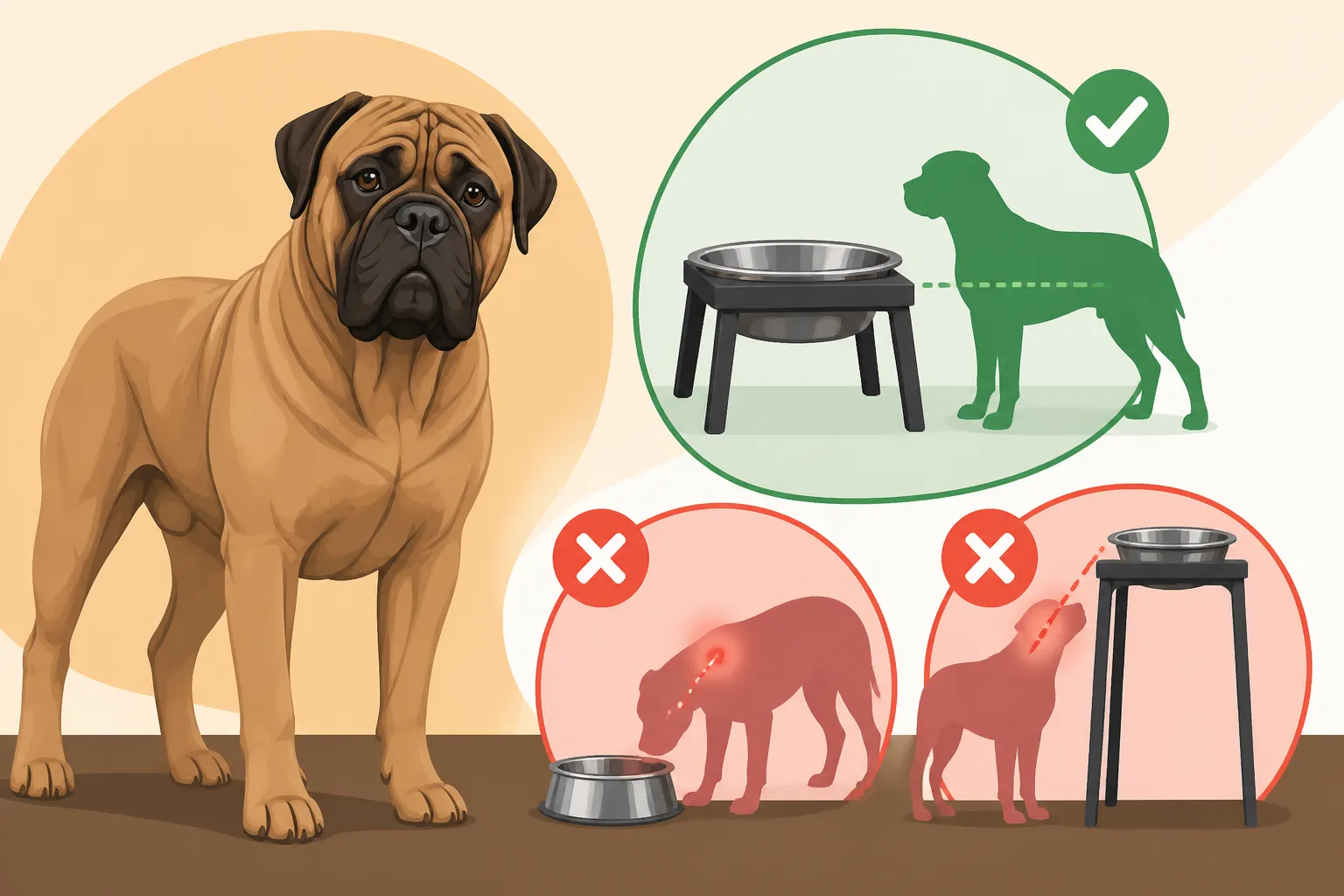
What Bowl Height Suits a Bullmastiff
Figuring out the best way to feed your beloved Bullmastiff can feel like navigating a minefield of conflicting advice, especially when it comes to something as seemingly simple as their food bowl. You want to do everything right for your big, beautiful companion, but you've probably heard so many different opinions on whether a raised bowl is better or worse for them. This guide will cut through the noise, explaining why the traditional advice has shifted, what the actual risks are for deep-chested breeds like Bullmastiffs, and how you can make the most informed choices for your dog’s health and comfort.
The Shifting Wisdom on Raised Bowls for Bullmastiffs
For years, it was common practice, even widely recommended by many vets, to feed large and giant breeds like Bullmastiffs from raised food bowls. The thought process was logical enough: it seemed like it would be more comfortable for such a tall dog to eat without bending their neck and back excessively, potentially reducing strain on their joints. People also believed that it would aid digestion, making it easier for food to travel down to the stomach. However, what we’ve learned through more recent research has completely flipped this long-held belief on its head, leaving many dedicated Bullmastiff owners feeling confused and perhaps a little frustrated. You’ve likely invested in a sturdy, elevated feeding station for your gentle giant, only to now hear that it might actually be doing more harm than good. It's a tough pill to swallow when you've been trying your best based on the information available at the time.
This isn't just about general comfort; it's specifically about a life-threatening condition known as Gastric Dilatation-Volvulus, or GDV, more commonly called bloat. Bullmastiffs, with their deep chests and large size, are unfortunately among the breeds at a higher risk for this catastrophic event. While common sense might suggest an elevated bowl helps food go down, studies have indicated a surprising link between raised feeding and an increased risk of bloat in certain breeds. It’s a classic example of how even well-intentioned advice can sometimes be based on assumptions rather than solid scientific evidence. Understanding this shift is crucial for any Bullmastiff owner who wants to proactively protect their dog.
Why the Old Advice Was Appealing
The idea behind raised bowls made intuitive sense for a long time. Imagine trying to eat your dinner off the floor if you were six feet tall; it would be uncomfortable, right? Owners projected this human experience onto their massive dogs. For a Bullmastiff, who can stand over two feet tall at the shoulder, bending down to floor level for every meal looks like a significant effort. Concerns about arthritis and spinal issues, especially as the dog ages, were legitimate factors considered when recommending raised feeders. It felt like a humane and preventative measure for a breed known for its substantial bone and body mass.
Beyond physical comfort, there was also the theory that gravity would assist the food's journey from mouth to stomach, potentially reducing regurgitation or making digestion smoother. For some dogs who tend to inhale their food, it was thought that a raised bowl might slow them down just a little, leading to less air intake. These theories, while plausible on the surface, lacked the rigorous scientific backing that later studies would provide. It highlights how important it is to continuously re-evaluate pet care practices as new research emerges, even if it means letting go of what once seemed like sound advice. Many of us, myself included, have gone through phases with different feeding setups, always trying to adapt to the latest understanding to ensure our dogs thrive.
What Recent Research Has Revealed
The landscape changed significantly with studies, notably one conducted by Purdue University, which looked specifically at risk factors for GDV. This extensive research challenged the long-held assumption that raised bowls were beneficial. What they found was quite contrary: feeding from a raised bowl was actually associated with an increased risk of bloat in large and giant breeds. The exact mechanism isn't fully understood, but one prominent theory suggests that when dogs eat from an elevated position, they might consume air more rapidly, especially if they're eating quickly. This gulping of air is a known contributor to bloat.
It's a perplexing finding, certainly, for those of us who have always aimed to provide the most comfortable and beneficial environment for our dogs. The studies didn't find a significant reduction in orthopedic strain, either, which was another key reason for the old recommendation. Instead, the focus shifted to minimizing factors that encourage rapid eating and air ingestion. This new understanding puts the onus on owners to reconsider their feeding setup and prioritize bloat prevention. It's a stark reminder that sometimes what seems logical isn for a dog's unique physiology and health challenges.
Understanding the Bloat Risk in Bullmastiffs
Bloat, or Gastric Dilatation-Volvulus (GDV), is a terrifying reality for owners of deep-chested breeds, and Bullmastiffs are definitely on the "high risk" list. It's not just an upset stomach; it's an emergency that can turn fatal in a matter of hours if not treated swiftly. When bloat occurs, the stomach first fills with gas and fluid (dilatation), causing it to expand like a balloon. This alone is incredibly painful and puts pressure on other organs, hindering blood flow. The real danger, however, is when the distended stomach then twists on its axis (volvulus), cutting off both ends and trapping everything inside. This twisting also cuts off blood supply to the stomach, leading to tissue death and a cascade of critical systemic issues.
The thought of your gentle giant suddenly being in such extreme distress is enough to keep any Bullmastiff owner awake at night. Recognizing the signs and understanding the risk factors, including our feeding practices, is paramount. You can learn more about this urgent condition by reading Bloat in a Bullmastiff. The breed's conformation—their broad, deep chests—is considered a significant anatomical predisposition. This is why paying close attention to how they eat, not just what they eat, becomes such a critical part of routine care. Every Bullmastiff owner needs to be vigilant and informed about GDV, as prevention and rapid response are the best defenses.
What Makes Bullmastiffs Prone to Bloat?
Several factors contribute to a Bullmastiff's predisposition to bloat, and it's often a combination of these elements rather than a single cause. Their genetics play a significant role; breeds like Bullmastiffs, Great Danes, Weimaraners, and German Shepherds are all disproportionately affected. It’s part of their genetic lottery, unfortunately. Beyond genetics, their physical build is a major contributor: their deep, narrow chests provide ample space for a stomach to dilate and twist, unlike breeds with shallower, wider rib cages. Think of it like a bowling pin in a wide-open space versus one squeezed into a tight box – the wide-open space allows for more movement and twisting.
Eating habits are another critical piece of the puzzle. Bullmastiffs can be enthusiastic eaters, sometimes gulping down their meals quickly. Rapid ingestion of food and water can lead to swallowing excessive amounts of air, which then contributes to the initial gastric distention. Stress, fear, and certain types of exercise (especially vigorous activity immediately before or after eating) are also implicated. The combination of genetic predisposition, specific physical conformation, and eating behaviors creates a perfect storm for bloat. This is why advice like Why a Bullmastiff Should Rest After Eating is so important. Understanding these multifaceted risks helps us create a feeding and daily routine that minimizes danger for our beloved companions.
The Link Between Raised Bowls and Bloat Risk
The research, particularly the extensive study from Purdue University, found a statistically significant correlation between the use of elevated food bowls and an increased risk of GDV in large and giant breeds. For breeds like the Bullmastiff, the risk was shown to be notably higher. While the exact physiological mechanism is still debated, the leading theory centers on air intake. When a dog eats from a raised bowl, they might be able to eat faster and more furiously. This speed, combined with the altered head and neck posture, could lead to them swallowing more air with each bite.
Consider the dynamic: a large dog, eager for their meal, dives into a raised bowl. The angle of their head might create a more open pathway for air to enter the esophagus along with the food. This swallowed air then contributes to the gas buildup in the stomach, which is the first step towards bloat. It's counter-intuitive to what many of us previously believed, which was that stretching up would slow them down or make it easier. Instead, it seems to have the opposite effect for many dogs. This finding has been a game-changer in how veterinary professionals and responsible breeders advise owners on feeding practices for at-risk breeds. It has shifted the focus from perceived comfort to proven risk reduction, prompting many to abandon elevated feeders entirely for breeds like the Bullmastiff.
Choosing the Right Feeding Setup for Your Bullmastiff
Given the insights into bloat risk, many experts now recommend feeding large and giant breeds like Bullmastiffs from bowls placed on the floor. This encourages a natural eating posture, similar to how their wild ancestors would have eaten. While it might look less "convenient" for such a tall dog, the evidence suggests it's actually safer. The goal is to minimize rapid air intake and promote a calmer eating experience. However, "floor level" doesn't mean just any bowl; material, stability, and even the bowl's design can make a difference.
When choosing a bowl, stainless steel is often considered the gold standard. It’s durable, easy to clean, non-porous (which means it won't harbor bacteria like some plastics can), and heavy enough not to slide around too easily. Ceramic bowls are another good option, but they can chip or break, and if glazed improperly, might contain lead. Plastic bowls should generally be avoided, as they can scratch, become breeding grounds for bacteria, and some dogs can develop contact allergies or acne from them. No matter what material you choose, ensure it's food-grade and free of harmful chemicals. You can find a vast selection of appropriate bowls on sites like Chewy or Amazon, making it easy to pick one that meets these safety standards.
Floor Bowls vs. Elevated Feeders: Making the Decision
For the vast majority of Bullmastiffs, placing their food and water bowls directly on the floor is the recommended approach. This encourages a natural head-down eating posture that has been associated with a lower risk of bloat. It might look a little awkward for them to bend down, but their bodies are well-equipped for it, and it doesn't generally cause undue strain. The critical factor is reducing the potential for them to gulp air while eating, and floor-level feeding appears to help with this. If you’ve been using an elevated feeder, making the switch might feel strange at first, but it’s a proactive step in protecting your Bullmastiff from a serious health threat.
However, there can be exceptions, and it's always best to discuss your specific situation with your veterinarian. For example, an elderly Bullmastiff suffering from severe arthritis in their neck or front legs might genuinely struggle to reach a floor-level bowl. In such cases, the comfort and ability to eat without pain might outweigh the bloat risk, and a slightly raised bowl could be considered, possibly combined with measures to slow down eating. But this is a decision that should be made in consultation with a vet, and not as a default. For all other healthy Bullmastiffs, especially puppies and young adults, floor-level is the way to go.
Slow Feeder Bowls: A Worthwhile Investment
One of the most effective tools to reduce bloat risk, regardless of bowl height, is a slow feeder bowl. These bowls are designed with ridges, mazes, or other obstacles that force your Bullmastiff to eat around them, making it impossible to gulp large quantities of food at once. This significantly slows down their eating pace and, crucially, reduces the amount of air they swallow with their meal. For a breed that can be highly food-motivated and prone to vacuuming up their dinner, a slow feeder is an invaluable addition to their feeding routine.
You'll find many different designs of slow feeders, from simple inserts to elaborately shaped bowls. Look for one that's sturdy, easy to clean, and made from a safe, durable material like stainless steel or BPA-free plastic. Brands like Outward Hound, available on Chewy and Amazon, offer excellent options that are specifically designed to challenge fast eaters. Even if you switch to a floor-level bowl, combining it with a slow feeder provides an extra layer of protection against bloat. It transforms mealtime from a frantic race to a more measured, enjoyable activity, and that small change can make a huge difference in your Bullmastiff's overall health and longevity.
Beyond Bowl Height: Comprehensive Feeding Practices
While the debate over bowl height is significant, it's just one piece of the puzzle when it comes to keeping your Bullmastiff healthy and happy. A holistic approach to feeding involves looking at everything from the type of food, portion sizes, meal frequency, and even the post-meal routine. These practices, when combined, create a robust strategy for managing their health, especially reducing the risk of conditions like bloat and obesity. It’s not just about what they eat, but how and when they eat it, and how their overall lifestyle supports their well-being. Thinking about the big picture is crucial for a breed with such specific health considerations.
For instance, the quality and type of food you provide can impact their digestion. Some owners opt for fresh food diets, like those offered by Ollie, believing they are easier to digest, while others stick to high-quality kibble. Whatever your choice, ensuring it's appropriate for a large breed and nutritionally balanced is key. Then there's the ever-present battle against excess weight; Keeping a Bullmastiff Lean Is the Best Thing You Can Do is not just good advice, it's vital for their joint health and overall lifespan. Every element of their feeding routine plays a role in their long-term health, so let's dive into some of these other crucial aspects.
Meal Timing and Frequency
How often and when you feed your Bullmastiff can significantly impact their digestion and bloat risk. Instead of one large meal per day, which can put a significant strain on the digestive system, it’s generally recommended to feed adult Bullmastiffs two or three smaller meals throughout the day. This distributes the food intake, reduces the likelihood of rapid gulping, and lessens the amount of food sitting in the stomach at any one time. For puppies, even more frequent, smaller meals are usually necessary.
Consistency in meal timing is also beneficial. Dogs thrive on routine, and knowing when to expect their meals can help regulate their digestive processes. Avoid feeding immediately before or after strenuous exercise. It’s crucial that your Bullmastiff has ample time to rest and digest their food after eating, ideally for at least an hour, but preferably longer. A quick walk before a meal is fine, but intense play, running, or training should be avoided. This practice directly relates to the advice in Why a Bullmastiff Should Rest After Eating, underscoring its importance for preventing bloat. Establishing a calm, consistent mealtime routine is a simple yet powerful preventive measure.
Managing Rapid Eating and Air Intake
Many Bullmastiffs are enthusiastic eaters, to put it mildly. Their sheer size and appetite can lead them to devour their food at an alarming rate, which as we know, is a major risk factor for bloat due to excessive air intake. Beyond using a slow feeder bowl, there are other strategies you can employ to encourage a more leisurely mealtime.
Here's a quick comparison of strategies to manage eating speed:
| Strategy | Description | Benefits | Considerations |
|---|---|---|---|
| Slow Feeder Bowl | Bowls with ridges or mazes that make food harder to access. | Significantly reduces eating speed, lowers air intake. | Wide variety available (Chewy, Amazon); choose durable, easy-to-clean materials. |
| Multiple Small Meals | Divide daily food allowance into 2-3 portions instead of one large one. | Prevents stomach overload, reduces urgency, aids digestion. | Requires owner consistency, may not be feasible for all schedules. |
| Food Puzzles/Toys | Distribute food in puzzle toys that release kibble slowly. | Engages mental stimulation, drastically slows eating. | Some dogs may get frustrated; can be messy; may not hold a full meal for a Bullmastiff. |
| Scattering Kibble | Spread food on a clean, flat surface (e.g., baking sheet, floor mat). | Forces individual kibble retrieval, slows eating significantly. | Requires clean surface; may not be suitable for wet food; can be messy. |
| Adding Water to Kibble | Moisten kibble with water or broth. | Softens food, potentially slows eating, adds hydration. | Some dogs prefer dry kibble; ensure water is fresh and clean. |
Another option is to simply make mealtime a bit more interactive. You can hand-feed a portion of their meal, which not only slows them down but also reinforces your bond. For those who use dry kibble, scattering some of it across a clean floor or a large, shallow baking sheet can force your Bullmastiff to forage for each piece, preventing large gulps. Remember, the goal is to make eating a calm, measured activity, not a race.
Hydration and Water Bowl Management
Water intake is just as important as food, and how your Bullmastiff drinks can also play a role in bloat prevention. While necessary, gulping large amounts of water very quickly, especially after exercise or a meal, can also contribute to air intake and stomach distention. Always ensure your Bullmastiff has access to fresh, clean water throughout the day, but consider how they drink it.
If your Bullmastiff tends to "inhale" water, you might consider using a slower-drinking bowl or offering smaller amounts more frequently. Some bowls are designed with a floating disc that only exposes a small amount of water at a time, preventing them from submerging their entire muzzle and gulping. This is particularly useful after vigorous activity. It’s also crucial to avoid restricting water, as dehydration is a serious health concern, but rather manage how they access it. Just like with food, a measured approach to water consumption can contribute significantly to their overall health and reduce the risks associated with rapid intake.
Disclaimer
This article is for general informational purposes only and does not constitute professional advice. Laws, prices and regulations vary by location and change over time. Consult a qualified professional for guidance on your specific situation.