Whether a Bullmastiff Sunburns
It’s a common misconception that a big, dense-coated dog like our beloved Bullmastiff is immune to the sun's harsh rays. Many owners unwittingly expose their gentle giants to the risk of painful sunburn, leading to discomfort and potentially serious health issues down the line. This guide will walk you through everything you need to know about whether a Bullmastiff can get sunburned, how to spot it, and most importantly, how to keep your big buddy safe from the sun.
Understanding Your Bullmastiff's Skin and Coat
When you look at a Bullmastiff, with their powerful build and short, thick coat, you might assume they're practically sun-proof. But while their coat offers some protection, it’s not the impenetrable barrier many imagine. Their skin, especially in certain areas, is just as vulnerable as yours.
The Bullmastiff's Coat: A Deceptive Layer
Our Bullmastiffs have that signature short, dense coat that feels so lovely to stroke. It often comes in beautiful fawn, red, or brindle shades. This short, smooth fur is excellent for low-maintenance grooming, and it does provide a first line of defense against minor scrapes and a little bit of chill. However, it's not the same as the thick, double coat you might see on a Husky or a Newfoundland. That kind of coat acts like an insulator, protecting against both heat and cold, and often provides a much denser barrier against UV radiation.
A Bullmastiff's coat, while dense, is relatively short. The individual hairs don't provide a continuous, thick canopy over the skin everywhere. Think of it like a very short stubble rather than a lush forest. When the sun beats down, those UV rays can still penetrate to the delicate skin underneath, especially if the hair is sparse or if your Bullmastiff loves to sprawl out on their back, exposing their belly to the sky. It's easy to be fooled into thinking their coat is sufficient, but in reality, it often isn't enough to prevent sunburn.
Areas Most Susceptible to Sunburn
Just like humans, some areas on a Bullmastiff are far more prone to burning than others. These are typically areas with thinner fur, less pigment, or those that are more directly exposed to the sun.
- Nose and Muzzle: The bridge of the nose and the top of the muzzle, especially if your Bullmastiff has a pink or lighter-colored nose, are prime targets. There's very little hair here, and it's constantly pointing towards the sky.
- Ears: The tips and edges of their ears often have very fine hair, making them highly vulnerable. You'll notice how thin the skin is here when you gently feel your dog's ears.
- Belly and Groin: This is perhaps the most overlooked area. When a Bullmastiff rolls over for a belly rub or just sprawls out in the sun, their belly, groin, and inner thighs are completely exposed. The skin here is often very pale, thin, and almost hairless, making it incredibly easy to burn. This is a common spot for serious burns and subsequent issues.
- Paw Pads: While not a "sunburn" in the traditional sense, prolonged exposure to hot pavement can cause burns and blistering on their paw pads, which is just as painful and damaging. This isn't UV radiation, but it's a critical sun-related hazard to remember, especially when considering When It Is Too Hot to Walk a Bullmastiff.
- Around the Eyes: Just like us, the delicate skin around a dog’s eyes is thin and sensitive, though usually somewhat protected by facial structure.
It’s crucial to be particularly vigilant with these areas, as they are often the first to show signs of irritation and can quickly become severely damaged.
Pigmentation and Sun Sensitivity
This is a big one for Bullmastiffs. While they come in fawn, red, and brindle, many have lighter fawn or red coats, and critically, many have pinker skin underneath those coats, especially on their bellies. The black mask they are known for offers some protection for their facial area, but not all over.
Dogs with less pigment in their skin, like those with pink noses, pale gums, or light skin showing through sparse fur, are significantly more susceptible to sunburn. Think of it like a fair-skinned person versus someone with naturally darker skin – the fair-skinned individual burns much more easily. A Bullmastiff with a light fawn coat and pale underlying skin on their belly is at a much higher risk than, say, a heavily brindled Bullmastiff with a fully black nose and darker skin pigment.
This doesn't mean a darker-coated Bullmastiff is totally safe, as even black dogs can get sunburned, especially on those thinly haired areas. But the risk is undeniably higher for their lighter-colored brethren. Always check your individual dog's skin color beneath the fur in vulnerable spots. If it's pink and pale, consider them highly sensitive. This sensitivity is often what leads to owners asking, Whether a Bullmastiff Sunburns.
Signs and Dangers of Sunburn in Bullmastiffs
Spotting sunburn in a dog can sometimes be tricky because they can't tell you they're hurting. However, there are clear physical signs and behavioral cues that can alert you to the problem. More importantly, understanding the long-term dangers is vital, as a simple burn can escalate into something far more serious.
Recognizing the Red Flags
When a Bullmastiff gets sunburned, the initial signs are often similar to what you’d experience:
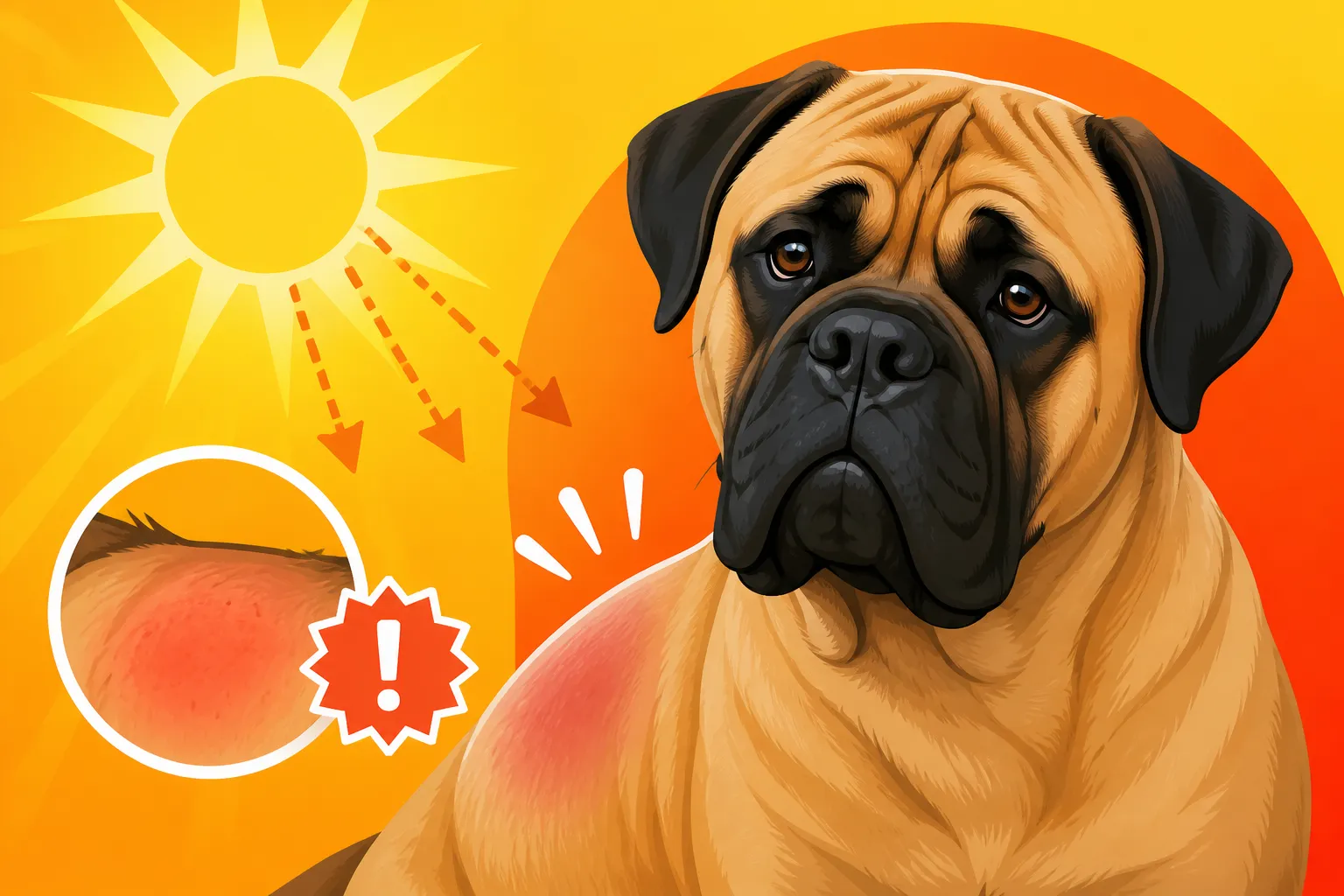
- Redness and Inflammation: The skin will appear pink or red, often feeling warm to the touch. This is most noticeable on areas with less fur, like the belly or inner thighs.
- Tenderness and Pain: Your Bullmastiff might shy away from touch, especially on the affected areas. They might yelp or flinch if you try to pet them there.
- Licking or Scratching: An irritated, itchy, or painful patch of skin will often lead to excessive licking or scratching. This can actually worsen the burn by breaking the skin and introducing bacteria, leading to infection.
- Peeling Skin: After a few days, the burned skin might start to flake or peel, just like a human sunburn. This indicates the skin is damaged and attempting to regenerate.
- Blistering (Severe Cases): In more severe cases, you might notice small blisters forming on the skin. This is a serious burn and requires immediate veterinary attention. Do not pop these blisters!
- Dry, Cracking Skin: If the burn is chronic or left untreated, the skin can become dry, thickened, and cracked, making it uncomfortable for your dog.
Behaviorally, a sunburned Bullmastiff might be more lethargic, reluctant to play, or seem generally uncomfortable. They might seek out cooler, shady spots more often than usual, or even hide away. Pay close attention to these subtle changes, as they are often your dog's way of communicating distress.
The Serious Risks Beyond a Simple Burn
A sunburn isn't just uncomfortable; for dogs, especially a breed like the Bullmastiff, it carries significant health risks that can have long-lasting consequences.
First and foremost, repeated or severe sunburns drastically increase a Bullmastiff's risk of developing skin cancer. Two common types linked to sun exposure are:
- Squamous Cell Carcinoma: This aggressive form of skin cancer can appear as a persistent sore that doesn't heal, a raised plaque, or a wart-like growth. It's often found on areas heavily exposed to the sun, like the nose, ears, or belly.
- Hemangiosarcoma: While often associated with internal organs, this malignant tumor can also occur on the skin, particularly in areas of chronic sun damage. It can appear as a red or blue-black lump. Bullmastiffs are already predisposed to various cancers, and adding sun-induced skin cancer to that list is something no owner wants. For a broader understanding of cancer risks, you might want to read Lymphoma Kills More Bullmastiffs Than Anything Else.
Beyond cancer, sunburn can also lead to other nasty skin issues:
- Infections: Burned skin is compromised skin. The protective barrier is damaged, making it much easier for bacteria to enter and cause secondary skin infections. This can lead to hot spots, pustules, and further discomfort, often requiring antibiotics.
- Chronic Dermatitis: Persistent irritation from sun exposure can lead to chronic skin inflammation, making the skin thickened, itchy, and prone to repeated flare-ups.
- Pain and Discomfort: While perhaps not life-threatening in the short term, the pain and discomfort of a severe sunburn can significantly impact your Bullmastiff's quality of life, making them miserable and affecting their appetite and activity levels.
Given that The Median Bullmastiff Lives Eight and a Half Years, focusing on preventive care like sun protection is one way we can try to ensure those years are as healthy and comfortable as possible.
Practical Strategies for Sun Protection
Protecting your Bullmastiff from the sun doesn't have to be complicated, but it does require a bit of mindful planning. A multi-pronged approach combining avoidance, physical barriers, and topical protection is usually the most effective.
Limiting Sun Exposure: When and How
This is the simplest and often most effective strategy. Just like for humans, the sun is strongest and most damaging during certain hours of the day.
- Avoid Peak Hours: The sun's UV rays are typically most intense between 10 AM and 4 PM. This is the prime time to keep your Bullmastiff indoors or ensure they are in a heavily shaded area. Plan your walks and outdoor playtime for early mornings or late evenings when the sun is lower and less harsh. This is especially critical during warmer months, as it also ties into preventing overheating, a significant risk for this breed (see Why Eighty Degrees Is Dangerous for a Bullmastiff).
- Provide Ample Shade: If your Bullmastiff must be outside, ensure they have access to plenty of shade. This means not just a small patch of shade, but an area large enough for them to sprawl out comfortably without any part of their body being in direct sunlight. Trees, shade sails, gazebos, or even an umbrella can work wonders. Be mindful that as the sun moves, so does the shade, so periodically check to make sure your dog isn't suddenly baking in direct sun.
- Indoor Activities: On bright, sunny days, embrace indoor games and training sessions. Mental stimulation can be just as tiring as physical exercise for a Bullmastiff. Play hide-and-seek with their favorite Which Rewards a Bullmastiff Works For treats, work on puzzle toys, or practice new commands.
Even a short period in direct sunlight during peak hours can be enough to cause a burn, especially if your Bullmastiff is enjoying a deep sun nap on a patio. Vigilance is key.
Canine-Specific Sunscreens and Protective Gear
Sometimes, avoiding the sun entirely isn't possible, or your Bullmastiff simply loves being outdoors. This is where physical protection comes in.
- Dog-Safe Sunscreen: This is non-negotiable for vulnerable areas. Do not use human sunscreen, as many contain ingredients (like zinc oxide or para-aminobenzoic acid, PABA) that are toxic if ingested, and our dogs will lick it off. Look for sunscreens specifically formulated for dogs, usually available from reputable pet retailers like Chewy or Amazon. These are typically broad-spectrum, waterproof, and non-toxic. Apply it liberally to their nose, ear tips, belly, and any other thinly furred or pale-skinned areas about 20 minutes before going outside. Reapply frequently, especially if they’ve been swimming or licking.
- Protective Clothing: Believe it or not, doggy UV protective clothing exists! For Bullmastiffs, a lightweight, breathable UV-blocking rash guard or vest can be incredibly useful for protecting their back and belly, especially if they love to sunbathe. While it might seem a bit silly at first, it's a practical solution for preventing widespread burns on their torso. There are various styles and sizes available through online pet supply stores.
- Paw Protection: For walks on hot pavement, consider dog booties. These provide a physical barrier between their delicate paw pads and scorching surfaces. Test the pavement with your hand; if it’s too hot for you to hold your hand on for five seconds, it’s too hot for your Bullmastiff’s paws.
Remember to introduce any new gear, like sunscreen or clothing, slowly and positively with treats to ensure your Bullmastiff associates it with good things.
Dietary Support for Skin Health
While diet won't prevent a sunburn directly, a well-nourished Bullmastiff with healthy skin is generally more resilient and better equipped to heal. Think of it as building a strong foundation.
- Omega Fatty Acids: Including omega-3 and omega-6 fatty acids in your Bullmastiff's diet can contribute to healthy skin and a shiny coat. These essential fatty acids help maintain the skin's barrier function, reduce inflammation, and support overall skin integrity. Many high-quality dog foods, including fresh food options like those offered by Ollie, incorporate these. You can also add supplements like fish oil, but always consult your vet for appropriate dosing for a large breed dog.
- Antioxidants: Vitamins E and C, along with other antioxidants, help protect cells from damage, including damage from UV radiation. A balanced diet rich in quality ingredients will naturally provide these.
- High-Quality Protein: Protein is essential for skin and hair growth and repair. Ensuring your Bullmastiff gets adequate, digestible protein helps maintain healthy skin turnover.
- Hydration: Proper hydration is crucial for overall skin health. Always ensure your Bullmastiff has access to fresh, clean water, especially when it's warm outside. Keeping them well-hydrated contributes to skin elasticity and overall health.
While diet is a supporting role, it’s an important one. A Bullmastiff who is well-fed and healthy generally has a better ability to withstand environmental stressors and recover from minor issues. For more on their nutritional needs, you can look into Keeping a Bullmastiff Lean Is the Best Thing You Can Do.
What to Do If Your Bullmastiff Gets Sunburned
Despite your best efforts, sometimes accidents happen, or a sneaky sun spot catches your Bullmastiff off guard. Knowing how to react quickly can make a big difference in their comfort and recovery.
Immediate First Aid
If you suspect your Bullmastiff has a sunburn, don't panic, but act promptly to alleviate their discomfort and prevent further damage.
- Get Out of the Sun: The very first step is to move your Bullmastiff indoors or to a deeply shaded, cool area immediately.
- Gentle Cooling: Apply cool (not ice cold) compresses to the affected areas. A cool, damp cloth can provide instant relief. You can also gently sponge them down with cool water. Avoid using ice directly on the skin, as it can cause further damage.
- Soothing Topical Treatments: For mild sunburns, certain topical treatments can help soothe the skin.
- Aloe Vera (Pure): Ensure it's 100% pure aloe vera gel, without any added alcohol, fragrances, or lidocaine, which can be toxic if licked. Apply a thin layer to the affected area.
- Oatmeal Baths: A colloidal oatmeal bath can be incredibly soothing for irritated skin. You can find colloidal oatmeal at drugstores or pet supply stores like Chewy. Follow the package directions for mixing and bathing.
- Veterinary-Recommended Sprays/Creams: Your vet might recommend a specific soothing spray or cream that is safe for dogs. Avoid using human lotions or creams unless explicitly approved by your vet.
- Prevent Licking: Your Bullmastiff will naturally want to lick at any irritated spot. This can remove the soothing treatments, introduce bacteria, and make the burn worse. Consider using an Elizabethan collar (cone) or a recovery suit to prevent them from accessing the sunburned areas.
Always observe your dog closely after first aid. If the pain seems severe or the burn covers a large area, it's time to call the vet.
When to Seek Veterinary Attention
Not all sunburns require a vet visit, but it’s always best to err on the side of caution with our big, sensitive Bullmastiffs. Here’s when you absolutely should contact your veterinarian:
- Blistering or Open Sores: Any sign of blistering, weeping, or open sores indicates a severe burn that needs professional medical attention to prevent infection and promote proper healing.
- Severe Pain: If your Bullmastiff is visibly in extreme pain, yelping when touched, or refusing to move due to discomfort, they need veterinary care. They may require prescription pain relief or anti-inflammatory medication.
- Signs of Infection: Redness, swelling, warmth, pus, or a foul odor emanating from the burned area are all signs of a secondary bacterial infection. The vet can prescribe antibiotics and proper wound care.
- Lethargy or Systemic Illness: If your Bullmastiff seems lethargic, isn't eating or drinking, or exhibits other signs of general illness alongside the sunburn, it could indicate heatstroke or a more serious underlying issue. This is especially pertinent given Signs a Bullmastiff Has Heatstroke.
- Large Affected Area: If a significant portion of their body is sunburned, even if it doesn't appear immediately severe, it can lead to dehydration and discomfort.
- No Improvement: If, after a day or two of at-home care, the sunburn isn't showing signs of improvement or seems to be getting worse, a vet visit is warranted.
Your vet can accurately assess the severity of the burn, rule out other conditions, and provide appropriate treatment, which might include medicated creams, oral medications, or even fluid therapy in severe cases. Don't hesitate to reach out to them; they are there to help your Bullmastiff feel better.
Here's a quick reference guide for Bullmastiff sun protection:
| Sun Hazard | Vulnerable Areas | Prevention Strategy | What to Do if Sunburned |
|---|---|---|---|
| UV Rays | Nose, Ears, Belly, Groin | Avoid peak sun (10 AM-4 PM), provide shade, dog-safe sunscreen, UV clothing | Cool compresses, pure aloe vera, prevent licking, vet for severe burns |
| Hot Surfaces | Paw Pads | Walk during cooler hours, stick to grass, dog booties | Cool water soak, apply paw balm, vet for blistering/pain |
| Overheating | Whole Body | Shade, water, limit exercise, cooling mats | Move to cool area, cool water, vet immediately for heatstroke signs |
This article is for general informational purposes only and does not constitute professional advice. Laws, prices and regulations vary by location and change over time. Consult a qualified professional for guidance on your specific situation.