How Often a Bullmastiff’s Nails Need Trimming
One of the quiet battles every Bullmastiff owner faces, often daily, is the relentless growth of those thick, sturdy nails. It’s not just about the annoying click-click-click on your hardwood floors; overgrown nails can lead to serious discomfort, pain, and even long-term joint issues for your beloved giant. This guide will walk you through everything you need to know about how often a Bullmastiff’s nails need trimming, the best tools for the job, and how to make this necessary chore a less stressful experience for both of you.
The Daily Grind: Why Nail Trimming is Such a Big Deal for Your Bullmastiff
Let's be honest, nail trimming isn't anyone's favorite activity, especially when you're dealing with a strong, opinionated Bullmastiff. But ignoring those nails isn't an option. Their massive weight and unique physiology mean that proper paw care is paramount to their overall health and comfort. It's not just a cosmetic issue; it's a structural one.
The Dangers of Overgrown Nails: More Than Just a Click-Clack
When your Bullmastiff’s nails get too long, they hit the ground before the paw pads do. Think about trying to walk with shoes that are too long, forcing your toes to curl up. That’s essentially what's happening to your dog. This constant pressure pushes the nail back into the nail bed, causing significant pain and discomfort. It can even lead to the nails growing into the paw pad itself, which is excruciating and can cause infection.
Beyond the immediate pain, overgrown nails force your Bullmastiff's toes to splay and their foot structure to change. This alters their natural gait, putting undue stress on their joints, tendons, and ligaments. Over time, this can contribute to or worsen conditions like arthritis, hip, and elbow dysplasia – issues that are already concerns for a heavy breed. You might notice your Bullmastiff being reluctant to stand or move, limping, or exhibiting general stiffness, and often, the silent culprit is simply neglected nails. It's a sneaky problem because it can manifest as other aches and pains, making diagnosis harder.
The Anatomy of a Bullmastiff's Paw: Quick and All
Understanding the unique structure of your Bullmastiff's paw is key to successful nail care. Their nails are robust and usually dark, which can make locating the "quick" a real challenge. The quick is a sensitive area within the nail that contains blood vessels and nerves. If you cut into the quick, it’s painful for your dog and will bleed, often profusely. This can turn a necessary grooming task into a traumatic experience, making future sessions even harder.
Unlike many smaller breeds, Bullmastiffs often have thick, strong nails that are designed to grip and provide traction for their substantial frame. Their dewclaws, if present, are also important to remember. These are the nails higher up on the inner side of their front legs, and sometimes on the back. They don't naturally wear down as much as the other nails because they don't touch the ground during regular walking. Neglecting dewclaws can lead to them growing in a full circle and piercing the skin, which is not only painful but also a prime spot for infection. It's a common oversight, but crucial for their overall comfort.
Why Many Bullmastiff Owners Struggle with Nail Care
It's completely understandable why so many Bullmastiff owners find nail care a daunting task. First, there's the sheer size and strength of these dogs. A Bullmastiff can easily outweigh a grown person, and if they decide they don't want their paws handled, it can be a wrestling match you won't win. Then there's the challenge of those dark nails. Peering into a black nail to find the quick feels like playing a dangerous guessing game, and no one wants to hurt their dog. The fear of "quicking" them can lead to owners trimming too little, or avoiding it altogether.
Many Bullmastiffs also inherit a certain stoicism or stubbornness. While generally gentle giants, they can be quite particular about personal space and what they deem necessary. If they weren't introduced to paw handling early as puppies, they might develop a strong aversion. Add to that the common misconception that large dogs wear their nails down naturally with walks. While exercise helps, for many Bullmastiffs, especially those with less active lifestyles or living on softer surfaces, it's simply not enough to prevent overgrowth. The combination of physical challenge, fear of injury, and behavioral resistance makes this a recurring frustration for many dedicated owners.
How Often is "Often Enough"? Setting a Realistic Nail Trimming Schedule
When it comes to Bullmastiff nails, consistency is far more important than sporadic, aggressive trims. You're aiming for a maintenance routine, not an emergency rescue mission. The frequency will depend on several factors, but there's a good baseline to start with.
The "Two-Week Rule" and Why It's a Starting Point, Not a Strict Law
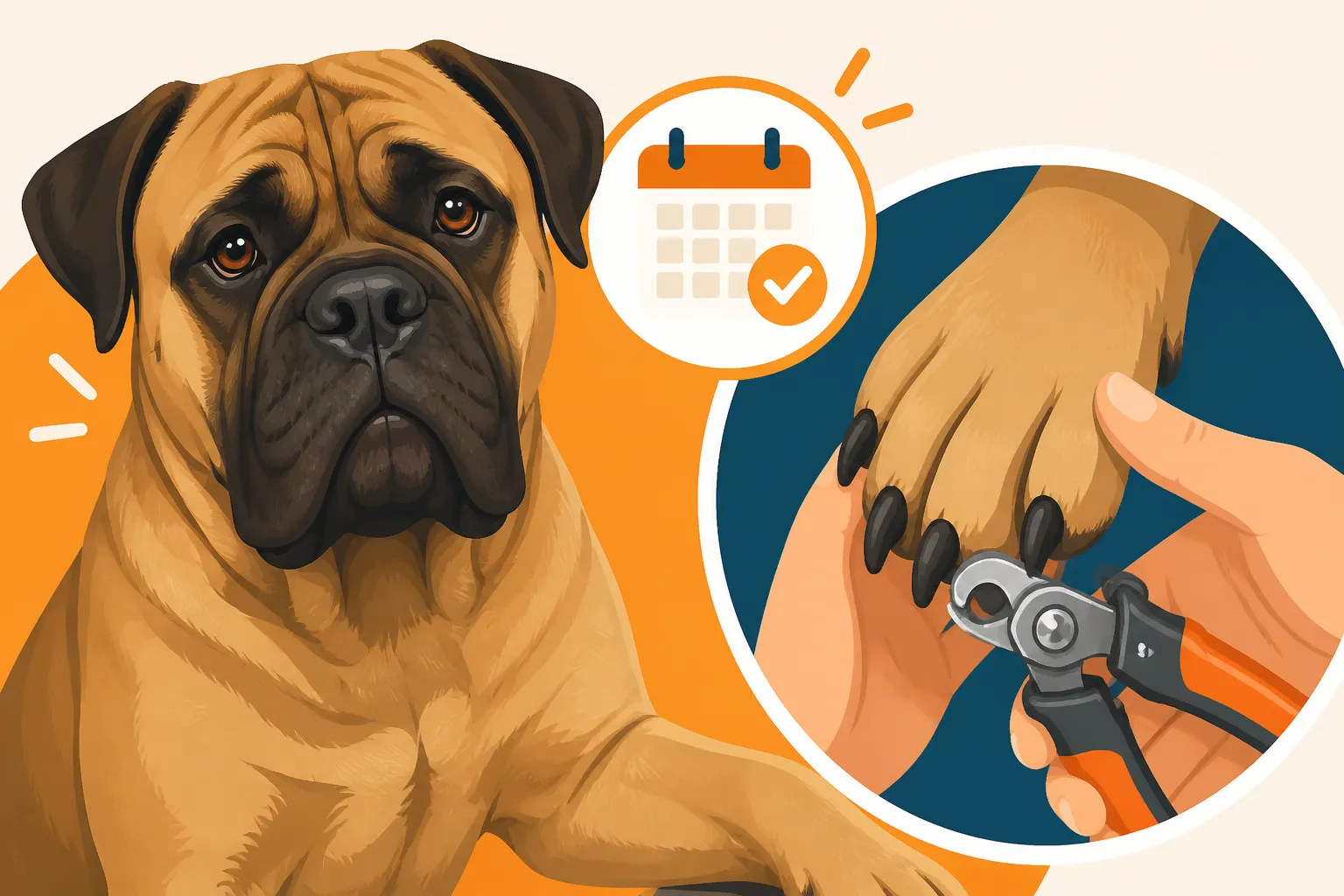
Many experienced dog owners and groomers will tell you about the "two-week rule" for nail trimming, and it's a pretty solid guideline for Bullmastiffs too. This means attempting to trim your dog's nails every two weeks. The idea behind this frequent trimming is that it slowly encourages the quick to recede, allowing you to gradually trim the nails shorter over time without causing pain. If you only trim once a month or less, the quick grows with the nail, making it almost impossible to get them to a healthy, short length.
However, it's crucial to understand that this is a starting point. Every Bullmastiff is an individual. Some might have nails that grow like weeds, while others might have slower growth. Puppies, especially, need more frequent checks as their nails can be sharp and grow quickly. A young Bullmastiff needs all the good habits you can instill, including regular paw handling. The Training a Bullmastiff Puppy That Weighs More Than You Do article has some great tips on early training. The goal is to make it a routine part of your life, like feeding or walking, rather than a dreaded chore you put off.
Listening to the "Click": Signs Your Bullmastiff's Nails are Too Long
The most obvious sign that your Bullmastiff's nails are too long is the sound they make on hard surfaces. If you hear a distinct "click-click-click" as they walk across your kitchen tile, hardwood floors, or pavement, those nails are definitely overdue for a trim. A healthy nail length means the nails should not be touching the ground when your Bullmastiff is standing naturally. You should be able to slide a piece of paper underneath the tip of their nails when their paw is flat on the floor.
Beyond the sound, observe their posture and gait. Are they favoring one paw? Are their toes splayed out more than usual? Are they slipping on smooth floors more often? These can all be subtle indicators of discomfort caused by overgrown nails. If their nails are so long they push up on their toes, it's akin to walking on tiptoes constantly, leading to unnecessary strain. Pay particular attention to the dewclaws; if they're curling around towards the leg, they need immediate attention before they grow into the skin.
Factors That Influence Your Bullmastiff's Nail Growth
Several elements can impact how quickly your Bullmastiff’s nails grow and how frequently they need trimming.
- Activity Level and Surface Type: This is a big one. A Bullmastiff who spends a lot of time walking on concrete, pavement, or rough terrain will naturally wear down their nails more than a dog who primarily walks on grass, carpet, or softer indoor surfaces. A country-dwelling Bullmastiff who trots down gravel paths regularly might need less frequent trims than one living in a suburban home with a manicured lawn. If your Bullmastiff has Why a Bullmastiff Needs Less Exercise Than It Looks, and spends a lot of time indoors, their nails will likely grow faster.
- Genetics: Just like humans, some dogs simply have faster-growing nails than others. It's a genetic lottery. You might have one Bullmastiff whose nails seem to grow overnight, while another in the same household has slower growth.
- Diet and Health: A balanced diet contributes to overall health, including nail health. While specific nutrients don't dramatically alter growth speed, severe deficiencies could potentially impact nail quality. Certain health conditions or medications might also influence nail growth or strength.
- Age: Puppy nails tend to be softer and grow rapidly, requiring frequent checks. As dogs age, their nails can become harder, thicker, and sometimes more brittle. Senior Bullmastiffs, who might be less active, will certainly need consistent attention to their nails. Caring for a Caring for a Bullmastiff Past Six often means addressing mobility, and short nails are a crucial part of that.
Tools of the Trade: Choosing the Right Equipment for Your Large Breed
Equipping yourself with the right tools is half the battle when it comes to trimming a Bullmastiff's nails. Their nails are thick and strong, requiring sturdy, sharp, and appropriately sized instruments. Trying to use flimsy clippers designed for a Chihuahua on a Bullmastiff is an exercise in futility and frustration.
Clipper Types: Scissor-Style vs. Guillotine for a Bullmastiff
When it comes to clippers, you'll generally find two main types:
- Scissor-Style Clippers: These look like a pair of pliers with a curved blade. They are often recommended for large breeds because they provide more leverage and a cleaner cut through thick nails. Brands like Safari or Miller's Forge offer heavy-duty, large-sized scissor-style clippers that can handle a Bullmastiff's substantial nails with ease. The key is sharp blades; dull clippers will crush the nail, causing pain and splintering. Many owners find these easier to handle for the back paws, where leverage might be awkward with other types.
- Guillotine-Style Clippers: These have a small hole where you insert the nail, and a blade slides across to make the cut. While popular for smaller to medium-sized dogs, they can sometimes struggle with the sheer thickness of a Bullmastiff's nails. If the blades aren't extremely sharp, they can jam or fail to cut cleanly, leading to a jagged edge or a crushed nail. If you do opt for a guillotine style, ensure it's specifically designed for large breeds and that the blade is regularly sharpened or replaced.
Regardless of the type, always buy the largest, most robust clippers you can find. A good quality, sharp pair of clippers will make the job quicker and less stressful for your Bullmastiff.
The Dremel Difference: When to Grind Instead of Clip
For many Bullmastiff owners, a rotary tool or "Dremel" style grinder is a game-changer. Grinding offers several advantages, especially for dark-nailed dogs where the quick is hard to see. Instead of a single, quick cut, the grinder slowly files the nail down. This allows you to remove small amounts of nail at a time, making it much easier to see the quick as it approaches. You'll notice a small dark dot appear in the center of the nail as you get close – that's your sign to stop!
Grinding also creates a smoother, blunter nail edge, which is gentler on your floors and skin. It can be less intimidating for dogs who are sensitive to the pressure or sound of clippers. However, grinders are noisy and create vibrations, so desensitization is key if you choose this route. Some popular pet-specific grinders are available through retailers like Chewy or Amazon, offering different speeds and abrasive bands. Just remember that it takes longer than clipping, so patience is a virtue here.
Here's a quick comparison:
| Feature | Nail Clippers (Scissor-Style) | Rotary Grinder (Dremel) |
|---|---|---|
| Speed | Faster for quick trims | Slower, more gradual removal |
| Precision | Requires careful judgment to avoid quick | Allows for more gradual approach to the quick |
| Ease of Use | Can be daunting for dark nails; requires firm grip | Can be noisy/vibrating; less risk of quicking if done slowly |
| Nail Finish | Can leave sharp edges; risk of splintering if dull | Smooth, rounded edges |
| Dog Tolerance | Some dogs dislike the "snip" sensation and pressure | Some dogs dislike the sound and vibration |
| Maintenance | Keep blades sharp | Replace abrasive bands regularly |
| Best For | Experienced owners, dogs tolerant of clipping, lighter nails | Dark-nailed dogs, quick-phobic owners, fine-tuning |
Essential Accessories: Quick-Stop, Treats, and a Good Harness
Even with the best intentions and tools, accidents can happen. Always have some styptic powder (often called "Quick-Stop") on hand. This magical powder stops bleeding quickly if you accidentally nick the quick. A small amount pressed onto the bleeding nail tip usually does the trick. You can find this at any pet supply store, and it's an absolute must-have in your grooming kit.
Treats are your best friend during nail trims! High-value, irresistible treats will create a positive association with the process. Think cheese, peanut butter, cooked chicken – anything your Bullmastiff absolutely adores. Offer them frequently throughout the session, not just at the end. Which Rewards a Bullmastiff Works For will give you ideas.
Finally, consider a comfortable, sturdy harness, especially for a Bullmastiff who might try to back out of the session. While you should never physically force your dog, a well-fitting harness can provide a bit of gentle control and security without being restrictive. A non-slip mat or rug can also help your Bullmastiff feel more stable and prevent slipping during the trim, which adds to their anxiety.
Making Nail Trimming a Positive Experience (Yes, It's Possible!)
Let's face it, for many dogs and their owners, nail trimming is akin to a wrestling match. But with a Bullmastiff, who can weigh over a hundred pounds, winning that match physically isn't a sustainable long-term strategy. The key is consistent, positive reinforcement and gradual desensitization, ideally starting when they're puppies.
Starting Early: Acclimatizing Your Bullmastiff Puppy to Paw Handling
The single most effective thing you can do to make nail trimming easy is to start early. From the moment you bring your Bullmastiff puppy home, get them used to having their paws touched and manipulated. During cuddle time, gently rub their paws, touch their toes, and play with their nails. Make it a pleasant experience by pairing it with calm praise and tiny, delicious treats.
Introduce the clippers or grinder casually. Let them sniff the tools, turn them on (if it's a grinder) in another room so they get used to the sound, then gradually bring them closer while offering treats. Don't even attempt to trim a nail at first. Just touch the clipper to a nail, then give a treat. The goal is to build a positive association: "Clippers appear, I get yummy food!" Even a young Bullmastiff needs to be taught Teaching a Bullmastiff to Have Its Feet Handled. Gradually, you can work up to clipping just one nail, then two, always ending on a positive note, even if you only manage a small step forward.
The Gradual Approach: Desensitization for Older or Apprehensive Dogs
If you have an adult Bullmastiff who already views nail trims as the ultimate betrayal, don't despair! It will take more time and patience, but you can turn the tide. The trick is to go at their pace and break the process down into tiny, manageable steps.
- Just Touch: Start by simply touching their paw gently for a second, then immediately reward with a high-value treat. Repeat this many times over several days, slowly increasing the duration of the touch.
- Handle Toes: Once comfortable with paw touching, move to gently handling individual toes, again, for a second, then treat.
- Introduce Tools: Bring out the clippers or grinder. Don't use them yet. Just let your Bullmastiff see and sniff them. Treat. Turn the grinder on in another room. Treat. Turn it on in the same room, far away. Treat. Gradually move it closer. Treat.
- Touch with Tool: Once they are comfortable with the sound/sight, gently touch the back of the clippers to a nail (not the blade). Treat. Repeat. Then touch the actual blade (but don't clip). Treat.
- The "One Nail" Method: When your Bullmastiff is relaxed with all the above, try to trim just one nail. If they tolerate it, praise lavishly and give a jackpot of treats. If they show any stress, stop, and revert to an easier step. The goal is to always end before they get truly stressed. It might take weeks or even months to do all four paws, but slow and steady wins the race. For a Bullmastiff, How Sensitive a Bullmastiff Is means a gentle, patient approach is always best.
Positive Reinforcement: Making Every Session a Treat Fest
Positive reinforcement isn't just about giving a treat at the end; it's about making the entire experience positive.
- Praise and Encouragement: Use a calm, reassuring voice. Tell your Bullmastiff how good they are, even for small acts of compliance.
- High-Value Rewards: As mentioned, use treats they absolutely love. Save these special treats only for nail trimming sessions to really build that positive association. You could even use a lick mat smeared with peanut butter to distract them while you work.
- Short, Frequent Sessions: If your Bullmastiff is particularly resistant, opt for very short, frequent sessions. Instead of trying to do all 16 nails (including dewclaws) in one go, aim for just one or two nails per session, several times a day if needed. This prevents them from becoming overwhelmed and turning the experience into a negative memory. Always end on a good note, even if it means only getting one nail done today.
- Location, Location, Location: Choose a calm, quiet space where your Bullmastiff feels comfortable and there are minimal distractions. For some, this might be on the couch next to you; for others, a non-slip mat on the floor.
Remember, the goal is not speed, but success. A cooperative Bullmastiff is a much safer, happier Bullmastiff, and a less stressed owner!
Common Challenges and Troubleshooting for Bullmastiff Nail Care
Even with the best intentions and techniques, nail care for a Bullmastiff can present its own set of unique challenges. These magnificent dogs are strong and can be very clear about their displeasure! Understanding these common hurdles and having strategies in place can make all the difference.
Dealing with Dark Nails: The Fear of Quicking
The prevalence of dark nails in Bullmastiffs is arguably the biggest hurdle for owners and groomers alike. It's truly like looking into a dark tunnel and guessing where the safe exit is. The fear of "quicking" your dog – cutting into the quick and causing pain and bleeding – is legitimate and can lead to anxiety for both of you.
- Small Cuts, Frequently: The golden rule for dark nails is to take off very small slivers at a time. Trim a tiny bit, then look at the exposed end of the nail. You'll see a white or grayish ring, and as you get closer to the quick, a small dark or pinkish dot will appear in the center. Stop immediately when you see this! That dark dot is the quick.
- The "Flashlight Trick": For some dark-nailed dogs, especially those with slightly thinner nails, a powerful flashlight held behind the nail can sometimes illuminate the quick from within. It’s not foolproof for all Bullmastiffs, but worth a try.
- The Grinder Advantage: As discussed, a Dremel-style grinder is often preferred for dark nails precisely because it allows for this gradual removal. You can watch for that dark dot to appear much more easily than with clippers.
- Keep Styptic Powder Handy: No matter how careful you are, an accident can happen. Having styptic powder immediately available helps you react quickly, minimizing the bleed and your dog’s discomfort. The quicker you stop the bleed, the less traumatic the experience.
When Your Bullmastiff Puts Up a Fight: Strategies for Large Dogs
A Bullmastiff who doesn't want their nails trimmed is a formidable opponent. Physical force is rarely the answer and can damage your relationship with your dog.
- Enlist a Helper: A second person can be invaluable. One person can distract with treats and gentle petting, while the other focuses on the nails. This can spread the attention and make the dog feel less singled out.
- Comfortable Positioning: Experiment with different positions. Some Bullmastiffs might be more tolerant lying on their side (often called the "cradle" position if they're comfortable being held that way), while others prefer to stand. A non-slip mat can provide stability and confidence. You might also try trimming their nails while they are relaxed and sleepy, such as after a long walk or during quiet evening cuddles.
- Break It Up: If a full session is too much, do one paw at a time, or even just one nail per session, spread throughout the day or over several days. The consistency of daily positive paw handling, even without a trim, builds trust.
- Muzzle Training: For genuinely anxious or reactive dogs, muzzle training can be a safety measure. A well-fitted basket muzzle allows your Bullmastiff to pant and take treats but prevents accidental nips if they get overwhelmed. This should always be introduced positively, never as a punishment.
- Veterinary Consult: If your Bullmastiff has an extreme phobia, there might be underlying pain or anxiety. A vet visit can rule out physical issues, and they might suggest calming aids or behavioral modification techniques, potentially even a mild sedative for initial sessions if the fear is severe.
Professional Help: Knowing When to Call in the Experts
There's absolutely no shame in admitting that you need professional help with your Bullmastiff's nails. Sometimes, it's safer and less stressful for everyone involved.
- Your Veterinarian or Vet Tech: Your vet's office is equipped to handle even the most resistant dogs. Their staff are trained in safe handling techniques and can often get the job done quickly and efficiently. They can also administer sedatives if absolutely necessary, or provide calming medications to use at home. This is often the best option if your dog has an extreme phobia or if the nails are severely overgrown and require significant trimming.
- Professional Groomers: Many professional groomers are experienced with large breeds and can provide regular nail trims. They often have specialized equipment and techniques that make the process smoother. However, ensure they understand the nuances of working with a Bullmastiff's temperament and dark nails. Ask for references or observe their handling if possible. Services like those offered through Chewy's network or local groomers can be invaluable.
- First Few Times: If you're a new Bullmastiff owner, or if you've recently adopted an older dog with neglected nails, having a professional do the first few trims can set a healthy baseline. They can get the nails to a manageable length, and then you can maintain them at home with less stress. It’s also a great opportunity to ask for tips and observe their technique. Sometimes, seeing it done correctly can boost your confidence.
Remember, a Bullmastiff is a huge, powerful animal, and your safety is paramount. If you're struggling, don't hesitate to seek help.
Long-Term Nail Health: Beyond Just Trimming
While regular trimming is undeniably crucial, there are other aspects of care that contribute to your Bullmastiff's overall paw and nail health. Thinking holistically about their diet, exercise, and general well-being can help ensure those mighty paws stay in top condition.
Diet and Supplements for Strong, Healthy Nails
A balanced, high-quality diet is the foundation for your Bullmastiff's entire body, and that includes their nails. Poor nutrition can manifest in brittle, weak, or easily chipped nails.
- Quality Protein: Nails are primarily made of keratin, a type of protein. Ensuring your Bullmastiff gets adequate, high-quality protein in their diet is essential for strong nail growth.
- Omega Fatty Acids: Omega-3 and Omega-6 fatty acids, found in sources like fish oil (salmon oil, cod liver oil), flaxseed, or certain commercial dog foods, are fantastic for skin and coat health, which extends to nail strength and integrity. They can help prevent dry, brittle nails that are prone to splitting. You might find a good selection of these supplements on Amazon or at local pet stores.
- Biotin and Zinc: These micronutrients are sometimes linked to healthy nail growth. While most complete and balanced dog foods should provide sufficient amounts, some specific supplements target nail and paw health. Always consult with your veterinarian before adding any supplements to your Bullmastiff's diet, as excessive amounts can sometimes be harmful. Ensuring your Bullmastiff is on a diet that promotes Keeping a Bullmastiff Lean Is the Best Thing You Can Do will also contribute to overall health, indirectly supporting nail integrity by reducing strain on joints.
Exercise and Natural Wear for a Bullmastiff's Nails
While not a complete substitute for regular trimming, appropriate exercise on abrasive surfaces can certainly help keep your Bullmastiff's nails naturally shorter.
- Hard Surfaces are Your Friend: Regular walks on concrete sidewalks, asphalt paths, or even gravel driveways can gradually grind down the tips of your Bullmastiff's nails. If your dog only ever walks on grass or soft dirt, their nails won't experience this natural abrasion.
- Structured Walks vs. Zoomies: It's not just about how much exercise, but the type. A leisurely stroll or a controlled walk where your Bullmastiff is actively pushing off the ground will have more impact on nail wear than short bursts of running on soft grass. However, always be mindful of your Bullmastiff's unique needs, especially in warm weather. Why Eighty Degrees Is Dangerous for a Bullmastiff is a critical read if you plan longer walks.
- Balance is Key: Remember, too much hard impact on young joints can be detrimental for a growing Bullmastiff. Find a balance between encouraging natural wear and protecting their still-developing skeletal system. As they mature, more extensive walks on varied terrain can be very beneficial for both physical conditioning and nail maintenance.
Recognizing Underlying Health Issues Affecting Nail Growth
Sometimes, unusual nail growth or recurring nail problems can be a red flag for an underlying health issue. Don't dismiss persistent issues as just "bad nails."
- Brittle or Cracking Nails: If your Bullmastiff's nails are consistently brittle, flaky, or cracking, even with good care, it could indicate a nutritional deficiency, a fungal infection, or even an autoimmune condition affecting the nail bed.
- Changes in Nail Color or Shape: Any sudden changes in the color, texture, or shape of your Bullmastiff's nails should warrant a vet visit. This includes excessive thickening, unusual softness, or signs of infection around the nail bed.
- Excessive Bleeding or Pain: If a nail consistently bleeds easily or your Bullmastiff exhibits severe pain when their paw is touched (even without a trim), it's time to see the vet. This could be due to an injury, an infection, or a more serious condition.
- Symmetrical Lupoid Onychodystrophy (SLO): While not exclusive to Bullmastiffs, SLO is an autoimmune disease that specifically targets the nails, causing them to become painful, brittle, to split, and eventually shed. If you notice several nails being affected, especially in multiple paws, and your Bullmastiff is exhibiting lameness or discomfort, discuss SLO with your vet. It's a debilitating condition that requires veterinary diagnosis and management.
Regularly inspecting your Bullmastiff's paws and nails during your cuddles and grooming sessions is a simple but effective way to catch potential problems early. Your attentive care is the best defense against discomfort and serious health issues for your gentle giant.
Disclaimer
This article is for general informational purposes only and does not constitute professional advice. Laws, prices and regulations vary by location and change over time. Consult a qualified professional for guidance on your specific situation.