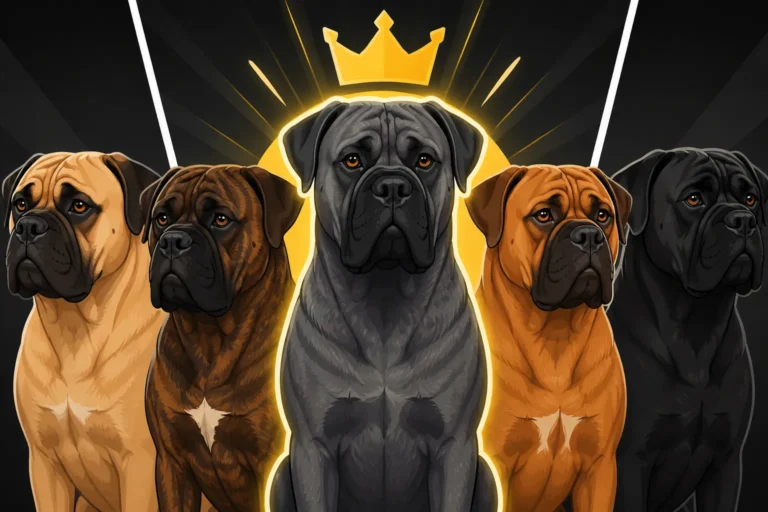
Whether the Bullmastiff Formula Was Ever Written Down
Many aspiring Bullmastiff owners, or even those who simply admire this magnificent breed, often come across the widely cited "60% Mastiff, 40% Bulldog" formula and naturally wonder if this was some official, written-down recipe from the breed's earliest days. It’s a completely understandable question, a desire for concrete proof in a world full of vague historical accounts. You want to know the true blueprint, the very genesis, of your beloved Bullmastiff. This guide will dive into the history of this fascinating ratio, explore its origins, and clarify whether it was ever a formal, documented instruction for breeding.
The Origins of the Bullmastiff: A Practical, Not Documented, Endeavor
When we talk about the very beginnings of the Bullmastiff, we're stepping back into a time before formal breed registries and meticulously kept records were commonplace. The late 19th and early 20th centuries in England were a different world for dog breeding, especially for a working dog like the Bullmastiff.
The Gamekeeper's "Recipe" and Oral Tradition
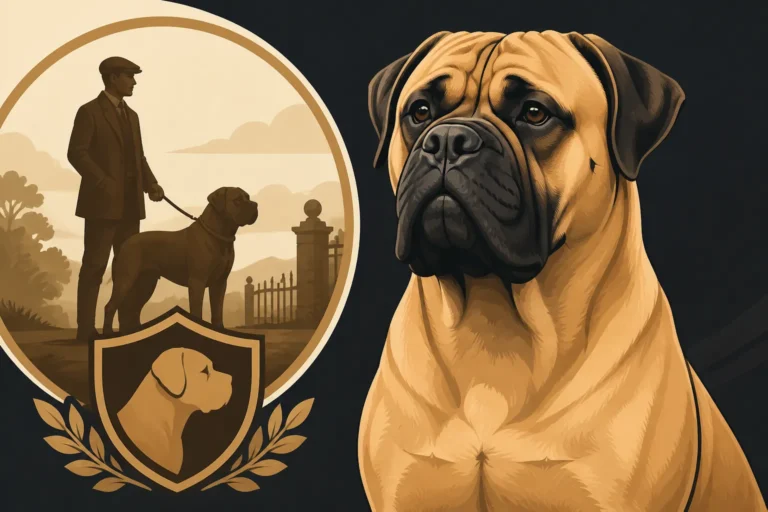
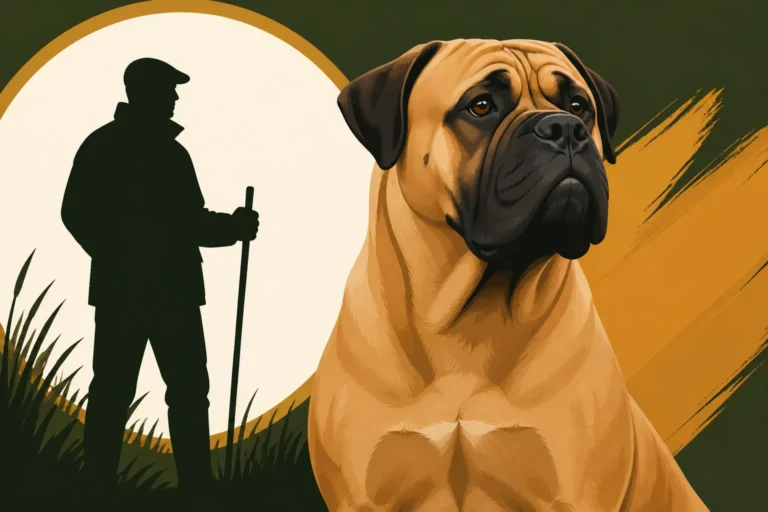
Imagine the sprawling estates of England, rife with game but also plagued by poachers. The gamekeepers, the men charged with protecting these lands and their wildlife, needed a specific kind of dog. They needed a guardian that was powerful enough to tackle and hold a full-grown man, but also swift and silent enough to catch him in the dark. They certainly didn't need a dog that would maim or kill, just one that could subdue. This very specific job requirement drove their breeding choices.
These gamekeepers weren't academics or geneticists with white lab coats; they were practical men solving a very real problem. Their "breeding program" wasn't guided by a written-down genetic formula as we might understand it today. Instead, it was an iterative process, an observational science passed down through experience and oral tradition. They would choose the largest, most formidable Mastiffs for their power and imposing presence, then cross them with the tenacious, courageous, and lower-to-the-ground Bulldogs. It was a trial-and-error approach, with generations of gamekeepers refining the "type" they needed. They were looking for a dog that embodied both strength and agility, courage and control. What a Gamekeeper Needed a Night Dog For perfectly illustrates this practical need. The 60/40 "formula" wasn't a specific percentage written on a ledger; it was a rough, functional guide based on the desired physical and temperamental traits they observed in successful working dogs. They saw that if you had too much Mastiff, the dog might be too slow or too unwieldy. Too much Bulldog, and it might lack the imposing size or reach to effectively hold a poacher.
Early Breed Development and the Lack of Formal Records
The initial development of the Bullmastiff occurred long before kennel clubs officially recognized the breed. These dogs were tools for a trade, highly valued for their utility rather than their pedigree papers. Breeders, if you could call them that in the formal sense, were often gamekeepers themselves, focusing on performance and function above all else. They bred what worked, what produced the most effective "night dogs" for their specific, demanding role. The concept of "purity" in a modern breed sense wasn't their primary concern; efficacy was.
When you think about it, why would a gamekeeper meticulously document the exact percentage of Mastiff or Bulldog in each pairing? Their records, if they kept any, would likely have focused on which dogs produced the best working offspring, perhaps noting physical characteristics or temperament, rather than a precise genetic breakdown. The idea of a "formula" implies a level of scientific precision that simply didn't exist in that era of informal working dog breeding. The blend of Mastiff and Bulldog was an ongoing experiment, gradually leading to a recognizable "type" through selective breeding based on observed results. The early "Bullmastiffs" were essentially a crossbreed, albeit one bred with a very specific purpose in mind, and that purpose was met with incredible success. Which English Counties Bred the First Bullmastiffs shows how localized and practical this breeding was.
The Emergence of a Breed Standard, Not a Breeding Formula
While the initial blend wasn't formally documented as a ratio, the eventual recognition of the Bullmastiff as a distinct breed necessitated a written standard. This is where the distinction between a "breeding formula" and a "breed standard" becomes crucial.
The Role of S.E. Moseley and Early Breed Recognition
It wasn't until the early 20th century that efforts began to formalize the Bullmastiff as a distinct breed rather than just a working type. A pivotal figure in this was S.E. Moseley, often credited with much of the work in standardizing the breed and achieving Kennel Club recognition in England. Moseley wasn't creating the 60/40 formula; rather, he was observing the successful outcome of generations of gamekeeper breeding. He saw the optimal balance of traits in the best working dogs and sought to solidify those characteristics into a written standard that future breeders could emulate.
Moseley, and others like him, championed the Bullmastiff for its unique qualities – its power, speed, silence, and steadfast temperament. They recognized that this carefully cultivated "type" deserved recognition as a breed in its own right. The journey from a functional crossbreed to an officially recognized breed involved painstaking work, often including registering foundation stock and defining what an ideal example of the breed should look like and act like. This process involved assessing existing dogs that exemplified the desired traits developed by gamekeepers. It was about codifying what was, rather than laying out a strict formula for what should be in terms of parental lineage percentages. When the Kennel Club Recognized the Bullmastiff marked a huge step, but it came after years of informal development.
Defining Type vs. Prescribing Ancestry
A breed standard describes the ideal physical appearance, temperament, and movement of a dog belonging to that breed. It outlines things like acceptable size, color, head shape, ear set, and bite. It also often describes the breed's typical disposition. For the Bullmastiff, the standard was written to capture the essence of the successful gamekeeper's dog: a powerful, symmetrical animal, active and alert, fearless but good-natured, with a black mask and fawn, red, or brindle coat.
Crucially, this standard describes the type, the result of the desired 60/40 Mastiff/Bulldog blend, but it does not prescribe the exact percentage of each breed that must be used in any given mating. Once the breed was established, breeders were expected to breed Bullmastiffs to other Bullmastiffs, working within the defined standard to produce the next generation. The "formula" became more of a historical explanation for the breed's characteristics, a shorthand to understand its unique blend of qualities, rather than a live instruction for current breeding practices. Who First Bred Bullmastiffs to Type were those individuals who worked to consistently produce dogs meeting this emerging ideal. The focus shifted from the "ingredients" to the "finished product" and how to maintain that product's integrity. The aim was to ensure that a Bullmastiff remained recognizably a Bullmastiff, embodying the specific balance of Mastiff strength and Bulldog tenacity that made it so effective at its original job.
Why the 60/40 Persisted (and What It Truly Means)
Despite not being a formally written-down breeding instruction, the 60/40 ratio has become an indelible part of the Bullmastiff's lore. It's more than just a historical tidbit; it's a profound statement about the breed's essence.
The Visual and Functional "Balance" of Mastiff and Bulldog
The enduring power of the "60% Mastiff, 40% Bulldog" formula lies in its ability to succinctly explain the Bullmastiff's distinctive characteristics. It's a conceptual framework that helps us understand why the Bullmastiff looks and acts the way it does.
Think about it:
- Mastiff influence (the 60%): This accounts for the Bullmastiff's substantial size, heavy bone, and general air of dignified power. Mastiffs are known for their protective instincts, their imposing presence, and their relatively calm demeanor. The Bullmastiff inherits much of its formidable guard dog nature from its Mastiff ancestors, being a dog that commands respect purely through its stature. The Bullmastiff Is Sixty Percent Mastiff and Forty Percent Bulldog directly addresses this foundational aspect.
- Bulldog influence (the 40%): From the Bulldog comes the Bullmastiff's compact yet powerful build, its incredible courage, tenacity, and a certain fearlessness. The Bulldog's low center of gravity and powerful bite were crucial for holding game, and these traits were vital for the Bullmastiff's original job of holding poachers. This contribution also lends the breed its characteristic broad skull and powerful jaws. Why the Bulldog Half Was Added to the Bullmastiff further details this crucial genetic input.
The combination creates a dog that is larger and more agile than a pure Mastiff, yet calmer and more substantial than a pure Bulldog. It’s a balance that produces a dog capable of bursts of speed, immense strength for holding, and a steady, confident temperament. This balance, achieved through generations of selection by gamekeepers, is what the 60/40 formula represents. It's less about a precise genetic percentage in every dog and more about the ideal blend of attributes derived from its two parent breeds.
This table illustrates how the contributions were conceptualized to achieve the desired Bullmastiff type:
| Trait | Mastiff Contribution (Conceptual 60%) | Bulldog Contribution (Conceptual 40%) | Desired Bullmastiff Outcome |
|---|---|---|---|
| Size & Stature | Imposing height, large frame, heavy bone | Compactness, powerful musculature | Large, powerful, well-balanced, capable of significant impact |
| Speed & Agility | Longer stride, ability to cover ground | Quick bursts, agility, lower center of gravity | Swift enough to catch, agile enough to maneuver an opponent |
| Temperament | Dignified, loyal, formidable deterrent, calm | Courage, tenacity, fearlessness, strong will | Confident, brave, steadfast, but controllable and good-natured |
| Head & Muzzle | Broad skull, moderate length muzzle | Shorter, broader muzzle, strong jaw | Broad skull, moderate muzzle depth, powerful holding bite |
| Holding Ability | Raw strength, body mass for pinning | Tenacity, strong bite grip, low to the ground | Unwavering hold, able to subdue without causing severe injury |
| Silence | Generally quiet nature | Focus on task, less prone to indiscriminate barking | Quiet worker, deters silently before action |
Modern Genetics and the Legacy of the "Formula"
In the era of modern genetics and DNA testing, we understand breed composition with far more precision than the gamekeepers ever could. However, the 60/40 concept remains deeply ingrained in the Bullmastiff community because it accurately describes the phenotype – the observable characteristics – that the original breeders were striving for. While an individual Bullmastiff might not have a perfectly quantifiable 60% Mastiff and 40% Bulldog genetic markers (as breeds evolve and interbreed, genetic percentages become complex), the breed as a whole perfectly embodies that functional blend.
The "formula" serves as a historical touchstone, a reminder of the pragmatic and ingenious breeding choices that created this remarkable "Gamekeeper's Night Dog." It's a testament to the fact that sometimes, the most effective "formulas" are developed through keen observation, practical application, and generations of dedicated effort, even if they aren't written down in a formal breeding manual. It tells the story of The Bullmastiff Was Built to Catch Poachers in the Dark in a very concise way. Today, when you look at a Bullmastiff, whether they are a show champion or a beloved family pet, you can see the living legacy of that clever combination – the power of the Mastiff harmoniously blended with the grit of the Bulldog. The formula itself was likely an oral tradition, a guiding principle rather than a strict genetic blueprint, passed down from one generation of gamekeepers to the next.
Disclaimer
This article is for general informational purposes only and does not constitute professional advice. Laws, prices and regulations vary by location and change over time. Consult a qualified professional for guidance on your specific situation.