Why a Bullmastiff Was Bred Light Enough to Run
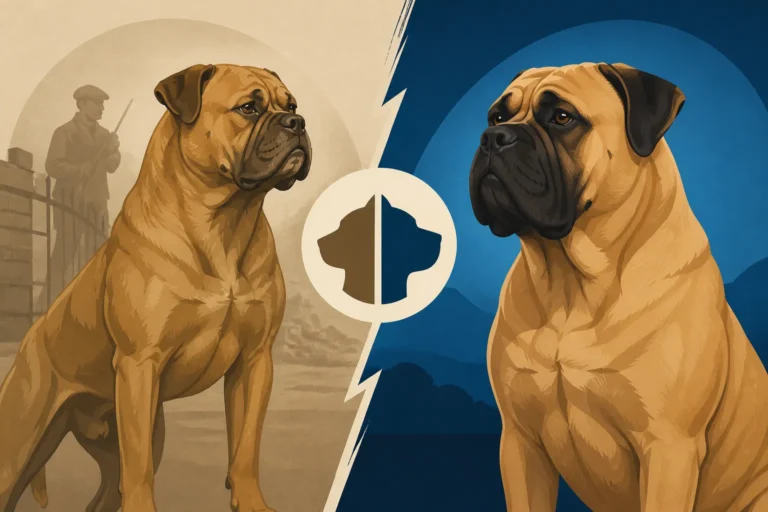
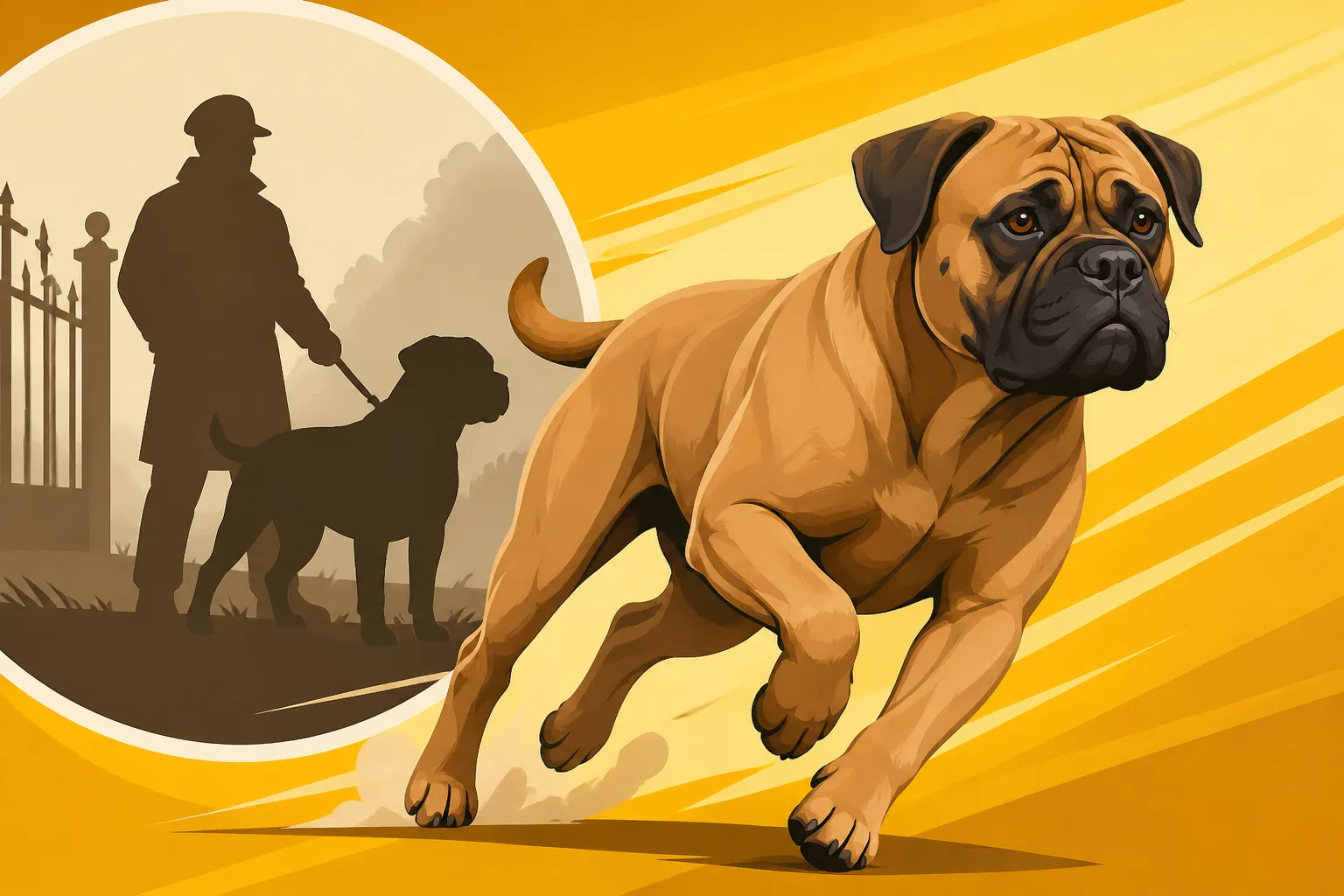
A Bullmastiff was not bred to be a light dog in the ordinary sense. It was bred to move quickly enough to help a gamekeeper catch a poacher, then use its size and strength to hold that person until help arrived. That balance—power without unnecessary bulk—explains why speed mattered in the breed’s early development.
Why gamekeepers needed a dog that could move
Catching a poacher called for more than strength
The Bullmastiff developed in England as a working estate dog, associated with gamekeepers who needed to protect land and game from poaching. A dog that could merely look imposing would not have solved the problem. It needed to notice a person, cover ground in the dark, and get close enough for the gamekeeper to intervene.
That job called for a particular sequence of abilities: alertness, short-burst speed, confidence, and enough strength to restrain someone. A dog that was too slow might not catch up. One that was too fragile might not safely hold a struggling person. The ideal was a dog capable of closing the distance and controlling the situation, not one built for a long chase across open country.
The work also took place in conditions that made agility useful. Estate ground could include rough paths, woodland, hedges, ditches, and uneven terrain. A massive dog that struggled to turn or keep its footing would be less useful than a powerful dog able to move decisively over short distances. The practical history behind that role is explored in The Bullmastiff Was Built to Catch Poachers in the Dark and What a Gamekeeper Needed a Night Dog For.
Why “light enough” is a relative description
The phrase “light enough to run” can sound odd when applied to a breed now known for its substantial frame. It does not mean that early Bullmastiffs were delicate, small, or built like coursing hounds. It means that, compared with an even heavier dog, they could be more mobile and useful for the task.
A dog may have great strength but still be poorly suited to quick movement if its weight, proportions, or conditioning make acceleration and turning difficult. Gamekeepers needed a dog with enough mass to be physically persuasive, while avoiding so much bulk that it became slow or cumbersome. The goal was practical capability rather than a particular number on a scale.
That distinction matters when reading breed history. “Fast” in this setting means able to move effectively when a person was spotted—not able to sustain a race or run for miles at high speed. The Bullmastiff’s original job depended on getting to the target and holding it, rather than pursuing it indefinitely.
The balance between Mastiff power and Bulldog tenacity
What each type of dog contributed
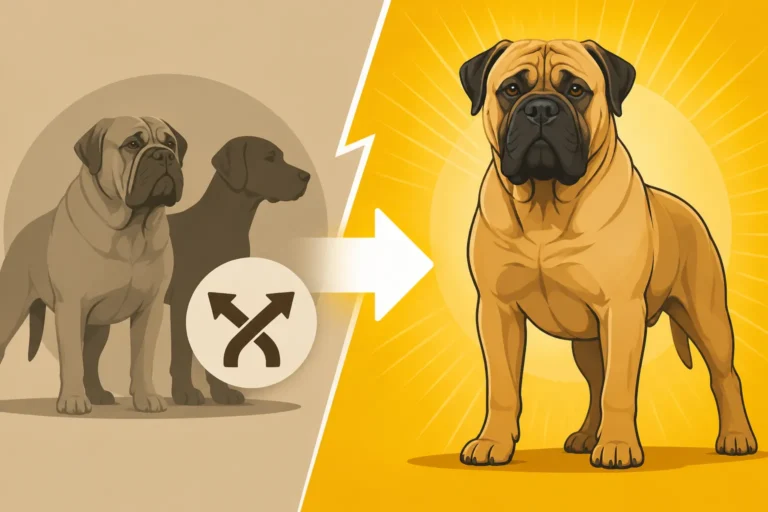
Bullmastiff history is often described through the qualities associated with Mastiffs and Bulldogs. The Mastiff influence is linked with size, strength, and a steady presence. The Bulldog influence is associated with tenacity and a compact, powerful build. The familiar shorthand sometimes describes a particular proportion of each, but it is best understood as a simplified way to explain the desired combination rather than a precise recipe followed in every breeding.
The design problem was not simply to create the biggest possible dog. A very large dog could be intimidating and strong, but excessive size might make pursuit and movement less practical. A smaller, more compact dog could be determined, but might lack the stature and strength expected of an estate guardian. The working Bullmastiff had to bring enough of both sets of qualities to perform the whole job.
This is why comparisons with the parent types help explain the breed’s purpose. Why a Mastiff Alone Was Too Slow for the Job considers the limits of relying on sheer size, while Why a Bulldog Alone Was Too Small for the Job looks at why tenacity by itself was not enough. The Bullmastiff was shaped around a combination that could act quickly and hold firmly.
The dog was meant to restrain, not pursue endlessly
The historical image of a Bullmastiff racing after a person for a long distance can be misleading. Its purpose was closer to interception and restraint. Once the dog reached the poacher, its strength and controlled holding behavior mattered more than continuing to run.
That is a different kind of athleticism from the endurance required by a hunting or distance-running dog. Short bursts, balance, and the ability to change direction could matter more than a long, sustained pace. The dog needed to respond to a specific working situation and stay engaged until the gamekeeper arrived.
This context also helps explain why speed alone would have been a poor breeding goal. A fast but lightly built dog might not have been capable of safely controlling an adult. A very heavy dog might have been formidable once it arrived, but less effective at getting there. Selection favored a useful compromise, not one extreme.
What “light enough to run” meant in the Bullmastiff’s outline
Movement and proportions mattered alongside weight
A dog’s ability to move is not determined by weight alone. Proportions, balance, muscle, foot placement, and general soundness all affect how efficiently it can walk, turn, or accelerate. A dog can be powerful without being clumsy, provided its build supports functional movement.
The outline gamekeepers wanted was therefore more than a bulky silhouette. The dog needed a body capable of carrying strength while still allowing purposeful movement. A short, strong frame could help with close control, while functional legs and sound joints mattered when crossing uneven ground. The Outline a Gamekeeper Wanted in a Bullmastiff explores those practical shape requirements.
There is a useful contrast between “massive” and “effective.” More weight is not automatically more useful if it interferes with mobility or puts unnecessary strain on the body. In a working dog, structure should serve the task. That principle remains relevant when evaluating modern Bullmastiffs, even though most are companions rather than estate workers.
Speed meant short-burst capability, not racing speed
The Bullmastiff’s historical usefulness depended on covering ground quickly enough to catch up in a practical situation. It did not require the breed to be built for prolonged high-speed running. A quick response over a limited distance, followed by the ability to brace and hold, better matches the work.
That helps put the breed’s physical reputation in perspective. Bullmastiffs are powerful, heavy dogs, and their body type is not the same as that of a lean, endurance-oriented athlete. How Fast a Bullmastiff Had to Cover Ground addresses the kind of movement the work called for. The important point is functional readiness, not a universal speed figure.
Nor does the historic role mean that every modern Bullmastiff should be encouraged to run hard. Health, age, body condition, breathing, temperature, and joint comfort all influence what exercise is appropriate. The breed’s history explains why mobility mattered; it is not a prescription for intense exercise in a modern pet.
| Working need | Why it mattered | What it did not require |
|---|---|---|
| Quick acceleration | To close the gap when a person was spotted | Sustained racing speed |
| Agility | To move over uneven estate ground and turn effectively | A light, narrow build |
| Strength | To physically restrain a person | The greatest possible body weight |
| Stability | To stay controlled during a struggle | Unrelenting aggression |
| Cooperation with the gamekeeper | To support a human handler’s work | Acting independently without control |
What the breed’s history means for owners today
A historic working role is not an exercise plan
It is easy to hear that Bullmastiffs were bred to run and conclude that a modern dog needs long runs to be fulfilled. That leap overlooks the nature of the original work and the differences between individual dogs. The historical task involved purposeful movement and short pursuit, not necessarily hours of continuous exertion.
For a pet Bullmastiff, exercise should be adapted to the individual and discussed with a veterinarian when there are concerns about breathing, joints, weight, or stamina. Many owners do better with regular, manageable walks and calm enrichment than with trying to turn a heavy guardian breed into a distance runner. Puppies also need age-appropriate activity rather than forced running or repetitive impact while they are growing.
Pay attention to how your dog responds. A Bullmastiff slowing down, lagging behind, repeatedly stopping, or breathing with unusual difficulty should not be pushed to keep pace. Weather matters, too: a short-muzzled, heavy dog can struggle in heat, so choose cooler times and keep outings gentle when conditions are warm. For related background, see Why a Bullmastiff Was Bred Light Enough to Run alongside Why the Bullmastiff Is in the Working Group.
Preserve mobility with sensible everyday care
Keeping a Bullmastiff at a healthy body condition is one of the most practical ways to support comfortable movement. Ask your veterinarian to assess body condition rather than relying only on a scale or on the idea that a large dog should look especially heavy. Measured meals and careful treatment portions can make a meaningful difference over time. If you use an online retailer such as Chewy to source food or basic supplies, choose feeding amounts with veterinary guidance rather than treating package suggestions as a substitute for an individual plan.
Good equipment also helps make ordinary walks safer and more comfortable. A well-fitted harness and sturdy leash can give the handler control without relying on the dog’s collar alone. Chewy is one place owners may look for general walking gear, but fit matters more than the retailer: check that equipment does not rub, restrict shoulder movement, or allow the dog to back out of it. For a strong dog, practice calm leash behavior at home and in quiet areas before relying on it in busy places.
Comfortable footing and a gradual approach to activity matter as well. Slippery floors can make turning and getting up harder, particularly for a heavy dog, and sudden increases in exercise may leave an unconditioned dog sore. If you are organizing your dog’s routine, supplies such as a non-slip mat or a properly fitted walking setup may be available through retailers including Chewy; ask your veterinarian whether a particular change is suitable for your dog. The historical ideal was not maximum bulk or nonstop exertion. It was a dog able to move with purpose and use its strength effectively.
A Bullmastiff was bred “light enough to run” because its work demanded both mobility and power. That phrase describes a compromise shaped by a specific job: get close, move capably, and restrain with strength. Understanding that balance gives the breed’s history its proper meaning—and helps modern owners value sound movement without confusing an old working role with a need for strenuous exercise.
Disclaimer
This article is for general informational purposes only and does not constitute professional advice. Laws, prices and regulations vary by location and change over time. Consult a qualified professional for guidance on your specific situation.