What a Bullmastiff’s Chest Should Be Like
A Bullmastiff’s chest should look broad, deep, and powerful without making the dog appear barrel-shaped or cumbersome. That strong front is part of the breed’s characteristic build, but it can be hard to judge when puppies are still growing or an adult is carrying extra weight. This guide explains what to look for, how chest shape relates to the rest of the body, and when a change deserves veterinary attention.
The typical Bullmastiff chest
Broad, deep, and balanced
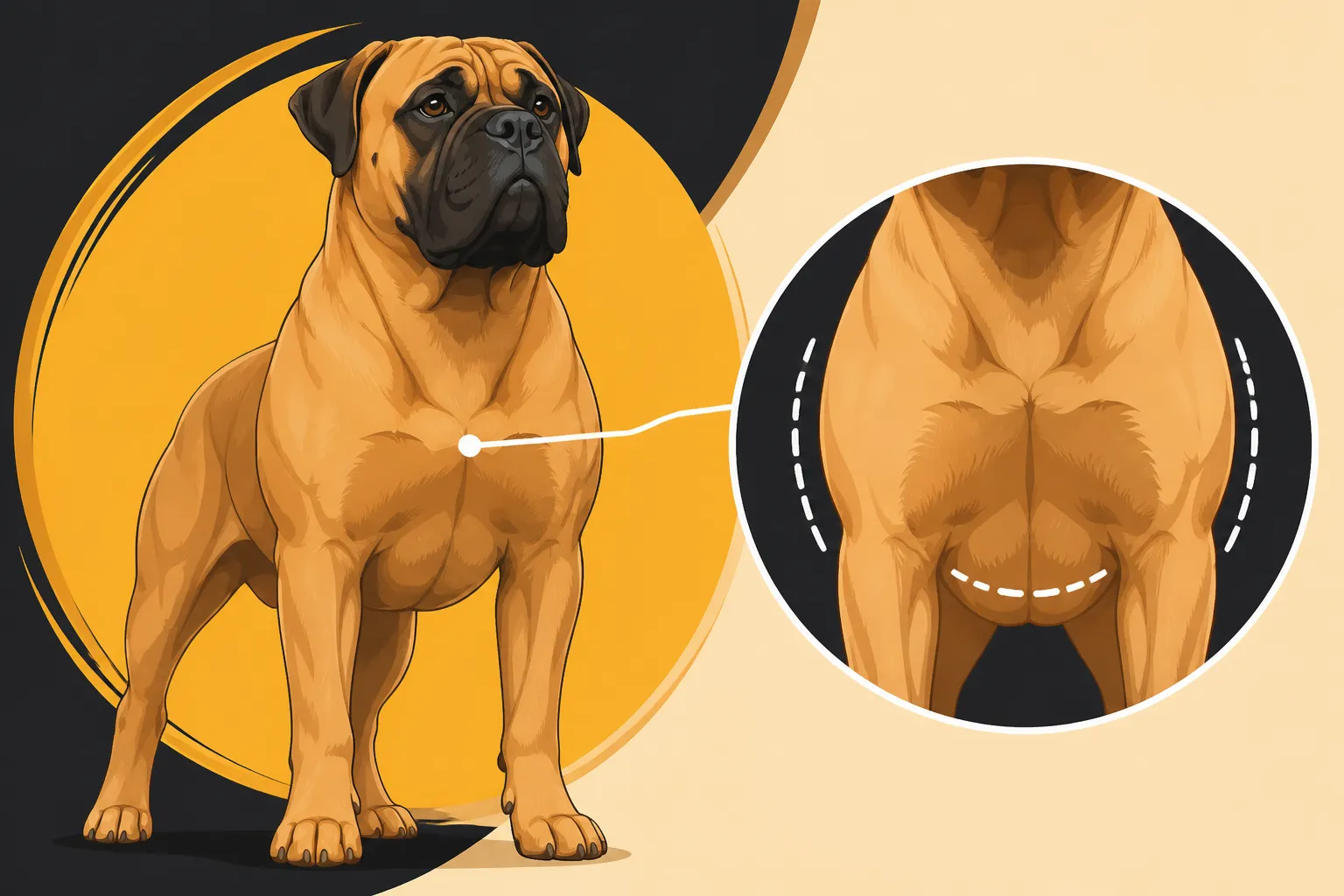
A Bullmastiff’s chest is generally broad and deep, giving the front of the dog a substantial, solid appearance. Viewed from the front, the body should look strong through the chest rather than narrow or delicate. From the side, the chest should have depth, with the brisket—the lower portion of the chest—reaching down toward the level of the elbows.
That does not mean the chest should look like a round barrel projecting far beyond the rest of the body. A well-proportioned Bullmastiff has a powerful front that fits into an overall balanced outline. The chest, shoulders, ribs, back, and hindquarters should work together visually. A very wide front paired with a weak-looking rear, for example, may look impressive at a glance but does not necessarily indicate sound structure.
It can help to think of the chest as a sturdy foundation, not an isolated feature. The breed’s characteristic outline is described in more detail in A Hundred and Thirty Pounds of Bullmastiff, Measured. That broader view matters because a dog’s apparent chest size can change with posture, coat, body condition, and age.
Forechest, ribs, and brisket
The forechest is the front portion of the chest visible between and in front of the shoulders. In a mature Bullmastiff, this area should contribute to a substantial, strong-looking front. The ribs behind it should provide depth and a rounded but not exaggerated shape. The lower chest, or brisket, should have enough depth to give the body its characteristic substance.
A quick visual check is to look at the dog standing naturally, rather than stretching the legs or posing the body. From the side, notice whether the chest has depth and whether the outline flows into the abdomen without an abrupt, unhealthy-looking tuck or a heavy, sagging appearance. From the front, look for an even, stable stance and a chest that appears in proportion to the shoulders and legs.
Individual dogs vary, and a pet Bullmastiff does not have to look like a show-ring photograph to be healthy. Breed standards describe a general type, not a promise that every dog will have the same proportions. For a fuller comparison of the breed’s overall build, see How Tall a Bullmastiff Stands and How Much a Bullmastiff Weighs.
| What you notice | What it may suggest | What to check next |
|---|---|---|
| Broad, deep chest that looks balanced with the rest of the body | Typical powerful Bullmastiff build | Assess the dog standing naturally and consider overall body condition |
| Narrow-looking chest on a young puppy | The puppy may still be developing, or individual proportions may differ | Compare growth over time and ask the veterinarian at routine visits |
| A rounded chest with little visible waist | Extra body fat may be affecting the outline | Check body condition with a veterinarian rather than judging by weight alone |
| Sudden enlargement, swelling, or tenderness | A health problem may be present | Contact a veterinarian promptly, especially if breathing or behavior changes |
| Harness edges digging into the chest or behind the legs | The harness may not fit the dog’s shape | Recheck sizing and adjust or try another design |
How the chest fits the whole body
A strong front is not the same as excess bulk
Bullmastiffs are large, muscular dogs, so their chests can look imposing even when they are in good condition. But “big” is not the same as “healthy,” and adding weight does not create better structure. Extra body fat can blur the natural shape of the ribs and waist, making it difficult to tell where the chest ends and the abdomen begins.
Rather than trying to judge a dog by a target number on a scale, look at the whole outline and ask a veterinarian to assess body condition. A healthy dog should not need to be made heavier to look powerful. The goal is to maintain a sound, comfortable body, not to maximize size.
This distinction is especially useful when comparing two Bullmastiffs. One may have a naturally wider chest, while another may have more visible waist definition. Differences in sex, age, genetics, posture, and fitness all affect appearance. The breed’s proportions are easier to understand alongside The Bullmastiff Is Sixty Percent Mastiff and Forty Percent Bulldog and The Bullmastiff Against the Mastiff, rather than by focusing on chest width alone.
Chest shape changes as a puppy grows
A Bullmastiff puppy’s body does not develop all at once. At some stages, the legs may look long while the chest is still narrow; later, the body may broaden and deepen. A puppy can also look awkward or uneven during a growth spurt without that appearance automatically meaning something is wrong.
Try not to compare a growing puppy with a fully mature adult or assume that an unusually broad puppy will necessarily become a better-proportioned adult. Keep routine veterinary appointments, feed an appropriate diet for growth, and follow professional guidance about your puppy’s body condition. Sudden changes, discomfort, or difficulty moving are more concerning than ordinary variation in a growing dog’s outline.
A strong chest also needs to be considered with the back and limbs. The Bullmastiff’s body is substantial, but the whole dog should still move comfortably and stand securely. Why a Bullmastiff Needed a Short Back adds context on how the body’s outline fits together, while Hips and Elbows Under a Hundred and Thirty Pound Bullmastiff discusses why sound movement matters in a large breed.
Checking chest shape and body condition at home
Look from more than one angle
Choose a moment when your dog is relaxed and standing squarely on a level surface. Avoid judging chest depth while the dog is sitting, leaning against you, twisting to look at something, or pulling against a lead. A change in posture can make the chest look narrower, wider, or lower than it does when the dog stands naturally.
Look at the dog from the front and side. From the front, consider whether the chest and shoulders appear balanced and whether the front legs stand comfortably beneath the body. From the side, look at the depth of the chest and the transition from the ribcage toward the abdomen. You are looking for an overall impression, not trying to measure a perfect outline with your eyes.
If you are unsure whether your Bullmastiff is carrying excess weight, ask the veterinary team to show you how to assess body condition. Hands-on guidance is particularly helpful with a dense, muscular dog, because a thick coat or heavy build can make visual estimates misleading. Keep notes or take occasional side-view photos in similar lighting and posture if you are trying to track gradual changes.
Fit equipment to the chest, not just the label
A broad chest can make harness shopping frustrating. A harness may fit around the neck but pinch behind the front legs, or it may seem secure while restricting shoulder movement. Check that straps lie flat, do not dig into the skin, and leave the dog able to walk naturally. The harness should not rub the armpits or shift so much that it twists during a walk.
If you are comparing options through retailers such as Chewy, use the manufacturer’s measuring instructions and check the return policy before choosing a size. A listed size is only a starting point; two harness designs labeled for similar dogs can sit very differently on a broad-chested Bullmastiff. If a harness repeatedly slips, rubs, or limits movement, try a different cut rather than tightening it until it feels secure.
For a hands-on fit check, put the harness on while your dog is calm, adjust it according to the product instructions, and watch your dog walk a few steps. Check the chest and the areas behind both front legs after the first short outing. If you are browsing Chewy or another pet retailer, product measurements and return options are more useful than choosing by breed name alone. See Which Harness Suits a Bullmastiff for more on choosing a suitable design.
When a chest change needs attention
Normal variation versus a new symptom
A naturally broad chest is usually just part of the dog’s build. What deserves attention is a noticeable change, particularly if it happens quickly or comes with other symptoms. New swelling, a tender area, an uneven bulge, or a change in how the dog breathes or moves should not be dismissed as ordinary breed shape.
Pay attention to the dog as a whole. Is your Bullmastiff reluctant to lie down, unusually tired, coughing, breathing differently, or uncomfortable when touched? Has the chest changed since the last time you checked? Those details help a veterinarian decide how urgently the dog needs to be examined. A photo can help show how the appearance has changed, but it cannot replace an examination.
If your dog is struggling to breathe, collapses, appears severely distressed, or has sudden abdominal swelling alongside repeated unproductive retching, seek urgent veterinary care. Do not press on a swollen or painful area to investigate it yourself. The chest’s normal appearance is only one part of assessing health, and an abrupt change is more important than whether the dog matches an idealized breed outline.
Get individualized guidance for your dog
A veterinarian can assess body condition, chest shape, movement, and any symptoms together. This is more useful than relying on a single measurement or comparing your dog with pictures online. It is also the right time to discuss whether a puppy’s growth looks appropriate or whether an adult’s changing outline could reflect weight gain, muscle loss, or another concern.
Bring practical observations to the appointment: when you first noticed the change, whether it is getting bigger, whether it seems painful, and whether appetite, energy, breathing, or movement has changed. If the concern is equipment-related, bring the harness or show the veterinarian where it rubs. Chewy can be one place to compare pet-supply options, but comfort and safe movement should guide the final choice.
In short, a Bullmastiff’s chest should generally look broad and deep, with a powerful but balanced outline. The best assessment is not a contest in chest size. It is whether the dog’s build is comfortable, proportionate, and supported by healthy movement—and whether any change from that dog’s normal appearance is checked appropriately.
Disclaimer
This article is for general informational purposes only and does not constitute professional advice. Laws, prices and regulations vary by location and change over time. Consult a qualified professional for guidance on your specific situation.