How Broad a Bullmastiff’s Skull Should Be
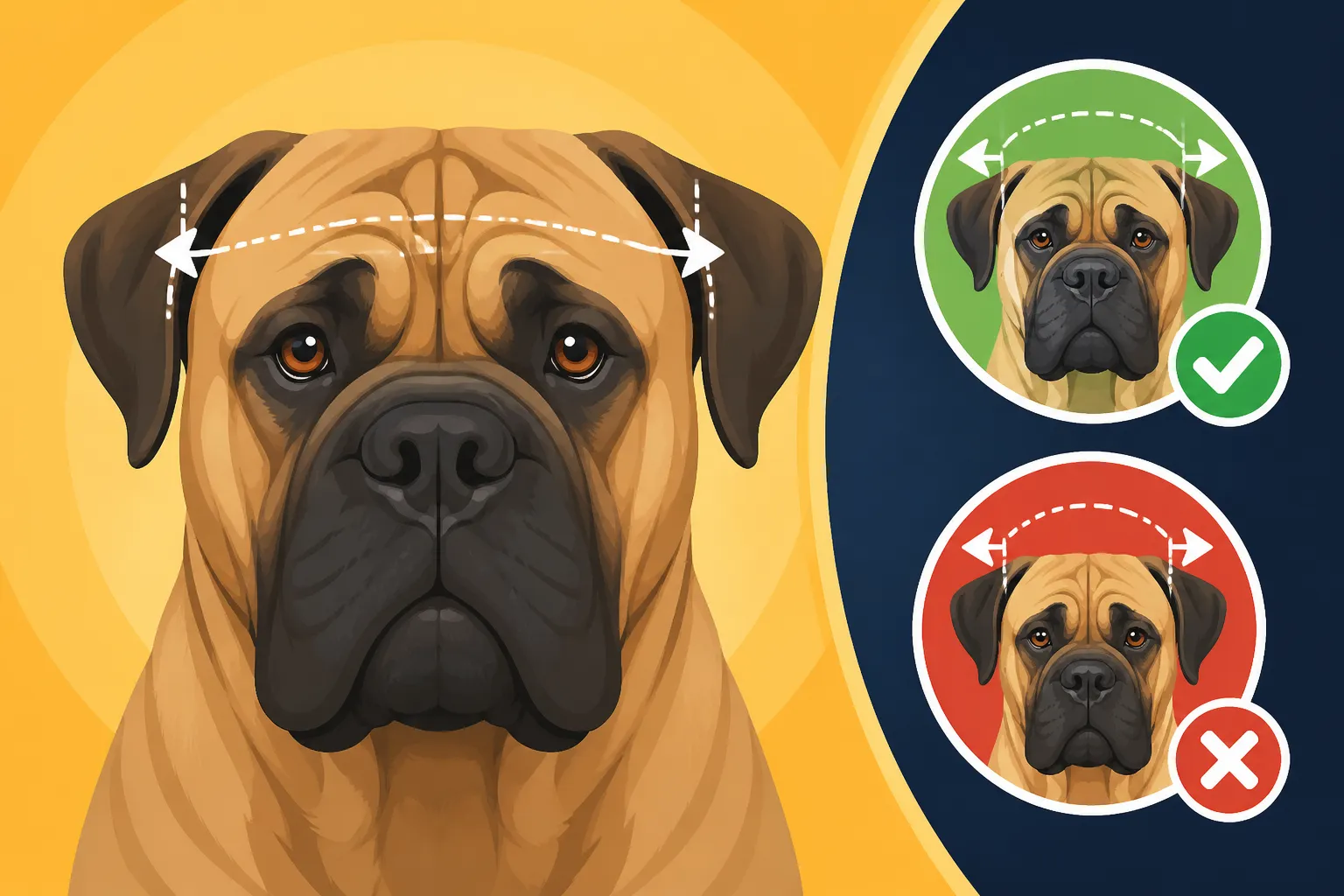
A Bullmastiff’s skull should look broad, large, and square, not narrow or sharply tapered. But there is no single width in inches that defines a correct head: age, sex, overall proportions, and the breed standard being used all matter. This guide explains what “broad” means in practice, how to assess it fairly, and when a head-shape concern deserves a vet’s attention.
What a broad Bullmastiff skull looks like
Read the whole head, not just its width
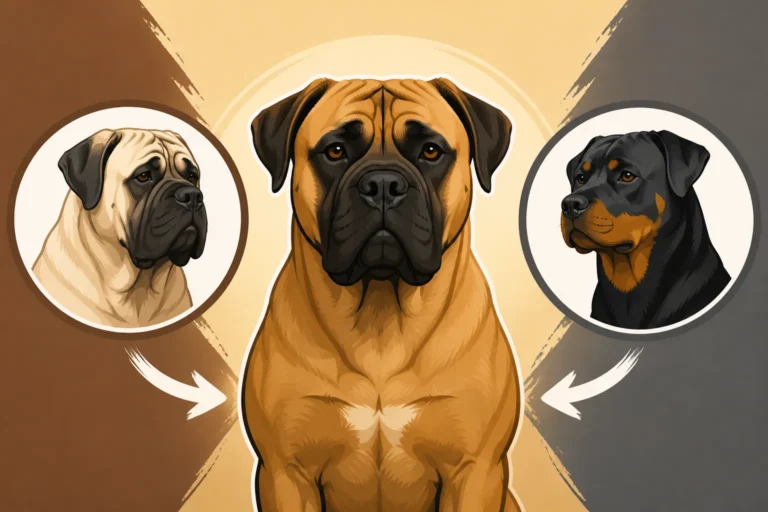
In the breed standard, a Bullmastiff’s skull is described as large and square, with well-developed cheeks. Seen from different angles, the head should have substance and width rather than a long, narrow or wedge-shaped outline. The forehead is broad, and the overall impression is powerful without looking exaggerated or out of proportion to the dog.
“Broad” does not mean that the skull should be as wide as possible. A head can look wide because of the cheeks, skin, coat, camera angle, or the way the ears sit. The useful question is whether the skull’s width fits the rest of the dog: the muzzle, jaw, neck, shoulders, and body. A very wide-looking head on a young, lightly built dog may change in appearance as the dog matures.
A side view and a front view can tell different stories. From the front, you may notice the cheeks and the width between the eyes. From above, the outline may look more square or more tapered. A single photograph, particularly one taken close to the face, can distort proportions. Step back, use an ordinary camera setting, and look at the whole head rather than judging from a close-up.
The Bullmastiff’s skull is only one part of its distinctive expression. The muzzle should be short and broad, and the transition from forehead to muzzle should be noticeable. For a clearer picture of how these features work together, see How Long a Bullmastiff's Muzzle Should Be and Why a Bullmastiff's Nostrils Must Be Wide.
How the skull relates to the muzzle, cheeks, and wrinkles
A broad skull and a broad muzzle are related features, but they are not interchangeable. The muzzle sits beneath the eyes and should have enough width to balance the skull. If the muzzle narrows sharply toward the nose, the head may look less square even when the skull itself is broad. The jaw and cheeks contribute to the impression of strength, too.
Wrinkles can make the head appear wider or more imposing, especially when a dog is alert. Breed descriptions commonly distinguish between wrinkles that show when the dog is interested and a face that remains heavily wrinkled at rest. Wrinkle depth alone is not a reliable measure of skull width. Skin folds may change with expression, age, and body condition.
The black mask, ears, eyes, and nose also shape the head’s appearance. A dark mask frames the muzzle and can emphasize its breadth, while ear position affects the outline of the skull. These details are worth considering alongside the head’s proportions; related guides include What a Bullmastiff's Black Mask Should Look Like and How a Bullmastiff's Ears Should Sit.
| Feature | What to look for | What can mislead you |
|---|---|---|
| Skull | Broad, substantial, and square in overall impression | A close-up photo that enlarges the center of the face |
| Cheeks | Well developed and in balance with the head | Extra skin or a particular facial expression |
| Muzzle | Short and broad, balancing the skull | Looking only at the distance from nose to eyes |
| Wrinkles | More noticeable when the dog is alert than at rest | Assuming deeper folds always mean a broader skull |
| Overall head | Proportionate to the dog’s body and age | Comparing a puppy directly with a mature adult |
Why there is no universal width measurement
Breed standards describe the desired outline and proportions; they generally do not give a required skull width in inches. That is important for owners who are tempted to take a tape measure to a dog’s head and compare the result with an online number. A measurement can be recorded, but without a consistent method and context, it does not tell you whether a Bullmastiff meets a breed standard.
Even two adult dogs of similar height can have different-looking heads. Sex, family lines, bone and muscle development, and individual variation all influence appearance. A judging decision also considers the dog as a whole, not a single measurement taken in isolation.
If you are recording a puppy’s growth for your own reference, use the same gentle method each time and note the puppy’s age and body weight. A soft flexible tape may be available through general pet-supply retailers such as Chewy, though a sewing or craft shop is another option. Do not squeeze the head, stretch the skin, or treat a small change in a home measurement as proof of a problem.
How to assess a Bullmastiff’s skull fairly
Start with age and maturity
A puppy’s head is not a finished version of an adult head. During growth, the face, skull, jaw, and body do not necessarily develop at the same pace. A young Bullmastiff may look narrow or leggy for a while, then become more substantial as it matures. It is usually more helpful to compare the dog with itself over time than to expect an early puppy to resemble a fully mature adult.
Growth does not follow a perfectly smooth visual timeline. One month the body may seem to lengthen; later the chest and head may look more developed. A worried owner might see a narrow-looking head in a puppy photo and assume it will stay that way. But photos vary with posture and camera angle, and normal development is individual. Keep notes rather than drawing a firm conclusion from one snapshot.
For a puppy, focus first on steady, healthy development and routine veterinary care. Avoid feeding extra food or supplements in an attempt to make the head broader. Nutrition should support appropriate growth, not push rapid weight gain or try to alter a dog’s natural structure. For more on the breed’s overall growth pattern, see When a Bullmastiff Reaches Full Height and When a Bullmastiff Fills Out.
Use consistent views instead of guesswork
If you want to assess appearance at home, take a few calm, ordinary photographs rather than repeatedly handling the dog’s head. Try a front view and a side view from a little distance, with the dog standing naturally and looking forward. Keep the camera around head height and avoid a wide-angle close-up, which can make the nose and central features look larger than they are.
Compare the skull with the muzzle and the rest of the dog. Ask whether the head appears balanced, whether the cheeks have substance, and whether the outline looks broadly square rather than long and narrow. Do not try to force a pose, hold the dog’s mouth open, or press on the skull to estimate its shape. If the dog is uncomfortable, stop.
A simple record can be more useful than a string of impressions. Note the date, age, weight if known, and any major change you notice. If you are already keeping puppy-care notes or buying routine supplies through Chewy, you can keep those records in the same place as your feeding and vet reminders. The point is consistency, not turning a normal home observation into a show-ring evaluation.
Understand what a breeder or judge is evaluating
A breeder or conformation judge considers the head in relation to the standard and the entire dog. They may look at the skull from multiple angles, assess the cheeks and muzzle, and consider expression and balance. That is different from asking whether the head looks impressive in a single photo.
If you are choosing a puppy, ask to see the parents and, when possible, mature relatives. This gives you a better sense of the family’s adult type than a puppy’s head alone can provide. Ask the breeder how the parents’ health and structure are assessed, and be cautious of anyone promising that a puppy will develop a particular exaggerated feature. A puppy’s adult appearance cannot be guaranteed in every detail.
For show eligibility or a formal assessment, consult the relevant breed standard and a knowledgeable breed specialist. Standards can differ in wording between kennel organizations, and judges are trained to evaluate proportions in context. A pet owner does not need to decide whether a dog is show-quality in order to appreciate a broad, typical Bullmastiff head.
When skull shape may need attention
Appearance is not the same as a health diagnosis
A head that looks narrower than expected is not, by itself, evidence of illness. Nor does a broad skull guarantee healthy breathing, vision, or dental function. Head shape is one aspect of conformation; health depends on many factors that cannot be evaluated from a photograph or a width measurement.
Pay attention to changes rather than simply comparing your dog with an idealized picture. Sudden swelling, a new lump, pain when the head is touched, difficulty chewing, changes in eye position, or unusual facial asymmetry are reasons to contact a veterinarian. If your dog seems short of breath, has noisy or labored breathing, or struggles with ordinary activity, seek veterinary guidance rather than attributing the issue to the skull being broad.
Bullmastiffs have a short muzzle, but head proportions alone do not tell you how well an individual dog is breathing. The relationship between muzzle shape and breathing is discussed in Whether a Bullmastiff Is Brachycephalic. For specific concerns about bite alignment or jaw function, What a Bullmastiff's Bite Should Be provides related background, while a veterinarian can assess your dog’s actual health.
Normal variation versus a change worth checking
A head that has always looked a little different from another Bullmastiff may simply reflect individual variation. In contrast, a new one-sided swelling or a sudden change in facial outline deserves attention. Take note of when you first saw it, whether it is growing, and whether your dog reacts when you approach or touch the area. Those details help the vet understand what has changed.
Do not try to diagnose a lump by pressing it or comparing it with pictures online. A vet can examine the area and decide whether any tests are appropriate. This is especially important if the change is accompanied by loss of appetite, lethargy, drooling beyond your dog’s normal pattern, or trouble eating.
For routine head and face care, gentle observation is enough. Look at the eyes, skin folds, and ears during normal grooming, and mention persistent irritation or discomfort at a regular checkup. Chewy may be one source for basic pet-care supplies, but supplies do not replace an examination when a physical change or symptom appears.
Practical answers to common questions
Should I measure my Bullmastiff’s skull at home?
You can measure for personal record keeping, but there is no universal breed-standard width to compare against. If you choose to track it, use the same soft tape, position, and method each time, and record the dog’s age. Avoid pulling the tape tight or repeatedly handling a dog that is uneasy. A measurement is a note, not a diagnosis or a show-quality verdict.
If the question is whether your dog’s head is proportionate, a relaxed front and side view may be more helpful than a number. Compare the skull with the muzzle, cheeks, and body, and remember that puppies change as they mature. Ask a breeder or breed specialist for a conformation opinion, and ask a veterinarian about health concerns.
Does a broader skull mean a better Bullmastiff?
Not automatically. The goal is a broad, square head that is in balance with the dog, not maximum width at any cost. A head should be considered alongside the muzzle, expression, movement, body structure, and health. Exaggerated features are not a substitute for sound overall conformation.
Can food or supplements make a puppy’s skull broader?
There is no responsible feeding shortcut for changing a puppy’s skull shape. Feed a suitable diet in amounts recommended for the individual dog, and discuss growth or supplement questions with a veterinarian. Adding food to encourage size can lead to excess weight without producing the head shape you expect. The healthier goal is steady development and a lean, well-conditioned dog.
Where can I find a reference for the breed’s head?
Start with the breed standard used by the kennel organization relevant to your location, then look at photos of mature Bullmastiffs from multiple angles. Avoid relying on a single promotional image, where camera position, lighting, and expression may exaggerate the head. If you are comparing a puppy with an adult, account for age and maturity. Chewy is a retailer some owners use for everyday pet supplies, but for breed-standard interpretation, a breed club, experienced breeder, or qualified conformation judge is a more appropriate source.
Disclaimer
This article is for general informational purposes only and does not constitute professional advice. Laws, prices and regulations vary by location and change over time. Consult a qualified professional for guidance on your specific situation.