Whether an Oversized Bullmastiff Can Be Shown
A Bullmastiff that looks impressively large may still be too tall, too heavy, or simply out of proportion for the breed standard. Those are different issues, and they do not always have the same effect in the show ring. This guide explains how judges assess an oversized Bullmastiff, what the standard says, and how to tell whether size is a real concern or just a big-dog impression.
What “Oversized” Means in the Bullmastiff Show Ring
Height and weight are separate measurements
A Bullmastiff can be considered oversized because of height, weight, or both. Height is measured at the withers, the highest point of the shoulders. Weight is assessed alongside the dog’s overall outline and substance; a powerful, well-conditioned dog may look very different from one carrying excess fat.
Under the American Kennel Club breed standard, the preferred height range is 25 to 27 inches for males and 24 to 26 inches for females. The stated weight ranges are 110 to 130 pounds for males and 100 to 120 pounds for females. Dogs outside the listed height or weight ranges are to be penalized in proportion to the extent of the deviation. That wording matters: being over a listed measurement is a reason for a penalty, not automatically a statement that the dog cannot enter a show.
The standard used by a show depends on the country and registry. Before planning a show career, check the rules for the organization and event you have in mind. For a broader look at the breed’s measurements, see How Tall a Bullmastiff Stands and How Much a Bullmastiff Weighs.
A large-looking dog is not necessarily over the standard
Bullmastiffs are substantial dogs. A broad chest, heavy bone, thick neck, and muscular frame can make a dog look enormous even when its height is within the accepted range. Conversely, a dog may be only slightly outside the height range but look less imposing because it is leaner or more lightly built.
The key is not to judge by appearance in a photograph or by comparing your dog with a particularly large dog at the park. Perspective, coat, posture, sex, age, and conditioning all affect what the eye sees. A dog standing on uneven ground can look taller or shorter than it is, while a relaxed posture may make the topline and proportions difficult to assess.
An accurate measurement is a better starting point. Ask an experienced breeder, handler, or veterinarian to show you how to measure at the withers, and repeat the measurement on a firm, level surface with the dog standing naturally. A single casual measurement at home is easy to misread, especially if the dog shifts its weight or stands with its legs out of position.
Size should be considered with proportion and condition
A show judge is assessing the whole dog, not just a number on a scale. The standard describes a strong, powerful Bullmastiff with a balanced outline. Proportion, movement, structure, head, expression, coat, and temperament all contribute to the overall evaluation. A dog’s bulk does not compensate for poor balance, and extra weight from body fat is not the same thing as correct substance.
Owners sometimes hear “he’s a big one” and assume that means “he’s show quality.” It may simply mean he is large for the breed, or that he has a broad frame. An experienced person can help distinguish a naturally substantial dog from one that is over-height, overweight, or poorly proportioned. The outline and chest are part of that picture; What a Bullmastiff's Chest Should Be Like offers another useful reference point.
Can an Oversized Bullmastiff Still Be Shown?
Usually, a size deviation is a penalty rather than an automatic bar
If a Bullmastiff is registered and otherwise eligible under the relevant show rules, being above the standard’s preferred height or weight does not necessarily prevent entry. Under the AKC standard, a dog outside the stated measurements is penalized in proportion to the deviation. A modest difference and a substantial difference are not necessarily treated alike.
That does not mean an oversized dog has no disadvantage. Conformation competition is about how closely the dog matches the breed standard. If a dog is clearly beyond the accepted range, that can count against it when the judge compares it with dogs whose size and proportions are closer to the standard. The outcome also depends on the rest of the dog and the quality of the competition.
Avoid relying on broad claims such as “a dog over the limit is disqualified” or “a bigger dog always wins.” Neither is a dependable rule across all registries and show settings. Read the current standard and event rules for the organization you plan to enter, and ask an experienced Bullmastiff breeder or handler to interpret them for your dog.
Eligibility and competitiveness are different questions
A dog may be eligible to enter yet unlikely to be competitive because its size is a noticeable deviation. Conversely, a dog may be close to the standard but have other structural or movement issues that affect its prospects. That distinction can save owners a lot of confusion: “Can I enter?” and “Is this dog likely to place?” are separate questions.
Show eligibility can also depend on factors beyond size, including registration, age, class requirements, and whether the event is a conformation show. Rules differ among organizations, so confirm those details directly with the show-giving body before making plans. If you are unsure how your dog measures up, ask someone familiar with the standard to assess the dog in person rather than relying only on a breeder’s description or social-media comments.
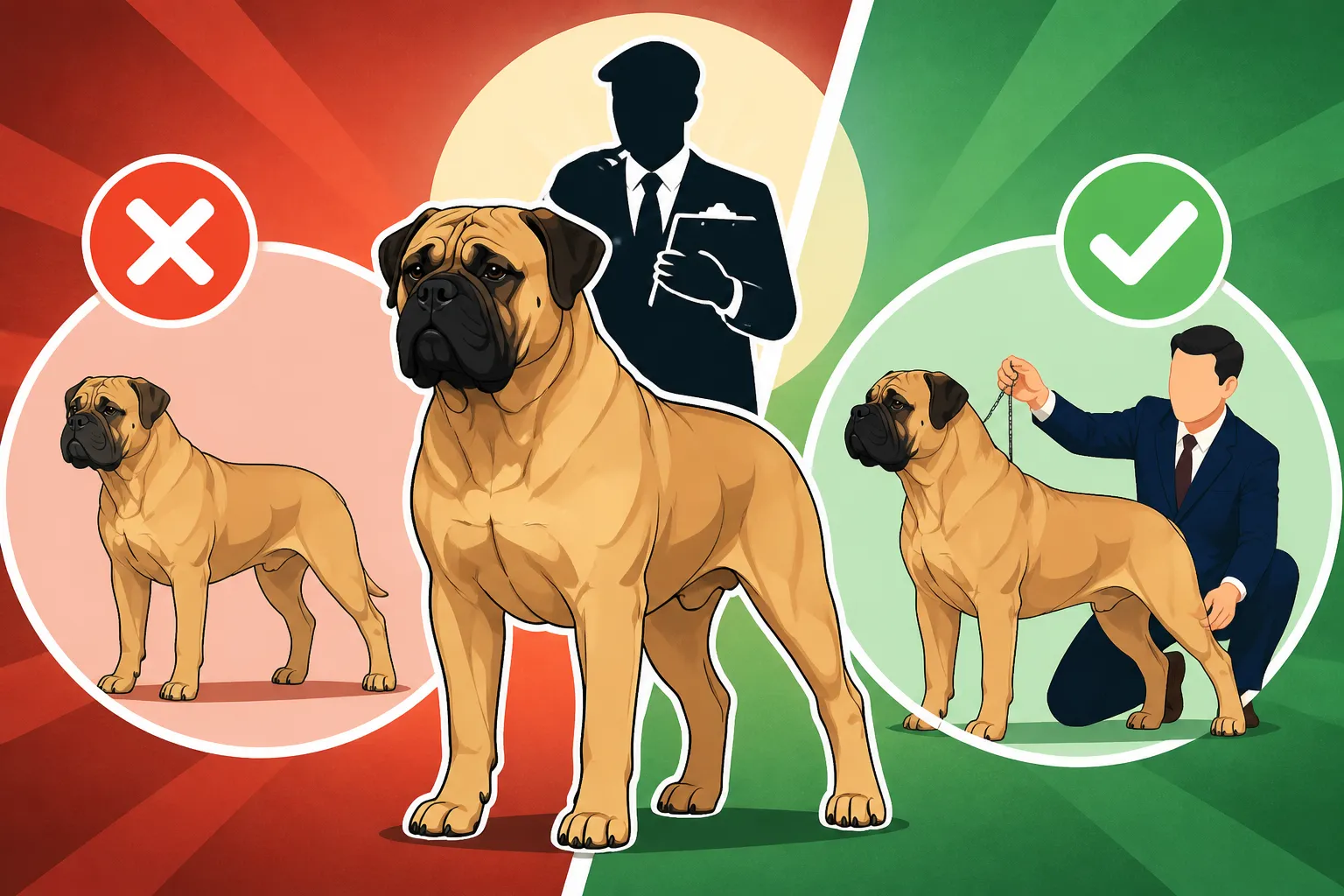
A practical evaluation should include a proper height measurement, a realistic look at body condition, and an assessment of movement and proportions. It can be helpful to have a knowledgeable person measure the dog more than once, then explain how the result compares with the applicable standard. What a Bullmastiff Judge Puts a Hand On First can help explain why a hands-on assessment involves more than checking height.
Show homes and pet homes have different goals
A Bullmastiff can be a wonderful companion without being a strong conformation prospect. If a dog is oversized, that does not make the dog less affectionate, less trainable, or less deserving of a good home. It simply means that conformation competition may not be the best measure of that individual dog’s strengths.
Owners can still enjoy activities that fit the dog’s health, temperament, and training. A calm, well-socialized Bullmastiff might enjoy obedience foundations, scent games, or relaxed outings, provided the activity suits its age and physical condition. Avoid pushing a dog to exercise excessively in an effort to “trim down” its frame. Exercise can support fitness, but it cannot change adult bone structure or safely make a naturally tall dog shorter.
For owners comparing show and non-show dogs, Whether Show Bullmastiffs Are Heavier Than Working Ones is relevant context. A dog’s role and breeding goals can shape what people notice about its build, but the conformation standard remains the reference in the show ring.
How to Assess Your Bullmastiff’s Size Fairly
Measure the dog correctly before drawing conclusions
Start with a calm, repeatable measurement. Place the dog on a level, nonslip surface and have a second person help keep it standing squarely. The measuring point is the withers, not the top of the head or the highest point of the back. A proper wicket or other suitable measuring tool is more reliable than estimating from a wall, a tape held at an angle, or a photograph.
Take the measurement when the dog is relaxed and standing naturally. If the dog is crouching, leaning, stretching its neck, or shifting its weight, the result may be misleading. If you get different readings, do not pick the one that supports what you hoped to hear. Repeat the process with someone experienced and record the result.
Weight also needs context. A scale tells you how heavy the dog is, but not whether that weight is appropriate for its frame. Your veterinarian can assess body condition and help distinguish muscle and structure from excess fat. If weight management is needed, discuss a safe plan rather than restricting food sharply or adding strenuous exercise. Keeping a Bullmastiff Lean Is the Best Thing You Can Do covers why a healthy body condition matters beyond the show ring.
Ask for an honest, specific evaluation
When you speak with a breeder, handler, or judge, ask precise questions. “Is he too big?” may invite a quick opinion. More useful questions include: “How does his height compare with the standard?” “Is his weight appropriate for his frame?” and “Does his movement and overall balance support a conformation career?”
Ask the person to explain what they see. If someone says a dog is oversized, find out whether they mean height, weight, or overall impression. If they say the dog is “big but beautiful,” ask whether that is a personal compliment or an assessment of show potential. Clear language helps prevent a flattering comment from being mistaken for a formal evaluation.
If you are preparing for a show, consider having the dog assessed at a specialty event or by a reputable mentor who understands Bullmastiffs. A pet retailer such as Chewy may be useful for basic grooming supplies, but a product purchase cannot substitute for a knowledgeable structural assessment. When you do prepare at home, focus on comfort and care rather than trying to alter the dog’s natural shape.
| What you notice | What it may mean | A sensible next step |
|---|---|---|
| Height above the standard’s range | A measurable deviation that may be penalized | Recheck the measurement with an experienced person |
| High weight with soft body condition | Possible excess fat rather than correct substance | Ask your veterinarian to assess body condition |
| Broad frame but standard height | A substantial appearance that may be within range | Assess proportions and movement, not appearance alone |
| Conflicting opinions about size | Different people may be judging by different standards | Ask which measurement or feature they mean |
| A dog is eligible but unlikely to place | Entry rules and competitive quality are separate | Confirm event rules and seek an informed assessment |
If You Are Choosing a Puppy for Future Showing
Ask the breeder about structure, not just expected adult size
No breeder can guarantee exactly how large a puppy will be as an adult. Growth depends on genetics, sex, nutrition, health, and individual variation. A breeder may have a reasonable expectation based on the puppy’s parents and relatives, but “this puppy will be exactly 120 pounds” is not a promise anyone can responsibly make.
Ask to see adult relatives when possible and discuss their height, build, movement, and health. Ask how the breeder evaluates puppies and what they mean when they describe one as a show prospect. A puppy can have promise at eight weeks and develop differently as it matures. If you are making a show-focused choice, also discuss what happens if the dog grows outside the preferred range.
For questions to bring to that conversation, see Which Questions to Ask a Bullmastiff Breeder. Responsible breeders should be willing to talk about the strengths and limitations of their dogs without treating show potential as a guarantee.
Avoid trying to control adult height through feeding
A puppy’s growth should be steady and appropriate, not deliberately accelerated or restricted to affect its eventual size. Feeding too much can lead to excess body weight and put unnecessary strain on developing joints. Feeding too little can compromise health and development. Neither approach is a safe way to shape a future show dog.
Use a complete diet appropriate for the puppy’s life stage, follow veterinary guidance, and monitor body condition as the puppy grows. A food scale and a consistent feeding routine can make portions easier to track. Chewy is one possible place owners look for everyday pet supplies, but a veterinarian should guide diet decisions when growth or body condition is a concern.
The same principle applies to supplements and exercise. Do not add calcium or other supplements simply to make a puppy grow larger, and do not impose intense exercise to keep it smaller. Large-breed puppy development deserves careful attention; Why a Bullmastiff Puppy Should Be Kept Lean explains why a healthy, controlled growth pattern matters.
Decide what you want from showing before making size the whole story
A show career involves more than meeting a measurement. The dog must be comfortable being handled, able to move calmly in a ring, and suitable for the event’s requirements. Some owners love the learning and community of showing even when their dog is not a likely winner. Others mainly want a companion and are happiest skipping competition altogether.
If your Bullmastiff is above the standard, you can still enjoy training, grooming, and spending time together. Chewy may help with practical supplies such as brushes or cleaning products, while a qualified handler or breeder can offer show-specific feedback. Keep those roles distinct: equipment can make care easier, but it cannot change a dog’s height, structure, or conformation.
The most useful question is not simply whether your Bullmastiff is “too big.” Ask what is oversized, how far the dog is from the applicable standard, and whether showing remains enjoyable and realistic for you. A careful measurement and an honest evaluation will give you a much clearer answer than comparing your dog with the biggest Bullmastiff you have ever seen.
Disclaimer
This article is for general informational purposes only and does not constitute professional advice. Laws, prices and regulations vary by location and change over time. Consult a qualified professional for guidance on your specific situation.