Why a Bullmastiff Must Have a Black Mask
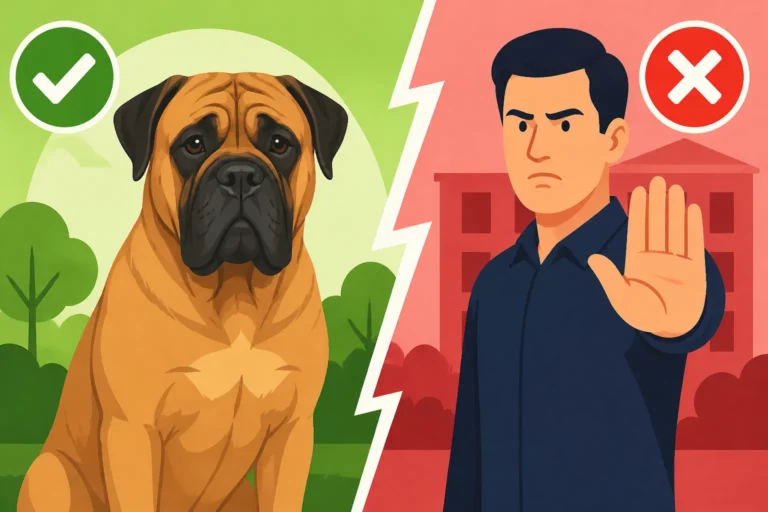
A Bullmastiff’s black mask is more than a dramatic feature: it is part of the breed’s traditional appearance and a requirement in major show standards. But “must have” can sound as if a maskless dog is unhealthy or not a Bullmastiff. This guide explains what the mask is, why the standard calls for it, how it can change with age, and what it does—and does not—tell you.
What the Bullmastiff’s black mask is
How to recognize the mask
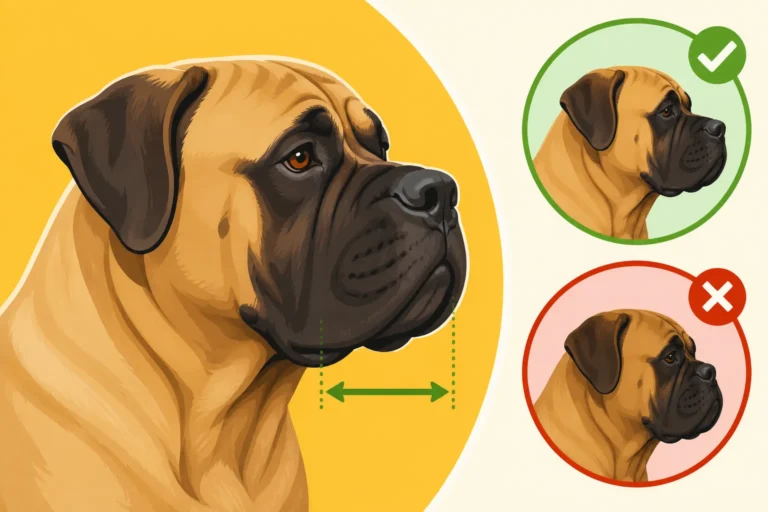
The black mask is the dark coloring over a Bullmastiff’s muzzle and around the face. It gives the breed its familiar serious, alert expression, especially when seen against a fawn, red, or brindle coat. The contrast can vary: some dogs have a sharply defined dark face, while others have shading that blends more gradually into the lighter coat.
A mask is not the same thing as an entirely black coat. Bullmastiffs are generally described by the accepted coat colors fawn, red, and brindle, with a dark mask as a defining feature. Brindle dogs may have dark stripes across the body, but those stripes are separate from the facial mask. For more on accepted colors, see Which Colors a Bullmastiff Comes In.
The breed’s appearance is shaped by more than one feature. A broad skull, short muzzle, dark eyes, and black mask work together to create the recognizable Bullmastiff expression. The mask is one part of the picture, not a stand-alone measure of whether a dog has the right temperament, health, or quality.
Why breed standards call for a black mask
Breed standards describe the appearance expected of a Bullmastiff in conformation shows. They help judges assess how closely a dog matches the accepted type, including its proportions, coat, head, and expression. In that setting, the black mask is a specified feature rather than an optional decoration.
Standards can differ in wording between kennel clubs, so a breeder or exhibitor should check the rules of the organization where a dog will be shown. In general, though, the black mask is an important part of the traditional Bullmastiff look. A dog without a clearly visible mask may not meet the standard as closely as one with the expected facial pigmentation.
That show-related distinction does not mean a maskless or lightly masked dog cannot be a much-loved companion. Conformation standards are not a complete measure of a dog’s health or suitability as a family pet. If you are choosing a puppy, it is more useful to consider the whole picture: responsible breeding, health screening, stable temperament, and the care the dog will need throughout its life. What Nobody Tells You Before Buying a Bullmastiff covers other practical considerations that can matter more in everyday ownership.
Why the black mask is part of the breed’s look
A feature tied to the Bullmastiff’s traditional type
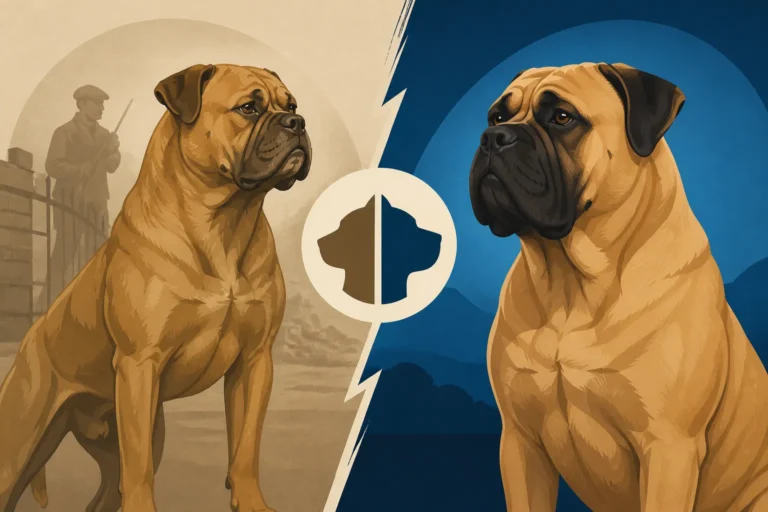
Bullmastiffs were developed as powerful working dogs, and their distinctive head and expression became part of the breed’s familiar identity. The black mask contributes to that recognizable appearance. It frames the face and makes the eyes and muzzle stand out, which is one reason people often notice it first in photographs or at a show.
It is tempting to read meaning into a dog’s expression. A dark mask can make a Bullmastiff look stern, but appearance does not tell you whether that individual dog is calm, confident, anxious, social, or protective. Those qualities are shaped by genetics, early experiences, health, and training—not by the color of the fur on the muzzle.
The same caution applies to assumptions about working ability. The Bullmastiff’s history is interesting, but a modern dog’s behavior cannot be predicted from a facial marking. A responsible breeder should be willing to discuss temperament and family history as well as appearance. The breed’s background is explored in The Bullmastiff Was Built to Catch Poachers in the Dark.
Coat color, mask color, and markings
Bullmastiffs may be fawn, red, or brindle, and the body coat can differ noticeably from one dog to another. A fawn dog may look pale or golden; a red dog can have a deeper, warmer coat; and brindle markings create a striped effect. The mask is the dark facial coloring that accompanies these coat patterns.
A small amount of white on the chest can occur, but it is distinct from the mask. Likewise, dark brindle striping on the body does not mean a dog has an unusually large or unusual mask. When comparing puppies, look at the face and body separately rather than treating every dark patch as the same marking.
| Feature | What it describes | What it does not tell you |
|---|---|---|
| Black mask | Dark coloring over the muzzle and face | Whether the dog is healthy or well behaved |
| Fawn, red, or brindle coat | The general color or pattern of the body coat | Whether the dog will have a particular temperament |
| White chest marking | A patch of lighter fur on the chest | Whether the facial mask is present |
| Dark body stripes | Brindle patterning across the coat | The size or quality of the facial mask |
If you are unsure how a puppy’s coloring fits the standard, ask the breeder to explain what you are seeing and, if showing matters to you, consult the relevant breed standard. Photos can be misleading: lighting, age, and camera settings may make a mask look darker or lighter than it does in person.
How a Bullmastiff’s mask can change over time
Puppy coloring may become clearer as the dog grows
A puppy’s face can change as its coat develops. Some pups have a dark mask that is easy to see early; in others, the contrast may look softer or less defined. The surrounding coat also changes in appearance as the puppy matures, which can affect how pronounced the mask seems.
That can make puppy comparisons confusing. One pup may look more strongly masked in a bright outdoor photo, while another appears darker in a shaded room. Rather than making a decision from one picture, ask to see the puppy in ordinary light and, where possible, photos of its parents and older relatives. A breeder can explain what is typical in their lines, but no photograph can promise exactly how an individual puppy’s coat will look as an adult.
Color is only one part of choosing a puppy. Ask about the parents’ health testing, the puppies’ early socialization, and the breeder’s plans if a family’s circumstances change. For a broader checklist, see What a Bullmastiff Breeder Should Have Screened and Which Questions to Ask a Bullmastiff Breeder.
Graying and fading around the face
Like other dogs, Bullmastiffs can develop gray or lighter hairs as they age. These may appear around the muzzle and face, making an older dog’s mask look less solid than it did when the dog was young. The pace and pattern of this change vary between individuals.
A little gray hair by itself is not a diagnosis. If a dog’s facial color changes suddenly, or the skin itself looks irritated, swollen, or sore, pay attention to the skin and the dog’s comfort rather than assuming it is simply an aging change. Persistent redness, discharge, itching, or a new lump deserves a conversation with a veterinarian.
It can also help to keep familiar grooming supplies on hand. A soft cloth and dog-safe cleaning products can make routine face care easier; some owners look at general pet-supply retailers such as Chewy when restocking basics. Avoid using household cleaners or products made for people on the muzzle, especially near the eyes. If you are concerned about a change in pigmentation or skin condition, a veterinarian can examine the area directly.
Caring for the face and understanding what the mask means
Keep the muzzle clean without overdoing it
The mask itself does not need special treatment because it is black. Care focuses on the skin and folds around the muzzle, where moisture, food residue, or saliva can collect. A gentle wipe with a clean, damp cloth after meals can help keep the area comfortable, followed by careful drying if the skin tends to stay damp.
Check the face during normal grooming rather than scrubbing it every day without a reason. Look for persistent odor, redness, dampness, scabs, or a dog that suddenly resists having its muzzle touched. These signs may point to irritation or another issue that needs attention, not a problem with the mask’s color. For a practical routine, see How to Clean a Bullmastiff's Face Wrinkles.
If you need replacement cloths or other basic grooming items, Chewy is one place owners may browse for pet supplies. Choose products suitable for a dog’s skin, and keep them away from the eyes unless the label specifically says they are safe for that use. A plain, soft cloth is often all that is needed for routine surface cleaning.
What the mask can and cannot tell you
A black mask is a breed feature, not a health test. It cannot tell you whether a Bullmastiff has a heart condition, joint problem, or other inherited risk. Nor does a dark, dramatic face mean that the dog is naturally more protective or aggressive. Those conclusions cannot be drawn from coat color alone.
When assessing a Bullmastiff, put more weight on observable health and behavior. Is the dog moving comfortably? Does it breathe without obvious distress at rest? Is it able to settle around ordinary household activity? For a puppy, ask what health evaluations have been done and what support the breeder provides after the dog goes home. For adults, routine veterinary care and attention to changes in behavior matter more than whether the mask remains jet black.
Owners sometimes notice that face cleaning becomes part of the everyday routine, especially after drinking or eating. If you are gathering supplies, Chewy may be a convenient place to compare pet-safe wipes or grooming cloths, but read product labels carefully and check with your veterinarian if your dog has sensitive skin. The goal is comfortable skin—not making the mask look darker or altering its natural appearance.
Disclaimer
This article is for general informational purposes only and does not constitute professional advice. Laws, prices and regulations vary by location and change over time. Consult a qualified professional for guidance on your specific situation.