How a Bullmastiff Puppy’s Color Changes
A Bullmastiff puppy’s coat can look different as it grows, leaving owners wondering whether the color is changing or whether the dog will mature into a different shade. Usually, the change is subtle: the puppy coat gives way to an adult coat, and the fawn, red, or brindle pattern becomes easier to see. Here’s what may shift, what usually stays, and when a color change deserves a closer look.
What Bullmastiff puppy colors can look like
The breed’s recognized colors
Bullmastiffs come in fawn, red, and brindle. Those broad color categories can include plenty of variation: one fawn puppy may look pale and sandy, while another appears deeper gold or reddish. A red coat can range from a warm, muted shade to a rich, dark red. Brindle coats have dark stripes over a lighter base, and the contrast between the stripes and background varies from dog to dog.
Puppies in the same litter may not look identical, even when they share the same parents. A brindle puppy may have bold, obvious striping, while a littermate’s pattern looks softer or less distinct. In a young puppy’s short, soft coat, some markings can be difficult to judge at a glance. As the coat grows and settles, the pattern may become more noticeable without actually being new.
For a broader look at the permitted shades and patterns, see Which Colors a Bullmastiff Comes In. If you’re trying to identify a puppy, remember that photographs can exaggerate or flatten color: indoor lighting, shadows, and phone-camera settings all affect how a coat appears.
The black mask and other markings
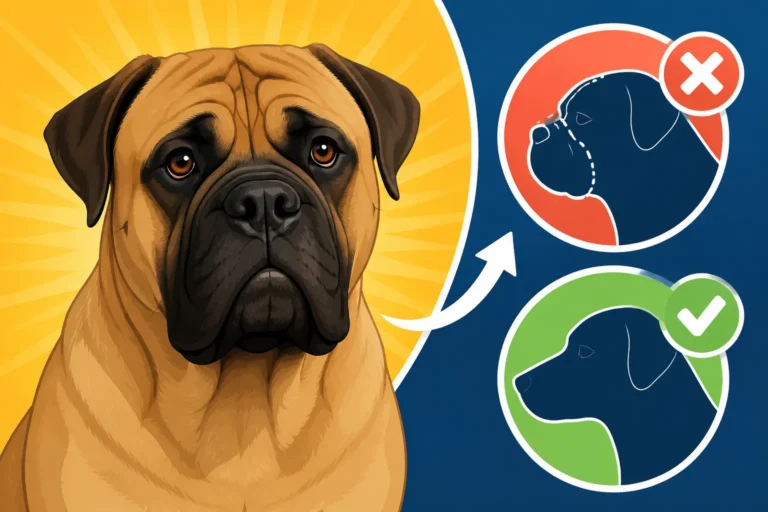
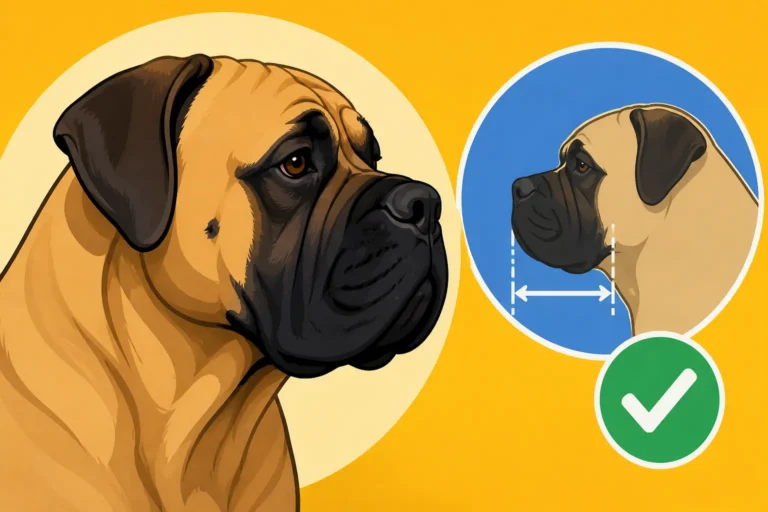
A dark mask across the muzzle and around the eyes is a familiar Bullmastiff feature. In a very young puppy, the mask can look especially strong against a lighter face. It may seem less dramatic as the rest of the puppy’s coat deepens or becomes more even, though a dog’s face can also look different in different lighting. The mask is a separate feature from the overall coat shade, so a fawn puppy with a dark mask is still fawn.
White markings can occur, often as a small area on the chest. Their size and visibility vary. A white patch may appear more noticeable when a puppy is small simply because it stands out against the puppy’s body; as the dog grows, the patch covers a smaller proportion of the chest. Growth doesn’t necessarily mean the white hairs have disappeared.
The mask and coat color don’t tell you everything about a puppy’s health or temperament. If you’d like to understand what the breed’s facial marking is meant to look like, What a Bullmastiff's Black Mask Should Look Like offers a useful comparison. For questions about whether a particular marking fits a breed standard, ask the breeder or a qualified breed specialist rather than relying on one photo.
How a puppy’s coat changes as it matures
Puppy coat gives way to adult coat
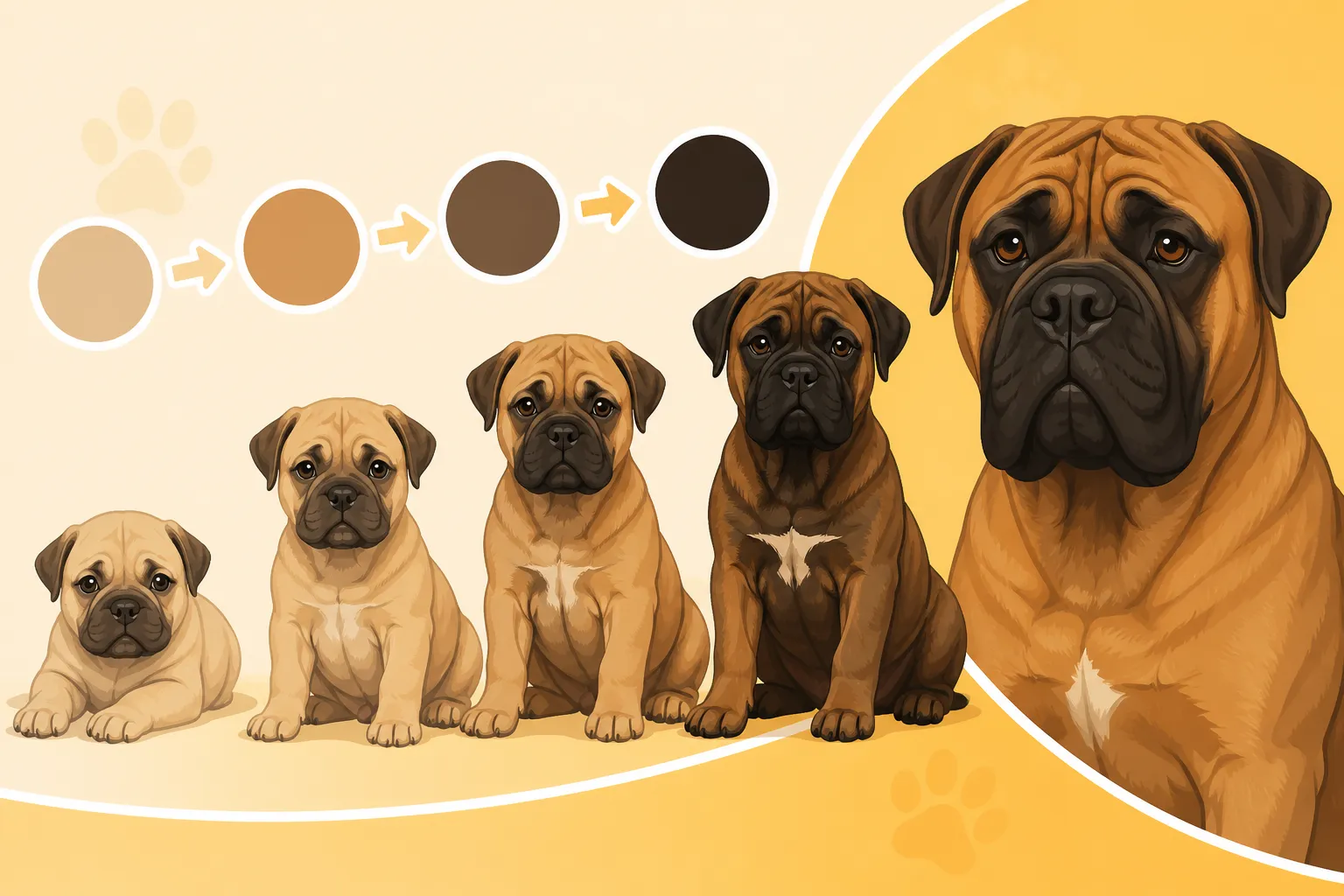
A Bullmastiff puppy’s coat can feel softer or fluffier than the short, dense coat of an adult. As the puppy grows, that coat gradually changes. The emerging adult hair may have a different texture, and its color can appear more even, deeper, or more clearly patterned. This can make it seem as if the puppy has changed color, even when the underlying coat pattern has stayed much the same.
The transition isn’t a dramatic, predictable makeover with a specific finish date. It happens gradually, and individual dogs vary. You might notice a change around the neck, shoulders, or back before the whole coat looks different. A puppy who appears pale in one area may develop a richer-looking shade as the adult coat comes through.
Brindle patterns can be especially confusing during this stage. Short puppy hairs and uneven coat growth may make stripes look faint or broken. Later, the same markings can be easier to see because the coat lies differently or the contrast becomes clearer. That doesn’t necessarily mean the dog has developed a new color.
Why photos and seasons can fool you
Lighting is one of the most common reasons owners think a puppy’s coat has changed overnight. Warm indoor bulbs can make fawn or red hair look more orange; shade can make it seem darker; bright sunlight can wash out the coat or bring out individual highlights. A phone camera may also automatically adjust color and exposure from one picture to the next.
Seasonal shedding can change the coat’s appearance, too. When loose hair comes out, the coat may look smoother and more uniform. When the coat is shedding or growing in, it can look uneven or slightly different in tone. Dirt, dampness, and regular grooming can also affect how the coat looks in the moment, without changing its actual pigment.
If you want a reliable comparison, take photos in the same place and natural light every few weeks. Photograph the whole dog and a close-up of the back and face. Keep notes about the date and whether the puppy has recently been bathed or is shedding. A small photo log is much more useful than comparing a sunny outdoor snapshot with a dim indoor picture.
What tends to stay the same and what may look different
Fawn, red, and brindle as the coat develops
A puppy may look lighter or darker as it matures, but the broad color category generally remains recognizable. A fawn puppy can grow into a deeper-looking fawn, and a red puppy may appear richer or more muted as the adult coat comes through. The line between shades can feel subjective, especially when a dog’s coat falls between the descriptions people commonly use.
Brindle is a pattern rather than a single uniform shade. The base coat and dark stripes may become easier to distinguish over time, but the pattern itself is usually visible early on. Some puppies have more contrast than others. For background on the breed’s history with this pattern, see Why Brindle Was the Original Bullmastiff Color.
It’s also possible for a puppy’s color to be described differently by different people. One person may call a warm, dark fawn coat red; another may describe the same dog as fawn with reddish tones. If you’re choosing a puppy, ask the breeder how they describe the litter and request clear, natural-light photos of both parents and the puppies. Don’t expect a shade label to predict how striking or dark the adult coat will appear.
A practical comparison of common changes
| What you notice | What may explain it | What to check |
|---|---|---|
| The coat looks darker in a new photo | Different lighting, camera settings, or a deeper-looking adult coat | Compare photos taken in the same natural light |
| Brindle stripes seem more visible | Coat texture, growth, or stronger contrast as the puppy matures | Look at the pattern across the back and sides |
| The face looks less dark | The rest of the coat has changed in appearance, or the lighting is different | Compare the muzzle and eye area in consistent light |
| A white chest patch looks smaller | The puppy has grown around it, changing its proportion to the body | Check whether the marking itself has changed |
| The coat looks patchy or unusually thin | Shedding may be one explanation, but skin irritation or hair loss is also possible | Look for redness, itching, scabs, or expanding bare spots |
A coat changing in apparent shade is usually different from actual pigment loss or hair loss. If your puppy’s coat looks patchy, the skin is irritated, or the change is sudden and accompanied by scratching, sores, or discomfort, contact a veterinarian rather than assuming it is ordinary maturation.
How to care for the coat while the color settles
Keep grooming gentle and consistent
Bullmastiffs have short coats, so they generally don’t need elaborate grooming to keep their hair manageable. A gentle brush can lift loose hair and help you notice changes in the coat or skin. Use light pressure, especially with a young puppy who is still learning to enjoy being handled. Brief, calm grooming sessions are often easier than trying to brush a wiggly puppy for a long stretch.
If you’re putting together basic grooming supplies, a suitable brush and puppy-safe shampoo are more useful than products marketed to brighten or alter coat color. Chewy is one place owners may browse for ordinary grooming tools, but the important part is choosing products appropriate for your puppy and using them as directed. A shampoo won’t change the dog’s natural coat pigment.
Bathing too often can dry or irritate the skin, which may make the coat look dull or rough. Brush out surface dirt and bathe when needed, using a product made for dogs. If you’re unsure whether a product is suitable for a young puppy or a dog with sensitive skin, ask your veterinarian before using it. Chewy’s grooming listings can help you compare basic product descriptions, but a color-enhancing claim isn’t a reason to use a product on your puppy.
Track changes without overchecking
It’s easy to scrutinize every small shift when you’re watching a puppy grow. A more relaxed routine can help: take a clear photo every few weeks, check the coat during normal petting or brushing, and note any changes that involve the skin as well as the color. This gives you a useful record without turning every lighting difference into a worry.
When choosing a brush or gentle cleaning cloth, focus on comfort and suitability rather than the promise of a particular shine or shade. Chewy may carry a range of standard coat-care supplies, but no brush, wipe, or shampoo can determine what color your puppy will mature into. Natural coat changes depend on the dog, and grooming is mainly about keeping the skin and coat clean and comfortable.
If the coat change is only a gradual shift in shade or pattern visibility, and your puppy otherwise seems well, it is usually reasonable to bring it up at the next routine veterinary visit. If there’s sudden hair loss, inflamed skin, persistent itching, or a rapidly changing spot, contact your clinic sooner. A veterinarian can distinguish ordinary coat development from a skin problem that needs attention.
Questions to ask when choosing a Bullmastiff puppy
Ask about the parents and the litter
A breeder can often tell you how they describe each puppy’s color and what they’ve noticed as the litter matures. Ask for recent photographs taken in natural light, and, if possible, pictures of the parents. Those details can help you understand the range of shades in the family, though they can’t guarantee the exact appearance of an adult puppy.
You can also ask whether the breeder has noticed any coat or skin concerns in the litter. A straightforward answer should focus on what they’ve observed rather than making promises that a puppy will retain a particular shade. When comparing descriptions such as “red,” “dark fawn,” or “brindle,” remember that shade labels may be interpreted differently.
For a closer look at the range of red shades, see How Dark a Red Bullmastiff Can Be. If you’re looking at a puppy whose coloring seems to sit between two categories, it’s fine to ask how the breeder classifies it—but avoid treating a label as a forecast of exact adult color.
Don’t let color outweigh health and fit
Color can be part of what first catches your eye, but it should be a small part of choosing a puppy. Ask about the parents’ health, the puppies’ veterinary care, their early social experiences, and the breeder’s willingness to answer questions as the dog grows. A puppy’s eventual coat shade is not a substitute for thoughtful breeding or appropriate care.
If a particular pattern interests you, learn how it fits within the breed’s accepted range. For example, Whether a Bullmastiff Can Be Fawn and Brindle Both can help explain how people talk about combinations of base shade and pattern. You can also review Whether White Markings Disqualify a Bullmastiff if a puppy has a visible chest patch and you want to understand how markings are discussed in the breed.
Most Bullmastiff puppies become more clearly recognizable as their adult coat develops, but no one can promise that a puppy will keep precisely the same look it had in a photograph. The sensible expectation is gradual variation in shade, texture, and pattern visibility—not a completely different coat. Keep photos in consistent light, groom gently, and bring any skin or hair-loss concerns to your veterinarian.
Disclaimer
This article is for general informational purposes only and does not constitute professional advice. Laws, prices and regulations vary by location and change over time. Consult a qualified professional for guidance on your specific situation.