Bullmastiff or Mastiff for a Family
Choosing between a Bullmastiff and a Mastiff for your family is not just a question of which dog looks gentler in photos. Both can be devoted companions, but their size, strength, guarding instincts, care needs, and fit with children differ. This guide compares everyday life with each breed so you can decide which one suits your household and handling experience.
Bullmastiff and Mastiff at a glance
Size, strength, and daily handling
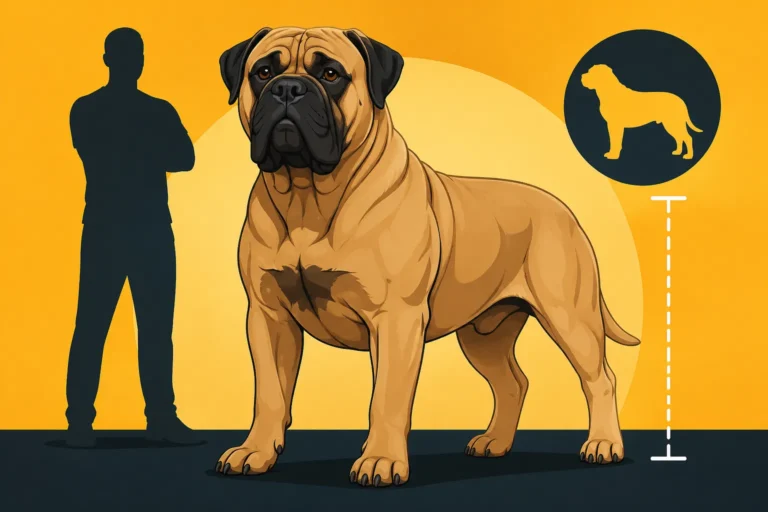
“Mastiff” can refer to several breeds, but people making this comparison usually mean the English Mastiff. Both dogs are powerful, heavy-bodied companions. A Bullmastiff is generally the more compact choice, while an English Mastiff can be substantially larger and heavier. Individual dogs vary, so meet the parents when possible and ask about the adult size of close relatives.
That size difference matters in ordinary moments, not just at the vet. Picture a dog leaning against you while you put on a coat, stepping in front of a visitor, or pulling toward an interesting smell on a walk. A Bullmastiff can be difficult to move if untrained; an English Mastiff may be harder still simply because there is more dog to manage. Both need leash manners and calm handling before they reach full strength.
Think about the physical layout of your home, too. Can the dog pass through hallways without knocking into people or furniture? Is there room for a large bed, a feeding area, and a clear route to the door? If you drive a smaller car, take time to consider how the dog will fit for routine trips, not just the journey home. How a Bullmastiff Differs From a Mastiff
Temperament and family life
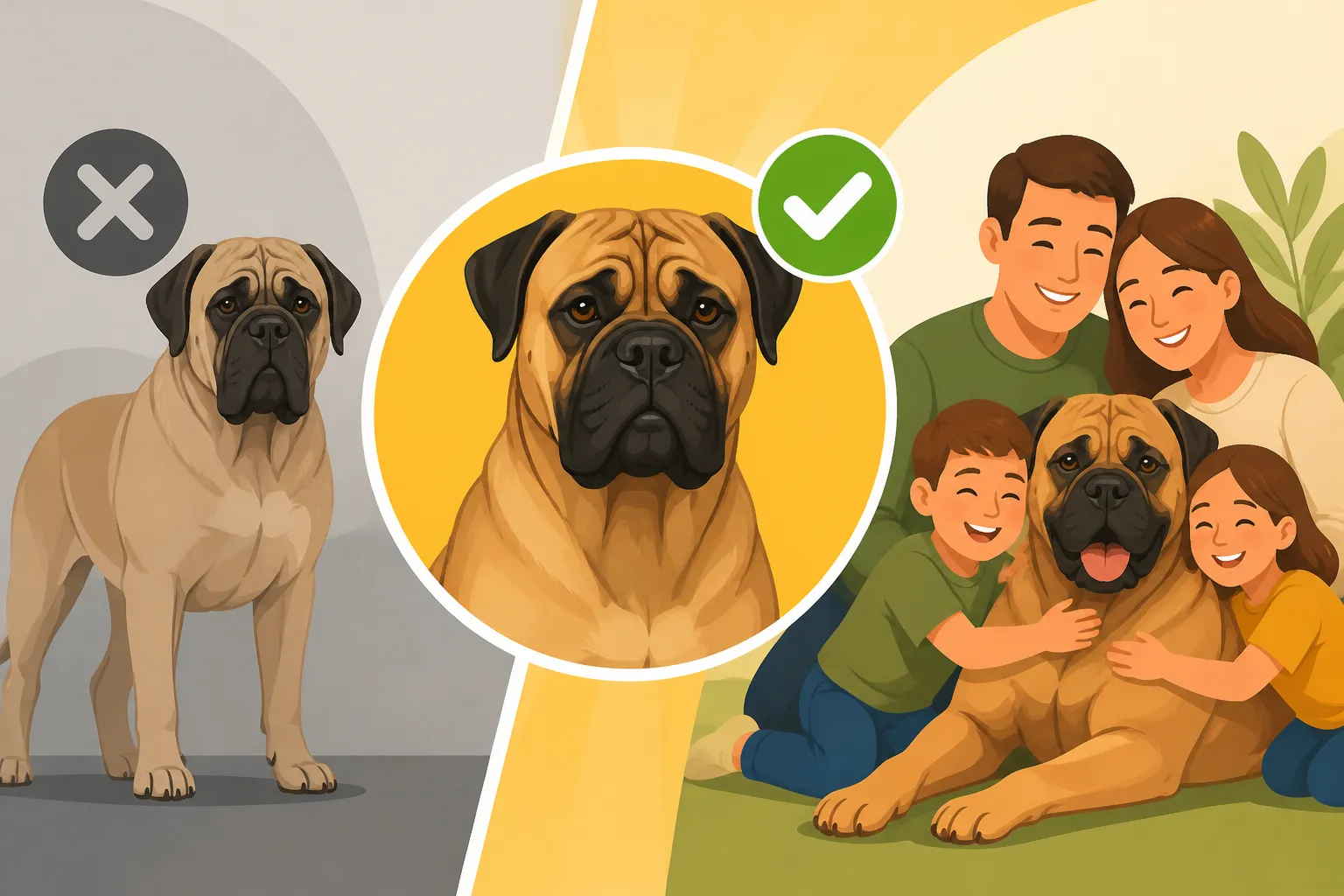
Neither breed is automatically a perfect family dog because of its name or reputation. A Bullmastiff is often described as steady and watchful, while an English Mastiff is often known for a calm, affectionate presence. But breed tendencies are not guarantees. A dog’s socialization, health, temperament, and experience all shape how it responds to children, visitors, other pets, and busy household routines.
Both breeds can be protective, and that can feel reassuring until the dog misreads a situation. A child’s friend arriving noisily, a delivery driver stepping inside, or a relative hugging a family member might draw a dog’s attention. Early, thoughtful introductions and clear household rules help teach the dog what normal family activity looks like. Protection should not be encouraged through intimidation or amateur guard training.
| Family consideration | Bullmastiff | English Mastiff |
|---|---|---|
| Overall size | Large and powerful, usually more compact than an English Mastiff | Often exceptionally large and heavy |
| Handling | Requires reliable leash skills and confident, consistent handling | Requires the same skills, with size adding to the challenge |
| Home space | Needs room to move and rest comfortably | Needs ample space for movement, resting, and household access |
| Family fit | Can suit a family prepared to train and supervise carefully | Can suit a family prepared for the practical demands of a giant dog |
| Key decision | Whether you can manage a strong guardian-type dog | Whether you can manage an even larger dog and its associated needs |
The table is a starting point, not a verdict. A calm, well-socialized English Mastiff may be easier to live with than a poorly matched Bullmastiff, and the reverse can also be true. When comparing dogs, ask about behavior around children, handling, visitors, and other animals rather than relying on breed stereotypes alone.
Choosing for a home with children
How age, supervision, and size change the picture
A dog can be gentle and still accidentally knock over a small child. A large dog turning quickly, standing up, or moving through a narrow space can bump a toddler without any aggression involved. This is a practical concern for both breeds, and the English Mastiff’s greater possible size can make the consequences of clumsy movement more significant. Whether a Bullmastiff Knocks Over Toddlers
Children also need coaching. They should not climb on a dog, disturb it while eating or sleeping, grab its face, or expect it to tolerate every kind of play. Adults should remain close enough to intervene, especially with young children and dogs that are new to the household. A baby gate or a quiet resting space can give the dog a predictable place to decompress when family life gets loud.
If your children are old enough to follow rules, involve them in calm, supervised routines such as preparing a leash or asking the dog to sit before a greeting. Do not make children responsible for walking a powerful dog. Even a friendly dog can lunge at a squirrel or pull toward another dog, and a child may not have the strength to respond safely. For more on the breed’s family behavior, see How a Bullmastiff Behaves With Children.
Matching the dog to your family’s routine
Consider what a normal weekday looks like. Is someone home to supervise introductions and help a new dog settle? Do children often have friends over? Are there other pets, frequent visitors, or narrow stairways? These details can matter more than whether your home has a large yard. A yard does not replace walks, training, companionship, or supervision.
A Bullmastiff may be the more manageable of these two options for a family concerned about sheer size, but “more manageable” does not mean easy. The dog still needs to learn not to jump, barge through doors, or pull on leash. An English Mastiff may be a lovely match for a household that welcomes its giant-dog needs and has the space and experience to handle them, but it is not automatically the better choice simply because it seems laid-back.
Be honest about who will handle the dog when plans change. If the adult who usually walks the dog is sick, can another household member safely take over? If a child drops a snack, can you calmly redirect a dog that is interested in it? Thinking through these ordinary moments before choosing can prevent a difficult mismatch later. Whether a Bullmastiff Suits a Family
Care, training, and the real cost of living with either breed
Training and exercise before the dog is fully grown
Start training as soon as your dog comes home. With a powerful breed, polite behavior is not a finishing touch; it is part of everyday safety. Practice walking on a loose leash, waiting at doorways, settling on a mat, and greeting people without jumping. Reward calm choices and keep lessons short enough that the dog can stay engaged.
A young Bullmastiff may look like a manageable puppy for a while, but its size and strength change quickly. An English Mastiff puppy also grows into a giant adult, so habits learned early become particularly important. Plan for steady socialization: introduce the dog to different people, surfaces, sounds, and ordinary outings in a positive, controlled way. Avoid forcing encounters that make the puppy fearful. A Bullmastiff Is Not Grown Up Until Three
Neither breed is a natural choice for someone seeking a running partner or a dog that needs hours of strenuous exercise. Both benefit from regular, age-appropriate walks, relaxed exploration, and low-impact mental activities. Puppies should not be pushed into intense exercise, and adults need breaks in hot or humid weather. A Bullmastiff’s short muzzle and substantial build can make heat management especially important; the same common-sense caution is wise with an English Mastiff.
Space, supplies, and ongoing expenses
The cost of ownership is more than the initial purchase or adoption expense. Food, routine veterinary care, medication, boarding, training, durable equipment, and unexpected treatment can all add up. A larger dog may need larger portions and appropriately sized equipment, although individual costs depend on health, diet, location, and the dog’s needs. Look at your household budget over the dog’s whole life rather than judging by one monthly expense. What a Bullmastiff Costs Over Its Lifetime
Before bringing either breed home, measure the space for a bed, crate, or vehicle setup rather than assuming a product labeled “large” will fit. Retailers such as Chewy can be one place to compare sizes and product details, but check dimensions carefully and confirm that the item suits your dog’s weight and build. A bed that looks generous in a product photo may leave a giant dog’s legs hanging over the edge.
Think beyond purchases, too. Can your household arrange transport if the dog is unwell or can no longer jump into the car? Is there a plan for boarding or pet care if the dog is too large for a provider’s usual setup? Some owners find it helpful to compare appropriately sized harnesses, ramps, and feeding supplies through retailers such as Chewy, then verify fit and suitability with a veterinarian or experienced trainer where relevant. What a Bullmastiff Needs Every Day, Which Is Less Than You Think
How to make the right choice for your family
Questions to ask before choosing a puppy or adult dog
A responsible breeder or rescue should be willing to discuss the individual dog’s temperament, health history, and needs. Ask how the dog behaves around children, unfamiliar adults, other dogs, handling, and household noises. For a puppy, ask what the parents are like in everyday settings, not only how they look or perform in a show ring. If you are considering an adult, ask about its known behavior and the circumstances in which it has lived.
Meet the dog in a setting where you can observe its natural behavior, and avoid making a decision based only on one brief greeting. Notice whether it can settle, how it responds to gentle handling, and how the people responsible for it manage introductions. A dog that is overwhelmed in a busy first meeting may need time and space; a dog that seems calm should still be assessed carefully rather than assumed to be safe in every situation.
Ask yourself whether the dog’s needs fit your household for the long term. A giant breed can become harder to lift, transport, and care for as it ages. Consider whether your home has slippery floors, stairs, or tight turns, and whether you can make practical adjustments. What Nobody Tells You Before Buying a Bullmastiff
A practical decision checklist
Use these questions to compare the breeds against your real circumstances:
- Can the adults in the household safely manage a strong dog on leash?
- Can you supervise every interaction between the dog and young children?
- Is there enough indoor space for a very large dog to rest and move without constant collisions?
- Can you afford food, veterinary care, training, suitable equipment, and possible emergencies?
- Do you have a plan for hot weather, travel, visitors, and pet care when you are away?
- Are you prepared to train consistently and manage a dog that may be watchful around strangers?
- Have you met individual dogs from both breeds, rather than choosing from appearance alone?
If the main concern is handling and physical size, a Bullmastiff may be the more practical of the two, though it remains a strong, substantial dog. If your family is comfortable with giant breeds and has enough room and experience, an English Mastiff may be a suitable companion. Neither breed is the universally safer or better family choice. The best match is the individual dog whose temperament, training, and needs align with the people who will care for it.
A useful final step is to write down your non-negotiables before meeting dogs: adult size you can handle, behavior around children, health information, and the support you need from a breeder or rescue. It is easy to fall for a relaxed puppy or a soulful adult face. A clear list helps you stay focused on whether the dog will fit your family’s actual life, including the less glamorous parts like drool, muddy paws, veterinary visits, and consistent training.
Disclaimer
This article is for general informational purposes only and does not constitute professional advice. Laws, prices and regulations vary by location and change over time. Consult a qualified professional for guidance on your specific situation.