Whether a Bullmastiff Is More Active Than a Mastiff
A Bullmastiff may seem more energetic than an English Mastiff, especially when young, alert, or out for a walk. But neither breed is usually a high-mileage exercise partner, and age, health, conditioning, and individual temperament matter more than breed labels alone. This guide compares their everyday activity needs and explains how to give either giant dog enough exercise without overdoing it.
Bullmastiff versus Mastiff activity levels
Is a Bullmastiff usually more active?
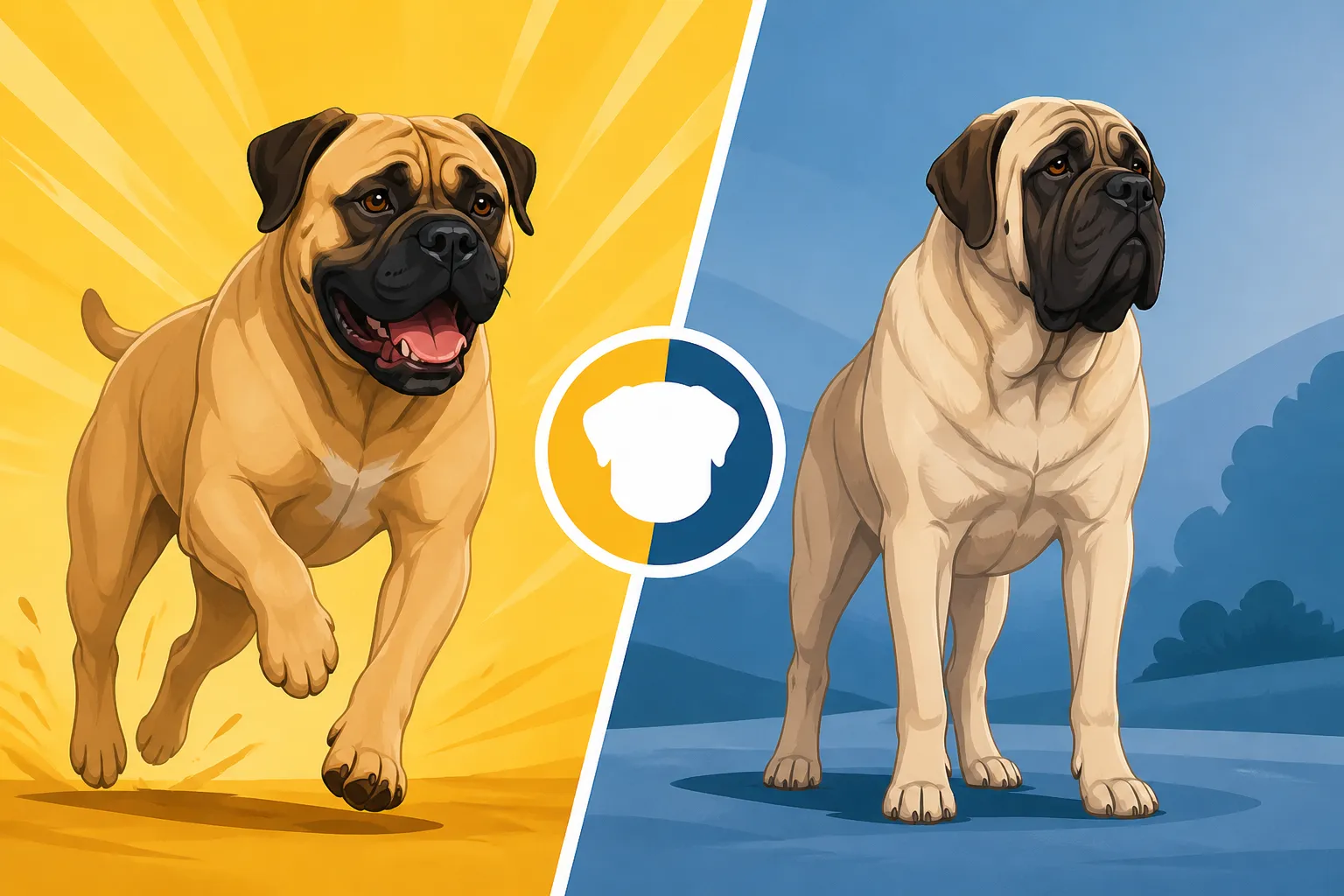
Often, a Bullmastiff comes across as more ready to move than an English Mastiff. Bullmastiffs tend to be compact and muscular, and many are quick to get up, follow their person, investigate a sound, or join a short outing. An English Mastiff is generally heavier and may seem more deliberate, particularly as an adult.
That difference is a tendency, not a promise. A lively English Mastiff can be more active than a laid-back Bullmastiff, and a Bullmastiff that is tired, uncomfortable, or older may prefer a very slow routine. Two dogs of the same breed can have quite different exercise preferences, even when they live in similar homes.
It also helps to separate enthusiasm from endurance. A Bullmastiff may start a walk with plenty of interest, but that does not mean it should keep going for miles. These are powerful, heavy dogs, not natural long-distance running companions. A burst of eagerness is not a reliable measure of how much exercise a dog’s joints and breathing can comfortably handle.
What “more active” looks like in everyday life
In a typical home, the difference may show up in small ways. A Bullmastiff might be quicker to meet you at the door, more inclined to patrol the yard, or more likely to ask for a game after a nap. An English Mastiff might be content to watch household activity from a comfortable spot and need a little more encouragement to get moving.
Neither breed necessarily needs hours of strenuous exercise. Both can be calm indoors when their needs are met, and both may spend a good part of the day resting. What matters is a routine of sensible walks, brief opportunities to explore, and low-impact activities that keep the dog engaged without exhausting it. How Much Exercise a Bullmastiff Needs offers a closer look at what that routine can involve.
| Activity factor | Bullmastiff | English Mastiff |
|---|---|---|
| Typical impression | Often alert, sturdy, and ready for moderate activity | Often slower-moving and more laid-back |
| Exercise style | Short walks, sniffing, and manageable play | Calm walks and gentle, low-impact movement |
| Endurance | Not built for sustained hard exercise | Large body makes prolonged strenuous exercise a poor fit |
| Main caution | Avoid overheating and excessive impact | Avoid excessive strain on a very heavy frame |
| Individual variation | Can range from easygoing to quite lively | Can range from relaxed to surprisingly playful |
The table describes common impressions, not a ranking of every dog. A dog’s age, health, body condition, and past activity can make a bigger difference than its breed. How a Bullmastiff Differs From a Mastiff explains some of the broader differences between the two breeds, beyond exercise alone.
What shapes each dog’s exercise needs
Age, health, and body condition
A young Bullmastiff may have more visible energy than an older English Mastiff, but young dogs need careful exercise rather than long, exhausting outings. Giant-breed puppies are still growing, so repetitive impact, forced running, and strenuous activity can put unnecessary stress on developing bodies. Let a puppy move at its own pace, use play breaks, and ask a veterinarian for advice that fits its growth and health.
Adult dogs also vary. A lean, healthy Bullmastiff that has built up gradually to regular walks may enjoy more activity than an adult English Mastiff carrying extra weight or recovering from an injury. Conversely, joint pain, heart concerns, breathing difficulty, or other health conditions can make a normally enthusiastic dog slow down. If your dog suddenly resists walks, pants more than usual, or seems reluctant to rise, don’t assume it is simply being lazy.
Body condition matters because extra weight makes ordinary movement harder. For a giant dog, even a modest gain can put more load on joints and make warm-weather exercise more uncomfortable. Rather than judging by the number on a scale alone, ask your vet to assess your dog’s body condition and help set a suitable activity plan.
Build and breed history
Bullmastiffs and English Mastiffs are both large, strong dogs, but they are not built exactly alike. Bullmastiffs are generally more compact and can appear more nimble in everyday movement. English Mastiffs are typically heavier, and that mass can make quick turns, repeated jumping, or long periods of hard activity especially demanding.
Breed history can help explain the difference in impression, but it shouldn’t be treated as an exercise prescription. A dog’s working background does not mean every modern Bullmastiff needs intensive training or long runs. Similarly, an English Mastiff’s size does not mean it should be kept inactive. Regular, comfortable movement helps both breeds maintain mobility and a healthy routine.
A yard can offer room to sniff and stroll, but it doesn’t automatically meet a dog’s exercise or social needs. A few minutes outside alone is not always a substitute for a walk with the chance to explore new scents and practise calm leash manners. Whether a Bullmastiff Needs a Yard explains why a yard can be useful without being essential to a well-planned routine.
Temperament and daily routine
Some Bullmastiffs are naturally more watchful and responsive to activity around the home. They may get up whenever someone moves or want to accompany family members from room to room. Others are content to nap and only show interest when there’s a clear invitation. English Mastiffs can be similarly varied: many are placid, but individual dogs may enjoy play and walks more than their size suggests.
The household routine also makes a difference. A dog that has regular, predictable walks may settle more easily than one whose outings happen sporadically. Short, calm activities spaced through the day can suit both breeds better than saving all exercise for one strenuous session. Mental activity counts too: sniffing, exploring at a comfortable pace, and practising familiar cues can make a short outing more satisfying.
Pay attention to the dog in front of you. If your Bullmastiff is eager at the start but slows down, lags behind, or lies down, take a break rather than encouraging it to push on. If your English Mastiff is reluctant to begin, check for discomfort and try a quieter route or a shorter walk before concluding that it needs less activity.
Planning a safe routine for either breed
Build walks gradually and watch the dog
There is no single daily distance that suits every Bullmastiff or English Mastiff. Start with a manageable walk at a comfortable pace, then adjust based on how the dog moves during the outing and recovers afterward. A dog that is stiff later in the day, unusually tired the next morning, or reluctant to go out may need a gentler plan and a veterinary check.
For many dogs, a relaxed walk is more appropriate than a brisk march. Give them time to sniff, pause, and take breaks. A comfortable harness and a leash you can handle securely can help keep walks controlled, especially while a large dog is still learning not to pull. How Far a Bullmastiff Should Walk Daily discusses how to think about distance in relation to the individual dog.
Avoid using a dog’s size as a reason to test its endurance. Long runs beside a bicycle, repeated stair climbing, or vigorous fetch on hard ground may be too demanding, especially for a puppy, an overweight dog, or one with joint concerns. If you want to increase your dog’s activity, make changes gradually and discuss any health-related limits with your veterinarian.
Add low-impact enrichment
Exercise does not have to mean a long walk. Gentle play in a secure area, slow exploring on a new route, and brief training sessions can add variety without putting the dog through repeated high-impact movement. Simple activities such as practising a wait at the door or encouraging a dog to find a familiar toy can also give it something to think about.
Food puzzles and other enrichment items may help on days when the weather is poor or a dog needs a calmer routine. If you’re comparing puzzle toys, Chewy is one place owners may look through different types and sizes; choose an option appropriate for the dog’s chewing style and supervise at first. The goal is not to keep a giant dog constantly busy, but to offer comfortable engagement alongside rest.
A young or easily excited dog may benefit from brief play that ends before it becomes frantic. For instance, a few minutes of gentle tug with clear start-and-stop cues may be more suitable than chasing a ball repeatedly across a slippery lawn. For more ideas about balancing rest, movement, and engagement, see What a Bullmastiff's Ideal Day Looks Like.
Adjust for heat, surfaces, and recovery
Warm weather deserves particular care. Bullmastiffs have short muzzles compared with many dogs, and heavy, muscular bodies can make heat management more challenging. English Mastiffs are also large dogs that can struggle in hot conditions. Choose cooler parts of the day, bring water, keep the route shaded when possible, and turn back if your dog appears uncomfortable. When It Is Too Hot to Walk a Bullmastiff covers the signs and precautions to keep in mind.
Pay attention to the ground, too. Hot pavement can injure paws, while slippery floors and uneven terrain can make movement harder for a large dog. At home, rugs or non-slip mats can help a dog move more confidently across slick surfaces. After a walk, allow time to rest and drink rather than immediately starting another active game.
If you are choosing enrichment supplies for indoor days, Chewy may be useful for comparing options such as treat puzzles or durable toys, but the dog’s size and chewing habits should guide your choice. A toy that looks sturdy may still be unsuitable for an individual dog, so supervise use and remove anything that breaks or becomes small enough to swallow.
Choosing the right expectations for your dog
Match activity to the individual, not the breed stereotype
A Bullmastiff may be more energetic than an English Mastiff in a particular household, but it is not safe to assume that every Bullmastiff needs more exercise. Look for consistent signs: willingness to start, comfortable movement, normal breathing, and a relaxed recovery afterward. A dog that is keen to go out but struggles to keep pace is not necessarily asking for more distance.
It can help to keep a simple record for a couple of weeks: note the length and conditions of walks, how the dog behaved, and whether it seemed stiff or unusually tired afterward. This doesn’t need to become a complicated tracking project. Even a few observations can help you spot patterns and explain them clearly at a veterinary appointment.
For a rescue dog or a dog with an unknown activity history, begin conservatively. A dog may seem energetic on the first outing because it is excited, then feel sore later. Give it time to settle into a routine before making big changes. If the dog has a diagnosed condition or a history of pain, let its veterinary team help determine appropriate activity.
Make the home routine practical
The best routine is one you can keep up consistently. A household with a Bullmastiff might plan a gentle morning walk, a short sniffing break later in the day, and a few minutes of calm play indoors. An English Mastiff may enjoy a similar schedule with shorter outings or longer rest periods, depending on age and condition. The right plan may change from season to season and as the dog grows older.
For a rainy or very hot day, replace a long outing with a brief toilet break and low-impact indoor enrichment. Chewy can be one place to browse for puzzle feeders or other activity options, but avoid choosing a toy just because it is marketed for large dogs. Check that it is appropriately sized, easy to clean, and suitable for your dog’s chewing habits.
If you’re deciding between the breeds, don’t choose a Bullmastiff solely because you want a more active dog. Both breeds can be affectionate, calm companions, and neither should be expected to provide an intense daily workout. Consider the size and strength you can comfortably manage, the dog’s health needs, your climate, and the time you can reliably give to walks and training. For a broader comparison, Whether a Bullmastiff Is Smaller Than a Mastiff can help clarify how size fits into the decision.
The practical answer is that a Bullmastiff is often somewhat more alert or lively than an English Mastiff, but the difference is usually about moderate daily activity, not athletic stamina. Choose a steady, low-impact routine, adjust it to your dog’s condition, and let comfort and recovery—not breed reputation—set the pace.
Disclaimer
This article is for general informational purposes only and does not constitute professional advice. Laws, prices and regulations vary by location and change over time. Consult a qualified professional for guidance on your specific situation.