Whether a Bullmastiff Is Smaller Than a Mastiff
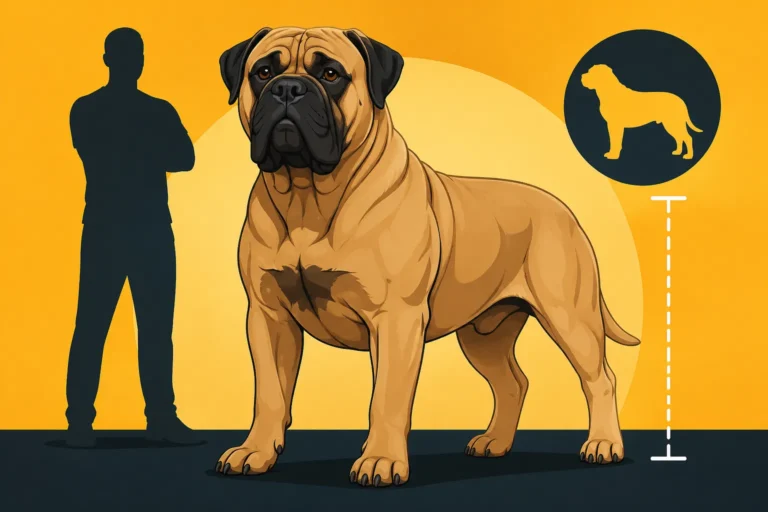
A Bullmastiff is smaller than an English Mastiff, but “smaller” can still mean a dog who weighs as much as an adult person and needs plenty of room at home. The difference shows up in height, weight, strength, and everyday handling—not just in photos. This guide compares the breeds’ typical sizes and explains what those measurements mean for living with either one.
How much smaller is a Bullmastiff than a Mastiff
Typical height and weight
The Bullmastiff is a large, powerful dog. The English Mastiff is generally taller and substantially heavier. Breed standards describe typical adult ranges, not guaranteed measurements: an individual dog can fall outside them, and size varies with sex, genetics, body condition, and overall build.
| Breed | Typical male size | Typical female size | General impression |
|---|---|---|---|
| Bullmastiff | About 25 to 27 inches tall and 110 to 130 pounds | About 24 to 26 inches tall and 100 to 120 pounds | Large, muscular, and compact |
| English Mastiff | At least about 30 inches tall, often weighing considerably more than a Bullmastiff | At least about 27.5 inches tall, often weighing more than a female Bullmastiff | Very large, tall, and massive |
These figures are useful for comparison, not a scorecard for an individual dog. A lean Bullmastiff may look smaller than a heavy one, while a particularly large Bullmastiff can overlap in weight with a smaller female Mastiff. Height is often the more obvious difference: an English Mastiff typically stands noticeably taller, with a longer frame and a greater overall sense of scale.
If you want a closer look at the Bullmastiff’s own measurements, see How Much a Bullmastiff Weighs and How Tall a Bullmastiff Stands. For the broader breed comparison, How a Bullmastiff Differs From a Mastiff looks beyond size to other ways the two dogs can differ.
Why weight does not tell the whole story
Two dogs can weigh the same and still occupy very different amounts of space. The Bullmastiff’s build tends to look compact and muscular, with a broad chest and a substantial head. The English Mastiff is usually taller and longer-bodied, and its greater scale can affect how it fits through a doorway, lies across a room, or settles beside the sofa.
For example, imagine a Bullmastiff and a relatively small female Mastiff both weighing around the same amount. The Bullmastiff may appear more densely built, while the Mastiff may look taller and longer. Their shared weight does not mean they need identical beds, harnesses, or room to turn around comfortably.
It is also easy to confuse “big” with “overweight.” A Bullmastiff should not be made heavy simply to look more imposing. You should be able to feel the ribs under a light covering and see a waist from above, though the outline can be subtle in a broad, muscular dog. Your veterinarian can help assess body condition, especially if your dog’s coat, loose skin, or powerful build makes visual judgment difficult.
How the size difference affects daily life
Space at home and getting around
A Bullmastiff can live in a smaller home than its imposing appearance might suggest, provided the dog has room to move safely, regular opportunities to go outside, and a comfortable place to rest. The same practical question applies to an English Mastiff, but its extra height and mass may make narrow hallways, tight staircases, and crowded rooms harder to manage. Neither breed needs a mansion, but both need people to plan around a very large dog.
Think about the pathways your dog uses every day. Can it turn around without knocking into a side table? Is there enough room for it to lie down without blocking the main route through the room? If the dog is young and still growing, will the space continue to work when it reaches adult size? These ordinary details matter more than the size of the yard alone.
A Bullmastiff might be easier to accommodate than an English Mastiff, but it is not automatically an apartment-sized dog. Rules about pets, elevator access, shared hallways, and a dog’s ability to settle quietly all matter. For more on the practical side, read Whether a Bullmastiff Suits an Apartment. If you are comparing the two breeds in a larger context, The Bullmastiff Against the Mastiff is another useful starting point.
Handling, exercise, and everyday control
The smaller breed is not necessarily easy to handle. A Bullmastiff can still pull hard, lean against a person, or decide to stop walking. Because the dog is powerful, good leash habits and polite behavior around visitors are much easier to teach while it is young, before its adult strength makes everyday situations harder to manage.
The Mastiff’s greater size can raise the stakes further. Helping a giant dog into a vehicle, guiding it through a busy doorway, or supporting it when it has trouble standing may require more space and more physical assistance. In either breed, it is wise to teach calm handling early and to plan for the possibility that an older dog may eventually need help with stairs, slippery floors, or getting into a car.
Both breeds need regular, sensible activity, but neither should be treated like a distance-running partner just because it is large. Walks, gentle play, and age-appropriate enrichment are usually more practical than strenuous exercise, particularly in hot weather or during puppyhood. Large bodies put extra demands on joints, so keep a growing dog lean and ask your veterinarian what exercise suits its age and health.
Choosing equipment for a giant-breed dog
Beds, crates, and doorways
A Bullmastiff may need less floor space than a Mastiff, but both breeds need equipment chosen for their actual adult dimensions—not just their puppy size. A bed should let the dog stretch out without hanging over the edges, and it should be sturdy enough to keep its shape under a heavy body. Measure your dog while it is lying in its usual sleeping position, then check the bed’s usable sleeping surface rather than relying only on the product name.
Crates need careful planning, too. A crate should allow the dog to stand, turn around, and lie down comfortably, while still being secure and manageable in your home. A crate that fits a Bullmastiff puppy may become far too small as the dog grows. Before buying, measure the intended space and consider whether the crate can fit through your doors and be positioned without blocking a walkway.
When browsing beds or other supplies through a retailer such as Chewy, compare the item’s interior measurements with your dog’s measurements rather than choosing based on a generic “large” or “giant” label. The label may not reflect how much room a particular dog needs, especially if it sprawls out to sleep. This kind of measuring is useful for the Bullmastiff and even more important when planning for the larger Mastiff.
Cars, stairs, and surfaces
A dog’s size matters every time it gets into a vehicle. A Bullmastiff may be easier to load than an English Mastiff, but neither breed is a natural fit for every car. Check the opening height, the available floor space, and whether the dog can ride safely without being squeezed into an awkward position. A ramp can help reduce jumping, particularly for an older dog or one with joint discomfort.
Inside the home, smooth floors can be difficult for a heavy dog to navigate. Rugs or runners can give paws better traction on hardwood or tile, while sturdy gates can help keep a dog away from stairs when necessary. If you are weighing the costs and logistics of transport, see Whether a Bullmastiff Needs a Bigger Vehicle. The same planning questions apply to a Mastiff, with even more attention to space and lifting needs.
Chewy can be one place to compare practical items such as beds, ramps, and nonslip runners, but the important part is matching the product to your dog and your home. Check dimensions, weight guidance, and the surface the product is designed for. A ramp that looks suitable online may be too narrow, too steep, or difficult to position beside your particular vehicle.
Which breed may suit your household better
When a Bullmastiff’s smaller size helps
If you love the Mastiff look but are concerned about fitting a giant dog into your everyday routine, a Bullmastiff may feel more manageable. It is still a substantial commitment, but a somewhat shorter, lighter body can make it easier to guide through a doorway, fit into a vehicle, or find a suitable bed. Those differences can be meaningful when you are carrying groceries through a narrow entry or trying to create a clear path through a modest living room.
That does not mean the Bullmastiff is a low-effort alternative. Its strength, drooling, shedding, and need for early training remain part of the picture. You will still need to plan for large-breed veterinary care, durable supplies, and a dog whose body can occupy much of a sofa or stretch across a hallway. The Bullmastiff is smaller than the Mastiff, but it is not small in any everyday sense.
A good fit depends on more than square footage. Consider whether you can safely control a strong adult dog, whether your household can accommodate a large bed and crate, and whether your schedule allows for regular walks and training. If you are deciding between breeds, spend time around adult dogs—not just puppies—and notice how their size feels in the kind of home and routine you actually have.
When a Mastiff’s extra size changes the decision
An English Mastiff may be the better match for someone who specifically wants a taller, heavier giant breed and is prepared to organize daily life around that scale. Its size can be a striking part of its appeal, but the practical consequences are real: more room may be needed for resting and turning, transporting the dog can be more complicated, and supporting it in old age may take additional planning.
A breeder or rescue can help you understand the likely size of an individual dog, but no one can promise an exact adult weight. Ask about the parents’ size, the dog’s growth, and any health concerns that could affect mobility. For either breed, prioritize sound structure and healthy body condition over an impressive number on the scale. A healthy, comfortable dog is a better companion than an oversized dog whose weight strains its joints.
If the size question is part of a broader decision about home suitability, Whether a Bullmastiff Is Too Much Dog for Most Homes can help you think through the commitment. And if you are trying to picture the day-to-day reality rather than just the measurements, What Nobody Tells You Before Buying a Bullmastiff offers another relevant perspective.
Disclaimer
This article is for general informational purposes only and does not constitute professional advice. Laws, prices and regulations vary by location and change over time. Consult a qualified professional for guidance on your specific situation.