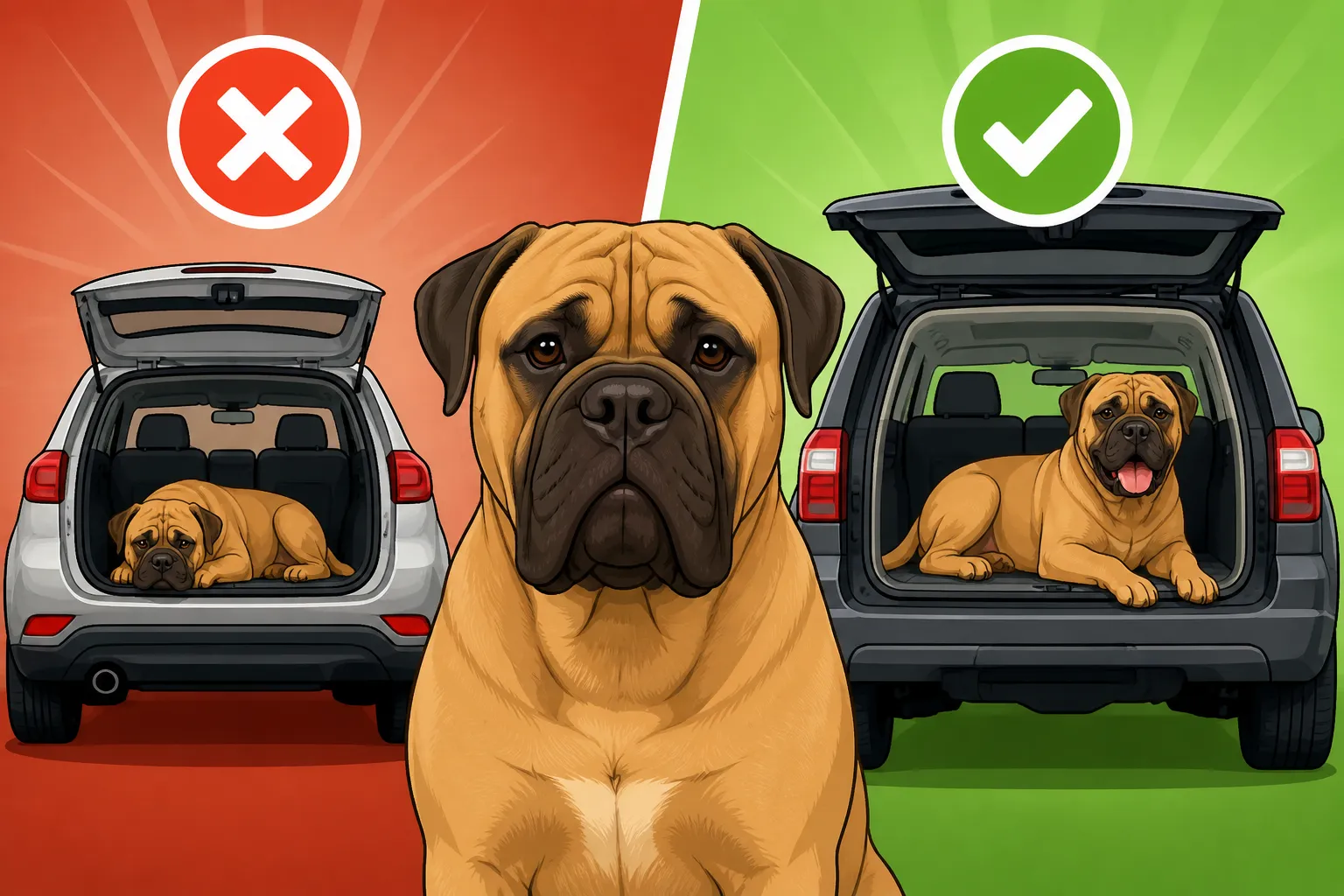
Whether a Bullmastiff Needs a Bigger Vehicle
One of the biggest surprises for new Bullmastiff owners, or even those considering bringing one of these magnificent dogs home, is just how much space they actually take up. It’s not just their weight, which is considerable, but their sheer volume, their sturdy build, and their desire to stretch out that can make car rides a real challenge. You might be wondering if your current family vehicle is even going to cut it, or if a whole new set of wheels is in your future. This guide is all about navigating the practicalities of vehicle ownership when you share your life, and your car, with a Bullmastiff.
The Sheer Reality of Bullmastiff Size and Space
Let's be real, a Bullmastiff isn't a miniature poodle you can tuck into a carrier under your arm. These are truly giant dogs, and their physical presence dictates a lot about your living arrangements, including your mode of transportation. Owners often underestimate just how much space a Bullmastiff needs, not just to stand or sit, but to comfortably lie down and stretch out, which is crucial for their joint health and overall well-being.
How a Bullmastiff's Dimensions Impact Vehicle Choice
When we talk about a Bullmastiff, we're discussing a dog that can easily stand 25 to 27 inches tall at the shoulder for males, and weigh anywhere from 110 to 130 pounds, sometimes even more. Females are a little smaller, but still substantial at 24 to 26 inches and 100 to 120 pounds. But it's not just height and weight that matter; it's their length and breadth too. Picture your Bullmastiff lying down, completely relaxed, taking up what feels like an entire sofa. Now imagine trying to fit that magnificent sprawl into a confined space.
A Bullmastiff needs enough floor space to comfortably stretch out, turn around, and settle without being cramped. If they're forced to curl up tightly for long periods, it's not only uncomfortable but can exacerbate joint issues, which are already a concern for large breeds. Think about their head, too – that broad skull and muzzle, often with those lovely jowls, needs overhead clearance. A car that feels spacious to a human might feel like a tiny box to a Bullmastiff. This isn't just about their comfort for a quick trip to the vet; it's about minimizing stress and preventing physical discomfort on any journey.
More Than Just Weight: Understanding Their Body Shape
It’s easy to focus on the numbers – "130 pounds!" – and think about how that translates to seat capacity. But a Bullmastiff's unique body shape adds another layer to the vehicle puzzle. They are dense, muscular, and broad. Their deep chests mean they need plenty of width, and their solid bone structure makes them less flexible than some leaner, more agile breeds. They aren't going to fold themselves into a tight space.
Consider the robust build of a Bullmastiff. They have a powerful, muscular body that is built for strength and endurance, not for squeezing into small gaps. This means that even if the floor space looks adequate, the vertical and horizontal clearance might not be. If they can’t stand up, turn around easily, or lie flat on their side with their legs extended, the vehicle simply isn’t big enough. They also tend to lean against things, which can be an issue if there isn't enough structural support in the car for them to brace themselves safely. Their short muzzles mean Why a Bullmastiff's Short Muzzle Cannot Cool It, and good airflow within the vehicle is non-negotiable, meaning they can't be crammed into a corner without proper ventilation.
Evaluating Your Current Vehicle's Capacity
So, you've got your Bullmastiff in mind. Now it's time to take an honest look at your current ride. It's not about making a snap judgment, but carefully considering the actual usable space and how it aligns with your dog's needs, both now and in the future.
Sedan vs. SUV vs. Minivan: A Practical Look
Let's break down the common vehicle types and their compatibility with a Bullmastiff:
- Sedans: Generally, sedans are a tough sell for Bullmastiffs. While some might technically "fit" in the back seat, it's rarely comfortable or safe for them, especially for longer journeys. The sloping rooflines often restrict head space, and the footwells don't offer much room for sprawling. Getting a large, heavy dog in and out of a sedan can also be a struggle, placing strain on both you and your dog. You'll quickly realize Whether a Bullmastiff Fits in a Sedan is a common question, and the answer is usually "not well."
- SUVs (Sport Utility Vehicles): This is where things start to look more promising. Mid-size to full-size SUVs often provide ample cargo space in the rear, especially with the back seats folded down. The higher roofline gives them much-needed headroom, and the flat floor of many cargo areas is ideal for a large crate or a comfortable dog bed. However, even within SUVs, there's a huge range. A compact SUV might still be too small, whereas a larger model like a Chevrolet Tahoe, Ford Expedition, or a Toyota Highlander (with seats down) could be perfect.
- Minivans: Don't let the "family car" label fool you; minivans are often unsung heroes for large dog owners. They typically offer the most interior volume, with incredibly versatile seating arrangements that allow for huge, flat cargo areas. The low step-in height can also be a huge advantage for Bullmastiffs, making entry and exit much easier compared to some higher-riding SUVs. Think about a Chrysler Pacifica or a Honda Odyssey – these can transform into spacious dog transportation units.
- Pickup Trucks: While they offer an open bed, transporting a Bullmastiff in an open truck bed is inherently dangerous and generally not recommended. If you have a crew cab, the back seat area can sometimes be sufficient for very short trips, but it still often lacks the consistent flat floor and full climate control for optimal comfort and safety.
Here's a quick comparison table:
| Vehicle Type | Pros for Bullmastiffs | Cons for Bullmastiffs | Overall Suitability |
|---|---|---|---|
| Sedan | Fuel efficient, easy to park | Insufficient space, difficult entry/exit, safety concerns | Poor |
| Compact SUV | Better ground clearance, some cargo space | Often still too small, limited crate options, moderate entry | Limited |
| Mid-Size/Full-Size SUV | Ample cargo space, good headroom, flat floor with seats down | Higher entry height, can be less fuel efficient | Good |
| Minivan | Excellent interior volume, low entry height, flexible seating | May not appeal aesthetically to all, less rugged | Excellent |
| Crew Cab Pickup | Large back seat (cab), secure bed with cap (if installed) | Open bed unsafe, cab often still cramped for long trips | Moderate (cab only) |
Trunk Space vs. Backseat: Where Will Your Bullmastiff Ride?
This is a critical decision that impacts both your Bullmastiff's safety and your peace of mind. For a Bullmastiff, the back seat of a standard car, even an SUV, is often not ideal without proper restraints and removal of anything that could cause injury. The cargo area, specifically behind the second row of seats in an SUV or minivan, tends to be the best spot.
Why the cargo area? It typically provides a larger, flatter, more open space. This allows for a large, properly secured dog crate – and believe me, What a Crate for a Bullmastiff Costs can be substantial because of their size, but it’s worth every penny for safety. A crate provides a secure, contained environment, protecting your dog from sudden stops or impacts, and protecting your car's interior from any "Bullmastiff moments." Without a crate, a high-quality, crash-tested seatbelt harness is the next best option, securing them to the seat itself. Trying to cram a Bullmastiff into a tight backseat, even with a harness, can lead to frustration for them and potential damage to your car's upholstery or doors. Plus, let's face it, a stressed or uncomfortable Bullmastiff in a confined space can be a messy or vocal affair, making the journey harder for everyone.
Safety First: Securing Your Bullmastiff in a Vehicle
No matter what vehicle you choose, securing your Bullmastiff is non-negotiable. An unrestrained Bullmastiff, even the most well-behaved one, is a massive projectile in an accident. Their weight and mass mean that even a minor fender bender can turn into a serious, even fatal, incident for your dog, or worse, for human passengers.
Crates, Harnesses, and Barriers: What Works for a Bullmastiff
When it comes to keeping your Bullmastiff safe in the car, you have a few primary options, each with its own benefits:
- Crash-Tested Dog Crates: For a Bullmastiff, a well-sized, crash-tested dog crate is arguably the safest option. It provides a secure enclosure that can withstand impacts and prevents your dog from becoming a dangerous projectile. When selecting a crate, make sure it’s large enough for your Bullmastiff to stand, turn around, and lie down comfortably. This often means you're looking at the very largest crates available. Brands like Gunner Kennels or Ruffland Kennels are often recommended for their durability and crash-test ratings, though they are an investment. The crate itself needs to be secured within your vehicle's cargo area, often with straps, to prevent it from shifting. This is why having ample, flat cargo space is so important.
- Vehicle Safety Harnesses: If a crate isn't feasible for your vehicle or particular travel needs, a crash-tested safety harness can be a good alternative. These harnesses are designed to attach to your car's seatbelt system, restraining your dog and distributing impact forces in case of a collision. It's crucial to choose a harness specifically rated for safety, as many standard harnesses are not. Look for certifications or independent crash test results. Brands like Kurgo or Sleepypod often have well-regarded options. Even with a harness, your Bullmastiff will still take up a lot of space in the backseat, potentially limiting passenger room.
- Carriers and Barriers (Less Ideal for Bullmastiffs): While mesh barriers or backseat hammocks can contain smaller dogs and protect your vehicle's interior, they offer minimal to no crash protection for a dog the size of a Bullmastiff. A barrier might prevent them from climbing into the front seat, but it won't stop them from being thrown forward with immense force in an accident. Similarly, soft carriers are completely inadequate for a Bullmastiff's size and weight.
The Risks of an Unsecured Giant Dog
It's impossible to overstate the dangers of an unsecured Bullmastiff in a vehicle. Think about the physics: a 120-pound Bullmastiff, even at a low-speed impact, can exert hundreds, if not thousands, of pounds of force.
- Injury to the Dog: In a sudden stop or collision, an unsecured Bullmastiff can be severely injured. They could be thrown into the dashboard, seats, or even out of a window. Broken bones, internal injuries, and head trauma are very real possibilities.
- Injury to Occupants: This is a tough one to consider, but it's vital. That same Bullmastiff, acting as a projectile, can cause devastating injuries to human passengers. Imagine a powerful blow from a 120-pound dog hitting you from behind.
- Distraction: An unrestrained dog can also be a massive distraction to the driver. They might try to get into the front seat, bark at something outside, or even climb into your lap. Even a momentary lapse of attention can lead to an accident. Keeping them safely contained allows the driver to focus on the road.
- Interference with Rescue Efforts: In the unfortunate event of an accident, emergency responders might be hesitant or unable to access injured occupants if there's a large, potentially stressed or injured dog loose in the vehicle.
Ensuring your Bullmastiff is properly secured is not just about convenience; it's a critical safety measure that protects everyone in the car.
Practical Considerations for Bullmastiff Owners on the Go
Beyond just fitting your Bullmastiff into a vehicle, there are daily practicalities that really make a difference. Owning a giant breed means thinking ahead about accessibility and their physical needs during travel.
Entry and Exit: Ramps and Lifting Aids
One of the biggest struggles, especially as your Bullmastiff grows and certainly as they age, is getting them into and out of the car. Bullmastiffs are heavy, and repeatedly jumping in and out, particularly from a higher SUV, can take a toll on their joints. This is where aids become invaluable.
- Car Ramps: A sturdy car ramp is a lifesaver. It allows your Bullmastiff to walk up into the vehicle rather than jumping. This is particularly important for growing puppies, whose growth plates are still open, and for senior dogs who might be dealing with Why an Aging Bullmastiff Struggles to Rise due to arthritis or other mobility issues. Look for ramps that are wide enough, have good traction, and can support your Bullmastiff's weight. Some ramps fold or telescope for easy storage. Knowing What a Car Ramp for a Bullmastiff Costs might surprise you, but it’s an investment in their long-term joint health.
- Lifting Harnesses/Slings: For Bullmastiffs who can't use a ramp or need a little extra help, a lifting harness or sling can provide crucial support. These devices allow you to assist in lifting their hindquarters or front end, reducing the strain on both you and your dog. They are also incredibly helpful for everyday mobility around the house, especially for senior Bullmastiffs.
- Vehicle Step-In Height: This is where minivans often shine. Their lower ground clearance means a much smaller step-in height compared to many SUVs. Even a few inches can make a huge difference in ease of entry and exit for a large, heavy dog, especially if they have any joint discomfort.
Regular trips to the vet, or even just fun outings, should be as stress-free as possible. Thinking about how your Bullmastiff will get into and out of the car will save you a lot of back pain and your dog a lot of joint strain.
Temperature Control and Airflow in Your Vehicle
Bullmastiffs, with their short muzzles and dense bodies, are particularly susceptible to overheating. This isn't just a matter of comfort; it's a serious health concern. Why Eighty Degrees Is Dangerous for a Bullmastiff isn't an exaggeration – heatstroke can be deadly. Proper temperature control and airflow in your vehicle are absolutely critical.
- Adequate Air Conditioning/Heating: Ensure your vehicle's climate control system is robust enough to keep the entire cabin, especially the cargo area where your Bullmastiff might be, at a comfortable temperature. On hot days, blasting the AC is essential. On cold days, a warm (but not stuffy) environment is equally important.
- Ventilation: Even with AC, good airflow is key. If your Bullmastiff is in a crate, make sure the crate isn't pushed right up against the back of the seats, blocking crucial vents. Sometimes, opening a window slightly (while still ensuring safety) can help with air circulation, but be mindful of road debris and the Bullmastiff's ability to stick their head out.
- Parking in the Shade and Timed Stops: Never, ever leave your Bullmastiff in a car, even for "just a minute," on a warm day. The temperature inside a vehicle can skyrocket incredibly quickly. How Fast a Bullmastiff Overheats in a Car is faster than most people realize. If you must make a stop, ensure it's brief, in the shade, with windows down, and ideally with the car running and AC on. For longer trips, plan frequent stops to allow your Bullmastiff to stretch, drink water, and cool down outside the car.
Ensuring your Bullmastiff stays cool and comfortable prevents not just discomfort but potentially life-threatening situations.
Long-Term Vehicle Needs as Your Bullmastiff Ages
While considering your Bullmastiff's current size is important, planning for their senior years is an act of love and responsibility. Their needs will evolve, and your vehicle might need to keep pace.
The Challenges of Mobility for Senior Bullmastiffs
As Bullmastiffs reach The Age a Bullmastiff Is Considered Senior, typically around six or seven years old, their mobility often begins to decline. Arthritis, hip and elbow dysplasia, and general stiffness are common. What was once an easy jump into the car becomes a painful struggle, or even an impossibility.
- Decreased Strength and Flexibility: An aging Bullmastiff might lose muscle mass, making it harder for them to support their own weight. Their joints might be less flexible, making tight turns or awkward positions uncomfortable. This means the generous, flat space in your vehicle becomes even more critical. They need room to lie down fully without bending their limbs into uncomfortable angles.
- Increased Need for Ramps and Assistance: If you weren't using a ramp before, you almost certainly will need one for a senior Bullmastiff. Even a few steps can be arduous. Having a lifting harness readily available becomes essential for times when they stumble or need help getting settled.
- Comfort is Key: An orthopedic dog bed placed in the cargo area can provide much-needed joint support and comfort during car rides. While What a Bed for a Bullmastiff Costs can vary, a good quality orthopedic bed will make a noticeable difference in their comfort levels on the road. Companies like Chewy often have a wide selection of orthopedic options.
Thinking about these changes proactively allows you to adapt and ensure your Bullmastiff remains a comfortable, included member of the family, even when travel becomes more challenging.
Planning for the Future: Bigger Isn't Always Just About Size
When you're choosing a vehicle, or reassessing your current one, think beyond just the square footage needed for a young, agile Bullmastiff. Consider the entire lifespan of your dog, which can be heartbreakingly short at The Median Bullmastiff Lives Eight and a Half Years.
- Accessibility over Aesthetics: You might have always pictured yourself in a sleek sedan or a sporty coupe, but the reality of Bullmastiff ownership often means prioritizing function and accessibility. A minivan or a larger SUV might not be your dream car, but it will undoubtedly be your Bullmastiff's dream ride.
- Storage for Gear: Beyond your dog, you'll need space for their gear. Collapsible water bowls, a first-aid kit, perhaps extra towels for drool or mud, a ramp, and maybe even a small cooler for water and snacks. If your Bullmastiff is on a special diet, you might even have a small bag of their Ollie fresh food for longer trips. These things add up and require storage.
- Resale Value and Long-Term Use: While you're not buying a car just for your dog, their needs will dictate a significant portion of its use. A vehicle that accommodates your Bullmastiff well will serve you for many years, making it a sound investment. And if, God forbid, your beloved companion faces a serious health challenge like cancer, leading to frequent vet visits, companies like Healthy Paws can help with the financial aspect, but getting your dog to those appointments still relies on having appropriate transportation.
Ultimately, while a Bullmastiff might not always need a bigger vehicle than what you currently own, the vast majority of owners find that a large SUV or minivan significantly enhances their quality of life, and more importantly, their Bullmastiff's comfort and safety. It's about providing them with the space and security they deserve, every mile of the way.
Disclaimer
This article is for general informational purposes only and does not constitute professional advice. Laws, prices and regulations vary by location and change over time. Consult a qualified professional for guidance on your specific situation.