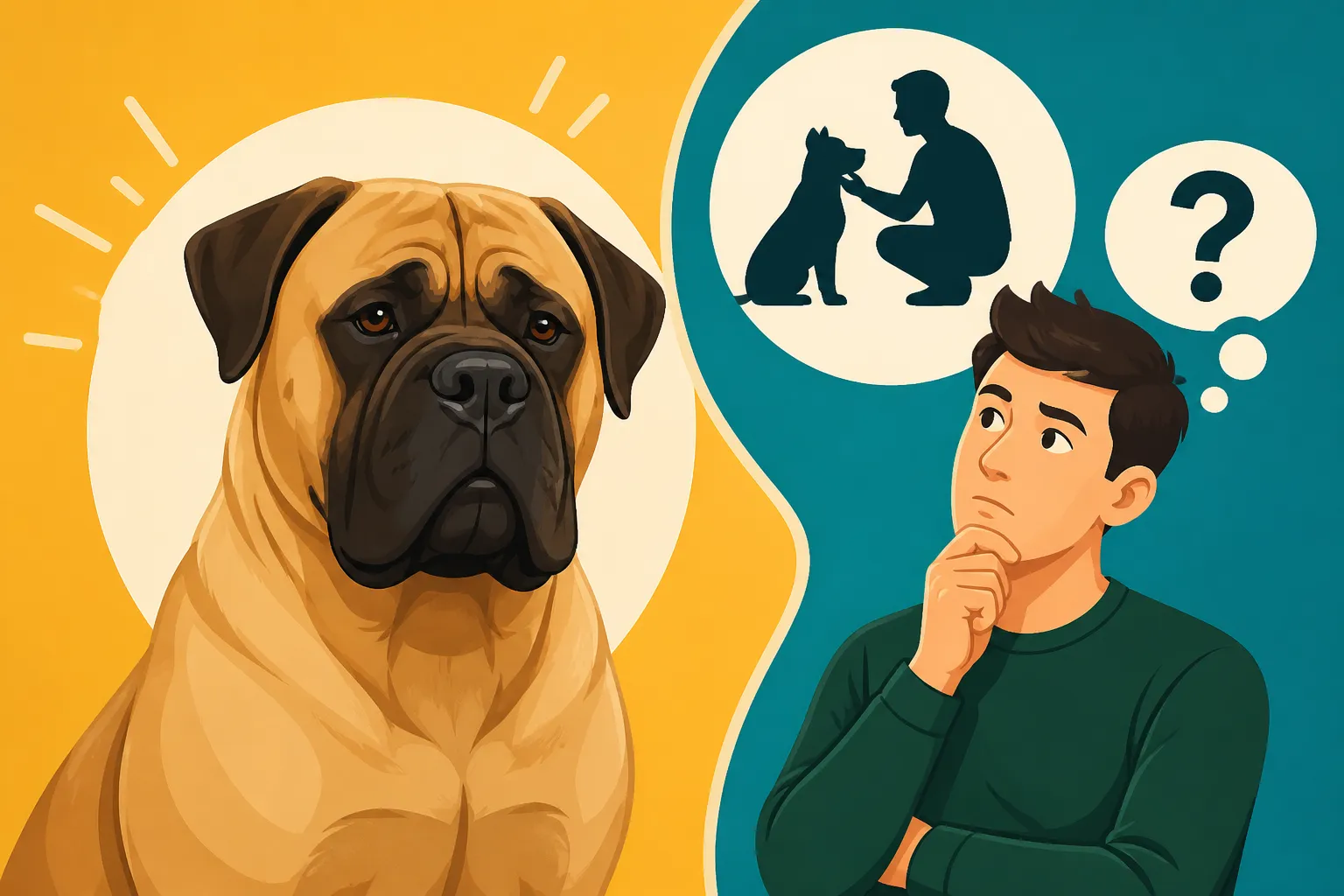
Whether a Bullmastiff Suits a New Dog Owner
A Bullmastiff can be a steady, affectionate companion, but its calm manner does not make it an easy first dog. New owners often underestimate the strength, training commitment, drool, and health care a giant breed can bring. This guide explains what living with a Bullmastiff is really like—and how to decide whether you’re ready.
Can a Bullmastiff Be a Good First Dog
Temperament is only part of the picture
Bullmastiffs are often described as calm, loyal, and devoted to their families. Many are content to lounge nearby rather than demand hours of activity, and their quiet presence can suit people who want a companion more than a high-energy exercise partner. Those traits can make the breed appealing to someone getting a dog for the first time.
But a calm dog is not automatically a simple dog. An adult Bullmastiff is powerful enough to pull an unprepared handler off balance, lean heavily against a visitor, or make a short leash walk difficult if it has not learned to walk politely. The question is not just whether a Bullmastiff is gentle at home; it is whether you can consistently guide a large dog in busy, unpredictable situations.
Their protective nature also calls for thoughtful socialization and management. A Bullmastiff may be reserved with unfamiliar people, especially around its home. That does not mean every dog will behave the same way, but owners should teach calm greetings and provide structure rather than assuming a friendly puppy will automatically grow into an easy adult. For a broader look at household fit, see Whether a Bullmastiff Suits a Family.
A first-time owner needs support, not just confidence
You do not need years of dog-owning experience to raise a Bullmastiff well. You do need to be willing to learn, ask for help, and make training part of ordinary life. A reputable puppy class, a qualified reward-based trainer, and a breeder or rescue that answers questions can make the early months much less daunting.
Think about the moments that test a new owner: a puppy grabs the leash and plants its feet, an adolescent lunges toward another dog, or a visitor arrives while the dog is excited at the door. With a small dog, mistakes can be easier to physically manage. With a Bullmastiff, good habits need to be built before the dog reaches its full strength.
If you’re drawn to the breed but unsure what daily life involves, What Nobody Tells You Before Buying a Bullmastiff offers useful questions to consider before committing. The honest version is that a Bullmastiff can be an excellent first dog for a prepared person, but it is a risky choice for someone hoping that a mellow-looking puppy will train itself.
The Real Challenges New Owners Should Expect
Strength makes early training essential
Bullmastiffs grow into large, strong dogs. A puppy that can be lifted or redirected easily will not stay that size for long, so training should begin as soon as the dog comes home. Focus first on practical skills: walking without pulling, waiting at doors, coming when called in safe settings, settling on a mat, and accepting handling for grooming and veterinary care.
Use short, positive sessions and reward the behavior you want to see. For example, if your puppy keeps four paws on the floor while greeting a family member, reward that calm choice. If it rushes toward the front door, pause and reset rather than turning the greeting into a wrestling match. These small repetitions matter because habits become harder to change as the dog grows.
Harsh corrections or physical force are a poor substitute for teaching. They can make interactions more stressful and are especially impractical when a dog is already strong. A useful starting point is Training a Bullmastiff That Weighs More Than You Do. For everyday leash skills, How to Walk a Bullmastiff That Outweighs You can help you think through control and safety before a walk becomes a tug-of-war.
Socialization means calm practice, not meeting everyone
A well-socialized Bullmastiff does not need to greet every person or dog. The goal is to help the dog experience ordinary sights, sounds, places, and handling without becoming overwhelmed. That might mean watching pedestrians from a comfortable distance, hearing traffic from a quiet spot, or practicing a calm greeting with one familiar visitor.
New owners sometimes interpret “socialize your puppy” as “take it everywhere and let everyone pet it.” That can backfire if the puppy is tired, frightened, or crowded. Keep experiences brief and positive, and allow the dog to move away when appropriate. Pay attention to body language: stiffening, turning away, repeated lip licking, or trying to hide can mean the dog needs more space.
This thoughtful approach matters because Bullmastiffs can become physically difficult to manage before they have finished maturing. Adult temperament varies, and genetics, early experiences, health, and training all play a role. Plan for gradual exposure and supervision rather than assuming friendliness is guaranteed.
Size affects the whole household
A Bullmastiff’s bulk changes ordinary routines. A dog that leans against a child, blocks a hallway, or barrels through a doorway can create problems even without intending harm. Children should be taught not to climb on, disturb, or crowd the dog, and adults should supervise interactions rather than relying on the dog’s reputation for gentleness.
Your home setup matters, too. Think about where the dog will sleep, whether floors are slippery, how guests will enter, and where food and toys can be kept out of the way. If you live in a smaller space, consider whether you can provide comfortable resting areas and manage the dog’s movement without constant congestion. Whether a Bullmastiff Suits an Apartment and Whether a Bullmastiff Needs a Yard can help you weigh those practical questions.
| Consideration | What a new owner should plan for |
|---|---|
| Physical strength | Teach leash manners and door manners while the dog is still young |
| Visitors | Use calm introductions, barriers, or a separate resting area when needed |
| Children | Supervise closely and give the dog a quiet place to retreat |
| Other pets | Introduce gradually and manage interactions rather than assuming instant friendship |
| Space | Make sure the dog can move, rest, and turn around comfortably |
| Daily routine | Build in training, walks, grooming, feeding, and quiet time |
Daily Care and Long-Term Commitment
Exercise should suit the dog, not its size
A Bullmastiff may look like an athlete, but the breed generally does not need endless strenuous exercise. Regular, moderate activity and opportunities to sniff and explore can be more suitable than forced running or repetitive high-impact exercise. The right routine depends on age, health, fitness, and the weather.
Puppies need particular care. Their bodies are developing, so avoid pushing them into long, demanding outings just because they seem eager to keep going. Build activity gradually, give them time to rest, and ask your veterinarian about exercise appropriate for their growth stage. Adult dogs also need breaks, especially in warm weather; a short-muzzled, heavy dog can struggle in heat. See How Much Exercise a Bullmastiff Needs and Why a Bullmastiff Overheats So Easily before making summer walks part of a rigid schedule.
A realistic routine might include a relaxed walk during a cooler part of the day, brief training exercises, and time to sniff in a safe area. On hot days, indoor enrichment and a quick bathroom outing may be wiser than a long walk. Be ready to adjust rather than treating a fixed mileage target as a measure of good ownership.
Grooming and household mess are part of the deal
Bullmastiffs have short coats, so coat care is usually manageable, but short hair does not mean no shedding. Regular brushing helps remove loose hair, while routine checks of the ears, nails, eyes, skin, and facial folds help you notice irritation early. Start handling paws and checking the face gently when your dog is young so those tasks do not become a struggle later.
Drool is another practical consideration. Some Bullmastiffs leave saliva on water bowls, furniture, clothing, or walls after drinking or eating. Keeping washable cloths nearby and wiping the mouth when needed can make the routine easier. If you like a spotless home and feel distressed by frequent cleanup, be honest with yourself about how much this will bother you after the novelty wears off.
You’ll also need suitable everyday supplies: appropriately sized bowls, a sturdy leash and walking equipment, a comfortable bed, grooming basics, and safe toys. For bulky essentials, some owners use retailers such as Chewy to order items for home delivery; check that any item is the right size and suitable for your dog rather than choosing by appearance alone. A second practical reminder: make sure the bed is large enough for the dog to stretch out, and that toys are durable and appropriate for its chewing habits.
Health care requires planning and observation
Like other large breeds, Bullmastiffs can face health concerns that call for responsible breeding, routine veterinary care, and attention to changes in behavior or movement. Before bringing one home, ask what health screening has been done and what health history is known in the dog’s family. If adopting an adult, ask the rescue what veterinary records and observations are available.
Keep up with wellness visits and ask your veterinarian what monitoring makes sense for your individual dog. A sudden change in appetite, energy, gait, breathing, or willingness to exercise deserves attention. Because a Bullmastiff may not show discomfort in an obvious way, it helps to know what is normal for your dog and mention subtle changes rather than waiting for a problem to become dramatic.
Health care can also be physically demanding. A large dog that becomes unwell or has difficulty getting into a vehicle may be hard to lift without help. Think ahead about transportation, access to veterinary care, and who could assist in an emergency. For routine care items, Chewy may be one place to find basic supplies such as grooming tools, but medical decisions and treatment plans should come from your veterinary team.
How to Decide Whether You’re Ready
Ask yourself practical questions first
Instead of deciding based only on the breed’s appearance or reputation, picture an ordinary week with a Bullmastiff. Can you train consistently, manage a strong dog on leash, and supervise interactions with children and visitors? Are you comfortable with drool and shedding? Can you arrange suitable exercise in both good weather and heat? These questions are more useful than asking whether the breed is “easy.”
Consider the dog’s full life, too. Bullmastiffs mature over time, and a playful or impulsive adolescent may not behave like the calm adult you imagined. Patience and consistency are important as the dog learns how to live in your household. When a Bullmastiff Finishes Maturing gives more context for setting realistic expectations about that process.
Also consider your support system. If you are ill, away, or unable to walk the dog for a period, who can help? A dog walker or trusted friend needs to be comfortable handling a large breed. If you work long hours, plan how the dog will get bathroom breaks, companionship, and appropriate activity; Whether a Bullmastiff Suits a Full Time Worker explores that part of the decision.
Meet individual dogs and ask direct questions
Breed tendencies are a starting point, not a guarantee of an individual dog’s personality. Spend time with adult Bullmastiffs if possible, and observe how they respond to ordinary household activity, visitors, and handling. Ask breeders or rescue staff what they have seen—not just whether the dog is “good.” Specific questions about behavior, health, routine, and support after placement are more revealing.
If choosing a puppy, ask about health screening, the parents’ temperaments, early socialization, and how the breeder prepares puppies for home life. If adopting, ask what the dog is like on a leash, how it behaves around other animals, and whether it has lived with children. Be wary of anyone who dismisses your concerns or promises that training and health will never be an issue.
A first-time owner can absolutely build a rewarding life with a Bullmastiff. The best match is someone who likes the breed’s quiet companionship but respects its size, invests in training before problems arise, and makes room for the everyday realities of care. If you are prepared to ask for guidance and adapt as your dog grows, inexperience alone does not rule you out.
Disclaimer
This article is for general informational purposes only and does not constitute professional advice. Laws, prices and regulations vary by location and change over time. Consult a qualified professional for guidance on your specific situation.