When Treatment Stops Being Right for a Bullmastiff
It's one of the hardest questions any Bullmastiff owner will ever face: "When is enough, enough?" Watching our stoic, loving giants decline is heartbreaking, and the decision of when to stop active treatments and shift focus is agonizing. This guide aims to help you navigate that profoundly difficult journey, offering insights into recognizing signs of declining quality of life, understanding treatment burdens, and making informed decisions with your veterinary team.
Recognizing the Signs of Declining Quality of Life
When you've committed to caring for a Bullmastiff, you know the deep bond you share. Their loyalty is immense, and their presence fills a home. Because of this bond, noticing the subtle shifts that signal declining health can be even more painful. It's not about them giving up, but about us recognizing when their fight becomes a burden greater than the reward. They often try to be brave for us, which makes our job of observation even more critical.
Physical Discomfort and Pain
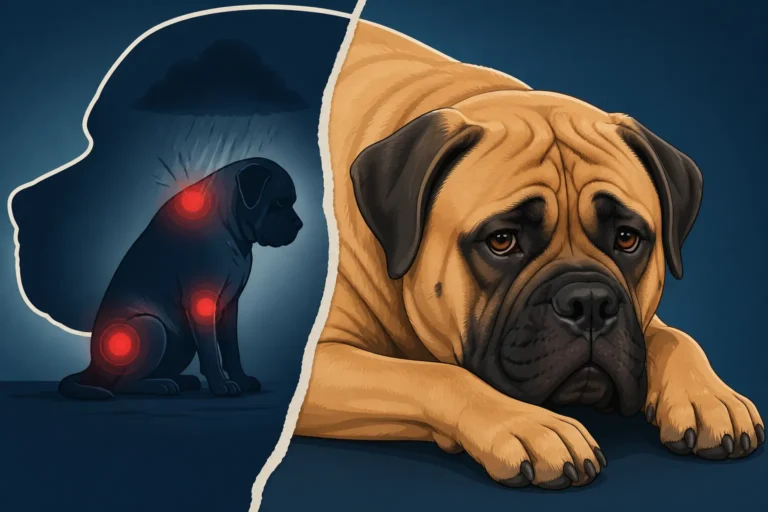
Our big dogs are masters at hiding pain, a trait likely inherited from their ancestors who couldn't show weakness in the wild. You might not see obvious limping or whining. Instead, look for more subtle changes. Is your Bullmastiff struggling to rise from a lying position, or taking longer to settle down? Are they less enthusiastic about their once-favorite activities, like a short walk around the block or playing with a beloved toy? These could be signs of underlying discomfort from conditions like arthritis or the pain associated with certain illnesses. A Bullmastiff that once greeted you at the door might now just lift their head, their body language communicating a weariness that wasn't there before.
Consider their posture, too. Is their back subtly hunched, or are they shifting weight differently? Are they pacing more often, or having trouble finding a comfortable spot to rest? Observe their breathing; is it more labored or shallow, even when at rest? These physical indicators, sometimes barely perceptible day-to-day, can accumulate and paint a clearer picture over weeks or months. It’s a good idea to keep a journal of these observations. Sometimes, looking back at notes from a month ago helps you see a trend you might otherwise miss. You might even want to revisit what their care needs were when they were younger by looking at an article like, Caring for an Aging Bullmastiff.
Loss of Joy and Engagement
Beyond physical discomfort, one of the most poignant signs that treatment might be losing its battle is a noticeable decrease in your Bullmastiff's joy and engagement with life. Bullmastiffs are usually calm and watchful, but they still have their moments of happiness – a wagging tail for mealtime, a gentle nudge for a head scratch, or the enthusiastic greeting when a family member returns home. When these moments become rare, or completely disappear, it’s a red flag.
Are they still interested in food, or are meals becoming a struggle? While some picky eating can be normal, a consistent disinterest in food, especially high-value treats, is concerning. Do they still acknowledge your presence with eye contact or a soft sigh, or do they seem distant, withdrawn, or even irritable? A Bullmastiff that once sought out company might start isolating themselves, choosing to lie alone in another room. This isn't just a sign of old age; it’s a sign that their inner spark is dimming. It's about looking past the physical and seeing if the dog is still there, happy and engaged in their world, or if they are merely existing. This is a critical element in assessing their overall Quality of Life.
Understanding the Impact of Ongoing Treatments
Deciding to pursue treatment for your Bullmastiff, especially for serious conditions like cancer or advanced heart disease, is a commitment. You want to do everything you can for your beloved companion. However, at some point, the very treatments meant to help can become a significant burden, both for your dog and for your family. It's essential to honestly assess if the benefit outweighs the cost, not just financially, but in terms of your Bullmastiff's comfort and your family's emotional bandwidth.
Side Effects and Daily Burdens
Many advanced medical treatments, while life-extending, come with uncomfortable side effects. Chemotherapy, for instance, can cause nausea, vomiting, diarrhea, and a general feeling of malaise. While Bullmastiffs often tolerate chemotherapy better than humans, they can still experience fatigue and reduced appetite. Medications for heart conditions might help the heart function, but they can also lead to increased urination, thirst, or other systemic issues that affect their daily comfort. Is your Bullmastiff spending more time recovering from treatments than enjoying their good days? Are the side effects making them feel worse than the disease itself sometimes?
Think about the practical burdens, too. Administering multiple medications several times a day, frequent trips to the vet for injections or check-ups, and managing dietary restrictions can all add stress. For a large dog like a Bullmastiff, getting in and out of the car, especially if they are weak or painful, can be a major ordeal. Each vet visit can be exhausting for them. It's a fine line between necessary care and treatments that begin to erode their remaining peaceful moments. When How a Bullmastiff Tolerates Chemotherapy is less than ideal, it’s time to ask hard questions.
Financial and Emotional Strain on the Family
Let's be real: veterinary care, especially specialized and ongoing treatments, can be incredibly expensive. From What Chemotherapy Costs for a Bullmastiff to regular medication refills and diagnostic tests, the bills can quickly add up. For many families, there comes a point where the financial strain becomes unsustainable, and that’s a perfectly valid, albeit painful, part of the equation. It doesn't mean you love your dog any less; it means you're being responsible with your family's resources. Having pet insurance like Healthy Paws can certainly help mitigate some of these costs, allowing owners to focus more on their Bullmastiff's well-being rather than agonizing over vet bills. However, even with insurance, there are often deductibles, co-pays, and limits.
Beyond the money, there's the emotional toll. Watching your dog suffer, feeling helpless, and constantly making difficult choices can lead to compassion fatigue. Family dynamics can be strained, and daily life can revolve around your dog's illness. It's okay to acknowledge this. If the emotional weight of treatment is overwhelming your family, and your Bullmastiff's quality of life isn't significantly improving, it might be time to consider a different path. It's a collective decision that impacts everyone in the household.
Here's a simple framework to help evaluate the situation:
| Quality of Life Indicators | Treatment Burden Indicators |
|---|---|
| Positive: | Negative: |
| Eating and drinking normally | Severe side effects (nausea, pain) |
| Engaged with family/environment | Constant vet visits/travel stress |
| No obvious signs of pain or discomfort | Difficulty administering medication |
| Good mobility (can stand, walk, eliminate easily) | Isolation or withdrawal post-treatment |
| Shows interest in favorite activities (walks, toys) | Loss of appetite/weight despite intervention |
| Urinating and defecating appropriately | Financial hardship due to ongoing costs |
| Sleeping peacefully | Emotional exhaustion for caregivers |
| More "bad" days than "good" days |
Navigating the Difficult Conversation with Your Vet
Your veterinarian is your most important ally in this journey. They have the medical knowledge and an objective perspective that can be invaluable when emotions are running high. Having an open, honest conversation with them is crucial, and it often requires you to be prepared with your observations and questions. Remember, they are there to help you make the best decision for your Bullmastiff, even if that decision is heartbreaking.
Asking the Right Questions
When you go into the vet's office, especially for these sensitive discussions, it’s easy to feel overwhelmed and forget what you wanted to ask. I always recommend writing down your questions beforehand. Don't be afraid to ask direct questions like:
- "If this were your Bullmastiff, what would you do?"
- "What is the realistic prognosis with continued treatment versus stopping treatment and focusing on palliative care?"
- "Are there any other treatment options we haven't explored, or are we truly at the end of what modern medicine can offer?"
- "What are the best ways to manage his pain and keep him comfortable if we stop active treatment?"
- "How will I know when he's truly in too much pain or suffering too greatly?"
- "What resources are available for grief support?"
Your vet should be able to explain the potential outcomes, the likelihood of improvement, and the impact of the disease and its treatments on your Bullmastiff's remaining time. They can offer guidance based on their experience and understanding of How Long a Bullmastiff Lives After a Lymphoma Diagnosis, for example, or any other specific condition.
Gathering Opinions and Making a Checklist
Sometimes, a single veterinary opinion isn't enough, especially for complex or emotionally charged situations. It's perfectly acceptable, and often advisable, to seek a second opinion from another veterinarian or a veterinary specialist, particularly an oncologist or internal medicine specialist if your Bullmastiff has a specific disease like cancer. They might offer alternative perspectives or slightly different treatment protocols.
Once you have all the information, it's time to weigh everything. Creating a "quality of life" checklist can be incredibly helpful. This isn't about ticking boxes, but rather providing a tangible way to assess your Bullmastiff's daily state. Assign a score (e.g., 1-5, with 5 being excellent) to aspects like:
- Appetite
- Hydration
- Pain level
- Breathing comfort
- Mobility
- Interest in surroundings/family
- Ability to eliminate (urinate/defecate) without struggle
- Overall happiness/spark
Review this checklist daily or weekly. When the bad days consistently outnumber the good days, or when the overall score dips significantly and stays there, it’s a strong indicator that treatment might no longer be the right path. This tool can provide concrete data to support what your heart already knows. Many owners find relief in knowing they have objectively evaluated their Bullmastiff's condition.
Providing Comfort and Dignity in Their Final Days
Making the decision to transition from aggressive treatment to palliative care, or even considering euthanasia, is one of the hardest acts of love you can offer your Bullmastiff. It's about prioritizing their comfort and dignity above all else, ensuring their final days are as peaceful and loving as possible. This phase of care is about maximizing comfort and minimizing distress.
Focusing on Palliative Care
Palliative care is all about making your Bullmastiff as comfortable as possible without attempting to cure their underlying disease. This often involves effective pain management, anti-nausea medications, appetite stimulants, and strategies to improve mobility. Your vet can prescribe appropriate medications to control pain, inflammation, and other symptoms. For a Bullmastiff who struggles to rise, a good orthopedic bed and perhaps a sling can make a world of difference.
The goal here is to cherish the remaining time, focusing on quality over quantity. This might mean adjusting their diet to something more palatable, even if it's not their "regular" food, as long as it brings them joy. It means ensuring they have easy access to water, a comfortable resting spot, and a calm, familiar environment. For many Bullmastiff owners, this also means letting go of strict routines and simply enjoying their presence, offering endless gentle strokes and quiet companionship. This is a time to create positive memories, even amidst the sadness. For a deeper understanding of this shift, consider What Changes in an Aging Bullmastiff's Care.
Creating a Peaceful Home Environment
Your Bullmastiff's home environment plays a critical role in their comfort during this time. Make sure their favorite resting spots are easily accessible and comfortable, ideally with supportive, orthopedic bedding. Consider moving their food and water bowls closer to where they spend most of their time, so they don't have to exert themselves unnecessarily. If they have trouble on slippery floors, lay down rugs or mats to help them with traction.
Limit loud noises and sudden changes that might startle them. Maintain a calm, consistent routine, as predictability can reduce anxiety in a vulnerable dog. If they have house-soiling accidents, manage them gently and patiently, understanding that this is part of their condition, not a behavioral issue. It's about creating a sanctuary where your Bullmastiff feels safe, loved, and at peace. Some owners even reach out to mobile veterinary services that offer in-home palliative care or euthanasia, allowing their beloved Bullmastiff to pass in their most cherished environment. The cost of these services, including Whether Euthanasia Costs More for a Bullmastiff at home, can be part of your financial planning.
Emotional Support for the Family
Saying goodbye to a Bullmastiff is like losing a family member. The grief can be profound and overwhelming, and it's essential to allow yourself and your family to feel it. There’s no right or wrong way to grieve. Children especially may need extra support and explanation during this time, so they can understand what's happening and process their feelings.
Lean on your support network – friends, family, and even pet loss support groups. Many veterinary clinics can provide resources for grief counseling. Remember the good times, the quiet cuddles, the silly moments, and the unwavering loyalty your Bullmastiff offered. Their lives, though often too short, are filled with immense love and impact. The decision to stop treatment or consider euthanasia is a testament to that love, a final act of kindness to spare them unnecessary suffering. It's a profound burden, but it comes from a place of deep, unconditional affection.
Disclaimer
The information provided in this article is for general informational purposes only and is not intended as a substitute for professional veterinary advice. Always consult with a qualified veterinarian for any health concerns or before making any decisions about your Bullmastiff's care.