Whether a Bullmastiff Puppy Should Climb Stairs
It’s a common scenario: you bring home your adorable Bullmastiff puppy, full of boundless energy, only to realize your home has stairs. Suddenly, you’re faced with a dilemma. Is it okay for this rapidly growing, heavy-boned little giant to navigate those steps, or are you inadvertently setting them up for future joint problems? The concern is real and valid, given their predisposition to orthopedic issues. This guide will help you understand the risks involved and equip you with practical strategies to protect your Bullmastiff puppy’s developing joints, ensuring they grow into a strong, healthy adult.
The Unique Vulnerability of a Bullmastiff Puppy's Joints
Bullmastiffs are magnificent dogs, but their impressive size comes with a unique set of challenges during their growth phase. Unlike smaller breeds, their rapid development and significant weight make their joints particularly susceptible to injury, especially during the critical first year.
Why Rapid Growth Poses a Risk
Imagine trying to build a sturdy brick wall at lightning speed, without letting the mortar fully set between layers. That's a bit like what happens with a giant breed puppy's growth. Bullmastiffs grow from tiny, squishy pups into massive dogs in a remarkably short period. However, their bones and joints don't mature at the same rate across the board, and certain areas remain vulnerable for longer than you might expect.
The key players here are the growth plates, also known as epiphyseal plates. These are areas of soft, developing cartilage located at the ends of a puppy's long bones. They are where new bone tissue is generated, allowing the bones to lengthen. Crucially, these growth plates are not yet fused or hardened like adult bone. They remain open and fragile, making them highly susceptible to damage from excessive force, impact, or repetitive strain. Things like jumping off furniture, running wildly on hard surfaces, or indeed, repetitive stair climbing, can cause microtrauma or even a direct fracture to these delicate areas. Damage to a growth plate can lead to abnormal bone growth, limb deformities, or predispose your dog to painful conditions later in life. This is why understanding When a Bullmastiff's Growth Plates Close is so important, as it directly impacts when certain activities become safer.
The Role of Weight and Breed Predisposition
It’s not just the speed of growth, but the sheer volume of mass your Bullmastiff puppy carries that amplifies the risk. A 4-month-old Bullmastiff puppy might already weigh 50-60 pounds – imagine that weight repeatedly impacting undeveloped joints with every step up or down a flight of stairs. Compare that to a terrier puppy of the same age, which might weigh a mere fraction of that. The physics simply aren't in favor of the Bullmastiff's growing body.
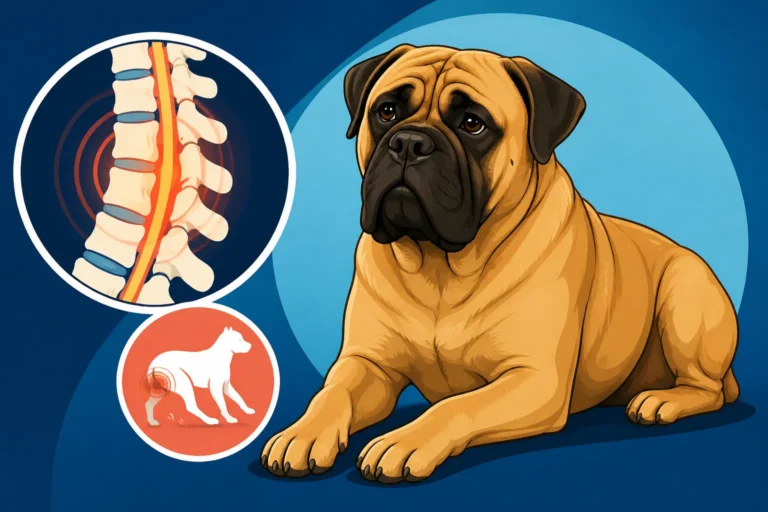
Bullmastiffs, like many large and giant breeds, are genetically predisposed to orthopedic issues such as Hip Dysplasia in a Bullmastiff and Elbow Dysplasia in a Bullmastiff. These are complex conditions influenced by both genetics and environmental factors. While you can't change their genetic blueprint, you can significantly mitigate environmental risks. Excessive strain on immature joints, especially when carrying significant body weight, can exacerbate these predispositions, leading to earlier onset or more severe forms of these painful conditions. Protecting their joints in these early, formative months isn't just about preventing acute injury; it's about safeguarding their long-term mobility and quality of life.
Navigating Stairs Safely with Your Bullmastiff Puppy
Living in a multi-story home with a Bullmastiff puppy means you’ll need a strategy for managing stairs. Ignoring the issue isn't an option, as unsupervised access can lead to unnecessary risks for their developing skeleton.
When to Introduce Stairs and How
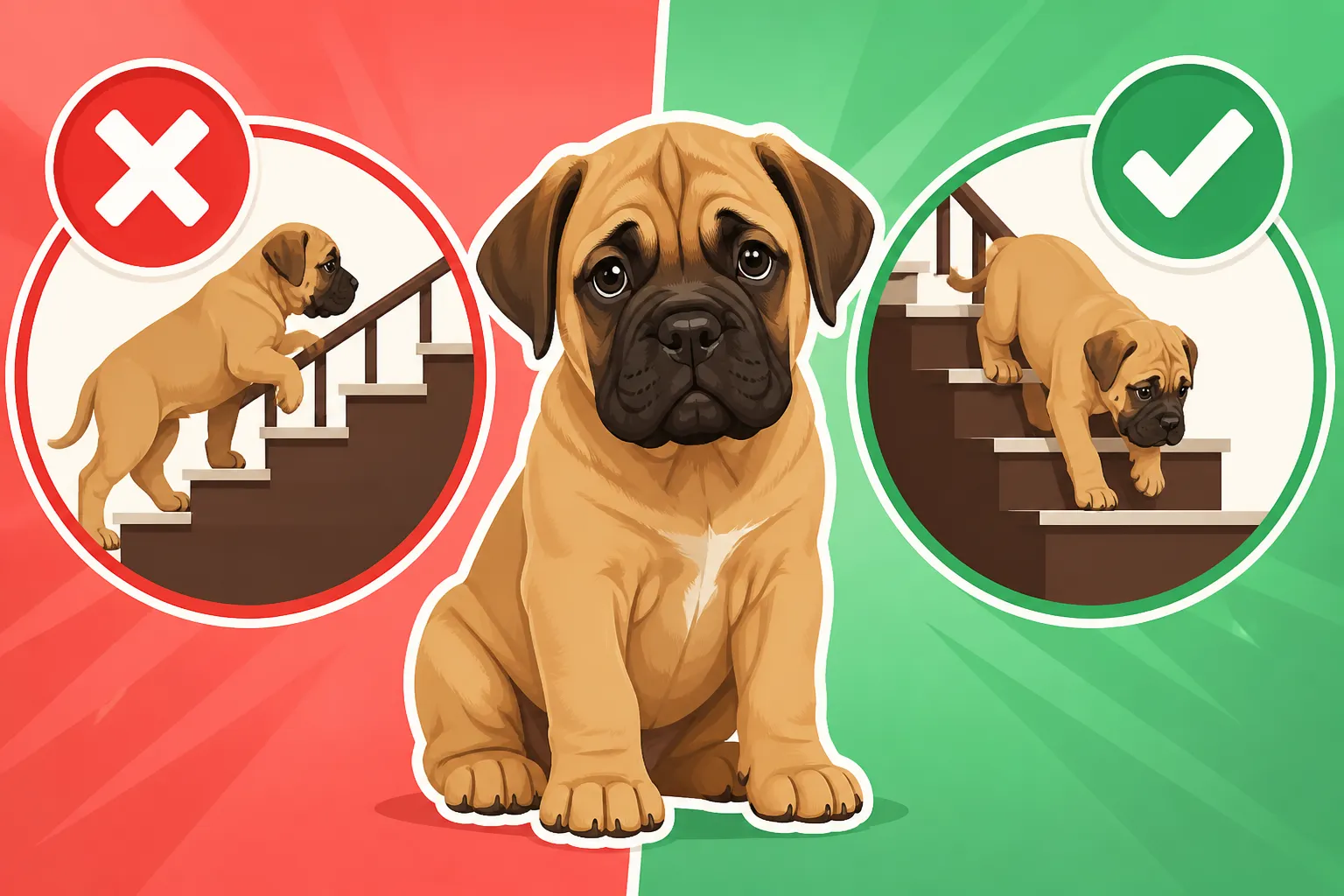
The general consensus among veterinarians and experienced Bullmastiff breeders is to avoid stair climbing entirely for Bullmastiff puppies until they are at least 4-6 months old, and ideally, even longer. Many recommend waiting until growth plates are well on their way to closing, which can be anywhere from 12 to 18 months for giant breeds. This might sound like a long time, especially when your puppy feels heavy, but it's a crucial period for their joint development.
When you do introduce stairs, think of it as a controlled training exercise, not a free-for-all. The goal is a gradual, positive introduction.
- Start with going UP first: Going up stairs involves pushing off with their hind legs, which is generally less impactful than going down, where the force of gravity and body weight can jar the front limbs.
- Use a short leash and treats: Keep your puppy on a short leash to maintain control and prevent them from rushing. Lure them with high-value treats, one step at a time. Make it a calm, deliberate process.
- One step at a time: Literally. Guide them to put one paw on the first step, reward, then the next, reward, and so on.
- Short sessions: Keep training sessions very brief, a few minutes at most, and only once or twice a day. The goal is to build confidence and strength, not to provide intense exercise. Remember, "The Exercise Limit for a Bullmastiff Puppy" applies to all activities, including stair work.
- Always supervise: Never allow your puppy unsupervised access to stairs, even if you think they "know" how to do it. A moment of excitement, a slippery surface, or a sudden misstep can lead to injury.
Practical Solutions for Multi-Story Homes
Living with stairs doesn't mean you can't have a Bullmastiff. It just means you need to be proactive and implement some smart solutions:
- Carry Them (When Possible): For younger puppies, the simplest and safest solution is to carry them. A 2-3 month old Bullmastiff might weigh 30-45 pounds, which is certainly a workout for you, but it’s manageable for most adults for a short flight of stairs. As they grow, this becomes less feasible, but it buys precious time for their joints.
- Baby Gates are Your Best Friend: Invest in sturdy, tall baby gates that can withstand a determined Bullmastiff puppy. Place them securely at both the top and bottom of every staircase. Brands like Regalo, Carlson Pet Products, or even custom-built wooden gates are excellent choices. Make sure they are pressure-mounted or hardware-mounted appropriately for safety. This is non-negotiable for preventing unsupervised access.
- Designate Puppy-Safe Zones: If possible, confine your puppy to a single level for much of the day during their most vulnerable growth period. This might mean having their crate, food, water, and playpen on the ground floor. If their primary sleeping area is upstairs, you'll need to carry them up and down for bed and morning routines.
- Consider Ramps: For older puppies or if you have a Bullmastiff with existing mobility issues (or one that develops them later in life), a well-constructed ramp can be an invaluable asset. Ramps provide a gentle incline, eliminating the jarring impact of stairs. You can find portable ramps for cars or consider building a custom ramp for indoor use if a particular staircase is frequently used.
- Duplicate Essentials: To minimize the need for stair travel, consider having duplicate sets of essentials on both floors. This means an Orthopedic Bed for a Bullmastiff on each level, water bowls, and favorite chew toys. This reduces the urge for your puppy to traverse stairs just to reach their favorite spot or get a drink.
Long-Term Joint Health and Prevention
Protecting your Bullmastiff’s joints isn't just about managing stairs; it's about a holistic approach to their care, especially during their growth. The decisions you make now will have a lasting impact on their health and comfort for years to come.
The Importance of Slow Growth and Lean Body Condition
One of the most critical factors in preventing joint problems in giant breeds like Bullmastiffs is managing their growth rate and maintaining a lean body condition. As outlined in "Why a Bullmastiff Puppy Should Be Kept Lean," allowing your puppy to grow too quickly or become overweight puts immense, unnecessary stress on their developing skeletal system.
- Controlled Growth Diet: Feed a high-quality large or giant breed puppy food. These formulas are specifically designed with lower protein, calcium, and phosphorus levels compared to regular puppy foods. This helps promote a slower, more controlled growth rate, allowing bones and joints to mature more steadily. Avoid "performance" puppy foods unless specifically recommended by your vet for working dogs, as these can be too calorie-dense for typical growing pups.
- Maintain Lean Body Condition: Your Bullmastiff puppy should always look lean, almost a bit lanky, during their growth phase. You should be able to easily feel their ribs, but not see them prominently. Their waist should be evident when viewed from above. An overweight puppy might look "beefy" and impressive, but you're doing them a disservice by adding extra strain to their still-forming joints. This practice of keeping them lean should continue throughout their entire life, as even a few extra pounds can accelerate the onset and severity of arthritis in a heavy breed.
To help visualize a healthy growth trajectory, here's an approximate guide for Bullmastiff puppies:
| Age (Months) | Approximate Weight Range (Male) | Approximate Weight Range (Female) | Stair Activity Recommendation | Key Joint Risk Factors |
|---|---|---|---|---|
| 2-3 | 25-45 lbs | 20-40 lbs | Avoid entirely, carry | Highly fragile growth plates, steep learning curve |
| 4-6 | 50-75 lbs | 45-70 lbs | Minimal, supervised, gentle | Rapid growth spurt, increasing weight |
| 7-12 | 80-110 lbs | 75-100 lbs | Controlled, slow practice | Growth plates still closing, heavy impact, adolescence |
| 12-18 | 100-130+ lbs | 90-120+ lbs | Gradual increase, assess | Growth plates typically closing/closed, still heavy |
Note: These are approximate ranges; individual growth rates can vary. Always consult your veterinarian for personalized advice.
Early Health Screening and Veterinary Care
Proactive veterinary care is paramount for Bullmastiffs. Regular check-ups allow your vet to monitor your puppy's growth, assess their gait, and discuss any concerns you might have.
- Responsible Breeding: The foundation of good health starts with responsible breeding. Ensure you select a puppy from a breeder who has performed all recommended health screenings on the parent dogs, including OFA (Orthopedic Foundation for Animals) certifications for hips and elbows. A breeder who proudly shares "What a Bullmastiff Breeder Should Have Screened" is a good sign. While good genetics don't guarantee perfect joints, they significantly reduce the inherent risk, allowing environmental factors (like stair management) to play an even more impactful preventative role.
- Puppy Insurance: Even with the best preventative care and responsible breeding, health issues can sometimes arise. This is where pet insurance becomes an invaluable tool. Enrolling your Bullmastiff puppy early with a reputable provider like Healthy Paws can provide peace of mind and financial protection. Should joint issues, injuries, or other health concerns emerge, having comprehensive coverage means you can focus on providing the best possible treatment without the added stress of overwhelming vet bills.
- Long-Term Strategy: Think of joint health as a lifelong commitment. The habits you establish in puppyhood – careful exercise, lean body weight, and appropriate nutrition – will serve your Bullmastiff well into their senior years. This proactive approach can potentially delay or lessen the severity of age-related joint conditions, impacting "What Changes in an Aging Bullmastiff's Care" down the road.
Addressing Common Concerns and Misconceptions
Despite the best intentions, owners often face challenges or hold misconceptions about managing their Bullmastiff puppy around stairs. Let's tackle some of these head-on.
"My Puppy Does It Anyway" – Understanding Canine Behavior
It's a common refrain: "My puppy just loves to run up and down the stairs!" While it might seem harmless, and puppies are indeed naturally curious and often fearless, this doesn't mean it's safe or advisable for a giant breed.
A Bullmastiff puppy's instinct isn't to protect its developing growth plates; it's to explore, play, and follow you. They don't understand the long-term consequences of repetitive, high-impact activities on their immature joints. What might be perfectly fine for a nimble Jack Russell Terrier or even a slightly larger Labrador Retriever at a young age is an entirely different story for a Bullmastiff. Their sheer size, combined with the rapid bone growth, means that every single jump, every slippery step, every repeated ascent or descent, carries a disproportionately higher risk of injury or cumulative stress.
This is where responsible ownership comes in. You, as their caretaker, are responsible for managing their environment and behavior to ensure their safety and long-term health. Relying on a puppy's "natural instinct" to determine safe activity levels is simply not enough for a giant breed. Consistent use of baby gates and direct supervision are crucial to preventing those unsupervised stair escapades that might seem fun in the moment but could lead to issues later.
The Financial and Emotional Impact of Joint Problems
Many owners, understandably, focus on the immediate joy of puppyhood. However, neglecting proper joint care in the early months can lead to significant financial and emotional burdens later on.
Conditions like severe hip dysplasia, elbow dysplasia, or a cranial cruciate ligament tear can be incredibly painful for your Bullmastiff. They can severely limit their mobility, impact their quality of life, and require extensive veterinary intervention. Surgeries for these issues are not only complex but also come with a hefty price tag. For instance, "What Hip Surgery Costs on a Bullmastiff" or "What Cruciate Surgery Costs on a Bullmastiff" can easily run into thousands of dollars for a single limb, and often, both sides are affected. Beyond surgery, there are costs associated with lifelong pain management, physical therapy, specialized diets, and mobility aids as your dog ages. These cumulative costs, especially for a dog with a lifespan where "The median Bullmastiff lives eight and a half years," can be substantial.
Beyond the financial strain, there's the emotional toll. Watching your beloved Bullmastiff struggle with pain, lose their playful energy, or have difficulty rising and moving around is heartbreaking. The guilt that can accompany preventable health issues is immense. This is why investing in preventative measures now – managing stairs, maintaining a lean weight, and choosing a reputable breeder – is truly an investment in your dog's future happiness and your own peace of mind. Again, having pet insurance from a provider like Healthy Paws can be a literal lifesaver, allowing you to make treatment decisions based on what’s best for your dog, rather than being constrained by budget. It’s about being prepared for the unexpected, especially with a breed prone to these types of expensive conditions.
Disclaimer
The information provided in this article is for general informational purposes only and does not constitute veterinary advice. Always consult with a qualified veterinarian for any health concerns or before making any decisions about your Bullmastiff puppy's care or treatment.