What Hip Surgery Costs on a Bullmastiff
Finding out your beloved Bullmastiff needs hip surgery is a gut punch, not just emotionally, but often financially too. The sheer size of these magnificent dogs means that everything, especially medical procedures, comes with a significantly larger price tag than you might expect for a smaller breed. This guide is here to walk you through the realistic costs associated with hip surgery for a Bullmastiff, from initial diagnostics to post-operative care, so you can be as prepared as possible.
Understanding Hip Dysplasia in Bullmastiffs
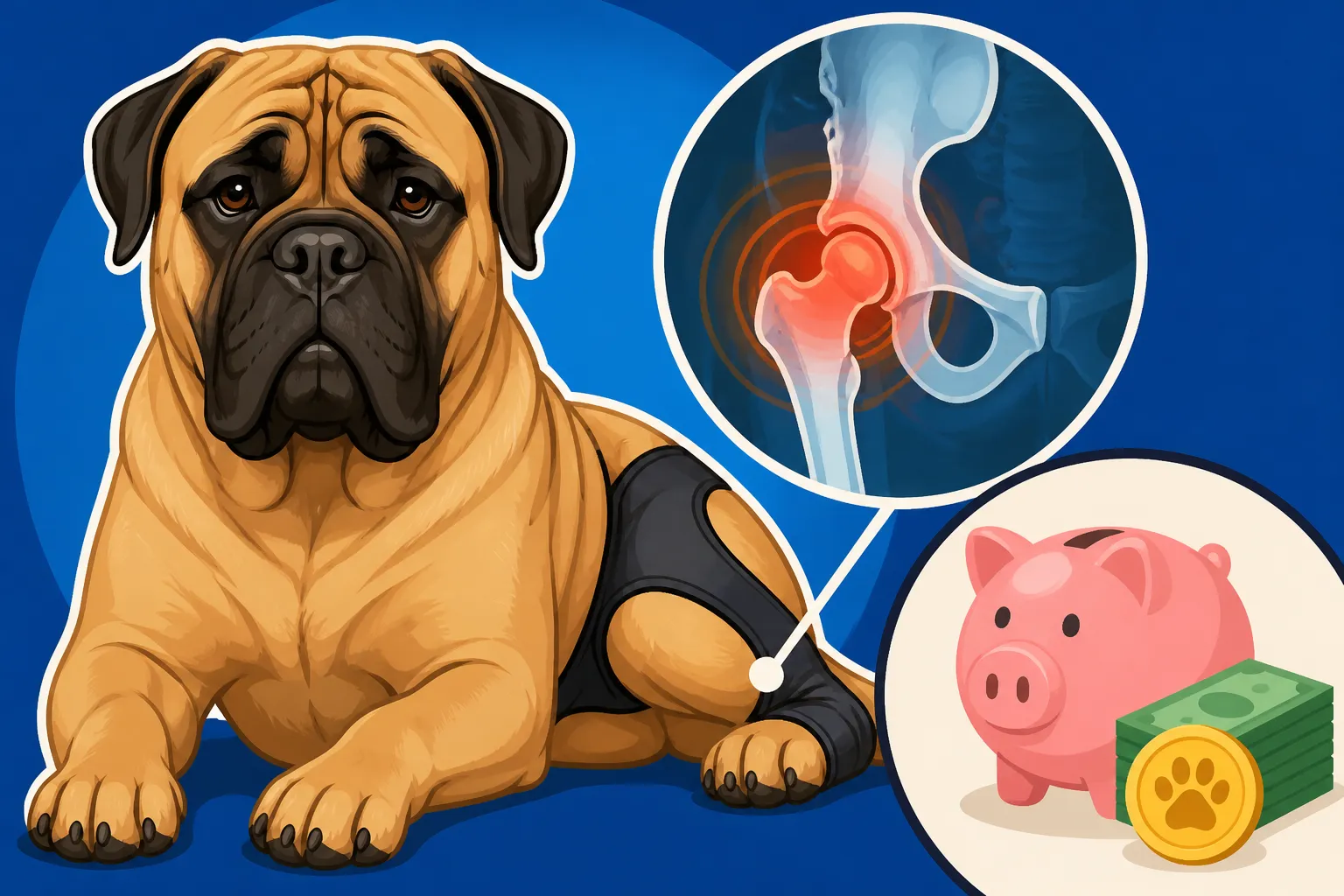
It's a harsh reality that large and giant breeds like our Bullmastiffs are predisposed to certain orthopedic conditions, and hip dysplasia is right at the top of that list. This isn't just a minor ache; it's a developmental condition where the hip joint doesn't form correctly, leading to a loose fit between the ball (femoral head) and socket (acetabulum). Over time, this poor fit causes grinding, pain, and degenerative joint disease or osteoarthritis.
Why Bullmastiffs are Prone to Hip Dysplasia
The genetic predisposition is undeniable. Bullmastiffs, with their impressive size and rapid growth rate, are unfortunately often dealt a difficult hand when it comes to hip health. While genetics play a huge role, environmental factors during their puppyhood can also contribute to the severity. Things like excessively rapid growth from overfeeding, too much strenuous exercise at a young age, or even slippery floors can exacerbate the issue in a genetically susceptible puppy. This is why responsible breeders are so crucial, performing health screenings on parent dogs to reduce the likelihood of passing on these problematic genes. You might want to read more about Hip Dysplasia in a Bullmastiff to understand the underlying causes.
Recognizing the Signs Your Bullmastiff's Hips Hurt
Our big, stoic Bullmastiffs are masters at hiding pain, which can make diagnosing hip issues challenging in the early stages. They often don't cry out or limp dramatically until the pain is quite severe. Instead, you might notice subtle changes: a reluctance to jump or climb stairs, a "bunny hop" gait when they run, stiffness after resting, a decreased desire to play, or even a shift in their personality where they seem more withdrawn. As the condition progresses, you might observe muscle loss in their hindquarters or an audible clicking sound when they walk. Paying close attention to these nuances is vital. If you’ve noticed your Bullmastiff struggling to get up, it could be one of the Signs a Bullmastiff's Hips Hurt.
The Veterinary Process Before Surgery
Before any talk of surgery, your vet will need to confirm the diagnosis and assess the severity of the hip dysplasia. This initial phase involves a series of examinations and diagnostic tests, each with its own cost implications.
Initial Consultations and Diagnostics
Your journey typically starts with a thorough physical examination by your primary veterinarian. They'll manipulate your Bullmastiff's hips, listen for crepitus (grating sounds), and check for pain responses. If hip dysplasia is suspected, X-rays are the definitive diagnostic tool. Because of your Bullmastiff's size, these X-rays often require sedation to ensure proper positioning and clear images, as even slight movement can distort the results.
The costs for these initial diagnostics can vary significantly based on your location and veterinary practice. A general breakdown might look like this:
- Veterinary Consultation: $60 – $150
- Sedation: $150 – $400 (Bullmastiffs require higher doses due to their weight)
- Hip X-rays (multiple views): $250 – $600
- Pre-sedation bloodwork: $100 – $300 (to ensure your dog is healthy enough for sedation)
So, just to get a clear picture of what's going on, you could be looking at an initial outlay of $560 to $1,450. It’s important to remember that these are just estimates, and unexpected complications or additional tests could add to the bill. To get the best diagnostic images, your vet will need to sedate your Bullmastiff before taking X-rays, similar to how they determine When a Bullmastiff Should Be X Rayed for other joint issues.
Specialist Referrals and Second Opinions
In many cases, your general veterinarian might recommend a referral to a board-certified veterinary orthopedic surgeon. These specialists have advanced training and equipment to provide the most accurate diagnosis and treatment plan. A specialist consultation will be another fee on top of your initial vet visit, typically ranging from $150 to $400. They might also recommend additional specialized imaging, such as a CT scan, which can cost anywhere from $1,000 to $2,500, especially for a large dog like a Bullmastiff who again would require heavy sedation. While these extra steps add to the cost, they are invaluable for ensuring the best possible outcome for your dog. For severe cases, seeing a specialist is usually non-negotiable.
Different Types of Hip Surgery and Their Costs
Once hip dysplasia is confirmed and deemed severe enough to warrant surgical intervention, you'll be faced with different surgical options. Each procedure is designed for specific situations and comes with its own set of complexities and costs.
Femoral Head Ostectomy FHO
An FHO is a salvage procedure where the head and neck of the femur (the ball part of the joint) are removed. The body then forms a "false joint" of fibrous tissue, and muscle takes over the job of stabilizing the hip. This procedure is generally considered for smaller dogs or when other options are cost-prohibitive. For a large Bullmastiff, while it can alleviate pain, it might not provide the same level of function as a total hip replacement due to their weight. The muscle mass needed to support their immense body can be challenged.
- Ideal Candidates: Typically smaller dogs, or Bullmastiffs with severe unilateral hip pain where other options are not feasible. It's less ideal for active, large dogs as it doesn't fully restore normal function.
- Procedure: The surgeon removes the femoral head and neck, allowing scar tissue to form a pseudo-joint.
- Average Cost Range: $2,500 – $5,000 per hip. This range includes the surgery itself, anesthesia, initial medications, and a few days of hospitalization.
Total Hip Replacement THR
A Total Hip Replacement (THR) is often considered the "gold standard" for treating severe hip dysplasia, offering the best chance for complete pain relief and restoration of normal hip function. This involves replacing both the ball and socket with prosthetic implants made of metal and plastic. It's a highly specialized and complex surgery, performed by orthopedic surgeons, and requires specific equipment. Because of the size and weight of a Bullmastiff, the implants themselves are larger and more expensive, contributing to the higher overall cost.
- Ideal Candidates: Bullmastiffs with severe, debilitating hip dysplasia (often bilateral), who are otherwise healthy and have good muscle mass. It offers the best chance for full return to function.
- Procedure: The diseased femoral head and acetabulum are removed and replaced with artificial components.
- Average Cost Range: $6,000 – $10,000 per hip. If both hips require replacement, the cost would be double, though sometimes surgeons will offer a slight discount for the second hip if done concurrently or in close succession. This price typically covers surgery, implants, extensive anesthesia, several days of intensive post-operative care, and initial medications. Complications can add significantly to this cost.
Triple Pelvic Osteotomy TPO / Double Pelvic Osteotomy DPO
These procedures are generally performed on younger dogs (typically under 10-12 months of age) who are showing signs of hip dysplasia but have not yet developed significant degenerative joint disease. The goal is to correct the hip joint's alignment by cutting and rotating the pelvic bone fragments to create a tighter, more stable fit for the femoral head within the acetabulum. TPO involves three cuts to the pelvis, while DPO involves two, often considered less invasive but equally effective in certain cases. Due to the Bullmastiff's rapid growth, the window for these surgeries is quite narrow.
- Ideal Candidates: Young Bullmastiff puppies (typically under a year old) with hip laxity but minimal existing arthritis. They must be good candidates biomechanically, confirmed by specific X-ray evaluations.
- Procedure: The pelvic bone is cut and rotated to improve the coverage of the femoral head by the acetabulum, then fixed in place with plates and screws.
- Average Cost Range: $4,000 – $7,000 per hip. This covers the surgical procedure, specialized implants, anesthesia, and recovery care.
Here’s a quick overview of the surgical options:
| Surgery Type | Description | Ideal Candidate | Average Cost Range (Per Hip) |
|---|---|---|---|
| FHO | Removal of femoral head and neck; body forms pseudo-joint. | Smaller dogs; severe unilateral pain; cost-driven | $2,500 – $5,000 |
| THR | Replacement of ball and socket with prosthetic implants. | Severe debilitating dysplasia; full function goal | $6,000 – $10,000 |
| TPO/DPO | Pelvis cut and rotated to improve joint congruence. | Young dogs (under 1 year) with hip laxity | $4,000 – $7,000 |
Post-Operative Care and Rehabilitation Costs
The surgery itself is only part of the equation. The recovery period, especially for a massive Bullmastiff, is critical and often lengthy, incurring significant ongoing costs. This is where the real dedication, and often the real financial strain, can come into play.
Immediate Post-Surgery Expenses
Right after surgery, your Bullmastiff will need careful management. This includes a course of pain medication, anti-inflammatories, and sometimes antibiotics. Depending on the surgery and your dog's recovery, these medications can run from $50 to $200 for the initial weeks. Bandage changes, suture removal, and follow-up examinations with your veterinary surgeon will also be necessary. Expect 2-3 follow-up appointments in the first 8-12 weeks, each costing $60-$150, plus any additional X-rays to monitor healing ($200-$400 per session). You might also need special recovery collars or harnesses to assist with mobility, adding another $50-$200 to the bill.
Long-term Rehabilitation and Physical Therapy
Rehabilitation is not optional for optimal recovery, especially after a THR or TPO/DPO. It's a long, dedicated process that helps restore muscle strength, range of motion, and proper gait. For a Bullmastiff, physical therapy is paramount to prevent muscle atrophy and ensure they regain as much function as possible. This can include:
- Hydrotherapy (underwater treadmill): Excellent for non-weight bearing exercise. Sessions can cost $50-$100 each, and your Bullmastiff may need 1-3 sessions per week for several months.
- Therapeutic Exercises: Guided exercises to improve strength and balance. Often done at home but taught by a certified rehab therapist, costing $80-$150 per session.
- Laser Therapy: To reduce pain and inflammation, $30-$70 per session.
- Massage and Manual Therapy: To improve flexibility and reduce muscle tension, $40-$80 per session.
A full course of rehabilitation could easily run into thousands of dollars over several months. For example, a typical 3-6 month rehab program might cost $2,000 – $5,000, depending on the intensity and types of therapies utilized. While intense, this commitment makes a huge difference in your Bullmastiff's quality of life. The recovery process can be similar to How a Bullmastiff Recovers From Cruciate Surgery, requiring patience and consistent therapy.
Managing Pain and Mobility Long-term
Even after successful surgery and rehabilitation, many Bullmastiffs with hip dysplasia will benefit from ongoing management to support their joint health throughout their lives. This includes:
- Joint Supplements: Glucosamine, chondroitin, MSM, and Omega-3 fatty acids are commonly recommended. These are often lifelong expenses, ranging from $30-$80 per month for large breed dosages. You can learn more about What Joint Supplements Cost for a Bullmastiff.
- Prescription Medications: Some Bullmastiffs may need intermittent or long-term NSAIDs (non-steroidal anti-inflammatory drugs) or other pain relievers, especially as they age or during flare-ups. This can add $50-$200 per month.
- Mobility Aids: Ramps for cars, orthopedic beds, or even supportive harnesses can help an aging Bullmastiff navigate their environment more comfortably. These are typically one-time purchases but can add up.
The goal is to keep them as comfortable and mobile as possible, reducing the impact of arthritis that often still develops over time, even with surgery. Caring for [an Aging Bullmastiff] often includes addressing these mobility challenges.
Financial Planning for Bullmastiff Hip Surgery
The costs associated with Bullmastiff hip surgery are substantial, often reaching into the tens of thousands of dollars if both hips require total replacement and extensive rehabilitation. It’s a financial undertaking that requires careful consideration.
The Role of Pet Insurance
This is where pet insurance can be a literal lifesaver. Policies vary widely, but a good comprehensive plan can cover a significant portion of unexpected veterinary bills, including diagnostics, surgery, hospitalization, and rehabilitation for conditions like hip dysplasia. However, it’s crucial to understand how pet insurance works, particularly concerning pre-existing conditions. Most policies will not cover conditions that were diagnosed or showed symptoms before the policy's effective date or during its waiting period. This is why many experienced Bullmastiff owners advocate for insuring their puppies from a very young age, ideally before any signs of hip issues appear.
For example, a provider like Healthy Paws offers comprehensive accident and illness plans. If your Bullmastiff developed hip dysplasia after enrollment and completion of the waiting period, Healthy Paws could reimburse a large percentage of your eligible vet bills, potentially saving you thousands. It’s vital to review policy details carefully, understand deductibles, reimbursement percentages (often 70-90%), and annual limits. Remember that hereditary conditions like hip dysplasia are often covered if not pre-existing. This differs from situations like Whether a Bullmastiff's Cancer Is Covered, which also highlights the importance of early and comprehensive insurance. Consider looking into What Insuring a Bullmastiff Costs a Month to get an idea of premiums.
Exploring Payment Options and Assistance Programs
If pet insurance isn't an option or doesn't cover enough, don't despair. There are other avenues to explore:
- Veterinary Payment Plans: Many veterinary clinics, especially specialist hospitals, offer in-house payment plans or work with third-party medical credit options like CareCredit. These can help spread the cost over several months or even years.
- Personal Savings / Emergency Fund: Having an emergency fund specifically for your pet is always a smart move. For a Bullmastiff, considering their potential health issues, aiming for $5,000-$10,000 in a dedicated fund isn't unreasonable. You can read more about What a Bullmastiff's Emergency Fund Should Hold.
- Crowdfunding: Platforms like GoFundMe or social media campaigns can sometimes generate support from friends, family, and compassionate strangers.
- Charitable Organizations: Several national and local organizations offer financial assistance for veterinary care. Examples include The Pet Fund, RedRover, and breed-specific rescues which sometimes have funds for emergent care. It's worth researching these options in your area.
- Breeder Support: A reputable breeder might offer support or advice, and some even have health guarantees or clauses in their contracts about inherited conditions, though this varies greatly. A breeder should have screened the parents, especially if you're concerned about issues like What a Bullmastiff Breeder Should Have Screened.
Navigating the cost of hip surgery for your Bullmastiff can be incredibly stressful, but understanding the breakdown of expenses and exploring all available financial avenues can help you make the best decision for your beloved companion. While an initial consultation for a cardiac issue might be relatively inexpensive, like What a Cardiac Exam Costs for a Bullmastiff, orthopedic surgeries are often far more involved and expensive.
Disclaimer
The information provided in this article is for general informational purposes only and does not constitute veterinary advice. Always consult with a qualified veterinarian or veterinary specialist for any health concerns or before making any decisions about your Bullmastiff's medical care or treatment plan. Costs mentioned are estimates and can vary significantly based on location, veterinary practice, and the specific needs of the individual dog.