Signs a Bullmastiff’s Hips Hurt
It's genuinely agonizing to watch your majestic Bullmastiff, usually a picture of strength and steady loyalty, start to slow down or show discomfort, especially when it comes to their movement. Hip pain can creep up silently in these magnificent giants, and often, by the time it's undeniable, the issue has progressed. This comprehensive guide is here to help you pinpoint both the subtle, early warnings and the more obvious indicators that your beloved Bullmastiff's hips might be hurting, empowering you to seek timely veterinary care.
Understanding the Roots of Hip Discomfort in Bullmastiffs
When we talk about hip pain in Bullmastiffs, we're almost always talking about hip dysplasia. It’s a condition where the ball and socket joint of the hip doesn't fit together properly, leading to grinding, wear and tear, and eventually, painful arthritis. It's a cruel twist of fate for a breed so prone to it, and it can start making itself known much earlier than many owners anticipate.
Why Bullmastiffs Are So Prone to Hip Issues
Bullmastiffs, like many large and giant breeds, are unfortunately predisposed to hip dysplasia. This isn't just bad luck; it's a complex interplay of genetics, rapid growth, and their sheer size and weight. Imagine the stress on a joint that's designed to support a hundred pounds or more, especially if that joint isn't formed perfectly. That constant strain can accelerate the breakdown of cartilage and bone, leading to inflammation and persistent pain. If you're looking into adding a Bullmastiff to your family, it's crucial to understand How Common Hip Dysplasia Is in Bullmastiffs and to seek out responsible breeders who screen their dogs diligently.
The rapid growth phase of a Bullmastiff puppy also plays a significant role. They go from tiny, clumsy bundles to massive, powerful dogs in a relatively short amount of time. If their diet encourages too-rapid growth, or if they experience too much strenuous exercise during this critical developmental period, it can exacerbate any underlying genetic predisposition to hip dysplasia. This isn't something that pops up overnight; it’s a gradual degradation that can start developing while they're still puppies, even if clinical signs don't show until later in life.
The Progression from Dysplasia to Arthritis
Hip dysplasia isn't just one thing; it's a spectrum. Some dogs might have mild laxity (looseness) in the joint and never show overt signs of pain, while others can have severe malformation that leads to debilitating lameness. Over time, regardless of the initial severity, that abnormal joint movement causes the body to try and stabilize the joint by laying down new bone, leading to osteoarthritis. This is essentially the body's attempt to fuse the joint, but it creates bone spurs and roughens the joint surfaces, which is incredibly painful.
The pain from hip dysplasia isn't static either. It can wax and wane. Your Bullmastiff might have good days and bad days, especially influenced by activity levels, weather changes, and even their mood. It's easy to dismiss a "bad day" as just normal aging, but if those bad days become more frequent, it’s a clear signal that something is amiss. As they age, the cumulative damage means The Age a Bullmastiff Gets Arthritis can often be surprisingly early for a giant breed.
Subtle Shifts: Early Signs Your Bullmastiff's Hips Are Aching
Bullmastiffs are stoic creatures by nature. They were bred for a job that required resilience and quiet determination, and this often translates into a tendency to hide pain. This means you, as their owner, need to become an expert observer, picking up on the most subtle changes in their behavior or movement that might indicate hip pain. It’s a frustrating reality for many Bullmastiff owners, as How a Bullmastiff Hides Pain can make early detection a real challenge.
Changes in Movement and Gait
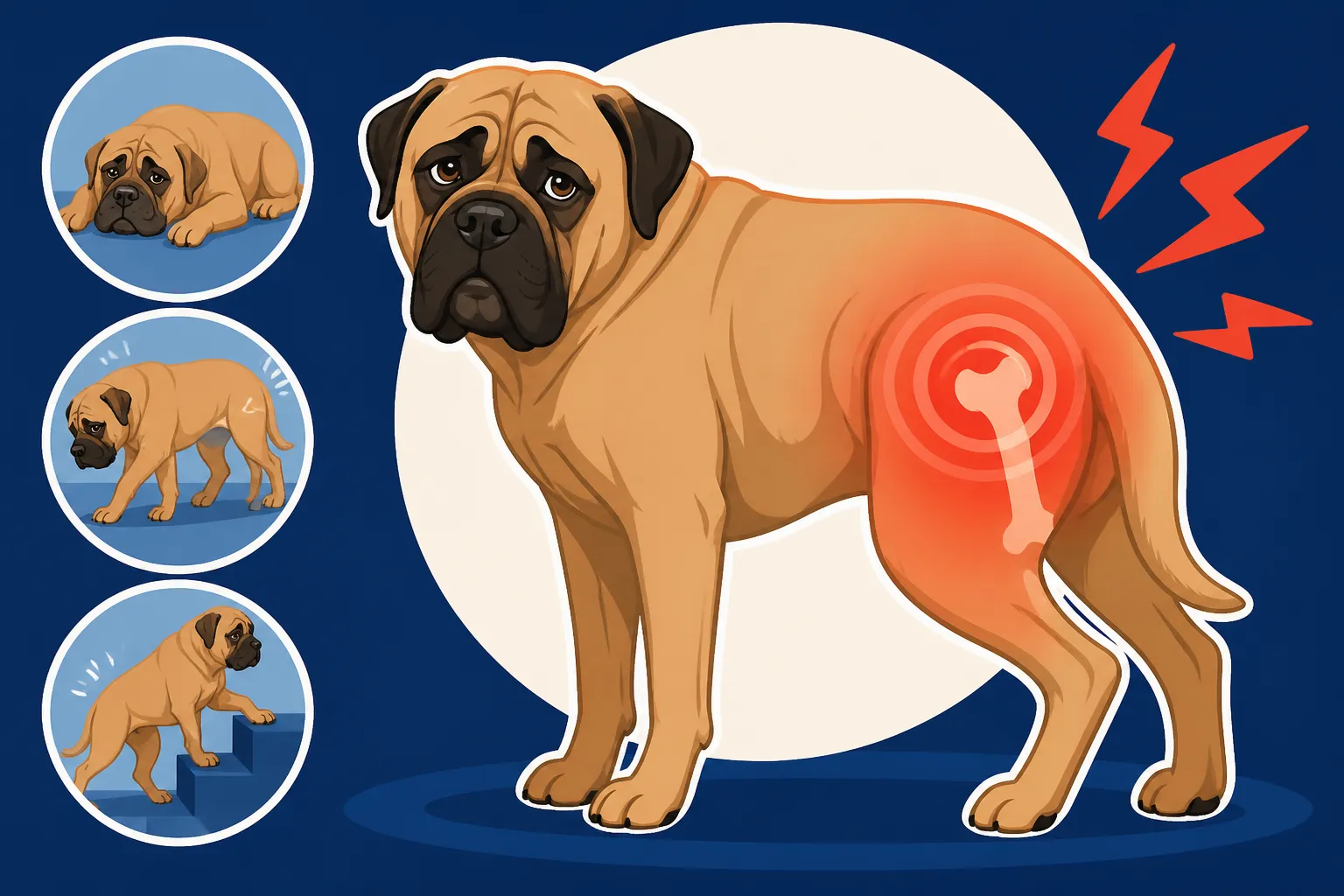
One of the first things you might notice is a subtle shift in how your Bullmastiff moves. They might not be overtly limping, but their walk might seem a bit stiffer, especially after periods of rest. Getting up from a lying position, especially after a long nap or in the morning, might become more of an effort. You might see them brace themselves more or hesitate before rising. They might also appear hesitant to use stairs, jump into the car, or even get onto their favorite couch.
Pay close attention to their hind end. Do they shift their weight more to their front legs? Is there a slight sway in their hips when they walk? Sometimes, you might notice a subtle "bunny hop" gait when they run or go upstairs, where both back legs move together rather than independently. This is a classic compensatory movement for hip pain, as it minimizes the painful rotation in the hip joint. These aren't just quirks; they're valuable clues.
Reluctance to Engage in Favorite Activities
A Bullmastiff's joy often comes from their routines: a walk, a romp in the yard, a game of gentle tug. If you notice your dog becoming less enthusiastic about these once-loved activities, it’s a significant red flag. They might decline to chase a ball, cut short their walks, or simply prefer to lie down instead of playing. This isn't laziness; it's often a sign that the activity itself causes discomfort.
They might even avoid certain positions that put pressure on their hips. For example, a dog with hip pain might stop sitting squarely, preferring to "lazy sit" with one hip splayed out to the side. They might also choose to lie on one side predominantly, or avoid lying down on hard surfaces altogether, even if they used to love to sprawl on the cool tile. These seemingly small changes are your Bullmastiff's way of telling you something is wrong, even when they can't voice it.
Obvious Indicators: When Hip Pain Becomes Hard to Ignore
While Bullmastiffs are masters at hiding discomfort, eventually, the pain can become too severe to conceal. At this stage, the signs are usually more pronounced and can significantly impact their quality of life. This is when most owners realize something is definitely wrong and seek immediate veterinary attention.
Visible Lameness and Muscle Atrophy
The most obvious sign of significant hip pain is overt lameness or limping. This might be constant, or it could manifest after exercise or prolonged rest. You might see a noticeable bob of the head as they try to shift weight off the painful hip, or their gait might become severely asymmetric. One of the most heartbreaking signs is when you observe Why an Aging Bullmastiff Struggles to Rise, often straining and pushing with their front legs to get their hindquarters up.
As the pain progresses, and the dog avoids using the affected leg as much, you'll start to see muscle atrophy in the hindquarters. One hip or both might look noticeably thinner or less muscular compared to their prime. Stand behind your Bullmastiff and look down at their hips; a healthy Bullmastiff should have well-muscled, rounded hindquarters. If one side looks concave or sunken, it's a strong indicator of muscle loss due to disuse, usually from pain.
Changes in Temperament and Interaction
Chronic pain doesn't just affect the body; it profoundly affects a dog's mood and personality. A Bullmastiff in constant pain might become more irritable, sensitive to touch, or even snap if their sore hip is accidentally bumped. They might withdraw from family interactions, seek solitude, or become less tolerant of other pets or even children. This isn't because they're being "mean"; it's a desperate attempt to protect themselves from further pain.
Conversely, some Bullmastiffs might become clingier, seeking comfort and reassurance from their owners. They might sigh more frequently, vocalize with soft whimpers, or even pant excessively due to discomfort. These behavioral changes are often just as critical as physical signs and should never be dismissed. If your gentle giant suddenly seems unlike themselves, pain is often a primary suspect.
| Sign Category | Early/Subtle Signs | Advanced/Obvious Signs |
|---|---|---|
| Movement | Hesitation to jump/climb, stiffer after rest, subtle "bunny hop" when running, slight hip sway | Overt limping (lameness), severe difficulty rising, inability to jump, dragging hind legs |
| Behavior | Reluctance to play, "lazy sit" position, choosing soft resting spots, decreased enthusiasm for walks | Withdrawal, irritability, snapping when touched, excessive panting or whining, guarding painful area |
| Physical | No visible changes, possibly subtle muscle stiffness | Visible muscle atrophy in hindquarters, uneven stance, sensitivity to touch around hips, audible grinding (rarely) |
| Impact | Mild decrease in activity, occasional discomfort | Significant impact on daily life, severe pain episodes, noticeable decline in mobility |
Taking Action: What to Do When You Suspect Hip Pain
Discovering your Bullmastiff is in pain is distressing, but the good news is that there are many ways to manage hip discomfort and improve their quality of life. The key is early intervention and a proactive approach in partnership with your veterinarian.
When to Consult Your Veterinarian
If you've noticed any of the signs discussed, even the subtle ones, it's time to schedule a visit with your veterinarian. Don't wait until the pain is debilitating. Explain all the changes you've observed, no matter how minor they seem. Your vet will perform a thorough physical examination, assessing your Bullmastiff's gait, range of motion in the hips, and palpating the joints for pain or crepitus (a grinding sensation).
Often, the next step will involve diagnostic imaging. Your vet will likely recommend X-rays of the hips. When a Bullmastiff Should Be X Rayed is often determined by the presence of clinical signs, but sometimes proactive screening is recommended. These X-rays will show the conformation of the hip joints, the degree of laxity, and any signs of osteoarthritis. It’s the definitive way to diagnose hip dysplasia and assess its severity. While the news can be tough, having a clear diagnosis allows you to develop the most effective treatment plan.
Management Strategies for Bullmastiff Hip Pain
Once a diagnosis is made, your vet will discuss a range of management options. These typically fall into conservative (non-surgical) and, in some cases, surgical categories. For most Bullmastiffs, especially those diagnosed later in life with arthritis, conservative management is the first line of defense.
Lifestyle and Weight Management
One of the most impactful things you can do for a Bullmastiff with hip pain is to keep them at a healthy, lean weight. Every extra pound puts immense strain on already compromised joints. Your vet can help you determine the ideal body condition score for your dog and develop a diet plan to achieve it. Keeping a Bullmastiff Lean Is the Best Thing You Can Do for their long-term joint health. Regular, moderate exercise that avoids high-impact activities is also crucial. Think swimming, leash walks, and gentle play rather than intense running or jumping.
Medications and Supplements
Your vet might prescribe anti-inflammatory medications (NSAIDs) to manage pain and reduce inflammation, especially during flare-ups. There are also joint supplements, often containing glucosamine, chondroitin, and MSM, that can help support cartilage health and reduce inflammation. While supplements alone won't cure dysplasia, they can be a valuable part of a comprehensive management plan. You might wonder Whether a Bullmastiff Needs Joint Medication Early, and the answer often depends on the individual dog and the severity of their condition. Your vet might also discuss other options like Librela or Adequan injections, which can provide significant pain relief and support joint health.
Physical Therapy and Environmental Modifications
Physical therapy, including hydrotherapy (swimming in a controlled environment) and targeted exercises, can help strengthen the muscles surrounding the hips, providing better support and reducing pain. This can be done with a certified canine rehabilitation therapist. At home, making environmental modifications can make a huge difference. Provide orthopedic dog beds to cushion joints, use non-slip rugs on slick floors, and consider ramps for getting into cars or onto furniture. As your Bullmastiff gets older, What Changes in an Aging Bullmastiff's Care will become increasingly important, and these small adjustments can greatly enhance their comfort and mobility.
Financial Preparedness and Pet Insurance
Managing hip pain, especially if it progresses to severe arthritis, can incur significant veterinary costs for diagnostics, medications, physical therapy, and potentially even surgery. This is where pet insurance, like a plan from Healthy Paws, can be an absolute lifesaver. Having coverage in place when your Bullmastiff is young and healthy means that when these issues inevitably arise, you can focus on getting them the best care without the added stress of financial burden.
Remember, Why a Bullmastiff's Bills Come Early for various health issues, including hip problems, means planning ahead is crucial. Investing in a good pet insurance policy when they are puppies ensures that conditions like hip dysplasia are covered, as long as they aren't pre-existing. It's truly empowering to know that if your Bullmastiff needs ongoing pain management, specialized treatments, or even surgery, a significant portion of those expenses can be reimbursed. Always research policies carefully to understand What Insurance Covers on a Bullmastiff and choose one that offers comprehensive coverage for chronic conditions.
Getting a regular check-up for your Bullmastiff is also vital. How Often a Bullmastiff Needs a Wellness Exam gives your vet the opportunity to catch subtle changes early, which can lead to better outcomes for managing conditions like hip pain. Being proactive with their health care and having a financial safety net through insurance can make all the difference in providing your beloved Bullmastiff a comfortable, happy life, even with hip challenges.
Disclaimer
This article is intended for informational purposes only and is not a substitute for professional veterinary advice. Always consult with a qualified veterinarian for any health concerns or before making any decisions about your Bullmastiff's care.