What Cruciate Surgery Costs on a Bullmastiff
One of the most heart-wrenching and financially taxing health challenges a Bullmastiff owner can face is a torn cruciate ligament. Seeing your strong, loyal companion suddenly unable to put weight on a leg, limping painfully, or even refusing to move, is a truly awful experience. Beyond the immediate distress for your dog, the prospect of surgery can bring on significant worry about the cost involved. This guide is here to walk you through the various expenses associated with cruciate surgery for your Bullmastiff, from diagnosis to recovery, so you can be prepared.
Understanding Cruciate Ligament Tears in Bullmastiffs
When a Bullmastiff suddenly can't use one of its back legs, a torn cranial cruciate ligament (CCL) is often the culprit. This isn't just a minor sprain; it's a serious injury that usually requires surgical intervention, especially in a dog of this size and weight. Knowing what it is and why it happens can help you understand the urgency and the approach to treatment.
What Exactly is a Cruciate Tear?
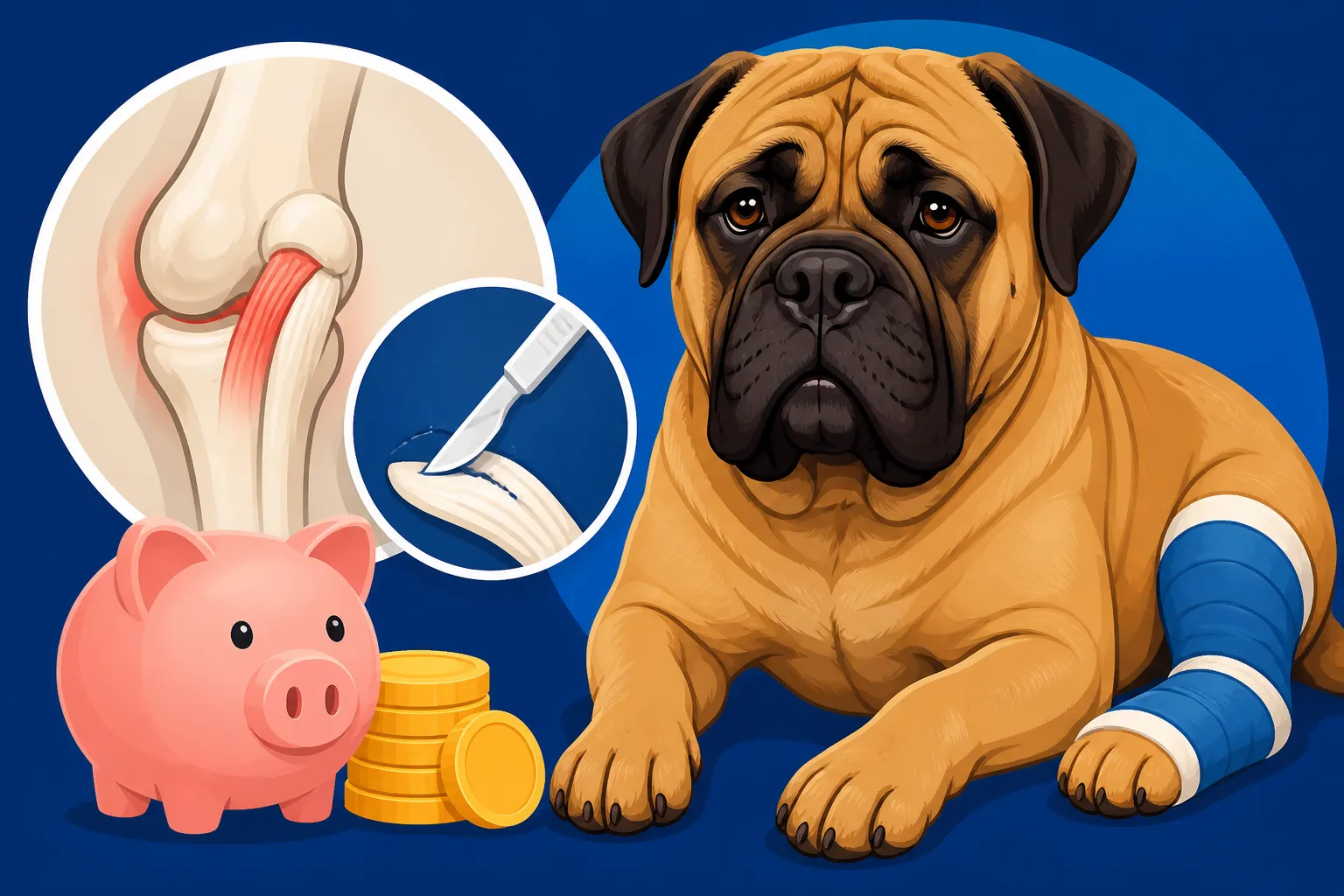
Think of the cranial cruciate ligament in a dog's knee (stifle joint) like the ACL in a human knee. It's a crucial band of tissue that stabilizes the joint, preventing the shin bone (tibia) from sliding forward relative to the thigh bone (femur). When this ligament tears, either partially or completely, the knee becomes unstable. This instability causes pain, inflammation, and can lead to progressive arthritis if not addressed. In a large, heavy breed like a Bullmastiff, the forces on this joint are immense, meaning even a minor tear can quickly worsen, and the instability is far more pronounced than in a smaller dog.
Unlike acute injuries in humans that often result from a sudden trauma, canine cruciate tears, particularly in larger breeds, are often degenerative. This means the ligament weakens over time, a process that can be happening for months or even years before a noticeable limp appears. A seemingly minor misstep or jump can then be the "straw that breaks the camel's back," leading to a full tear. The pain is instant, and without the ligament, the joint simply can't function correctly.
Why Bullmastiffs Are Prone to Cruciate Issues
Bullmastiffs, with their impressive stature and solid build, unfortunately, come with a predisposition to certain orthopedic problems, and cruciate tears are high on that list. Their sheer size and weight put tremendous stress on their joints, even during normal activities like walking or standing up. Imagine carrying an extra fifty pounds on your frame every single day; that's the kind of load their ligaments endure. This constant strain can contribute to the gradual degeneration of the cruciate ligament over time.
Genetics also plays a significant role. While it's not always a clear-cut inheritance pattern, certain lines and breeds, including Bullmastiffs, are statistically more likely to experience these tears. Factors like knee conformation, bone structure, and even the angle of the tibia can contribute to increased stress on the ligament. Keeping your Bullmastiff at a healthy, lean weight is one of the best things you can do to mitigate some of this risk, as excess weight only exacerbates the strain. Ignoring this fundamental aspect can accelerate joint degeneration and bring forward the day your dog may need Cruciate Tears in a Bullmastiff surgery.
Signs Your Bullmastiff Might Have a Cruciate Injury
Recognizing the signs of a cruciate tear early can be tough because Bullmastiffs are notoriously stoic, often hiding their discomfort until it becomes severe. However, there are some tell-tale indicators. The most common sign is a sudden, obvious limp, often characterized by holding the affected leg up completely, refusing to put any weight on it, or a "toe-touching" gait where they just lightly graze the ground with their paw. You might notice them struggling to get up from a lying position, hesitant to jump into the car, or showing a general reluctance to engage in their usual activities.
Sometimes, the initial lameness might improve slightly with rest and anti-inflammatory medication, only to return worse later. This waxing and waning lameness can be deceptive, making owners think it's just a minor sprain. However, the underlying instability remains, and the joint continues to suffer damage. You might also feel swelling around the knee joint or notice a click or pop when the joint moves. If you observe any of these symptoms, especially in a breed like a Bullmastiff, it's crucial to get them to the vet promptly for a thorough examination. Early diagnosis and intervention can significantly impact your dog's long-term comfort and mobility, and understanding Why a Bullmastiff Tears Its Cruciate can help you recognize potential issues.
Initial Diagnosis and Pre-Surgery Costs
Once you suspect a cruciate injury, the journey to treatment begins with a veterinary visit. This initial assessment and the diagnostic steps that follow are critical for confirming the diagnosis, assessing the severity, and ruling out other potential issues. These initial steps come with their own set of costs that are separate from the surgery itself.
The Vet Visit and Initial Assessment
Your first stop will be your regular veterinarian. They'll perform a thorough physical examination, which includes feeling the knee joint for instability, swelling, and pain. A key diagnostic maneuver for cruciate tears is the "cranial drawer test" and the "tibial compression test," where the vet tries to move the bones of the knee joint in a way that reveals instability. This test requires a very cooperative dog, and for a large, strong Bullmastiff, sedation might be necessary to get an accurate result, which adds to the initial cost.
Beyond the physical exam, the vet will discuss your Bullmastiff's history, activity levels, and the onset of symptoms. They'll also explain the potential treatment options, which almost invariably involve surgery for a dog of this size. The cost of this initial consultation and physical exam can vary widely depending on your clinic's location and whether sedation is required for proper examination. You might also leave with some pain medication and anti-inflammatories to make your Bullmastiff more comfortable in the interim, adding to the immediate out-of-pocket expenses.
Diagnostic Imaging: X-rays and Beyond
To confirm the diagnosis and assess the extent of arthritis that may already be present, X-rays are usually the next step. While X-rays don't directly show the soft tissue of the ligament, they can reveal signs of joint effusion (fluid in the joint), bone spurs (osteophytes) indicative of arthritis, and the characteristic displacement of bones that suggests a torn cruciate. Multiple views of the affected knee, and sometimes the opposite knee, are typically taken. Again, for a large dog like a Bullmastiff who may be in pain, sedation is often necessary to get clear, diagnostic radiographs, pushing up the cost.
In some complex cases, or if other joint issues are suspected, your vet might recommend more advanced imaging like an MRI or CT scan. These provide highly detailed images of soft tissues and bone structures, offering a clearer picture if the diagnosis isn't straightforward or if there are concerns about meniscal tears or other damage within the joint. These advanced diagnostics are often performed by specialists and come with a significantly higher price tag, sometimes in the thousands of dollars, making them a substantial part of the pre-surgical budget. It’s a part of understanding the full scope of Hip Dysplasia in a Bullmastiff or Elbow Dysplasia in a Bullmastiff too.
Pre-Anesthetic Bloodwork and Screenings
Before any surgical procedure involving anesthesia, pre-anesthetic bloodwork is absolutely essential, especially for a large breed like a Bullmastiff. This comprehensive panel checks your dog's organ function (kidneys, liver), blood cell counts, and clotting ability. This information helps the veterinary team ensure your Bullmastiff is healthy enough to undergo anesthesia and surgery, minimizing risks. Costs for this bloodwork vary but are a non-negotiable step to ensure safety.
For Bullmastiffs, specifically, additional screenings might be recommended. Given their predisposition to certain cardiac conditions, a pre-anesthetic cardiac exam, or even an echocardiogram, might be advised by your vet or the surgical specialist, especially if a heart murmur is detected. Conditions like Subaortic Stenosis Is There Before a Bullmastiff's First Birthday or Dilated Cardiomyopathy in a Bullmastiff are serious and need to be assessed before anesthesia to tailor the anesthetic protocol and ensure your dog's safety. These specialized screenings add to the overall diagnostic bill but are vital for mitigating serious risks during the procedure.
The Cruciate Surgery Itself: Procedures and Pricing
Once the diagnosis is confirmed and your Bullmastiff is deemed a suitable candidate, the next major hurdle is the surgery itself. The choice of surgical technique, the expertise of the surgeon, and the facility where it's performed all significantly impact the cost.
Common Surgical Techniques for Large Breeds
For large and giant breeds like Bullmastiffs, simply sewing the torn ligament back together isn't an effective long-term solution due to their weight and the forces on the joint. Instead, orthopedic surgeons use techniques that permanently alter the biomechanics of the knee joint to eliminate the need for an intact cruciate ligament. The two most common and highly recommended procedures are:
- Tibial Plateau Leveling Osteotomy (TPLO): This is one of the most popular and effective surgeries for large dogs. It involves making a curved cut in the top of the shin bone (tibia), rotating it, and then fixing it in place with a bone plate and screws. This changes the angle of the tibial plateau, neutralizing the "tibial thrust" that causes instability. TPLO generally results in excellent long-term function and is widely performed by board-certified veterinary orthopedic surgeons.
- Tibial Tuberosity Advancement (TTA): Similar to TPLO, TTA also aims to neutralize tibial thrust. It involves making a cut in the front part of the tibia (tibial tuberosity), advancing it forward, and securing it with a plate and screws, often with a cage or spacer. This changes the angle of the patellar ligament, also stabilizing the joint.
- Lateral Suture (Extracapsular Repair): While less common for giant breeds, a modified lateral suture technique can sometimes be an option, particularly for less active dogs or partial tears. This involves placing a strong suture outside the joint to mimic the function of the cruciate ligament. However, due to the immense forces in a Bullmastiff's knee, these sutures can stretch or break over time, leading to less stable long-term outcomes compared to TPLO or TTA.
The choice between TPLO and TTA often depends on the individual dog's anatomy, the surgeon's preference and expertise, and sometimes, the cost. TPLO and TTA are generally more expensive due to their complexity, the specialized equipment required, and the orthopedic surgeon's advanced training.
Anesthesia and Surgical Facility Fees
The cost of the actual surgical procedure is a significant component of the overall bill. This isn't just the surgeon's fee; it encompasses a whole range of services and resources. Anesthesia is a major factor: the drugs used, the advanced monitoring equipment (ECG, blood pressure, oxygen saturation, capnography), and the dedicated veterinary technician who monitors your Bullmastiff throughout the procedure. Given a Bullmastiff's size and potential predisposition to breathing issues related to their brachycephalic tendencies, meticulous anesthetic monitoring is absolutely crucial and contributes to the cost.
The surgical facility fees cover the use of the sterile operating room, surgical instruments, drapes, gowns, and all the consumables needed for surgery. It also includes post-operative care for at least one night, often more, especially for TPLO or TTA, where careful monitoring for pain and immediate complications is vital. The expertise of a board-certified veterinary surgeon specializing in orthopedics, which is highly recommended for these complex procedures in large breeds, will naturally come with a higher fee than a general practitioner, reflecting their years of advanced training and experience.
Potential Complications and Their Costs
While cruciate surgery has a high success rate, complications can unfortunately arise, and it's important to be financially prepared for this possibility. One of the most common complications is infection at the surgical site. This can require additional antibiotics, wound care, and in severe cases, removal of the implants, which means another surgery and associated costs. Another concern is implant failure, where the plate or screws break or loosen, necessitating revisional surgery.
Beyond the immediate surgical site, issues can arise with the meniscal cartilages within the knee. Sometimes, a meniscal tear is already present at the time of the cruciate tear and is addressed during the initial surgery. However, a tear can develop after surgery if one wasn't initially present, leading to new lameness and potentially requiring a second procedure to remove the damaged meniscus. Anesthetic complications, though rare, can also occur, and managing these can involve intensive care. Understanding the potential for these setbacks and their associated costs is vital when budgeting for your Bullmastiff's surgery.
Post-Operative Care and Rehabilitation Costs
The surgery itself is only half the battle; the recovery period is just as crucial for a successful outcome, especially for a massive dog like a Bullmastiff. The post-operative care and rehabilitation process are extensive, require significant commitment from you, and come with their own set of expenses.
Medication and Pain Management
Immediately after surgery, your Bullmastiff will be sent home with a regimen of medications to manage pain and inflammation, and often antibiotics to prevent infection. These typically include strong painkillers for the first week or two, followed by non-steroidal anti-inflammatory drugs (NSAIDs) for a longer period. Depending on the individual dog and the surgeon's protocol, other medications like muscle relaxants or gabapentin might also be prescribed. The cost of these medications, especially for a large dog where dosages are higher, can add up quickly over several weeks or months.
Ongoing pain management is critical not only for your Bullmastiff's comfort but also to encourage appropriate weight-bearing during recovery and prevent them from trying to compensate excessively with other limbs. It's a key part of ensuring they can begin the rehabilitation process without undue discomfort. Expect to factor in hundreds of dollars for these essential medications, as highlighted in What a Bullmastiff's Medication Costs by Weight. For ongoing joint health, your vet might also recommend long-term joint supplements, which become a recurring cost.
Physical Rehabilitation and Therapy
For optimal recovery, especially after complex procedures like TPLO or TTA, physical rehabilitation (physical therapy) is highly recommended for Bullmastiffs. Simply resting isn't enough; controlled, progressive exercise is vital to rebuild muscle, restore range of motion, and prevent stiffness. A certified canine rehabilitation therapist can design a tailored program that might include:
- Laser therapy: To reduce pain and inflammation and accelerate healing.
- Hydrotherapy (underwater treadmill): Allows for early, controlled weight-bearing exercise without putting excessive stress on the healing joint, excellent for a heavy breed like a Bullmastiff.
- Therapeutic exercises: Specific movements to strengthen muscles, improve balance, and increase flexibility.
- Manual therapy: Massage and joint mobilizations performed by the therapist.
These rehabilitation sessions are typically weekly or bi-weekly for several months and can be quite costly. However, investing in professional rehab can significantly improve the speed and quality of recovery, often leading to a much better long-term outcome compared to simply doing at-home exercises. It makes a huge difference in How a Bullmastiff Recovers From Cruciate Surgery and helps prevent problems in the other knee.
Follow-up Vet Visits and X-rays
The recovery period involves a series of mandatory follow-up appointments with your surgeon or referring vet to monitor progress. These usually include:
- Stitch removal: About 10-14 days post-op.
- Initial recheck and range of motion assessment: Several weeks after surgery.
- Radiographic recheck: Typically at 8-12 weeks post-op to confirm bone healing. This X-ray is critical to ensure the bone has fully healed before gradually increasing activity. Just like the initial X-rays, this will involve sedation for a Bullmastiff.
Each of these visits, especially those involving X-rays and sedation, will incur additional costs. These follow-up appointments are not optional; they are crucial to ensure the surgery has been successful, that healing is progressing as it should, and to make adjustments to your Bullmastiff's rehabilitation plan as needed. They also provide an opportunity for your vet to assess the contralateral (other) knee, as it's sadly common for Bullmastiffs to tear the other cruciate ligament within a year or two of the first, a phenomenon discussed in Whether a Bullmastiff Tears the Other Knee Next.
The Full Financial Picture: Totals and Considerations
When you add up all the components, cruciate surgery for a Bullmastiff is a significant financial undertaking. It's not just a single bill; it's a series of expenses spread out over several months. Understanding the full scope is essential for responsible pet ownership.
Breaking Down the Total Cost
The total cost of cruciate surgery on a Bullmastiff can vary widely based on your geographic location, the specific surgical procedure chosen (TPLO/TTA being more expensive), the surgeon's fees (general practitioner vs. board-certified specialist), and whether complications arise. However, to give you a realistic idea, you should prepare for a range that often falls between these figures:
| Cost Component | Estimated Range for Bullmastiff (USD) | Notes |
|---|---|---|
| Initial Diagnosis | ||
| Vet Exam & Initial Sedation | $150 – $400 | Includes consultation, physical exam, possibly mild sedation for knee manipulation. |
| X-rays (incl. sedation) | $300 – $800 | Multiple views, often requiring sedation for clarity. |
| Pre-Anesthetic Bloodwork | $200 – $500 | Essential for surgical safety. |
| Optional: Advanced Imaging (MRI/CT) | $2,000 – $5,000+ | For complex cases, consult with a specialist. |
| Surgery | ||
| TPLO/TTA Procedure | $4,000 – $8,000+ | Includes surgeon's fee, anesthesia, facility, implants, initial hospitalization. |
| Lateral Suture | $2,000 – $4,000 | Less common for Bullmastiffs, generally lower cost. |
| Post-Operative Care | ||
| Medications (pain, anti-inflam.) | $200 – $600 | Varies with duration and dog's weight. |
| Physical Rehabilitation | $100 – $200 per session | 8-12+ sessions often recommended. Total $800 – $2,400+ |
| Follow-up Vet Visits (X-rays incl.) | $300 – $700 per visit | Typically 2-3 follow-up visits, with at least one needing X-rays/sedation. |
| Total Estimated Cost | $6,000 – $15,000+ | This is a broad range; costs can exceed this with complications. |
This table provides a general overview, but it’s crucial to get a detailed estimate from your veterinary surgeon. Remember, these costs can add up quickly, especially if your Bullmastiff needs surgery on both knees at different times.
Pet Insurance and Cruciate Surgery
This is where pet insurance truly shines and can be an absolute lifesaver for Bullmastiff owners. Given the breed's propensity for cruciate tears and other orthopedic issues, having a comprehensive pet insurance policy in place before any symptoms appear is highly advisable. Policies typically cover a significant percentage (often 70-90%) of accident and illness costs, which cruciate surgery falls under.
However, there are crucial considerations:
- Waiting Periods: Most policies have waiting periods (e.g., 6-12 months) before orthopedic conditions like cruciate tears are covered. This means you can't buy a policy today and expect coverage for surgery next month if a tear occurs. This is why insuring a Bullmastiff from eight weeks is so important.
- Pre-Existing Conditions: If your Bullmastiff has shown any signs of lameness or a cruciate issue before you enroll in a policy, or during the waiting period, it will almost certainly be considered a pre-existing condition and won't be covered.
- Annual Limits and Deductibles: Understand your policy's annual limit and your deductible. While a policy from a provider like Healthy Paws can significantly reduce your out-of-pocket expenses, you'll still be responsible for the deductible and the remaining percentage not covered.
Many Bullmastiff owners, when reflecting on Whether Uninsured Bullmastiff Owners Regret It, will attest that pet insurance for a large breed with known health risks is a sound investment. It transforms a potentially crippling multi-thousand-dollar bill into a much more manageable out-of-pocket expense.
Budgeting and Financial Planning
Even with insurance, you'll still have out-of-pocket costs, and if you're uninsured, the full amount falls on you. This is why proactive financial planning is so important for Bullmastiff ownership. Establishing a dedicated emergency fund for your pet, as advised in What a Bullmastiff's Emergency Fund Should Hold, can provide a crucial safety net for unforeseen medical emergencies like cruciate surgery. Aim to have at least several thousand dollars set aside, ideally covering the upper range of potential surgical costs.
If you find yourself facing the bill without adequate funds, discuss payment options with your veterinary clinic or specialist. Many clinics offer payment plans or work with third-party financing companies that provide low or no-interest payment options. Some owners turn to personal loans or even crowdfunding in desperate situations. While it's tough, remember that your Bullmastiff depends on you for their health and comfort. Preparing for these kinds of expenses is part of understanding What a Bullmastiff Costs Over Its Lifetime. For day-to-day needs, budgeting for essentials from retailers like Chewy or exploring fresh food options like Ollie can help you manage regular expenses, allowing you to save for bigger medical needs.
Disclaimer
This article is for general informational purposes only and does not constitute professional advice. Laws, prices and regulations vary by location and change over time. Consult a qualified professional for guidance on your specific situation.