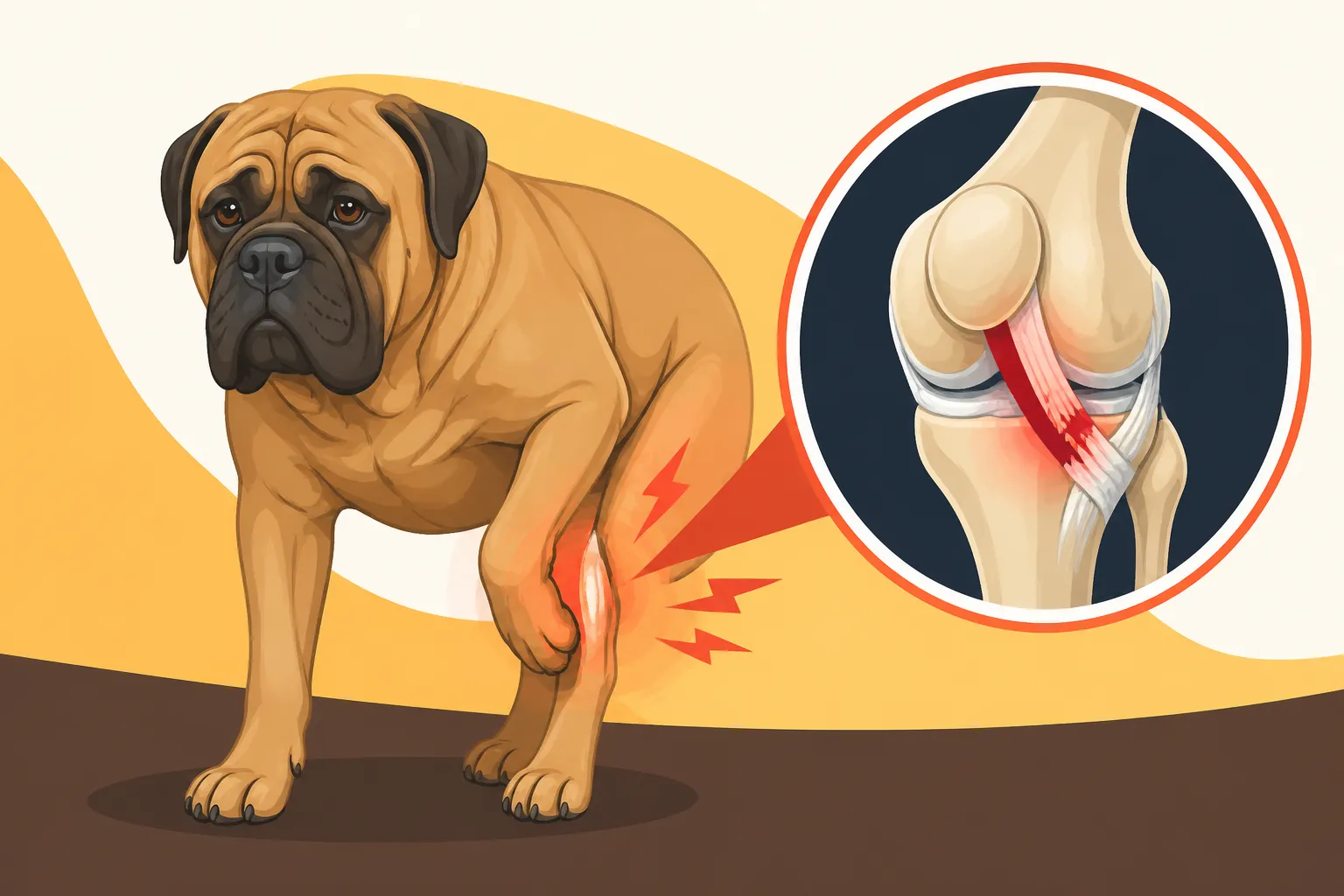
Why a Bullmastiff Tears Its Cruciate
Few things are more heartbreaking than seeing your big, beloved Bullmastiff suddenly lame, holding a back leg up as if it's broken, or struggling to get comfortable. Often, this agonizing sight is due to a torn cruciate ligament, a common and painful injury in our gentle giants that can lead to significant physical and financial strain. This guide will meticulously unpack why Bullmastiffs are particularly susceptible to this injury, what to watch for, and how to navigate diagnosis, treatment, and prevention.
Understanding the Cruciate Ligament in Bullmastiffs
When we talk about a "torn cruciate," we're usually referring to the cranial cruciate ligament (CCL) in dogs, which is very similar in function to the anterior cruciate ligament (ACL) in humans. This vital band of tissue resides within the knee joint, connecting the femur (thigh bone) to the tibia (shin bone). Its primary job is to stabilize the knee, preventing the tibia from sliding forward relative to the femur and limiting excessive internal rotation.
The Anatomy of a Bullmastiff's Knee
Imagine your Bullmastiff's powerful hind leg. The knee, or stifle, joint is a complex marvel of engineering, but it's also highly susceptible to injury, especially under the immense weight and forces a Bullmastiff exerts. The CCL is one of four ligaments that crisscross inside the knee, providing crucial stability. In dogs, unlike humans, cruciate ligament tears are rarely the result of a single, acute trauma from a sports injury. Instead, they often occur due to a long-term degenerative process where the ligament slowly weakens over time before a seemingly innocuous movement causes it to tear partially or completely. This degenerative process is a key factor in why Bullmastiffs, with their specific breed characteristics, are so prone to these injuries.
When this ligament is compromised, whether it's a partial tear that causes mild lameness or a complete rupture that leads to severe pain and instability, the joint becomes unstable. This instability not only causes immediate pain but also accelerates the development of osteoarthritis within the knee, a degenerative condition that can lead to chronic discomfort and reduced mobility if not managed properly. Understanding this gradual weakening is essential for grasping why sudden lameness in your Bullmastiff isn't always from a dramatic accident, but often the culmination of months, or even years, of silent stress on the joint.
Types of Cruciate Injuries
Cruciate injuries aren't always a dramatic, sudden snap. They often manifest along a spectrum, which can sometimes make diagnosis tricky in the early stages. Recognizing these distinctions is important for understanding the progression of the injury and the urgency of treatment.
-
Partial Tears: A partial tear means that some, but not all, of the fibers of the cranial cruciate ligament have ruptured. This can cause intermittent lameness, sometimes appearing as a slight limp that seems to get better with rest, only to flare up again. Your Bullmastiff might favor the leg, or you might notice a subtle decrease in activity. The knee might still have some stability, but the compromised ligament is under increased strain, making it highly susceptible to a complete tear with minimal additional stress. Owners often report their dog being "off" for a while, perhaps showing Signs a Bullmastiff's Hips Hurt, before a more serious episode occurs. This "on-again, off-again" lameness can be frustrating and misleading, often delaying a definitive diagnosis until the situation worsens.
-
Complete Ruptures: A complete rupture is a full tear of the CCL, leaving the knee joint severely unstable. This typically results in acute, non-weight-bearing lameness – your Bullmastiff will likely hold the leg up, refusing to put any weight on it, or only "toe-touch" the ground. The sudden absence of the ligament's stabilizing function causes the tibia to slide forward with every step, a phenomenon vets call "cranial drawer" movement. This is intensely painful and requires immediate veterinary attention. Without the ligament, the joint grinds, leading to rapid cartilage damage and the swift onset of debilitating arthritis. This is often the point at which owners realize the full extent of the problem and seek urgent care.
Why Bullmastiffs Are So Prone to Cruciate Tears
It's a common and devastating problem, leaving many Bullmastiff owners wondering why their magnificent dogs seem to be at such high risk for cruciate ligament tears. The truth is, it's a complex interplay of several factors, deeply rooted in their genetics, physical build, and how they grow.
Genetics and Breed Predisposition
First and foremost, genetics play a significant role. Bullmastiffs are known to have a genetic predisposition to cruciate ligament disease, meaning the quality and strength of their ligaments might simply not be as robust as in other breeds. This isn't just about a single gene; it's likely a polygenic trait, influenced by multiple genes that dictate ligament strength, joint conformation, and even inflammatory responses within the joint. Some researchers believe that the angle of the tibia, known as the tibial plateau angle (TPA), can also contribute. Breeds with a steeper TPA may put more stress on the CCL, leading to earlier and more frequent tears. While there isn't a single "cruciate gene" test readily available, responsible breeders strive to select for sound structure and avoid breeding dogs with a history of early-onset cruciate issues. Unfortunately, even with the best intentions, the widespread nature of this issue within the breed means it's still a risk.
Weight and Conformation
It’s hard to ignore the sheer size and presence of a Bullmastiff. These are dogs built with substantial bone, muscle, and body mass. An adult male Bullmastiff can easily weigh between 110-130 pounds, with females slightly less. This immense body weight puts incredible stress on all their joints, particularly the knees. Think about the cumulative force on those ligaments with every step, every rise from a lay, every subtle shift of weight.
Furthermore, their breed-specific conformation contributes to this vulnerability. Bullmastiffs are powerful, heavy-boned dogs, but they are also supposed to be agile for their size, capable of quickly changing direction. This combination of mass and potential for dynamic movement can be a recipe for disaster when it comes to joint health. Maintaining a lean body condition is paramount for these dogs; even a few extra pounds can dramatically increase the strain on their already susceptible knees. This is why "Keeping a Bullmastiff Lean Is the Best Thing You Can Do" isn't just about general health, but specifically about protecting their joints. Overweight Bullmastiffs face an exponentially higher risk of cruciate tears and other orthopedic issues, a fact that can't be stressed enough.
Activity Levels and Type of Exercise
While Bullmastiffs aren't typically considered high-energy dogs like some working breeds, the type of activity they engage in, or sometimes accidentally engage in, can contribute to cruciate tears. Unlike a sudden, traumatic injury often seen in highly athletic dogs (think a dog jumping off a deck wrong), Bullmastiff tears often happen during seemingly normal activities. A playful romp in the yard, a sudden stop and pivot, a clumsy stumble, or even just twisting awkwardly when getting up from a nap can be the "final straw" for an already weakened ligament.
They might not be marathon runners, but the sheer momentum of a 120-pound dog making a quick turn can generate powerful forces on the knee. Puppies, with their boundless energy and still-developing joints, are particularly at risk if over-exercised or allowed to engage in strenuous, high-impact activities. For instance, allowing a Bullmastiff puppy to climb stairs excessively or to jump on and off furniture can put undue stress on growing ligaments and growth plates, which are still open until a Bullmastiff's growth plates close around 12-18 months. Controlled, low-impact exercise is crucial throughout their lives to build muscle support without overloading their delicate joint structures.
Age and Degenerative Changes
Cruciate ligament disease is often a degenerative condition, meaning the ligament weakens and breaks down over time, rather than from a single acute injury. This process can begin subtly in younger dogs and progressively worsen with age. As Bullmastiffs age, the collagen fibers within their ligaments can become less elastic and more brittle, making them more susceptible to tearing. This is why even a mild twist can cause a complete rupture in an older dog, whereas a younger dog might recover from a similar incident with just a sprain.
The degenerative changes often happen bilaterally, meaning if one knee has a cruciate tear, the other knee is at a very high risk of tearing, often within a year or two. Owners often face the heartbreaking reality of managing two separate knee surgeries. Therefore, once one cruciate is torn, proactive measures to protect the other knee become even more critical, including strict weight management and appropriate exercise. These degenerative changes also contribute to the onset of arthritis, which is why understanding The Age a Bullmastiff Gets Arthritis is important for long-term care planning.
Underlying Conditions and Other Factors
Sometimes, a cruciate tear isn't an isolated incident but is exacerbated or even caused by other underlying health conditions. Joint conditions like Hip Dysplasia in a Bullmastiff or Elbow Dysplasia in a Bullmastiff can alter a dog's gait, putting abnormal strain on other joints, including the knees, as they try to compensate for discomfort elsewhere. Inflammation in the joint from other sources, such as certain immune-mediated diseases, can also contribute to ligament weakening.
While less common, some studies suggest a potential link between early spaying or neutering and an increased risk of orthopedic issues in large breeds, including cruciate tears, due to the role of hormones in bone and joint development. However, this is a complex and highly debated topic, and pet owners should discuss the timing of sterilization with their veterinarian considering all health and behavioral factors for their individual dog.
Finally, nutritional imbalances or deficiencies, while rare in dogs fed a high-quality commercial diet, could theoretically impact connective tissue health. Ensuring your Bullmastiff receives a balanced diet appropriate for large breeds is a fundamental part of their overall health strategy.
Recognizing the Signs of a Cruciate Tear
Recognizing the signs of a cruciate tear early can make a significant difference in your Bullmastiff's prognosis and recovery. While some signs are dramatic, others can be subtle, mimicking other joint issues. Knowing what to look for will help you seek veterinary care promptly.
Sudden Lameness or Limping
The most obvious sign of a cruciate tear is a sudden onset of lameness in a hind leg. If your Bullmastiff was running around fine one moment and then the next is refusing to put weight on a leg or has a noticeable limp, a cruciate injury should be high on your suspicion list. With a complete tear, they might hold the leg up completely, known as non-weight-bearing lameness. With a partial tear, the lameness might be intermittent or less severe, perhaps a noticeable limp after exercise that improves with rest, only to return. This "toe-touching" or favoring of a leg is a clear indication that something is wrong and warrants immediate veterinary attention. Don't assume it will just "get better" on its own, especially with a breed as prone to these injuries as a Bullmastiff.
Pain and Swelling
A cruciate tear is a painful injury. You might observe signs of pain in your Bullmastiff, such as whining, reluctance to move, difficulty getting up or lying down, or even snapping if the affected leg is touched. Swelling around the knee joint can also occur, though it might be subtle and harder to detect under a Bullmastiff's dense musculature and coat. Carefully and gently feeling around the knee, comparing it to the opposite knee, might reveal warmth or puffiness. Your dog might also show reluctance to bear weight on the leg or become unusually protective of it. Any vocalization or sharp movement away when you touch their knee area is a major red flag.
Changes in Gait and Posture
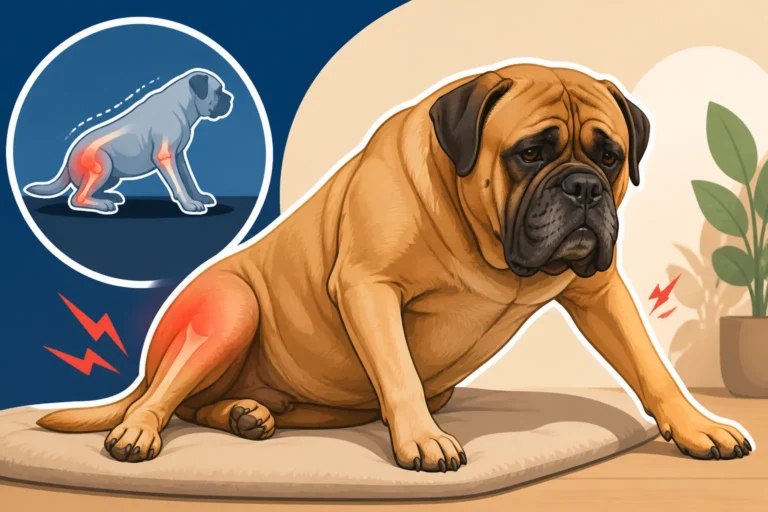
Beyond obvious limping, a Bullmastiff with a cruciate tear might exhibit specific changes in how they stand or move. One classic sign is the "sitting sideways" posture, where they avoid putting full weight on the affected leg by sitting with it extended out to the side rather than tucked underneath them. They might also shift their weight significantly to the other hind leg or even their front legs to alleviate pressure on the injured knee. This compensatory movement can lead to muscle atrophy in the injured leg and overwork the healthy leg, increasing the risk of a cruciate tear in the "good" leg down the line. You might also notice a decreased range of motion in the knee or a stiffness, especially after resting.
Diagnosis and Treatment Options for Cruciate Tears
Once you suspect a cruciate tear, prompt veterinary attention is crucial. Early and accurate diagnosis allows for the most effective treatment plan, which is vital for your Bullmastiff's long-term comfort and mobility.
Veterinary Examination and Tests
Your veterinarian will start with a thorough physical examination. They will palpate your Bullmastiff's knee, looking for swelling, pain, and signs of instability. The two hallmark tests for a cruciate tear are:
- Cranial Drawer Test: The vet will try to manually move the tibia forward relative to the femur. If the ligament is torn, there will be abnormal "drawer" movement. This test often requires the dog to be relaxed or even mildly sedated, especially with a strong, stoic Bullmastiff who might tense up.
- Tibial Compression Test: This involves flexing the hock (ankle) joint, which puts pressure on the knee. If the CCL is torn, the tibia will move forward.
These tests, combined with your observations of lameness, usually provide a strong presumptive diagnosis. X-rays are often taken to confirm changes in the joint consistent with a tear, such as fluid in the joint or early signs of arthritis, and to rule out other orthopedic issues like fractures or bone tumors. While X-rays don't directly show the ligament, they offer critical insights into the overall joint health and help plan for surgery. In complex cases, or if a partial tear is suspected, advanced imaging like an MRI might be recommended, though this is less common due to cost and availability.
Surgical Interventions
For large breeds like Bullmastiffs, surgery is almost always the recommended treatment for a torn cruciate ligament. Without surgical stabilization, the knee will remain unstable, leading to rapid and severe progression of osteoarthritis and chronic pain. The choice of surgical technique depends on the vet's experience, the dog's size, age, and activity level, and your financial considerations.
Here are the most common surgical options:
| Surgical Option | Description | Pros | Cons |
|---|---|---|---|
| Tibial Plateau Leveling Osteotomy (TPLO) | This procedure involves cutting and rotating the top of the tibia (tibial plateau) to change the angle of the joint. This neutralizes the "cranial tibial thrust," making the joint stable without the CCL. | Highly effective for large breeds, excellent long-term outcomes, good return to function. | More invasive, requires specialized equipment and training, longer recovery for bone healing, higher cost. |
| Tibial Tuberosity Advancement (TTA) | Similar to TPLO, this technique involves cutting and advancing the tibial tuberosity (front part of the tibia) to change the biomechanics of the joint, preventing tibial thrust. | Also very effective for large breeds, often good outcomes, generally faster initial weight-bearing than TPLO. | Still invasive, requires specialized training, potential for implant complications, often similar cost to TPLO. |
| Lateral Suture (Extracapsular Repair) | This traditional method involves placing a strong suture material outside the joint, from the lateral fabella (small bone behind the femur) to a drill hole in the tibia, to mimic the function of the CCL. | Less invasive, lower cost, quicker surgery time. | May not be as stable for very large, heavy, or active dogs, higher failure rate in large breeds compared to TPLO/TTA, relies on scar tissue formation for long-term stability. |
Considering the high costs associated with these procedures, which can easily run into thousands of dollars, having pet insurance from a provider like Healthy Paws can be an absolute lifesaver. They can help cover a significant portion of the expenses, easing the financial burden during an already stressful time. For more information on the financial aspects, you might want to read "What Hip Surgery Costs on a Bullmastiff" as knee surgeries are often in a similar price range.
Non-Surgical Management
While surgery is generally the gold standard for Bullmastiffs with cruciate tears, non-surgical management might be considered in very specific circumstances:
- Very mild, partial tears in older, sedentary dogs: Where surgery is not an option due to other health concerns.
- Financial constraints: Although this option usually leads to worse long-term outcomes and more chronic pain.
Non-surgical management typically involves strict rest, anti-inflammatory medications (NSAIDs), pain relievers, weight management, and physical therapy. While some dogs might show initial improvement, the underlying joint instability remains, almost inevitably leading to progressive osteoarthritis and a significantly poorer quality of life in the long run. It's truly a difficult decision, and for a powerful, heavy dog like a Bullmastiff, the continuous instability can cause debilitating pain and severe joint degeneration.
Rehabilitation and Recovery
Regardless of the treatment path, rehabilitation is critical. Post-surgical recovery for a cruciate tear is a long and dedicated process, often taking 4-6 months, sometimes longer. It typically involves:
- Strict confinement: Limiting activity to short, leashed potty breaks.
- Pain management: Medications to keep your Bullmastiff comfortable.
- Physical therapy: Exercises to rebuild muscle, improve range of motion, and promote proper weight bearing. This might include hydrotherapy, passive range of motion exercises, and controlled leash walks.
- Weight management: Keeping your Bullmastiff lean is non-negotiable during recovery and for the rest of their life to protect the surgically repaired knee and the healthy knee.
Adherence to the rehabilitation plan is key to a successful outcome. Rushing the process or failing to follow instructions can lead to complications, implant failure, or re-injury. You’ll be dedicating a lot of time and effort, but the reward is a happier, more mobile Bullmastiff.
Prevention and Long-Term Management
The best offense is a good defense, especially when it comes to a Bullmastiff's joints. While you can't eliminate the genetic predisposition, you can certainly mitigate the risks and manage the long-term health of their knees effectively.
Maintaining a Healthy Weight
This is, without a doubt, the single most critical factor in preventing cruciate tears and managing joint health in Bullmastiffs. Every extra pound your Bullmastiff carries translates to increased stress on their joints, accelerating the degenerative process in the ligaments. A lean Bullmastiff has significantly less strain on their knees, reducing the likelihood of tears and slowing the progression of arthritis.
Work closely with your veterinarian to determine your Bullmastiff's ideal body weight and maintain it through proper nutrition and controlled exercise. You should be able to easily feel your dog's ribs without seeing them, and they should have a discernible waist when viewed from above. If you're struggling to keep the weight off, remember that for a Bullmastiff, "Keeping a Bullmastiff Lean Is the Best Thing You Can Do" for their overall health and longevity. It's often the hardest recommendation for owners to follow, but it yields the most profound benefits.
Appropriate Exercise and Activity
While Bullmastiffs need exercise, it needs to be the right kind. Avoid high-impact activities that involve sudden stops, starts, twists, and jumps, especially during their growth phase and as they age. Think controlled, moderate, and consistent.
- Leashed Walks: Regular, moderate-length walks on soft surfaces (grass, dirt trails) are ideal.
- Swimming: A fantastic low-impact exercise that builds muscle without stressing joints.
- Avoid Rough Play: Discourage vigorous wrestling with other dogs, especially larger ones, that can lead to awkward twists.
- Controlled Puppy Exercise: For Bullmastiff puppies, follow guidelines to prevent over-exercising their developing joints. For example, limit long walks and strenuous activity until their growth plates have closed, usually around 12-18 months. Intense activities can sometimes lead to issues like Cruciate Tears in a Bullmastiff even at a young age.
Remember, the goal is to build strong supporting muscles around the joints without putting excessive pressure on the ligaments themselves.
Joint Supplements and Nutrition
Many Bullmastiff owners proactively use joint supplements, and for good reason. While not a cure-all, certain supplements can support joint health and may help slow the degenerative process. Common ingredients include:
- Glucosamine and Chondroitin: These are building blocks for cartilage and can help maintain its integrity.
- Omega-3 Fatty Acids (Fish Oil): Powerful natural anti-inflammatories that can reduce joint pain and inflammation.
- MSM (Methylsulfonylmethane): Another compound known for its anti-inflammatory properties.
Discuss with your veterinarian whether your Bullmastiff could benefit from joint supplements and which brands and dosages are appropriate. Given the breed's predisposition, many vets recommend starting these early, sometimes even when they are still relatively young, especially considering Whether a Bullmastiff Needs Joint Medication Early. High-quality large breed dog foods often include some of these ingredients, but additional supplementation may be beneficial.
Creating a Joint-Friendly Home Environment
Simple modifications around your home can also make a big difference:
- Non-Slip Surfaces: Place rugs or carpet runners on slippery floors (hardwood, tile) to provide traction and prevent slips that can cause injuries.
- Orthopedic Beds: Provide a supportive, thick orthopedic bed to cushion joints and prevent pressure sores. A good quality orthopedic bed can be a significant investment, so knowing What an Orthopedic Bed for a Bullmastiff Costs can help you plan.
- Ramps or Steps: Consider using ramps for cars or short steps for getting onto furniture (if allowed) to avoid high-impact jumps, especially as your Bullmastiff ages or if they have existing joint issues.
- Warmth: In colder climates, ensuring your Bullmastiff has a warm, draft-free place to sleep can help with joint stiffness.
These small changes can significantly reduce daily wear and tear on their joints and make life more comfortable for your Bullmastiff.
Pet Insurance for Peace of Mind
Given the breed's propensity for orthopedic issues like cruciate tears and other common health concerns such as Lymphoma Kills More Bullmastiffs Than Anything Else or Subaortic Stenosis Is There Before a Bullmastiff's First Birthday, investing in pet insurance is a highly recommended consideration for Bullmastiff owners. A torn cruciate ligament almost always requires expensive surgery and lengthy rehabilitation. Without insurance, these costs can be a significant burden, potentially forcing heartbreaking decisions about your dog's care.
Providers like Healthy Paws offer comprehensive coverage that can help with accident and illness costs, including surgical procedures, rehabilitation, and medications. It's crucial to enroll your Bullmastiff when they are young and healthy, before any conditions arise, as pre-existing conditions are typically not covered. Understanding What Insurance Covers on a Bullmastiff and looking into different plans early can save you a tremendous amount of stress and financial strain down the road. It ensures you can always make health decisions based on what’s best for your beloved companion, rather than solely on your wallet.
Disclaimer
The information provided in this article is for general informational purposes only and is not a substitute for professional veterinary advice, diagnosis, or treatment. Always seek the advice of your veterinarian or other qualified animal health provider with any questions you may have regarding a medical condition. Never disregard professional veterinary advice or delay in seeking it because of something you have read in this article.