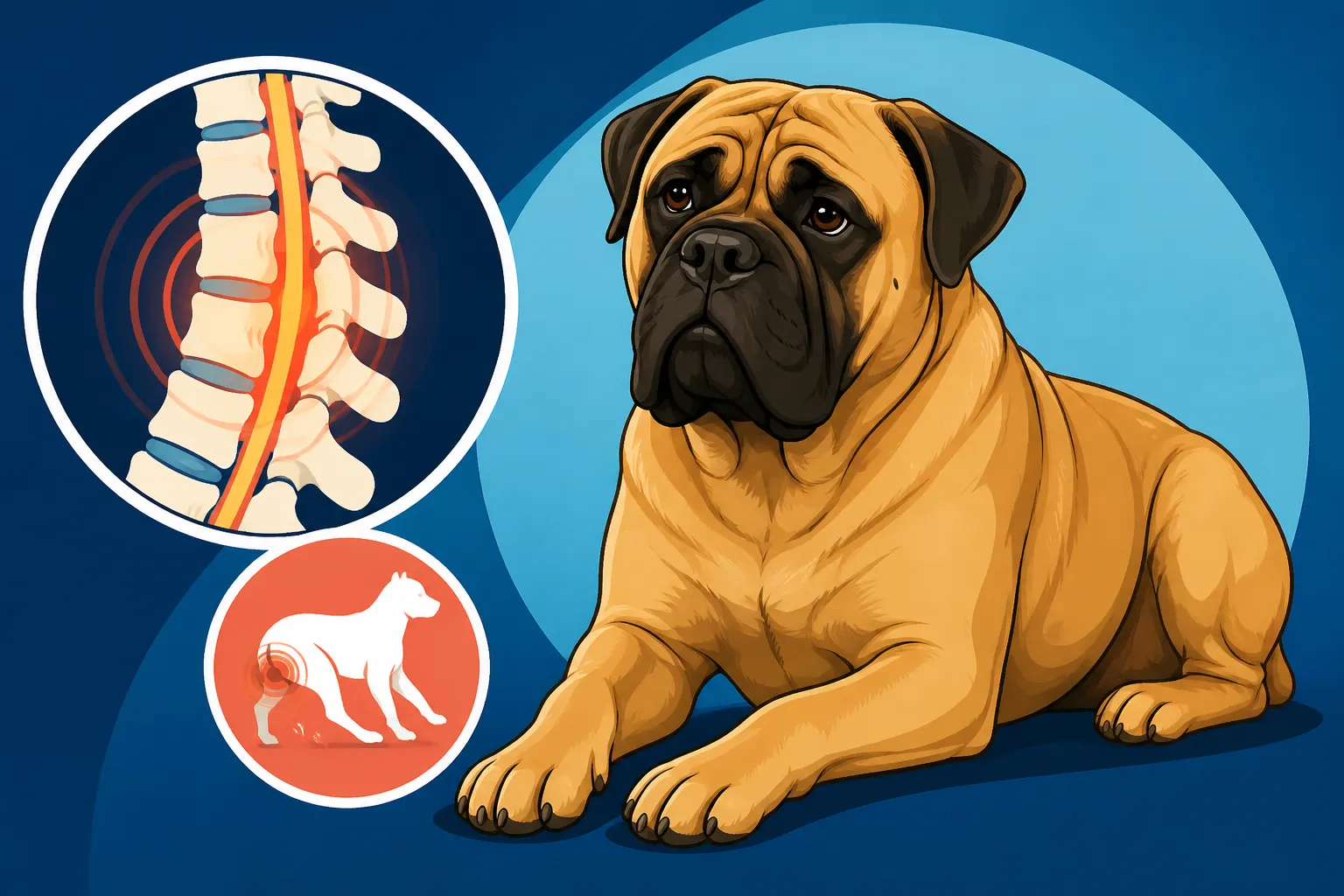
Degenerative Myelopathy in a Bullmastiff
Watching your beloved Bullmastiff start to struggle with their back legs, perhaps stumbling more often or dragging their paws, can be incredibly disheartening and frankly, quite scary. It's easy to dismiss these subtle changes at first, hoping it's just a misstep or a sign of old age, but sometimes it's a symptom of something more serious. This comprehensive guide is here to walk you through understanding Degenerative Myelopathy (DM) in Bullmastiffs, from recognizing its early signs to navigating the diagnostic process and providing the best possible care for your companion.
Understanding Degenerative Myelopathy: What it is and Why Bullmastiffs?
Degenerative Myelopathy (DM) is a cruel, progressive neurological disease that affects the spinal cord in dogs, leading to weakness and eventual paralysis in the hind limbs. It's often compared to Amyotrophic Lateral Sclerosis (ALS) in humans, given its similar debilitating progression. The root of the problem lies in the white matter of the spinal cord, where the myelin sheath (the protective coating around nerve fibers) and the nerve fibers themselves begin to degenerate. This breakdown disrupts the communication between the brain and the hind limbs, causing the dog to lose coordination and strength. It's a disease that doesn't usually cause pain directly, which can be a small comfort, but the loss of mobility is still a profound challenge for both dog and owner.
What Exactly DM Does to a Dog's Body
Imagine trying to walk, but your brain's signals to your legs are constantly breaking up, like a bad cell phone connection. That’s somewhat what it’s like for a dog with DM. The disease primarily targets the thoracic (chest) and lumbar (lower back) regions of the spinal cord. Initially, dogs might show mild instability, a slight wobble, or an odd dragging of a hind paw. As the disease advances, this progresses to more pronounced weakness, difficulty standing, walking, and eventually, they may become unable to move their hind legs at all. The front legs and brain functions generally remain unaffected, which means your dog's mind remains sharp even as their body fails them. This disparity can be particularly heartbreaking to witness. The spinal cord's messages are essentially getting lost, leading to a disconnect that slowly robs your Bullmastiff of their ability to move.
The Genetic Link and Why Certain Breeds, Like Bullmastiffs, Are Predisposed
The heartbreaking reality of DM is that it's largely a genetic disease. The primary culprit is a mutation in the superoxide dismutase 1 (SOD1) gene. This gene is vital for producing an enzyme that helps protect cells from damage. When it mutates, it leads to the accumulation of toxic proteins that harm motor neurons in the spinal cord. While many breeds can carry this mutation, certain ones are significantly predisposed, and unfortunately, the Bullmastiff is one of them. Other breeds commonly affected include German Shepherds, Boxers, Welsh Corgis, and Chesapeake Bay Retrievers.
For a Bullmastiff to be at risk of developing DM, they typically need to inherit two copies of the mutated SOD1 gene—one from each parent. A dog with one copy is considered a carrier and usually won't develop the disease themselves, but they can pass the mutated gene on to their offspring. This is why responsible breeding practices are so crucial. Reputable breeders strive to screen their breeding stock for this gene to avoid producing affected puppies. You might recall similar concerns around other hereditary conditions like Hip Dysplasia in a Bullmastiff or Subaortic Stenosis Is There Before a Bullmastiff's First Birthday. Understanding the genetic component of DM highlights the importance of asking about parentage health testing when considering a new puppy.
Recognizing the Early Signs of DM in Your Bullmastiff
Identifying Degenerative Myelopathy early can be incredibly challenging because the initial symptoms are often subtle and can mimic other common age-related conditions like arthritis or even cruciate ligament issues. As a large breed, Bullmastiffs are already prone to joint problems like Cruciate Tears in a Bullmastiff, which can further complicate diagnosis. However, paying close attention to your Bullmastiff's movements and behavior can help you notice these subtle changes as they begin.
Subtle Changes in Gait and Coordination
One of the very first things you might notice is a slight change in your Bullmastiff's hind leg movement. They might seem a little clumsy or uncoordinated, particularly when turning or moving on slippery surfaces. Perhaps they'll scuff their paws more, leading to worn-down nails on one side or even minor abrasions on the tops of their toes. You might observe a "wobbly" or "drunken" gait, also known as ataxia. They might drag their feet, causing the paw to knuckling over, where they walk on the top of their foot instead of the paw pads. This knuckling can be sporadic at first, only happening occasionally, but it becomes more frequent and pronounced as the disease progresses.
Think about how your Bullmastiff normally gets up from a lying position. Do they now struggle to push themselves up with their hindquarters? Do they seem to sit slightly lopsided? Or perhaps their tail carriage has changed, seeming less active or lower than usual because moving their hindquarters feels more difficult. These minor alterations, when viewed in isolation, might not seem like much, but a pattern of these subtle signs should raise a red flag and warrant a conversation with your veterinarian. It’s not just about the pain that accompanies things like Hip Dysplasia in a Bullmastiff; DM is about a loss of control, and that looks different.
Progression of Symptoms and What to Watch For
The progression of DM is typically slow and insidious, often unfolding over several months to a few years. What starts as mild hind limb weakness gradually worsens. You might notice your Bullmastiff losing muscle mass in their hind legs, even if they're still eating well and otherwise active – this is known as muscle atrophy. They'll have increasing difficulty with activities that once came naturally, such as climbing stairs, jumping into the car, or even just maintaining balance when standing.
As the disease progresses further, dogs will likely need assistance to walk, perhaps using a sling or harness. Eventually, they may lose the ability to walk entirely, becoming paraplegic. At this stage, urinary and fecal incontinence can also become an issue, not because the bladder or bowel itself is affected, but because the nerves controlling those functions from the brain via the spinal cord are compromised. It's crucial to understand that while the physical decline is profound, DM itself is not painful. Your Bullmastiff's personality, appetite, and ability to interact with you typically remain unchanged, which can make the decision-making process about their quality of life even harder. This progressive nature is why continuous monitoring and early intervention with supportive care are so vital for maintaining comfort and mobility for as long as possible.
The Diagnostic Journey: Confirming DM in Your Bullmastiff
Diagnosing Degenerative Myelopathy in a Bullmastiff can be a challenging and often frustrating process for owners and veterinarians alike. There isn't a single definitive test that can be performed on a living dog to confirm DM with 100% certainty, apart from a post-mortem examination of the spinal cord. This means diagnosis usually involves a combination of ruling out other conditions and considering the genetic predisposition.
Why Diagnosis is Often Challenging
The main reason DM diagnosis is so tricky is that its symptoms overlap significantly with many other neurological and orthopedic conditions that affect a Bullmastiff's hind legs. Conditions such as severe Hip Dysplasia in a Bullmastiff, intervertebral disc disease (IVDD), lumbosacral stenosis, spinal tumors, or even certain forms of arthritis can present with similar signs of weakness, ataxia, and lameness. Your vet will need to perform a thorough neurological exam, checking reflexes, proprioception (awareness of limb position), and muscle mass to localize the problem to the spinal cord. However, even these exams cannot definitively distinguish DM from other spinal issues.
The slow, often asymmetric onset of DM can also throw a curveball. Sometimes one leg seems worse than the other initially, or symptoms fluctuate slightly, which can lead to misdiagnoses. It's a journey of elimination, and it requires patience and a good working relationship with your veterinarian, possibly involving a referral to a veterinary neurologist for advanced diagnostics.
Ruling Out Other Conditions
To arrive at a presumptive diagnosis of DM, your veterinarian will need to systematically rule out other treatable conditions. This often involves a battery of tests:
- X-rays: Spinal X-rays can help identify obvious issues like severe arthritis, fractures, or some disc abnormalities, but they won't show nerve damage directly.
- Blood Tests: Standard blood work can rule out metabolic diseases, inflammatory conditions, or infections that might be causing neurological signs. Your vet might also check for conditions like Hypothyroidism in a Bullmastiff, which can sometimes present with vague neurological symptoms.
- MRI or CT Scans: These advanced imaging techniques are crucial for visualizing the spinal cord and surrounding structures. They can detect disc herniations, tumors, cysts, or spinal cord compressions that could be causing the symptoms. If these scans come back largely normal despite significant neurological signs, DM becomes a much stronger possibility. This step is often where a veterinary neurologist becomes invaluable.
- Cerebrospinal Fluid (CSF) Analysis: A sample of fluid surrounding the brain and spinal cord can be tested for inflammation or infection, further helping to rule out other causes.
The cost of these diagnostic tests can add up quickly, which is why having robust pet insurance like Healthy Paws can be a real lifeline. They can help cover a significant portion of the expenses associated with advanced imaging and specialist consultations, alleviating some of the financial burden during this stressful time.
The Role of Genetic Testing
While not a direct diagnostic test for active DM, genetic testing plays a critical role in assessing a Bullmastiff's risk and can support a presumptive diagnosis. A simple cheek swab or blood sample can be sent to a specialized lab to check for the SOD1 mutation.
Here’s what the results mean:
| Result | Interpretation | Implications |
|---|---|---|
| N/N (Clear) | The dog does not have the mutated gene. They are not at risk for DM and will not pass the mutation to their offspring. | Ideal for breeding. Low concern for DM development. |
| A/N (Carrier) | The dog has one copy of the mutated gene. They are unlikely to develop DM themselves but can pass the mutation to 50% of their offspring. | Should not be bred with another carrier or an affected dog. Can still develop DM, though rare. |
| A/A (At-Risk/Affected) | The dog has two copies of the mutated gene. They are at significant risk of developing DM. It's important to note that not all A/A dogs will develop DM, but the vast majority do if they live long enough. | High likelihood of developing DM. Breeding should be carefully considered or avoided. If symptoms are present, this result strongly supports a DM diagnosis after ruling out others. |
If your Bullmastiff is showing neurological signs consistent with DM and tests as A/A, it provides strong supportive evidence for the diagnosis, especially if other conditions have been ruled out. While the genetic test can't tell you when DM will start or how quickly it will progress, it helps confirm the genetic predisposition. This information is also invaluable for breeders working to eliminate the disease from their lines. For those passionate about the breed, understanding Whether Lymphoma Runs in Bullmastiff Lines or similar genetic predispositions is key to improving future generations.
Managing Life with DM: Support and Care for Your Bullmastiff
While there is no cure for Degenerative Myelopathy, managing the disease focuses on providing supportive care to maintain your Bullmastiff's quality of life for as long as possible. This involves a multi-faceted approach, combining physical therapy, mobility aids, nutritional support, and thoughtful home modifications. The goal is to keep your Bullmastiff comfortable, mobile, and engaged with their family.
Physical Therapy and Exercise
Regular, controlled exercise and physical therapy are paramount in slowing the progression of muscle atrophy and maintaining strength, balance, and coordination. Simply letting your Bullmastiff lay around will accelerate muscle loss. A certified canine rehabilitation therapist can develop a personalized exercise plan that might include:
- Therapeutic Exercises: Gentle range-of-motion exercises, controlled walks on varied surfaces, balance exercises on stability balls or wobble boards.
- Underwater Treadmill: This is a fantastic option as the buoyancy of the water supports your Bullmastiff’s weight, reducing stress on joints while allowing them to move their legs and build muscle. It's often less intimidating than dry land exercises for dogs with mobility challenges.
- Massage: Helps to improve circulation and reduce muscle stiffness.
- Laser Therapy: Low-level laser therapy can help reduce inflammation and promote nerve health, potentially offering some comfort and improving circulation.
Consistency is key. Even short, daily sessions at home, guided by your therapist, can make a significant difference. Keeping your Bullmastiff as active as safely possible will help them retain muscle mass and proprioception for a longer period.
Mobility Aids and Home Modifications
As DM progresses, your Bullmastiff will likely need help getting around. Thinking ahead and preparing your home can greatly reduce stress for both of you.
Mobility Aids:
- Support Harnesses/Slings: These are invaluable for assisting your Bullmastiff with standing, walking, and going up or down stairs. Front and rear harnesses can be used separately or together to provide full body support. For a large dog like a Bullmastiff, a sturdy, well-padded harness is crucial.
- Dog Wheelchairs (Carts): Once hind leg paralysis sets in, a custom-fitted dog wheelchair can give your Bullmastiff back their independence and ability to explore. Many dogs adapt remarkably well to them, allowing them to run and play again. You'll want to ensure it's a durable model designed for a large breed.
- Orthopedic Beds: Providing a firm, supportive orthopedic bed is essential to prevent pressure sores and ensure comfortable rest for a heavy dog like a Bullmastiff, especially as they spend more time lying down.
- Paw Protection: If your Bullmastiff is knuckling over or dragging their paws, dog boots or paw protectors can prevent injury and keep their feet healthy.
Home Modifications:
- Rugs and Runners: Cover slippery floors (hardwood, tile) with rugs or runners to provide better traction and prevent falls. This is also helpful for dogs struggling with other mobility issues, like those described in Why an Aging Bullmastiff Struggles to Rise.
- Ramps: Install ramps to help your Bullmastiff get into the car, onto furniture (if allowed), or navigate a few steps outside. Avoid stairs as much as possible, or use a sling for assistance.
- Raised Food and Water Bowls: These can make eating and drinking more comfortable, especially if your Bullmastiff struggles to lower their head.
- Non-Slip Mats: Place non-slip mats under food and water bowls to prevent them from sliding.
- Easy Access to Outdoors: Consider a dog door if feasible, or ensure easy, flat access to a fenced yard for potty breaks. When incontinence becomes an issue, waterproof bedding and regular cleaning are essential.
Embracing these aids and modifications isn't admitting defeat; it's empowering your Bullmastiff to live their best possible life despite the challenges of DM.
Nutritional and Supplementary Considerations
While no specific diet or supplement can cure DM, supporting overall health and mitigating secondary issues can be beneficial. Discuss any dietary changes or supplements with your vet or a veterinary nutritionist.
- Antioxidants and Anti-Inflammatories: Some veterinarians recommend supplements containing antioxidants like Vitamin E, Vitamin C, N-acetylcysteine (NAC), and alpha-lipoic acid, as well as anti-inflammatory agents like omega-3 fatty acids (fish oil). These might help protect nerve cells, though scientific evidence directly proving their efficacy in slowing DM progression is limited.
- B Vitamins: B vitamins, particularly B12 (methylcobalamin), are important for nerve health. Your vet might suggest injections or oral supplements.
- Joint Supplements: Even if DM is the primary issue, your Bullmastiff will likely have age-related joint changes. Continuing joint supplements like glucosamine and chondroitin can support overall mobility and comfort. You might already be familiar with their benefits from articles like Whether a Bullmastiff Needs Joint Medication Early.
- Weight Management: Keeping your Bullmastiff at a healthy, lean weight is crucial. Excess weight puts additional strain on weakened hind limbs, making mobility even more challenging. Adjust their food intake as their activity level decreases. Quality Feeding a Hundred and Thirty Pound Bullmastiff, but keeping them lean, is essential throughout their life.
- Easy-to-Digest Diet: As mobility decreases, ensure your Bullmastiff is getting a highly digestible, nutrient-dense food that supports muscle mass without excessive calories.
Remember, every Bullmastiff's journey with DM is unique. Working closely with your veterinary team, and adapting care as needed, will help you provide the most compassionate and effective support for your cherished companion.
Disclaimer
The information provided in this guide is for general educational purposes only and should not be considered a substitute for professional veterinary advice. Always consult with a qualified veterinarian or veterinary specialist for any health concerns or before making any decisions about your Bullmastiff's care.