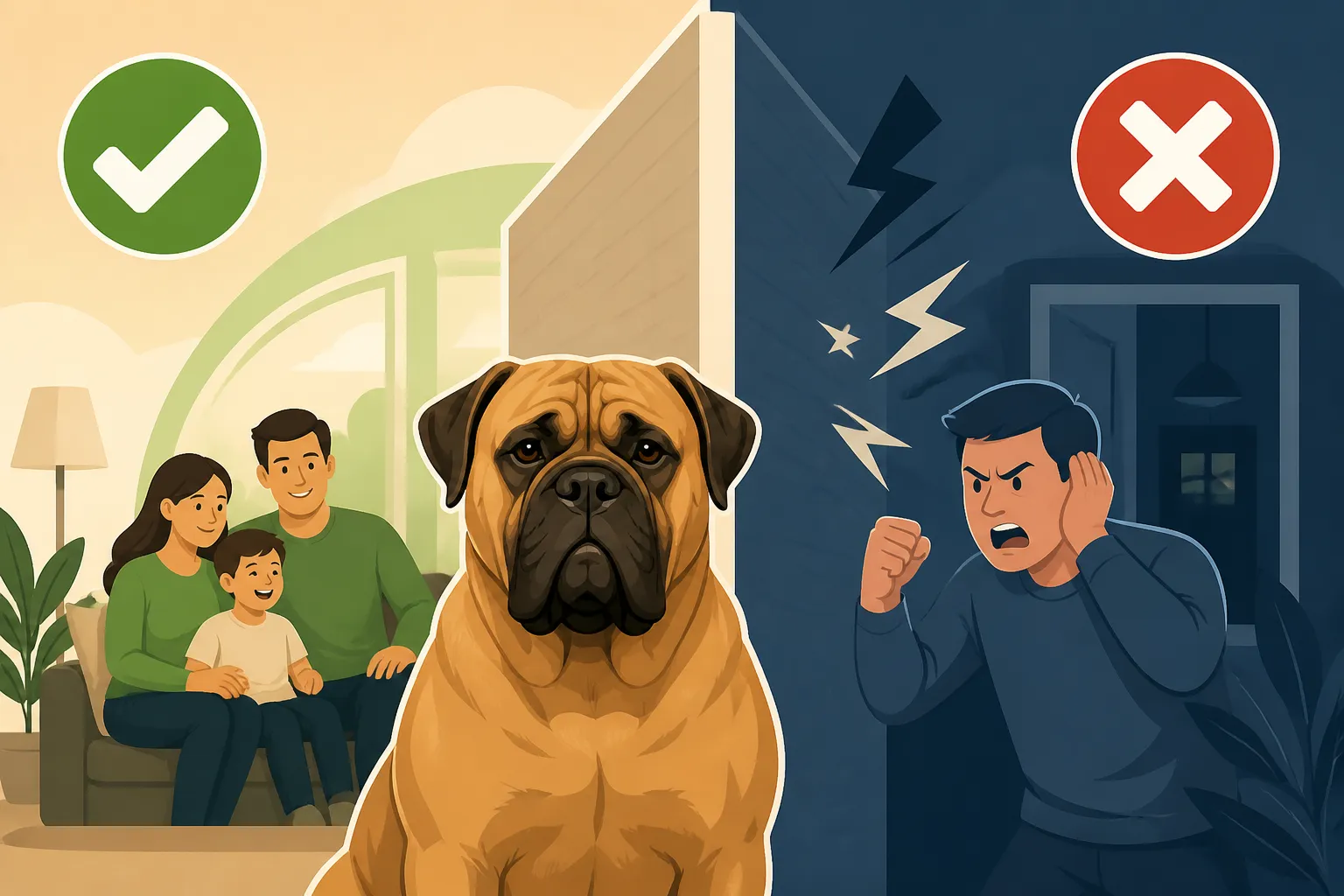
Whether a Bullmastiff Suits a Shared Wall
Bringing a magnificent Bullmastiff into a home with shared walls can be a real head-scratcher. You adore their calm demeanor and devoted nature, but you've also heard tales of their deep barks and legendary snores, leaving you wondering if a peaceful co-existence with neighbors is even possible. This guide will dive deep into the unique vocalizations and habits of Bullmastiffs, offering practical advice and insights to help you manage noise and ensure harmony in shared living spaces.
Understanding the Bullmastiff's Natural Vocalizations
It’s easy to fall in love with the Bullmastiff's stoic presence, and many new owners are drawn to the idea that these dogs are "silent guards." While it's true they aren't typically incessant yappers like some smaller breeds, assuming a Bullmastiff will be completely silent in an apartment or condo with shared walls is a mistake that can lead to friction with neighbors. Their vocalizations, though often infrequent, carry a weight and resonance that demands attention, both from you and from anyone on the other side of that drywall.
The Myth of the "Silent Guard"
The historical role of the Bullmastiff as a gamekeeper's companion meant they needed to work quietly at night, apprehending poachers without alerting the entire estate. This led to their well-deserved reputation as The Silent Guard: Why a Bullmastiff Barks So Little. However, "silent" doesn't mean mute. It means they are generally not prone to the high-pitched, incessant barking that can drive people (and other dogs) crazy. They were bred to be deliberate, to observe and act, rather than to raise a constant alarm.
What this historical context often overlooks in a modern home is the intensity of their occasional sounds. When a Bullmastiff does bark, it’s a deep, resonant sound that can vibrate through walls and floors. It’s not the sharp, piercing bark of a terrier; it's a booming "Woof!" that feels like it comes from their very core. While they might only bark a few times a day, those few barks can be incredibly impactful in a close-quarters living situation, potentially disturbing neighbors who aren't used to such powerful sounds. It's not about frequency as much as it is about sheer volume and depth.
Common Sounds Bullmastiffs Make Indoors
Beyond the occasional bark, Bullmastiffs are a symphony of unique sounds. If you live with one, you already know what I mean! These aren't necessarily "bad" noises, but they are definitely audible through shared walls.
First, there's the snore. Oh, the snore! Bullmastiffs are known for their profound, rumbling snores. Their brachycephalic (short-nosed) structure, combined with their sheer size, often means they are champion snorers. How Loudly a Bullmastiff Snores is a question many owners ponder, and the answer is usually: very loudly. This isn't just a gentle purr; it can sound like a freight train rumbling through your bedroom, and it certainly can be heard through a wall, especially at night when ambient noise levels drop. Imagine trying to sleep next to that, even through a wall. Your neighbors might not find it as endearing as you do.
Then there are the grunts, groans, and sighs. Bullmastiffs are incredibly expressive with their breathing and movements. Getting up from a nap often involves a theatrical groan, settling down can be punctuated by a deep sigh, and a sudden stretch might prompt a snort. These are just part of their charm, a constant soundtrack to their laid-back lives, but they are also sounds that travel. If your dog is prone to these vocalizations, they can accumulate, creating a general hum of dog-related noise that your neighbors might find intrusive.
Factors That Increase Bullmastiff Vocalization
While Bullmastiffs aren't usually excessive barkers, several factors can increase their vocalizations, making shared wall living more challenging. Understanding these triggers is the first step in managing them.
One of the biggest culprits is boredom or lack of mental stimulation. A Bullmastiff, despite its calm demeanor, isn't a couch potato all the time. If they don't get enough appropriate exercise or mental engagement, they can become restless. This restlessness can manifest as "demand" barks, frustrated sighs, or even destructive chewing that creates noise. A dog that is left alone for long periods without anything to do might start vocalizing simply out of loneliness or a need for attention. This isn't just about walks; it's also about puzzle toys, training sessions, and interactive play.
Another significant factor is inadequate socialization. A Bullmastiff that hasn't been properly introduced to various sights, sounds, and people during its critical developmental periods might be more prone to fear-based barking or territorial displays. If every new sound outside the shared wall, or every visitor to a neighbor's door, triggers an alarm bark, then you've got a problem. When to Start Training a Bullmastiff Puppy is crucial to ensure they grow into confident, well-adjusted adults who are less reactive to their environment. A well-socialized Bullmastiff is generally more secure and less likely to react with vocalizations to everyday stimuli.
Bullmastiff Behavior and Shared Walls
The way your Bullmastiff interacts with its environment, particularly regarding perceived threats or separation, has a direct impact on noise levels in a shared wall scenario. Their protective instincts and their strong bond with their human family mean that certain situations can predictably lead to audible behaviors.
Territoriality and Stranger Greetings
Bullmastiffs were bred to be guardians, and that instinct is deeply ingrained. They are naturally protective of their home and their family. While they are usually quiet about it, a sudden knock on the door, the sound of a neighbor's conversation right outside their territory, or the mail carrier's approach can trigger their protective response.
This often starts with a deep, warning bark or a low growl. They aren't necessarily "going crazy" with barking, but rather issuing a clear, powerful statement: "I hear you, and I'm here." How a Bullmastiff Greets a Stranger is often a measured, observant process, but that initial alert can be loud. If your door opens directly into a shared hallway, or if your living room wall is shared with a neighbor's entrance, every coming and going can become a potential trigger. For your neighbors, this repeated deep barking, even if brief, can be unsettling and disruptive, especially if it happens at inopportune times like early mornings or late evenings.
Separation Anxiety and Boredom Sounds
Leaving your Bullmastiff alone, even for short periods, requires careful consideration when you have shared walls. While many Bullmastiffs are fairly independent once mature, some can develop separation anxiety, leading to vocalizations. This isn't just a little whine; it can escalate to sustained barking, howling, or even destructive behaviors that create loud noises, like scratching at doors or chewing furniture. These distress signals are not only heartbreaking for you but also a major source of complaint for neighbors. How Long a Bullmastiff Copes Alone depends heavily on individual temperament and training.
Even if it's not full-blown anxiety, a bored Bullmastiff can be a noisy one. Imagine a 100-plus pound dog sighing dramatically, pacing, or dropping a heavy chew toy on a hardwood floor over and over again. These mundane sounds, amplified by the quiet of an empty apartment and conducted through shared building materials, can quickly become bothersome. Without adequate mental and physical stimulation, they will find ways to entertain themselves, and those ways often involve noise.
Night Noises: Snoring and Sleep Habits
We’ve already touched on the legendary Bullmastiff snore, but it's worth reiterating its impact on shared wall living. Their size and specific head structure make them prone to loud breathing and snoring during sleep. If your dog sleeps in a room with a shared wall, or even in a living area near a shared wall, those nighttime noises can easily penetrate to your neighbor's space.
Beyond snoring, Bullmastiffs can be active sleepers. They might twitch, vocalize (little "woofs" or grunts), or even suddenly thump their tail if they dream intensely. A sudden shift of their massive body can also create a thud on the floor. While these are normal dog behaviors, their sheer size means these actions are amplified. Think about the difference between a Chihuahua shifting in its sleep versus a 120-pound Bullmastiff adjusting its position – the latter will certainly be more noticeable through a thin wall. Consider the layout of your apartment and where your Bullmastiff will typically sleep relative to shared walls, especially bedrooms.
Strategies for Managing Noise in Shared Living Spaces
Living happily with a Bullmastiff and shared walls is absolutely possible, but it requires proactive planning, consistent training, and sometimes, a little creativity. You can't eliminate all sound, but you can significantly mitigate the impact.
Early Socialization and Training are Key
The foundation for a well-behaved, quiet Bullmastiff starts early. Proper socialization exposes your puppy to a wide variety of people, sounds, and environments in a positive way. This helps them develop confidence and reduces the likelihood of fear-based or territorial barking. Enroll in a good puppy class, take them on car rides, introduce them to calm, friendly dogs, and expose them to everyday sounds like vacuum cleaners and doorbells at a young age.
Consistent training is equally vital. A Bullmastiff that understands boundaries and responds reliably to commands is a huge asset. Teaching a "quiet" command can be invaluable for those moments when they do bark at an external trigger. Online training programs, like those offered by BAXTER & Bella, can provide structured guidance and support for owners, teaching you how to manage common behavioral issues from the comfort of your home. They cover everything from basic obedience to managing reactivity, which can be a game-changer for shared living. Remember, a Bullmastiff needs to be trained before they become too big and strong to physically manage. Why a Bullmastiff Must Be Trained Before It Is Strong is not just about control, but about building good habits.
Creating a Quiet and Secure Environment
Your home environment plays a massive role in managing your Bullmastiff's noise levels. Start by identifying where the most common noise triggers are. Is it the front door? The window overlooking a busy street? Then, implement strategies to minimize these triggers.
For visual triggers, heavy curtains or frosted window film can block out sights that might prompt barking. For auditory triggers, a white noise machine or soft music can help mask sounds from neighbors or the hallway, creating a more peaceful environment for your dog. Consider strategically placing furniture against shared walls to act as a sound buffer. Even thick rugs and carpets can absorb sound and reduce echo, making your home quieter for both you and your neighbors.
A designated "safe space" for your Bullmastiff is also incredibly important. This might be a quiet corner with their orthopedic bed and some favorite toys, or a large, comfortable crate. If they feel secure and have a place to retreat, they are less likely to feel anxious or reactive to external stimuli. Make sure their bed is extra comfortable – a supportive, high-density foam bed available on Amazon can help cushion their joints and provide a cozy spot to relax quietly.
Leveraging Tools and Resources
There are many tools and resources available to help manage dog noise, and some can be very effective for Bullmastiffs.
Enrichment toys, particularly those that dispense treats or require mental effort, can keep a bored Bullmastiff occupied for extended periods. Think puzzle feeders, KONGs stuffed with frozen peanut butter, or durable chew toys. These items are readily available on platforms like Amazon and can be lifesavers when you need your dog to settle down quietly while you’re busy or away. A mentally tired dog is often a quieter dog.
For dogs prone to separation anxiety, professional help might be needed. A certified professional dog trainer or a veterinary behaviorist can help you develop a desensitization and counter-conditioning plan to address the root cause of the anxiety, rather than just managing the symptoms. Sometimes, calming supplements or even prescribed medication from your vet might be part of a comprehensive management plan.
If your Bullmastiff's snoring is truly problematic, consulting your veterinarian is a good idea. While snoring is common for the breed, excessive or very labored breathing could indicate an underlying issue that might be alleviated, improving both your dog's health and your neighbors' peace.
Is a Shared Wall Truly Feasible?
Ultimately, deciding whether a Bullmastiff suits a shared wall comes down to a realistic assessment of your dog, your living situation, and your commitment to proactive management. It’s not a simple yes or no answer, but rather a spectrum of feasibility.
Assessing Your Specific Living Situation
Before you commit, take a brutally honest look at your specific apartment or condo. How thick are the walls? Can you easily hear your neighbors through them? If you can hear their conversations clearly, they will almost certainly hear your Bullmastiff.
Consider your neighbors themselves. Are they dog lovers? Do they have young children who nap during the day? Do they work from home or work night shifts? Understanding their routines and sensitivities can help you anticipate potential conflicts and take preventative measures. It’s always better to be proactive and address potential issues before they become problems.
Also, evaluate your own lifestyle. Are you home a lot, or will your Bullmastiff be left alone for many hours each day? If you’re regularly away for 8+ hours, a Bullmastiff might not be the best fit for shared wall living without significant investment in dog walkers or doggy daycare. What a Bullmastiff Does All Day is often sleeping and lounging, but those quiet periods need to be genuinely peaceful.
Communicating with Neighbors Proactively
One of the most powerful tools in navigating shared wall living with a large dog is open and honest communication with your neighbors. Before or shortly after your Bullmastiff arrives, introduce yourselves and your dog. Explain that while Bullmastiffs are generally quiet, they are large dogs and occasional sounds might be heard.
Offer your contact information and genuinely invite them to reach out to you if they ever have concerns about noise. This proactive approach shows respect and a willingness to be a good neighbor, which can go a long way in fostering understanding. You might even offer to have them meet your dog, so they see the gentle giant behind the powerful bark.
Be prepared to adjust your routines if necessary. If a neighbor works from home and your dog tends to bark when the mail arrives, perhaps you can schedule walks during mail delivery times or work on training a "place" command for your dog to go to a quiet spot during those windows. Shared wall living with a Bullmastiff is a commitment to managing their behavior and being a considerate member of your community. With dedication, training, and a bit of soundproofing, you and your majestic Bullmastiff can absolutely thrive in a home with shared walls.
Disclaimer
This article is for general informational purposes only and does not constitute professional advice. Laws, prices and regulations vary by location and change over time. Consult a qualified professional for guidance on your specific situation.