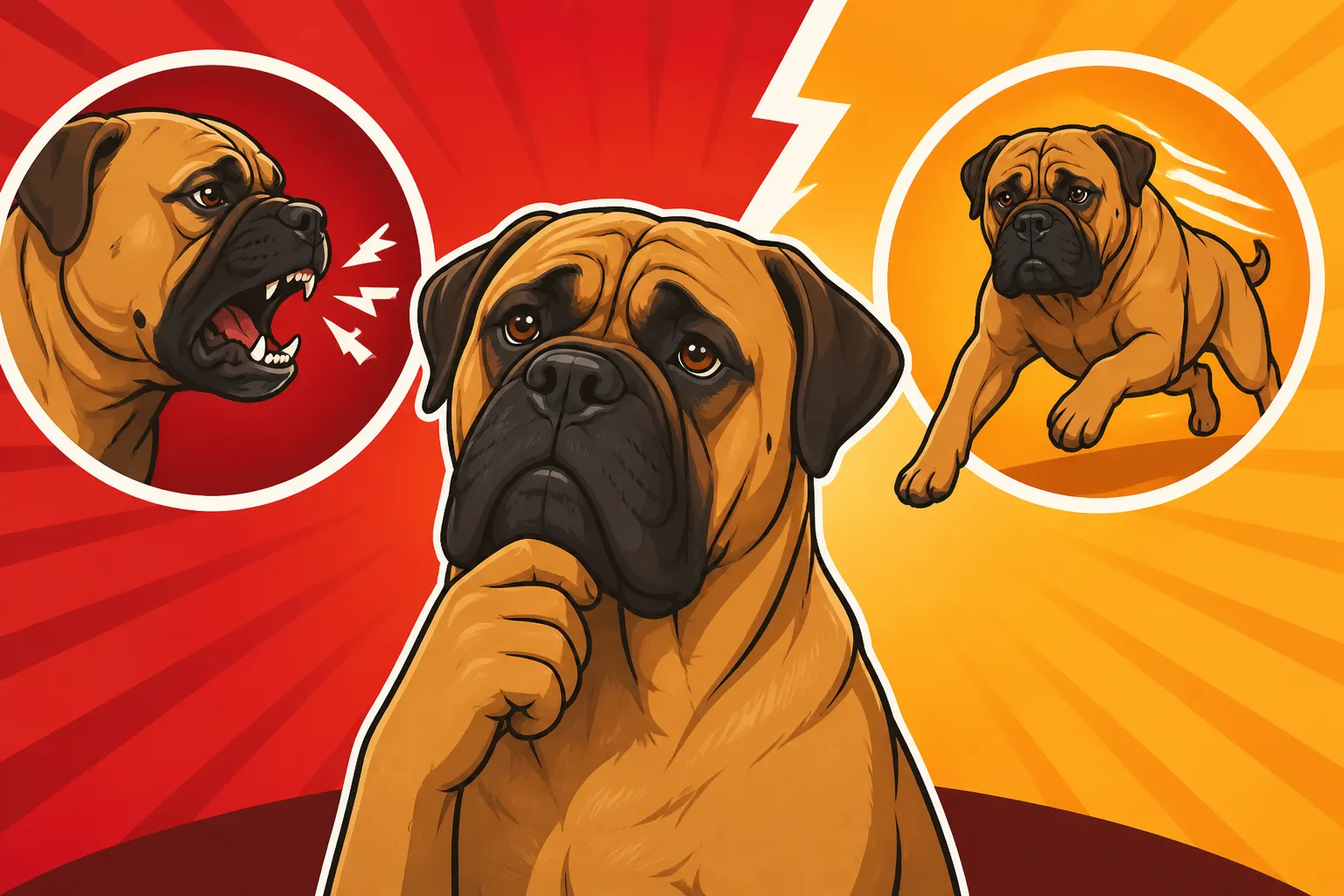
Whether a Bullmastiff Growls Before It Acts
It's a common, and very understandable, concern for any Bullmastiff owner: that low rumble emanating from your beloved giant. When your dog growls, it naturally makes you wonder if an act of aggression is imminent, leaving you anxious and unsure of how to react. This guide will help you decipher your Bullmastiff's growls, understand the context of their communication, and learn how to respond effectively, ensuring a safer and more harmonious home for everyone.
The Complex Language of a Bullmastiff Growl
Let's face it, when a large dog like a Bullmastiff growls, it can be downright intimidating. You might immediately jump to the conclusion that your dog is being aggressive, feeling a knot of fear or frustration. But here’s the thing: a growl is first and foremost a form of communication, a vocal signal from your dog telling you something important. It's not always a precursor to an attack; sometimes it's more like a nuanced conversation starter. Understanding this distinction is the first step toward handling these situations with confidence.
Why Growling Isn't Always a Warning of Aggression
It’s completely natural to feel a pang of worry when your massive Bullmastiff lets out a growl. Their size and powerful build can make even a soft rumble seem like a serious threat. However, equating every growl with impending aggression is a mistake that can actually hinder your relationship with your dog. Think of it this way: humans use many different tones of voice—a playful shout is different from an angry yell. Dogs are no different with their vocalizations.
Your Bullmastiff might growl during an enthusiastic game of tug-of-war, their body language loose and bouncy, tail wagging like crazy. This is a "play growl," a perfectly normal expression of excitement and engagement. On the other hand, a low, guttural growl when someone approaches their food bowl or a favorite toy could signal resource guarding, an issue that needs careful management but isn't necessarily immediate aggression. Then there are growls born of discomfort or pain—a soft grumble when you touch a sensitive spot, or a strained groan as they try to get up. These aren't threats, but rather pleas for understanding. Because Bullmastiffs are known for being deliberate, they often "think through" their actions, and a growl might be part of that process, rather than a quick, aggressive lunge. It’s like their way of saying, "Hold on, I need a moment to decide how to feel about this," which is perfectly in line with how Why a Bullmastiff Pauses Before Obeying their more complex requests.
The context is absolutely everything. A growl isn't a standalone declaration; it's a piece of a larger puzzle. What was happening the moment before the growl? Who was involved? What was your dog’s body language like? Ignoring these contextual clues means missing the full picture of what your Bullmastiff is trying to tell you. Rushing to judgment can lead to misinterpreting their signals and potentially escalating a situation that could have been diffused with a little understanding.
Decoding Different Growl Tones and Situations
Just like human speech, dog growls have different tones, pitches, and durations, each conveying a slightly different message. Learning to differentiate these nuances is crucial for any Bullmastiff owner.
A high-pitched, almost whiny growl that often accompanies a play bow or a bouncy trot is typically a "play growl." Your Bullmastiff's entire body language will be loose and inviting, perhaps even exaggerated, to show they're just having fun. This is common during roughhousing with other dogs or even with you during a vigorous game of fetch. It’s their way of upping the ante on the fun, not a sign of malice.
Conversely, a deep, rumbling growl that seems to vibrate from their chest might indicate discomfort or pain. If your Bullmastiff growls when you try to lift them, touch their paw, or even when they adjust their position on their bed, it's essential to investigate. This could be a sign of arthritis, an injury, or another medical issue. Many Bullmastiffs are incredibly stoic, so a growl might be one of the few ways they signal their pain.
Then there are growls that signify a boundary. A Bullmastiff might emit a low, steady growl if you approach their food bowl while they're eating, or if another pet gets too close to their favorite sleeping spot. This is often resource guarding. They're telling you, "This is mine, and I'd prefer you keep your distance." This particular growl usually comes with a stiffening of the body, a hard stare, or a slight curling of the lip. This type of growl isn't about outright aggression, but about protecting what they perceive as valuable. It requires a different response than a play growl, focusing on teaching them that your presence around their resources is a good thing, not a threat.
Here’s a quick overview to help you start distinguishing some common growl types:
| Growl Type | Context | Body Language | Potential Meaning | Action for Owner |
|---|---|---|---|---|
| Play Growl | Tug-of-war, wrestling, chasing | Loose body, play bow, wagging tail, relaxed mouth | "I'm having fun, let's play harder!" | Continue play, ensure it stays positive |
| Discomfort Growl | Being touched on sore spot, struggling | Stiff, tense, possibly cowering, avoiding eye contact | "I'm in pain / uncomfortable, please stop." | Stop interaction, investigate for injury or illness |
| Warning Growl | Approaching food, bed, stranger at door | Stiff posture, hard stare, wrinkled muzzle, low tail | "Back off, this is mine / I feel threatened." | Assess situation, create distance, manage environment |
| Frustration Growl | Behind a fence, unable to reach something | Pacing, whining, tense body, trying to get to target | "I want that! I can't get it!" | Redirect, provide alternative outlet |
More Than Just a Growl: Other Important Bullmastiff Signals
While a growl is an audible signal, it rarely happens in isolation. Dogs, especially Bullmastiffs, communicate through a rich tapestry of body language, facial expressions, and subtle cues that precede or accompany any vocalization. Relying solely on the sound of a growl to understand your dog is like trying to understand a conversation by only listening to the louder words. You'll miss so much of the story.
The Silent Signals Before the Sound
Bullmastiffs were originally bred as "Gamekeepers' Night Dogs," designed to work silently and efficiently. This heritage means they often rely on subtle, unspoken cues before resorting to more overt vocalizations or actions. The Silent Guard: Why a Bullmastiff Barks So Little is a testament to this instinct. So, before you hear that growl, your Bullmastiff has likely been sending you a series of visual warnings.
A stiffening of the body is a huge indicator. Watch for your dog’s muscles tensing, their posture becoming rigid, or their weight shifting to a more grounded stance. Their tail might be held low and stiff, perhaps with just the very tip giving a slight, rapid vibrate. A direct, hard stare, often accompanied by "whale eye"—where you can see the whites of their eyes—is a powerful signal of discomfort or challenge. Their head might lower slightly, their mouth might become tightly closed, or their jowls might wrinkle as they pull their lips back subtly, almost imperceptibly at first.
Ears are also tell-tale. Pinned back ears often signal fear or submission, while ears pushed forward or slightly out can indicate heightened alertness or a challenge. Raised hackles along their spine are an unmistakable sign of arousal, whether it's fear, aggression, or intense excitement. These signals are like a Bullmastiff's quiet conversation, and learning to read them is paramount. They might even try to physically put themselves between you and what they perceive as a threat, perhaps subtly Why a Bullmastiff Leans on People or body-blocking a path. By the time the growl comes, these silent signals have likely been escalating for some time.
The Spectrum of Bullmastiff Warning Behaviors
Think of a dog's communication, particularly when they're feeling threatened or uncomfortable, as a ladder. At the bottom are subtle signs like lip licking or turning their head away. As their discomfort or stress increases, they climb the ladder, moving through a series of escalating warnings before resorting to a bite. Growling is usually somewhere in the middle of this ladder.
Before a growl, a Bullmastiff might yawn or lick its lips when not sleepy or hungry, or shake off as if wet when dry—these are "calming signals" trying to diffuse tension. If these don't work, they might move to avoiding eye contact, turning away, or walking off. If the pressure continues, then the growl might emerge, often accompanied by a curled lip or a snarl, showing teeth. This is a clear warning: "I don't like this, and I want you to stop."
Further up the ladder are more intense signals like an air snap (snapping at the air without making contact) or a quick nip without breaking the skin. The final rung, of course, is a bite that makes contact. The beauty of a growl is that it gives you a clear, audible signal to intervene before things escalate to that point. Bullmastiffs are known for their protective nature, and their original purpose was to hold a poacher without mauling them. This means they were bred to be deliberate in their actions, not quick to bite. Understanding A Bullmastiff Was Bred to Hold a Man, Not Bite Him and Why a Bullmastiff Was Not Bred to Maul can help you appreciate their inherent restraint, but it doesn't mean you should ignore their warnings. They are communicating what they need to you directly.
Practical Steps for Understanding and Managing Growls
Dealing with a growling Bullmastiff requires a calm, observant approach. Reacting with fear or anger can actually worsen the situation. Your goal is to understand why your dog is growling and then address that underlying cause, while also teaching them more appropriate ways to express themselves or modifying the environment to prevent the need for a growling response.
Observing Context and Body Language
Becoming a skilled observer of your Bullmastiff is your most powerful tool. When your dog growls, take a moment to pause and ask yourself a series of questions:
- What just happened? Was someone approaching their crate, food, or a specific person? Was there a sudden noise? Did someone try to touch them in a certain way?
- Who was involved? Was it directed at a family member, a stranger, another pet, or even an inanimate object?
- What was your dog's body doing? Was their tail wagging or stiff? Were their ears forward, back, or relaxed? Were their muscles tense or loose? Was their gaze soft or hard?
- What was the environment like? Was it a busy dog park, a quiet home, a crowded street?
Keeping a simple journal of these incidents can be incredibly enlightening. Jot down the date, time, situation, who was present, your dog’s precise body language, the specific sound of the growl, and what the outcome was. Over time, you’ll start to see patterns emerge. You might realize your Bullmastiff consistently growls when children approach them while they're sleeping, or when a particular friend tries to hug you. These patterns highlight triggers and give you actionable information to work with. Remember, every Bullmastiff is an individual, and while we can speak broadly about the breed, understanding your dog's unique signals requires close observation.
Building Trust and Training for Clearer Communication
This is perhaps the most critical takeaway: never punish a growl. Punishing a growl is like disabling a smoke detector because you don't like the noise. Your dog is giving you a warning, a heads-up that they are uncomfortable or feeling threatened. If you punish the growl, you teach your dog that vocalizing their discomfort is bad. They might learn to suppress the growl, but their underlying feeling of discomfort doesn't disappear. Instead, they might go from a silent warning directly to a bite, which is far more dangerous.
Instead, your response should be to calmly remove your dog from the stressful situation or remove the stressor from your dog. Then, work on positive reinforcement training to build confidence and establish clear, positive communication channels. Programs like BAXTER & Bella offer comprehensive online training that can guide you through building a strong foundation of trust and understanding with your Bullmastiff. These resources often include lessons on reading canine body language, crucial for a breed as deliberate as the Bullmastiff. Regular, consistent positive training will also show your Bullmastiff that you are a reliable leader who will keep them safe, reducing their perceived need to take matters into their own paws. This is also where understanding What Motivates a Bullmastiff comes in handy; finding their high-value rewards will make training much more effective.
If the growling is linked to resource guarding, management is key. For example, if your Bullmastiff growls when someone approaches their food, feed them in a separate, quiet area. Slowly, you can work on counter-conditioning, where your presence near their food bowl means good things happen (like you tossing an even better treat into the bowl from a distance). High-quality enrichment toys, readily available on Amazon, can also redirect a Bullmastiff's focus and reduce stress that might lead to growling. For instance, puzzle feeders can make mealtime a positive, solitary experience, diminishing the chance of guarding. Furthermore, if the growling is associated with physical touch in certain areas, particularly paws, it might be an indication of pain or simply a lack of positive association with handling. This is where topics like Teaching a Bullmastiff to Have Its Feet Handled become highly relevant, as desensitization and positive reinforcement can make veterinary visits or nail trims much less stressful.
When to Seek Professional Help for Your Bullmastiff's Growls
While many growls are normal and manageable aspects of canine communication, there are definitely times when a growling Bullmastiff signals a deeper, more concerning issue. Knowing when to escalate your concerns to a professional is not only responsible but can be critical for your dog's well-being and the safety of everyone around them.
Recognizing When Growling Becomes Concerning
Not all growls are created equal, and some types of growling warrant immediate professional attention. Here are some red flags that indicate you should seek expert help:
- Sudden or Unprovoked Growling: If your Bullmastiff starts growling seemingly out of nowhere, without any obvious trigger, or if the growl escalates rapidly to a snarl or air snap, this is a serious concern. It suggests a low tolerance for stress or an underlying issue that needs investigation.
- Aggression Towards Family Members: Growling directed aggressively at people within your immediate household, especially children, is a critical issue that must be addressed by a professional immediately. This is not something to try and manage on your own.
- Growling Accompanied by Physical Symptoms: If the growling coincides with limping, reluctance to move, sensitivity to touch, changes in appetite, or other physical symptoms, it's highly likely your dog is in pain. Bullmastiffs are tough, but they can suffer from conditions like hip or elbow dysplasia, arthritis, or other internal issues. As discussed in Teaching a Bullmastiff to Have Its Feet Handled, sometimes pain in unexpected places can lead to unexpected reactions. A trip to the veterinarian is the first step to rule out medical causes.
- Escalation in Frequency or Intensity: If your Bullmastiff's growling has become more frequent, louder, or more intense over time, or if they are now growling at situations they used to tolerate, this indicates a worsening of their underlying discomfort or fear.
- Difficulty Interrupting or Redirecting: If you find it nearly impossible to interrupt your dog's growling or redirect their attention, it suggests they are highly aroused and deeply committed to their defensive behavior.
Finding the Right Professional Support
When you identify concerning growling behaviors, the first call should always be to your veterinarian. They can conduct a thorough physical examination and potentially run diagnostic tests to rule out any medical conditions that might be causing pain, discomfort, or neurological changes that manifest as growling. For a breed prone to joint issues, for example, a subtle discomfort could be the root cause of what appears to be aggression.
If medical issues are ruled out, your vet can often refer you to a qualified professional specializing in canine behavior. Look for:
- Certified Professional Dog Trainers (CPDT-KA): These trainers have a solid understanding of dog behavior and can help implement positive reinforcement strategies to modify unwanted behaviors and improve communication. Many excellent trainers are listed through organizations like the Certification Council for Professional Dog Trainers.
- Certified Applied Animal Behaviorists (CAAB) or Veterinary Behaviorists (DACVB): These are professionals with advanced degrees and specialized training in animal behavior. Veterinary behaviorists are veterinarians who have gone on to specialize in behavior, meaning they can diagnose and treat both behavioral and underlying medical issues, including prescribing medication if necessary. For complex or severe aggression issues, a veterinary behaviorist is often the most appropriate choice.
When you consult a professional, be prepared to share all your observations, including your growl journal entries. The more information you can provide about the context, frequency, and intensity of the growls, the better equipped they will be to make an accurate assessment and develop an effective behavior modification plan. Be ready for a commitment; resolving behavioral issues often takes time, patience, and consistency. But with the right support, you can help your Bullmastiff feel more secure and respond to the world around them with less stress and, hopefully, fewer growls. Your bond with your Bullmastiff is worth the effort, and a professional can guide you every step of the way.
Disclaimer
This article is for general informational purposes only and does not constitute professional advice. Laws, prices and regulations vary by location and change over time. Consult a qualified professional for guidance on your specific situation.