Signs a Bullmastiff Is Anxious Alone
It’s a heartbreaking sight to come home and find your usually calm, collected Bullmastiff has turned into a furry wrecking ball, or worse, has had an accident indoors. That feeling of guilt, confusion, and frustration when you realize your loyal companion is suffering when you're not there can be truly overwhelming. This guide is here to help you identify the subtle and obvious signs that your Bullmastiff might be struggling with anxiety when left alone, offering clarity and a path forward to helping them feel more secure.
Understanding Separation Anxiety in Bullmastiffs
Bullmastiffs are deeply devoted creatures, forming incredibly strong bonds with their human families. This loyal nature, while wonderfully endearing, can sometimes be a double-edged sword, making them particularly prone to separation-related distress. It’s not simply about missing you; it’s about a profound sense of panic when their primary source of security and companionship is suddenly absent.
Why Bullmastiffs Struggle with Being Alone
Our Bullmastiffs were originally bred as "Gamekeeper's Night Dogs," tasked with protecting large estates and apprehending poachers. This history instilled in them a strong desire to be near their people and to guard their territory. They weren't meant to be solitary figures; their job, even if it was to wait in the shadows, was always in relation to a human presence. This inherent need for companionship and a sense of "job" translates into modern life as a profound reliance on their human family for comfort and security. When that presence is removed, especially unexpectedly or for too long, it can trigger a deep-seated panic.
Think about it: they are massive, physically capable dogs, yet emotionally, they can be incredibly sensitive. They lean into you, literally and figuratively, for reassurance. When you’re gone, that pillar of support vanishes, leaving them vulnerable and unsure. This isn't just a matter of them being bored; it's a deep-seated stress response. If you've ever wondered How Long a Bullmastiff Copes Alone, it often comes down to this deep emotional connection and their ingrained desire to be part of the family unit.
The Difference Between Mild Distress and True Anxiety
It's important to differentiate between a little bit of unhappiness when you leave and full-blown separation anxiety. Most dogs, including Bullmastiffs, will show some signs of distress when their owner departs. A whimper, a sad look, perhaps even a brief bark as you close the door – these are often normal, fleeting expressions of disappointment. They’re saying, "Oh, I wish you weren't going!" But true separation anxiety goes much further.
With anxiety, the dog is in a state of panic, not just sadness. Their behavior is often uncontrolled, frantic, and driven by fear. They are not acting out of spite or boredom; they are genuinely terrified of being abandoned or alone. This distinction is crucial because the approach to managing mild distress is different from treating severe anxiety. Mild distress might resolve with routine and a special treat, whereas true anxiety requires a more comprehensive behavioral modification plan and often professional intervention. It's about recognizing the intensity and consistency of the behavior, rather than just the presence of a sound or action.
Common Behavioral Signs of a Bullmastiff's Anxiety
When a Bullmastiff is anxious alone, their distress often manifests in observable behaviors that can range from destructive to vocal. These aren't just naughty habits; they are cries for help stemming from a deep emotional struggle.
Destructive Chewing and Digging
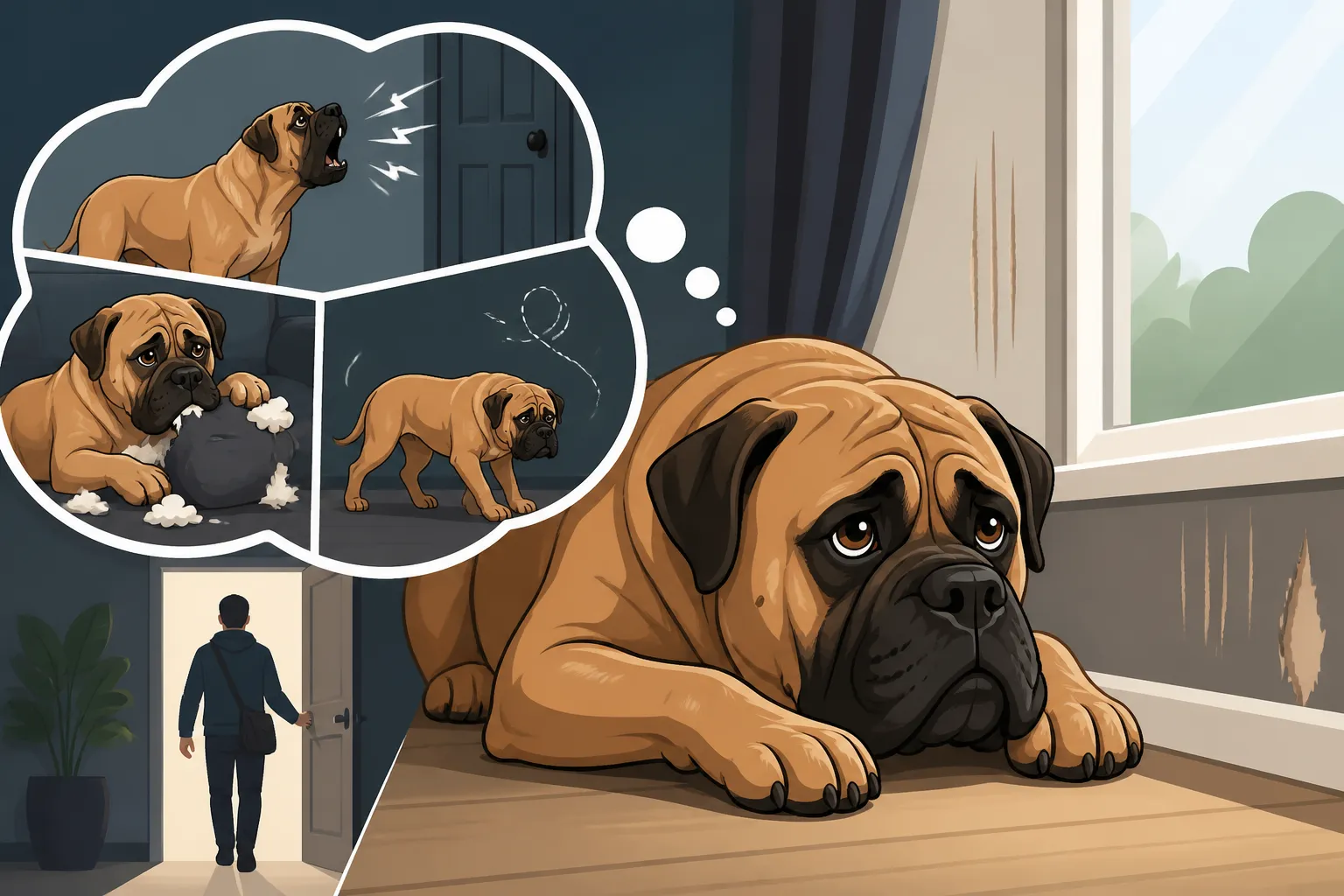
One of the most common and often frustrating signs of separation anxiety in a Bullmastiff is destructive chewing or digging. But it's not random. Anxious chewing is usually focused on exit points, like doorframes, windowsills, or even their crate bars, as they try to escape or relieve stress. They might also chew on items that smell strongly of their owner, like dirty laundry, shoes, or even rip up a brand-new dog bed you just got from Amazon. This isn't them being "bad"; it's a desperate attempt to cope with overwhelming fear.
This isn't the kind of chewing a bored puppy might do on a toy. This is intense, often damaging, and can result in self-injury, like broken teeth or paw pads. You might come home to find cushions shredded, carpet pulled up, or even holes dug in your yard right along the fence line. The sheer power of a Bullmastiff means this destruction can be extensive and costly. If you're coming home to consistent damage, especially around points of entry/exit, it's a huge red flag that your Bullmastiff is struggling. It's a clear indicator of what it means when What a Bored Bullmastiff Destroys goes far beyond mere boredom.
Excessive Vocalization
A Bullmastiff's bark is formidable, but a Bullmastiff experiencing separation anxiety might use its voice in ways that alert the entire neighborhood. This can include incessant barking, howling, or continuous whining from the moment you leave until you return. Unlike a few barks when someone passes the window, this vocalization is usually sustained and often distressful in tone. Neighbors are usually the first to notice, often leaving notes or complaints, which only adds to an owner's stress.
To truly understand if vocalization is anxiety-driven, consider recording your Bullmastiff while you're away. A simple webcam or an old smartphone can reveal a pattern of constant noise that you would otherwise never hear. This sustained vocal output is their desperate attempt to call you back or to express their profound unhappiness and fear. It’s a distinct sign, far different from the occasional Why a Bullmastiff Grunts and Groans that might be heard when they're simply settling down or getting comfortable.
Inappropriate Urination or Defecation
This sign can be particularly frustrating for owners, especially when they know their Bullmastiff is perfectly house-trained. An anxious Bullmastiff might urinate or defecate indoors, even shortly after being let out, and even if they've held it successfully for longer periods in your presence. This isn't a potty training regression or a defiance issue; it's an involuntary physical manifestation of extreme stress.
When a dog is in a state of panic, their bodily functions can be affected. They lose control. This behavior is often accompanied by other signs of anxiety. It's important to rule out medical issues first, but if your vet gives your Bullmastiff a clean bill of health, then these accidents, particularly if they only happen when you're gone, are very strong indicators of separation anxiety. It's not about them "getting back at you" for leaving; it’s a symptom of overwhelming fear.
Pacing, Drooling, and Panting
Beyond the more obvious destructive or vocal behaviors, Bullmastiffs experiencing anxiety alone often display physical signs of distress. Pacing is common, where they might walk a repetitive path, often near doors or windows, unable to settle. This is a restless energy driven by their internal panic, a desire to move but with no clear destination.
Excessive drooling and panting, even in a cool environment, are also strong physiological responses to stress. Bullmastiffs are known for their drool, but this goes beyond their normal slobbering; it can be profuse, leaving wet puddles or streaks on walls and floors. Their panting might be rapid and shallow, not related to heat or exertion. These are automatic stress responses, similar to how a human might sweat or have a racing heart during a panic attack. Observing these signs, perhaps through a recording, can provide crucial evidence that your Bullmastiff is genuinely suffering when you're not there.
Subtle Indicators You Might Be Missing
Sometimes, the signs of a Bullmastiff's anxiety aren't as dramatic as torn-up furniture or incessant barking. They can be more subtle, developing slowly, and often misinterpreted by busy owners. Learning to recognize these quieter cues can help you intervene before the anxiety escalates.
Changes in Pre-Departure Behavior
Anxious Bullmastiffs often start to anticipate your departure, and their behavior can change significantly as you prepare to leave. This might involve becoming overly clingy, following you from room to room like a shadow, or even trying to physically block your exit. They might whine softly, appear withdrawn, or even refuse treats they usually adore. Some Bullmastiffs might try to climb into your lap (all 130 pounds of them!) or lean on you more intensely than usual, a subtle attempt to keep you close.
For example, when you pick up your keys or put on your shoes, instead of remaining calm, your Bullmastiff might start pacing, panting, or even showing signs of mild agitation. They're connecting your actions with your impending absence and beginning to dread it. Recognizing these patterns can be key. Are they suddenly unable to relax when you start your morning routine? Do they try to stop you at the door, even if gently? These are important signals. It's not about being clingy; it's an emotional plea. This heightened awareness of your departure cues is a classic sign of developing anxiety, especially if you've been working on Teaching a Bullmastiff to Wait at a Door and suddenly those manners disappear before you even get outside.
Hyper-Greeting Upon Your Return
While it's lovely to be greeted enthusiastically by your Bullmastiff when you come home, an overly frantic or prolonged greeting can sometimes be a sign of underlying anxiety. This isn't just happy excitement; it might involve excessive jumping, whining, mouthing, or even submissive urination due to overwhelming relief and arousal. They might take several minutes to truly calm down, even after repeated interactions.
This kind of hyper-greeting signifies that their stress levels were incredibly high while you were gone. Your return is such a massive release of tension that they struggle to contain their emotions. It’s like a dam breaking. If your Bullmastiff is consistently beside themselves with emotion when you walk through the door, it’s worth investigating whether their alone time is actually as peaceful as you hope it is. They're telling you, in their own way, just how difficult your absence was for them.
Escape Attempts and Self-Harm
In more severe cases, an anxious Bullmastiff might attempt to escape their containment, whether it's a crate, a room, or even a securely fenced yard. This isn't about being disobedient; it's a desperate, fear-driven attempt to reunite with you. They might chew through doors, bend crate bars, or dig underneath fences. This can, unfortunately, lead to serious injury. Broken nails, bloody paws, raw noses, or even dental damage are often the result of these frantic attempts.
This level of self-harm is a stark and painful indicator of extreme psychological distress. If you find your Bullmastiff injured or showing clear signs of having struggled intensely to get out, it's critical to seek professional help immediately. Their need to escape overrides any sense of self-preservation, signaling a profound state of panic and fear of abandonment. For some, it might be the tragic culmination of their struggle to cope with being left alone.
What to Do When You Suspect Anxiety
Discovering your Bullmastiff suffers from separation anxiety is tough, but it's a solvable problem. The first step is acknowledging the issue, and the next is taking concrete steps to understand and address it.
Gathering Evidence: The Power of Observation
Before you can tackle the problem, you need to understand the full scope of it. This means becoming a detective in your own home. The most effective tool you have is a camera. Set up a webcam or an old smartphone to record your Bullmastiff's behavior from the moment you leave until you return. You might be surprised by what you see. Is the pacing constant? How long does the barking last? Is the destruction immediate or does it start after a period?
Keep a journal. Note down:
- When you leave and return: Exact times.
- What you say/do before leaving: "Be right back," "Good boy," no interaction.
- What you observe upon return: Damage, accidents, state of the dog.
- What the camera reveals: Specific behaviors, their duration, and intensity.
This data is invaluable, not just for your understanding, but also for any professional you might consult. It helps paint a clear picture of when the anxiety starts and how it manifests, moving beyond assumptions to concrete observations. You might also want to review How Many Hours a Bullmastiff Can Be Left based on the evidence you gather, as duration is a major factor.
| Sign of Anxiety | Description | Observation Tip |
|---|---|---|
| Destructive Chewing | Chewing focused on exit points, personal items, or crate. | Check doorframes, windowsills, dog beds, objects with your scent. |
| Excessive Vocalization | Continuous barking, howling, or whining. | Use a camera/audio recorder; ask neighbors. |
| Inappropriate Elimination | Urinating/defecating indoors, despite being house-trained. | Check common areas, especially near doors, upon return. |
| Pacing/Restlessness | Repetitive movement, inability to settle. | Camera footage will show persistent movement patterns. |
| Excessive Drooling/Panting | Profuse slobbering, rapid breathing not related to heat/exercise. | Look for wet spots on floor, walls, bedding; camera footage. |
| Pre-Departure Clinginess | Following you, blocking exits, unusual solicitous behavior. | Observe their behavior as you perform your leaving routine. |
| Hyper-Greeting | Over-the-top, prolonged, frantic excitement upon your return. | Note how long it takes for them to calm down after you enter. |
| Escape Attempts | Damage to crate, doors, windows, or fences in an attempt to get out. | Inspect containment areas for wear, scratches, or broken parts. |
Consulting a Professional
Once you have a clearer picture, the next crucial step is to seek professional guidance. This is not a problem most owners can solve alone.
- Veterinarian First: Always start with your vet to rule out any underlying medical conditions that could be causing or contributing to the behaviors. Some health issues can mimic anxiety symptoms.
- Certified Professional Dog Trainer/Behaviorist: If medical issues are ruled out, your vet can refer you to a certified professional dog trainer or a veterinary behaviorist. These experts specialize in understanding and modifying canine behavior, and they have specific protocols for addressing separation anxiety. They can help you develop a tailored plan that includes desensitization, counter-conditioning, and management strategies. Many offer virtual consultations, allowing you to get expert advice from the comfort of your home. Platforms like BAXTER & Bella can provide online coaching and resources to help you implement a behavior modification plan. They understand that a Bullmastiff’s large size means early and correct intervention is key to managing a dog that might otherwise become uncontrollable.
They will guide you through gradual absence training, teach you how to make departures less stressful, and potentially suggest tools like calming aids or specialized enrichment toys. A Bullmastiff's temperament means they respond best to positive reinforcement and a clear, consistent approach, so professional guidance is invaluable. The goal is to gradually teach your Bullmastiff that being alone isn't scary, but simply a part of life.
Initial Steps for Managing Mild Cases
If your Bullmastiff's anxiety seems mild, or while you're waiting for professional help, there are some things you can start doing:
- Create a Safe Haven: Designate a comfortable, secure spot for your Bullmastiff when you leave, perhaps a large crate (if they are crate-trained and don't associate it with panic) or a specific room. Make it a positive space with a cozy bed, some of their favorite toys, and a long-lasting chew or puzzle toy. This creates a predictable environment for them.
- Practice Short Absences: Start small. Leave for just 1-5 minutes, return calmly (don't make a big fuss), and gradually increase the duration. The key is to return before they become anxious, teaching them that you always come back. This takes patience and consistency.
- Tire Them Out: A tired Bullmastiff is often a calmer Bullmastiff. Ensure they get adequate physical exercise and mental stimulation before you leave. A good sniff walk, some playtime, or a brief training session can help burn off energy and satisfy their need for engagement. Remember, Why a Bullmastiff Needs Less Exercise Than It Looks doesn't mean no exercise.
- Avoid Dramatic Departures and Returns: Keep your comings and goings as low-key as possible. Don't make a big fuss when you leave or when you return. Wait until they are calm before greeting them. This helps reduce the emotional intensity around your departures and arrivals.
- Provide Enrichment: Offer engaging toys or chews that will keep them occupied for a while. A KONG stuffed with peanut butter or a durable chew toy can provide a positive distraction. Rotate these items to keep them novel and interesting. This can help them associate your absence with something enjoyable.
Dealing with a Bullmastiff's separation anxiety is a journey, not a sprint. It requires patience, understanding, and often, professional help. But with consistent effort and a compassionate approach, you can help your devoted companion find peace and comfort even when you're not by their side.
Disclaimer
This article is for general informational purposes only and does not constitute professional advice. Laws, prices and regulations vary by location and change over time. Consult a qualified professional for guidance on your specific situation.