Whether a Bullmastiff Can Be Called Off
It’s a scenario many Bullmastiff owners dread: that split second your big, beautiful companion spots something utterly captivating across a busy street, or decides a squirrel in the distant park is an emergency that demands immediate investigation. You call their name, you use your recall word, but it's like you're speaking a foreign language. The truth is, while a Bullmastiff can be called off, it requires immense dedication, understanding of their unique breed traits, and consistent, high-value training. This guide will dive deep into why recall can be such a challenge for these magnificent dogs and, more importantly, how to build a bond and a command that truly sticks.
Understanding the Bullmastiff's Instincts and Why Recall Is Tricky
Let's be real, expecting a Bullmastiff to have the same lightning-fast, eager-to-please recall as, say, a Border Collie, is setting yourself up for disappointment. These dogs were bred for a very specific, independent job, and their thought process often involves a moment of deliberation that can feel like defiance when you're in a hurry.
Their Breeding and Independent Streak
The Bullmastiff's history is steeped in the role of a "gamekeeper's night dog." Their job was to silently track and hold poachers until the gamekeeper arrived. This wasn't a job for a dog constantly looking to its handler for direction. It required a dog capable of making independent decisions, assessing situations, and acting with quiet confidence. They weren't bred to run back to you with a joyful wag of the tail the second you whistled. Instead, they were designed to engage with a target and maintain their position. This deeply ingrained instinct means that when something captures their attention, their primary drive might be to investigate or "hold" rather than immediately disengage and return. It's not that they don't love you; it's that their hardwiring tells them to take a moment and evaluate. You can read more about their original purpose in A Bullmastiff Was Bred to Hold a Man, Not Bite Him.
The Weight of Their Decisions
If you've spent any time with a Bullmastiff, you've likely noticed their thoughtful, almost philosophical demeanor. When you give them a command, there's often a pause. It's not always stubbornness; it's genuine contemplation. They are assessing whether your request is truly more important than whatever it is they're currently focused on. This is what we lovingly refer to as The Bullmastiff That Pauses to Decide Whether You Are Worth It. For a recall command, especially when there's a high-value distraction, that pause can feel like an eternity, and it's in that moment that they can decide the squirrel (or the new person, or the interesting smell) is a higher priority. Their size and power mean that once they've committed to a direction, it's incredibly difficult to physically stop them without a leash.
Distractions and Drive
Bullmastiffs, despite their calm interior, have strong prey drives and protective instincts. A fluttering leaf might not grab their attention, but a scurrying rabbit, a distant dog, or even a child running past can trigger that ancient programming. The strength of these distractions can easily overpower a weak recall command. Imagine a delicious steak on the table and then someone asking you to immediately go fold laundry – that's often how a Bullmastiff perceives a high-value distraction versus a low-value recall. Their scent-tracking abilities are also formidable, and once their nose is to the ground on an interesting trail, calling them off can be like trying to interrupt a deep meditation.
Building a Reliable Recall: More Than Just "Come!"
Given their unique nature, training a reliable recall for a Bullmastiff isn't just about repetition; it's about building immense value into the "come" command and making it irresistible.
Starting Strong: Puppy Foundations
The absolute best time to instill a solid recall is when your Bullmastiff is a tiny puppy. From the moment they arrive home, make "come" (or whatever your chosen recall word is) the most positive thing they ever hear. Call them for meals, for cuddles, for play, and always reward lavishly. Think high-value treats (like small pieces of cooked chicken or cheese) and enthusiastic praise. Never use "come" to do something unpleasant, like going to the vet for a shot or ending a fun play session in the park, unless you immediately follow it with something even better. Puppy classes are fantastic for this, helping your pup learn to ignore distractions in a controlled environment. When to Start Training a Bullmastiff Puppy is not a moment too soon!
Here's a basic puppy recall game you can play:
- The "Puppy Ping-Pong": With a family member or friend, stand a short distance apart. One person calls the puppy enthusiastically, offering a treat when they arrive. The other person then calls the puppy. This makes "come" a fun game between two exciting sources of rewards.
- Short Line Practice: Attach a lightweight long line (10-15 feet) to your puppy's harness. In a safe, enclosed area, let them wander. When they're not looking, call them happily, and gently reel them in with the line if they hesitate. Immediately reward with praise and treats. This teaches them that coming to you is easy and always positive.
The "Emergency" Recall: A Life-Saving Command
For a Bullmastiff, it's wise to have two types of recall: a casual "come" for everyday situations, and an "emergency" recall that you use only when absolutely necessary and that demands immediate, unquestioning obedience. This emergency command should be a distinct word (like "HERE!" or "FRONT!") and should always be rewarded with the highest value treat or toy your dog could ever imagine. You should never use this command lightly, and certainly not when you aren't prepared to reward them handsomely.
Here’s how to build it:
- Choose a Unique Word: Pick a word you don't use often.
- "Jackpot" Rewards: Reserve their absolute favorite, most irresistible treats (think roast beef, hot dogs, or a squeaky toy they adore) only for this command.
- Practice in Low-Distraction Areas First: Start in your quiet living room. Say the command, reward instantly. Repeat.
- Gradually Increase Distraction: Move to the yard, then a quiet park. The moment they respond, they get the jackpot. If they don't respond immediately, you haven't built enough value, or the distraction is too high.
- Use a Long Line: For safety and control during practice, a 30-foot or 50-foot long line, easily found on Amazon, is your best friend. It allows your dog to feel off-leash while you retain the ability to gently guide them back if they get distracted, preventing the command from being ignored. Never let them "fail" the emergency recall. If they start to ignore it, gently guide them back with the line and reward.
Proofing and Practice in Real-World Scenarios
A reliable recall isn't built in your living room; it's proofed in the real world. This means practicing in increasingly challenging environments. Start with minimal distractions, like a quiet park early in the morning, and gradually introduce more. Think about the types of distractions your Bullmastiff struggles with most – other dogs, people, specific smells – and create controlled scenarios to work through them. This might mean having a friend walk their calm, leashed dog past you at a distance while you practice recall.
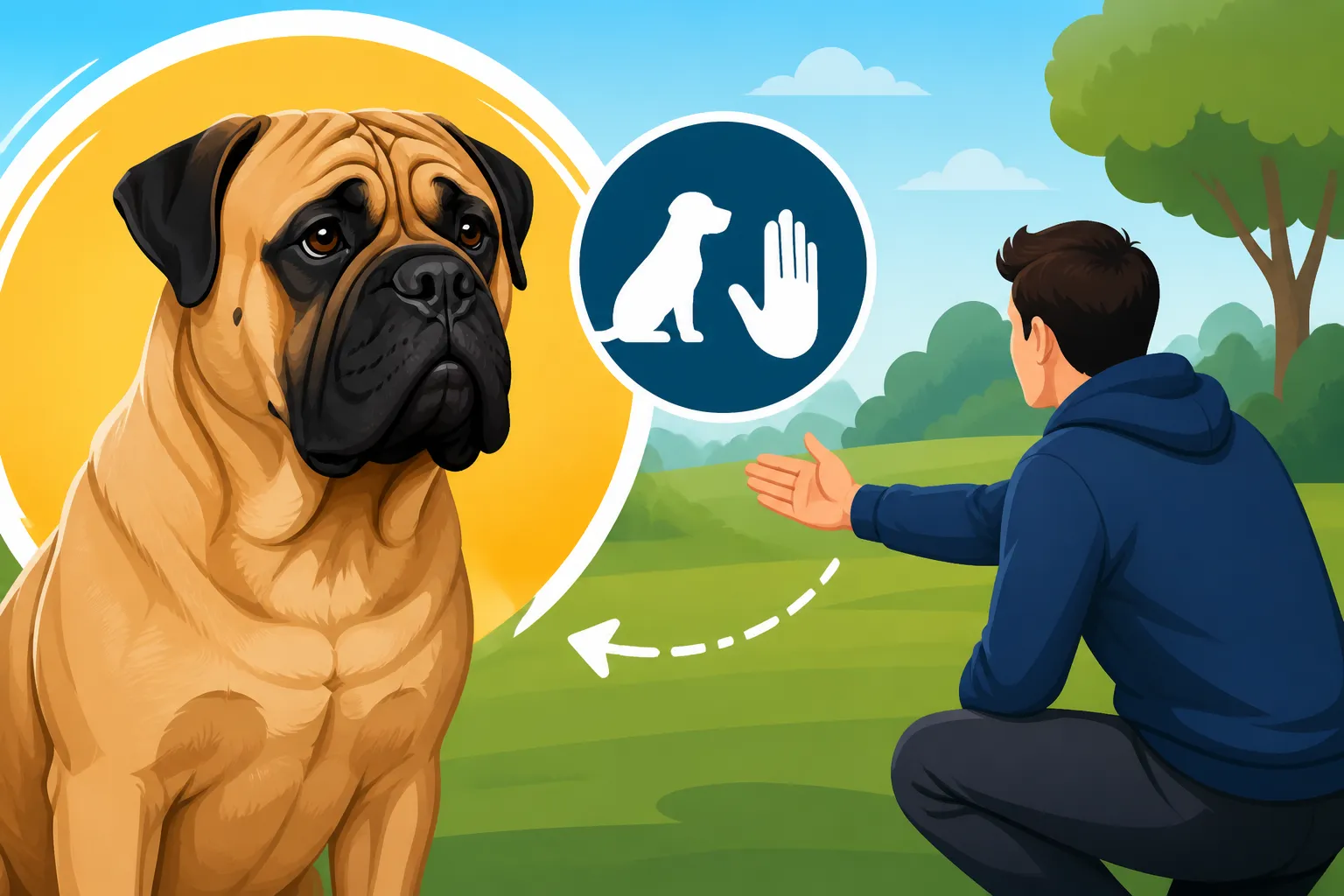
Don't forget the importance of making yourself the most exciting thing in the environment. Dance around, use an excited voice, drop to a knee. Your Bullmastiff might be deliberate, but they also have a strong desire to be near their people. If you consistently make coming to you the most fun and rewarding choice, they are more likely to choose it, even over a tempting distraction. Online training resources, like those offered by BAXTER & Bella, can provide structured plans for proofing recall in various settings.
When Recall Isn't Enough: Managing a Bullmastiff's Freedom
Let's face it: for many Bullmastiff owners, a completely off-leash, "come hell or high water" recall in all situations might be an unrealistic goal. Their size, strength, and historical independence mean that absolute certainty isn't always possible. In these cases, responsible management is paramount.
Leash Management and Secure Environments
For a Bullmastiff, a leash isn't just a suggestion; it's a safety device. Even with excellent recall training, there will always be unexpected situations where their instincts might kick in faster than your command. This means that walking on a leash, ideally with a sturdy harness designed for powerful breeds, is often the safest choice. For more on navigating walks with a strong dog, consider How to Walk a Bullmastiff That Outweighs You.
When you want to give your Bullmastiff more freedom to run and explore, always choose truly secure, fenced-in areas. Dog parks can be risky for Bullmastiffs due to potential for same-sex aggression or misunderstandings with smaller, faster dogs, so private, rented dog fields or friends' securely fenced yards are often better options. Even in a fenced yard, supervise them, as their impressive physical presence might not deter them from testing fences if something truly tantalizing is on the other side.
Understanding the Stakes: What's at Risk
The consequences of a failed recall for a Bullmastiff can be severe.
- Safety of Your Dog: A Bullmastiff bolting into traffic, or getting lost in an unfamiliar area, is a terrifying thought.
- Safety of Others: A large, powerful dog running unrestrained, even if friendly, can frighten people or accidentally knock over a child or an elderly person.
- Interactions with Other Animals: While many Bullmastiffs are good with other dogs, their size can make playful interactions intimidating, and a strong prey drive could lead to chasing smaller animals. This is why Why a Bullmastiff's Recall Is Unreliable is a critical concern for owners.
- Legal Consequences: Depending on your local leash laws, a dog running loose could lead to fines, impoundment, or even more serious legal action if they cause an incident.
The potential risks far outweigh the desire for your Bullmastiff to have "total freedom." Prioritizing their safety and the safety of others through careful management is a sign of a responsible owner.
Common Pitfalls and Troubleshooting Recall Issues
Training recall isn't a one-and-done deal. It's an ongoing process, and even well-trained dogs can have off days or hit new challenges. Understanding common pitfalls can help you troubleshoot.
Over-Reliance and Under-Rewarding
One of the biggest mistakes owners make is calling their dog "come!" too often without a reward, or using it for negative things. If "come" only means the end of fun, or that they're about to be ignored, why would they bother? Every time you call your Bullmastiff and they don't come, the command loses power. Each successful recall, especially an enthusiastic one, should be a celebration. Are you still using high-value treats for recall, even with an adult dog? Are you sometimes calling them just to give them a quick pet and then letting them go back to what they were doing? That "surprise reward" can keep the command fresh and valuable. If you only call them when you need them, they'll learn to associate the command with their freedom ending.
Adolescence and Testing Boundaries
Just like human teenagers, Bullmastiff adolescents (roughly from 10-12 months up to 2-3 years) can become incredibly challenging. They gain confidence, their hormones kick in, and they start testing boundaries. What worked perfectly at six months old might suddenly be ignored. This is a crucial period where consistency is key. Don't assume your training has failed; understand that it's a normal developmental phase. This is when patience and doubling down on your training efforts are most important. Their full mental maturity doesn't really kick in until they are around three years old, as discussed in A Bullmastiff Is Not Grown Up Until Three, so don't expect a fully settled, compliant adult dog before then. During this period, lean heavily on long lines and secure areas, and always carry those high-value treats!
Here's a quick comparison of general recall vs. emergency recall:
| Feature | Casual Recall (e.g., "Come!") | Emergency Recall (e.g., "HERE!") |
|---|---|---|
| Purpose | Everyday situations, general responsiveness | Life-saving, immediate, unquestioning return |
| Command Word | Common, used frequently | Unique, reserved for emergencies |
| Reward Value | Standard treats, praise, petting | Absolute highest value (jackpot treat/toy) |
| Frequency of Use | Regular, several times a day | Very rare, only when truly critical |
| Consequence of Ignoring | Minor setback, re-train if frequent | Never ignored; prevent failure at all costs |
| Training Gear | Collar/leash in safe areas | Long line for proofing, always leashed initially |
Ultimately, a reliable recall with a Bullmastiff is a testament to the strong bond and clear communication you've built. It’s an ongoing process of teaching, reinforcing, and managing expectations, always keeping their unique heritage and deliberate nature in mind.
Disclaimer
This article is for general informational purposes only and does not constitute professional advice. Laws, prices and regulations vary by location and change over time. Consult a qualified professional for guidance on your specific situation.