How a Bullmastiff Handles a Toddler
Bringing a new baby or welcoming a curious toddler into a home with a large, powerful dog like a Bullmastiff can feel like walking a tightrope. You adore your gentle giant, but you also worry about the unpredictable energy of a small child, and how such a substantial dog will react to sudden movements, loud noises, or an accidental grab of an ear. It's a completely natural concern, and understanding how your Bullmastiff's inherent nature and proper training can foster a safe, harmonious environment for everyone is key. This guide will walk you through the nuances of Bullmastiff behavior around toddlers, offering practical advice to help your family thrive together.
Understanding the Bullmastiff Temperament with Children
Many people envision massive dogs as clumsy and potentially dangerous around small children, but Bullmastiffs often defy this stereotype with their remarkable patience and protective instincts. However, it's crucial to understand both their natural tendencies and the vital role you play in shaping their interactions.
The "Gentle Giant" Reputation: Is It True?
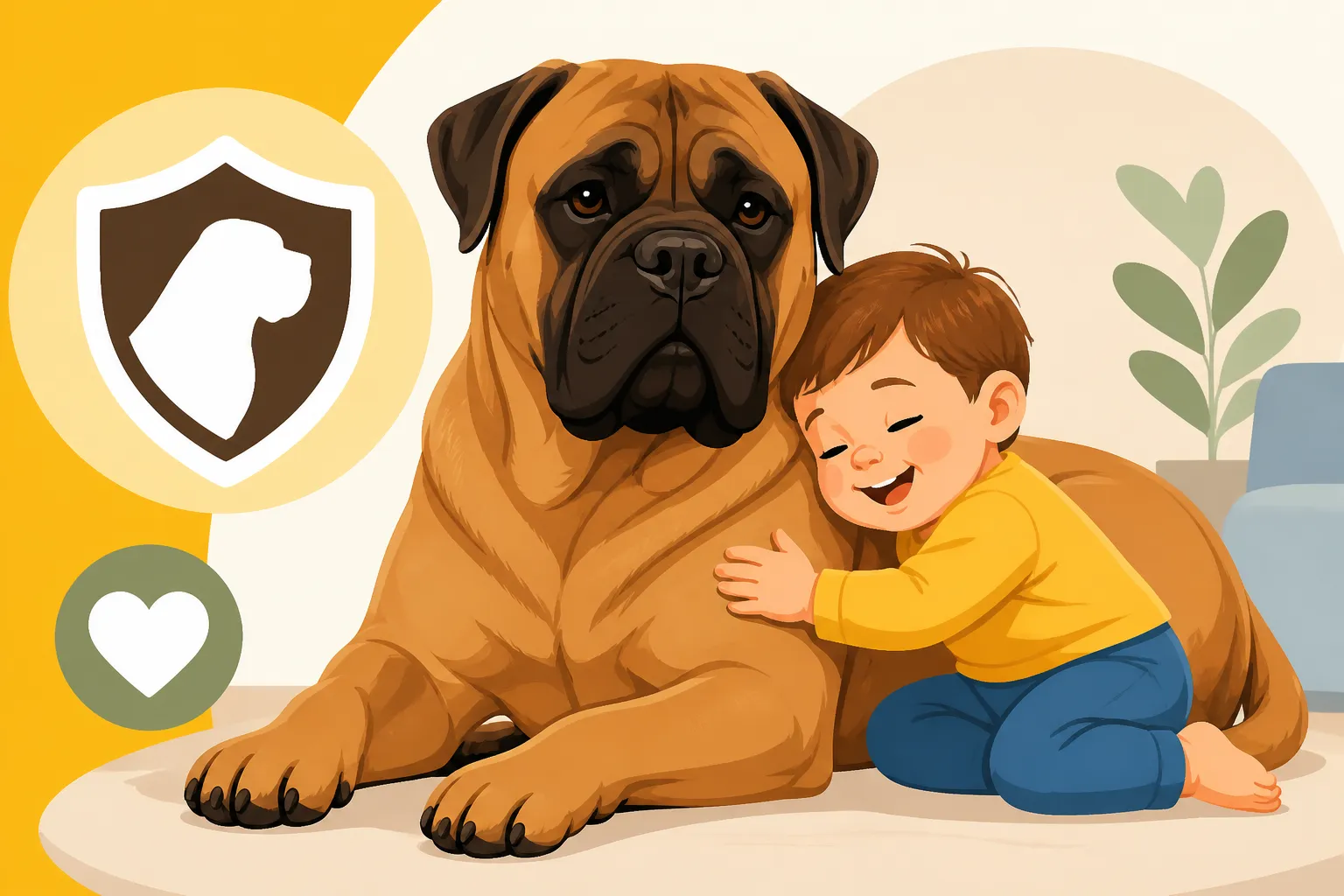
The Bullmastiff truly has earned its "gentle giant" moniker, especially within its own family circle. These dogs are inherently calm, loyal, and possess an almost uncanny patience. They bond deeply with their human families and often display a protective nature without being overly aggressive. This translates well to a home with children, as a well-socialized Bullmastiff typically views the younger, smaller members of their "pack" as something precious to be watched over. I've heard countless stories from Bullmastiff owners who marvel at how their immense dog tolerates a toddler's clumsy pats or even a little tail pull with nothing more than a sigh or a gentle shift. They’re not typically prone to snapping or lashing out, but rather show a remarkable tolerance. This isn't to say they're infallible, but their baseline temperament leans heavily towards peace and stability.
However, "gentle" doesn't mean "feeble." We're still talking about a dog that can weigh upwards of 130 pounds, a formidable mass of muscle and bone. While they may be gentle in spirit, their sheer physical presence is a factor that absolutely cannot be ignored when they are interacting with a small, unsteady child. A Bullmastiff might lean against a toddler affectionately, intending no harm, but inadvertently knock them off balance. A playful wag of that thick tail could easily sweep a small child's legs out from under them. So, while their temperament is largely favorable, their physical reality demands constant vigilance and proactive management. It’s about managing the environment, not just trusting the dog's good intentions.
Historical Context: A Dog Bred for Holding, Not Hurting
To truly understand a Bullmastiff's disposition, it helps to look back at their origins. These magnificent dogs were not bred to be aggressive fighters or to cause grievous harm. Instead, they were developed in 19th-century England by gamekeepers to help deter poachers. The gamekeepers needed a dog that could track silently, quickly apprehend an intruder, and hold them down without mauling them. The goal was capture, not carnage. This specific job requirement bred a dog with incredible strength, agility, and courage, but also a balanced temperament that could differentiate between threat and non-threat, and apply controlled force.
This "holding" instinct is a fascinating aspect of the Bullmastiff's heritage. It's why they are often described as "body blockers" or "leaners." They tend to use their bulk to physically intervene or position themselves between their loved ones and perceived threats, rather than resorting to overt aggression. While your toddler certainly isn't a poacher, this historical context explains the breed's underlying calm demeanor and their tendency to be protective without being overly reactive. They were designed to be formidable but discerning, a trait that serves them well in a family environment, even if the "threat" is just a wobbly toddler getting too close to their favorite toy. You can read more about A Bullmastiff Was Bred to Hold a Man, Not Bite Him and What a Bullmastiff Was Bred to Do to a Poacher to understand this foundational characteristic.
The Importance of Socialization
Even with a naturally good temperament, socialization is the bedrock of a well-adjusted Bullmastiff, especially one that will live with children. A Bullmastiff puppy needs to be exposed to a wide variety of sights, sounds, people, and experiences from a young age. This includes positive, supervised interactions with children of different ages, right from the start. Think of it as building a robust emotional vocabulary for your dog. The more positive experiences they have, the more confident and unfazed they will be by the unpredictability of a toddler.
Socialization isn't just about meeting people; it's about associating new experiences with positive outcomes. If your Bullmastiff puppy learns early on that children mean gentle pats, dropped snacks, and calm interactions, they'll grow up to view toddlers with benevolent curiosity rather than apprehension. If a dog is not properly socialized and then suddenly encounters a screaming, fast-moving toddler, their natural instinct might be fear or confusion, which can lead to undesirable reactions. Early and ongoing positive reinforcement training, like that offered by programs such as BAXTER & Bella, can be incredibly valuable in setting your Bullmastiff up for success in a bustling family home. This kind of program focuses on building confidence and good habits from the puppy stage, which is essential for a large breed with such a powerful presence. Remember, the goal is to create a dog that is not just tolerant, but genuinely comfortable and relaxed in the presence of young children.
Navigating the Physical Realities: Size and Unpredictability
It's one thing to understand a Bullmastiff's gentle nature, and another to manage the sheer physical dynamics of a 100+ pound dog interacting with a 30-pound human. This is where practicality and vigilance become your greatest tools.
Accidental Collisions: The Weight of a Bullmastiff
Let's face it: a Bullmastiff is a large, solid animal. Even the most careful and gentle Bullmastiff can accidentally knock over a small child. They move with an incredible amount of momentum, and their body language is often much larger than they realize. A sudden change of direction, a playful bounce, or even just getting up from a nap can send a toddler sprawling. This isn't malice; it's just physics. Imagine a full-grown adult stumbling into a small child – it’s not intentional, but the impact can be significant. Their thick tails can whip with surprising force, and a happy tail wag at eye level with a toddler could cause an injury. This is why supervision is non-negotiable.
It's your job to anticipate these accidental collisions. Ensure your Bullmastiff knows how to navigate around small bodies, and isn't allowed to charge through spaces where a toddler might be standing. Consistent training, starting from puppyhood, helps teach them body awareness and how to move politely. For instance, teaching a strong "wait" or "stay" command before going through doorways or around corners can prevent a lot of bumps. Keeping your Bullmastiff lean is also helpful; an overweight dog moves less gracefully and puts more strain on its joints, but also has more mass to accidentally bump into someone. Keeping a Bullmastiff Lean Is the Best Thing You Can Do for their overall health, and it definitely helps with graceful movement around tiny humans.
Toddlers' Unpredictable Movements
Toddlers are tiny bundles of chaos and curiosity. They shriek, they grab, they pull, they fall, and they have no concept of personal space or canine body language. A toddler might suddenly lunge for a Bullmastiff's ears, try to "ride" the dog, or attempt to share their snack directly from the dog's mouth. These actions, while innocent from a child's perspective, can be startling or even painful for a dog. A Bullmastiff, despite its patience, can become overwhelmed, uncomfortable, or even protective of its resources if not managed correctly.
It’s important to teach both your Bullmastiff and your toddler how to interact appropriately. Your Bullmastiff needs to learn to tolerate a certain level of toddler-induced chaos without reacting negatively. Simultaneously, your toddler needs to learn gentle hands, to avoid pulling fur or ears, and to respect the dog's space. This two-way education is paramount. Never assume your dog will simply endure anything a child does. Even the most stoic Bullmastiff has a breaking point, and it’s your responsibility to prevent that point from ever being reached. Teaching your dog a solid "leave it" command is invaluable in these situations, allowing you to redirect them away from a toddler's tempting toy or a child's sudden grab.
Managing Space and Supervision
Effective management is the cornerstone of safe dog-toddler interactions. It's not about being overprotective; it's about being proactive and responsible. The golden rule is always, always supervise. Never leave a Bullmastiff and a toddler alone together, not even for a second. Even if you trust your dog implicitly, accidents can happen in the blink of an eye.
Creating physical barriers is a great strategy. Baby gates are your best friend when you have both a large dog and a small child. They allow visual contact while providing a safe separation. You can find robust baby gates on Amazon that are tall enough to deter a leaping Bullmastiff and sturdy enough to withstand a toddler's exploration. This allows your Bullmastiff to relax in a separate area without feeling cornered or annoyed by constant toddler advances. Using a crate for your Bullmastiff can also be a wonderful safe haven, a quiet retreat where they can escape the hubbub of the house. Teaching your Bullmastiff to happily go to their "place" or "bed" on command is also incredibly useful for managing interactions in shared spaces. This gives them a designated spot to relax while still being part of the family, and it teaches your toddler that this is the dog's special zone to respect.
Establishing Boundaries and Training for Harmony
Training isn't just about obedience; it's about building communication and mutual understanding. When you have a Bullmastiff and a toddler, this understanding needs to flow both ways.
Teaching Mutual Respect: Dog and Child
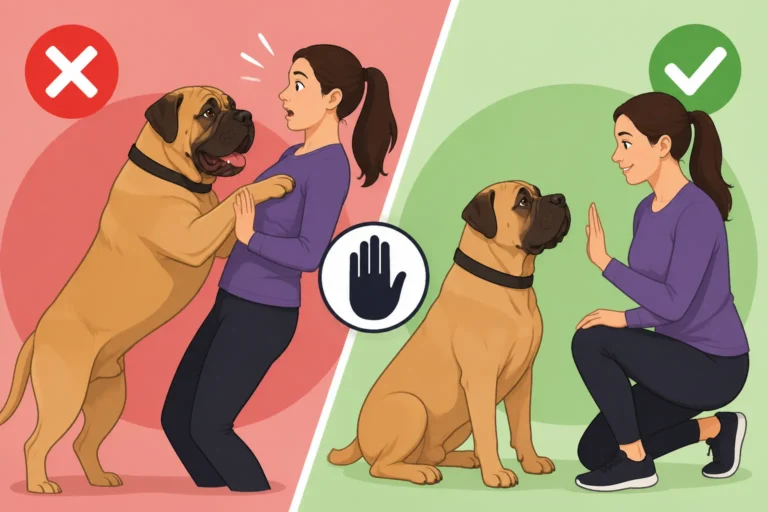
Creating a respectful dynamic means teaching both your Bullmastiff and your toddler how to interact safely and politely. For your Bullmastiff, this involves consistent positive reinforcement training. They need to understand that children are to be treated gently and that certain behaviors around them are off-limits. For example, Teaching a Bullmastiff Not to Jump Up is crucial, as a playful leap could easily injure a small child. Reward calm behavior around toddlers, such as lying down quietly or offering a gentle sniff. If your Bullmastiff has a habit of leaning on people, which is common for the breed as discussed in Why a Bullmastiff Leans on People, teach them to do so gently or only on command, reserving that kind of physical contact for adults.
For your toddler, education is equally important, though it will take longer and require constant repetition. Teach them "gentle hands," to pet on the back, not the head, and never to pull ears or tails. Show them how to offer a treat safely. Crucially, teach them to respect the dog's space, especially when the dog is eating, sleeping, or in their crate. A good rule of thumb is "If the dog is on their bed, leave them alone." Model good behavior yourself: always approach your Bullmastiff calmly, talk softly, and show your child how to do the same. Consistent, patient teaching for both species will lead to a more harmonious home.
Essential Commands for Toddler Interactions
There are a few key commands that become absolutely essential when you have a Bullmastiff sharing a home with a toddler. These aren't just tricks; they're safety cues.
- "Stay" or "Place": This command allows you to send your Bullmastiff to a designated spot – their bed, a mat, or their crate – and have them remain there until released. This is invaluable when a toddler is running around, or if you need to attend to the child and temporarily separate the dog. A comfortable, oversized dog bed (you can find great orthopedic options on Amazon for large breeds) will make their "place" an inviting spot.
- "Leave It": This is arguably one of the most important commands. It means "do not touch or pick up that item," and it's vital for preventing your Bullmastiff from grabbing a dropped toddler toy, food, or even the child's clothing. Practice it with tempting items regularly, so your Bullmastiff understands it perfectly.
- "Gentle" or "Soft": While not a traditional command, you can train your Bullmastiff to be "gentle" when taking treats or interacting with small hands. This involves rewarding extremely delicate mouthing or licking over any rough grabbing.
- "Off": For keeping paws off children, furniture, or counters. Given the Bullmastiff's size, having them understand they need to keep all four paws on the floor around a toddler is non-negotiable.
Consistency in training is key. Remember, Training a Bullmastiff That Weighs More Than You Do requires positive reinforcement, patience, and starting early. They are intelligent but can be deliberate, so short, frequent training sessions with high-value rewards work best. Online platforms like BAXTER & Bella can provide structured guidance for these essential commands, helping you build a strong foundation of obedience and good manners.
Creating Safe Zones
No matter how well-behaved your Bullmastiff is, or how well-taught your toddler, there will be times when separation is necessary for everyone's peace of mind and safety. Creating designated "safe zones" for both your dog and your child is a proactive approach to managing their interactions.
For your Bullmastiff, a safe zone might be a large, comfortable crate in a quiet room, or a section of the house blocked off by a sturdy baby gate. This is their sanctuary, a place where they can retreat when they feel overwhelmed, tired, or just need a break from the constant energy of a toddler. Ensure this space is comfortable, with an orthopedic bed suitable for their size (again, Amazon has excellent options), fresh water, and a favorite chew toy. This prevents them from feeling trapped or annoyed and reduces the likelihood of a negative interaction. It also helps them learn that being separated isn't a punishment, but a chance to relax.
For your toddler, a playpen or a securely gated room serves a similar purpose. This is a space where your child can play freely without inadvertently bothering the dog. It’s particularly useful when you need to step away for a moment, even if just to grab a cup of coffee. By creating these clear physical boundaries, you empower both your Bullmastiff and your toddler to have their own space, reducing stress and increasing overall safety. This approach also allows you to control the quality and duration of their shared interactions, making sure they are always supervised and positive.
Recognizing Warning Signs and When to Seek Help
Even the most patient Bullmastiff will communicate when they are uncomfortable or stressed. Learning to recognize these subtle cues is crucial for preventing negative interactions before they escalate.
Subtle Cues: Understanding Your Bullmastiff's Body Language
Bullmastiffs are generally quite expressive, but their signals can be subtle, especially if you're not used to interpreting canine body language. It's rare for a Bullmastiff to lash out without giving plenty of warning signs first. Look for these indicators that your dog is feeling uneasy around a toddler:
- Lip Licking: A quick flick of the tongue over the lips when no food is present often signals stress or anxiety.
- Yawning: Like lip licking, yawning when not tired can be a calming signal, indicating unease.
- Head Turns/Averting Gaze: If your Bullmastiff turns its head away or avoids eye contact with the toddler, it's a sign they want to disengage.
- Stiff Body Language: A dog that becomes rigid, freezes, or holds its breath is often signaling deep discomfort or fear.
- Whale Eye: When you can see the whites of your dog's eyes, particularly when they are looking sideways without turning their head fully, it's a sign of stress.
- Low Growl or Sniff: Any vocalization, no matter how quiet, or a deep sniff that seems to be assessing a potential threat, needs immediate attention.
- Moving Away: The most obvious sign. If your Bullmastiff consistently tries to leave the room or hide when the toddler approaches, they are telling you they need space.
It’s vital to acknowledge and act on these signals immediately. Never punish your dog for growling or displaying warning signs; they are communicating their discomfort. Punishing these signals can teach a dog to suppress them, leading to a sudden bite with no warning. Instead, use these signals as information to manage the situation and give your dog space.
Here’s a quick reference table for common Bullmastiff body language around toddlers:
| Sign of Discomfort/Stress | What It Looks Like | What It Means | What to Do |
|---|---|---|---|
| Lip Licking | Quick flick of tongue, no food involved | "I'm a bit stressed/uncomfortable." | Give space, distract toddler, remove dog to quiet zone. |
| Yawning | Wide open mouth, no sign of tiredness | "I'm trying to calm myself down, I'm uneasy." | Similar to lip licking, intervene to create distance. |
| Head Turn/Gaze Aversion | Dog turns head away, avoids looking at toddler | "I want to disengage, please leave me alone." | Redirect toddler, call dog away, use "place" command. |
| Stiff Body/Freezing | Muscles tighten, tail might tuck, dog becomes still | "I'm very uncomfortable, bordering on fearful." | Immediately separate dog and child, provide dog with safe space. |
| Whale Eye | Whites of eyes show, often with tense face | "I'm feeling cornered/threatened." | Urgent action: remove dog or child from the situation immediately. |
| Low Growl | Soft, rumbling sound from deep in the chest | "I'm seriously uncomfortable, this is my last warning." | Critical: separate immediately and re-evaluate management strategy. |
| Moving Away | Dog walks off, hides, goes to another room | "I need space and peace." | Allow dog to retreat, ensure toddler doesn't follow. |
When to Intervene: Immediate Steps to Take
Your intervention should be swift and calm. If you see your Bullmastiff displaying any signs of discomfort, don't hesitate.
- Create Distance: The first step is always to increase the distance between your Bullmastiff and the toddler. This can be as simple as gently redirecting your child, calling your dog to you, or leading your dog to their designated safe zone.
- Redirect Attention: Distract your toddler with a toy or an activity in another area. You can also redirect your Bullmastiff's attention with a puzzle toy or a chew.
- Assess the Situation: After separation, take a moment to understand what triggered the stress. Was the toddler too close to the dog’s food? Did they try to grab a toy? Identifying triggers helps you prevent future incidents.
- Reinforce Positive Choices: If your Bullmastiff moved away from the toddler independently, praise them for making a good choice and give them a high-value treat in their safe space. This reinforces that retreating is a good, rewarded behavior.
Remember, intervention isn't about blaming the dog or the child; it's about managing the environment to ensure safety for everyone. Consistency in these interventions teaches both dog and child what is acceptable and what is not.
Professional Guidance and Ongoing Support
Sometimes, despite your best efforts, you might feel overwhelmed or notice persistent issues. This is not a sign of failure; it’s a sign that you need extra support, and that's perfectly okay. Don't hesitate to seek professional help.
- Certified Professional Dog Trainer (CPDT-KA): A trainer specializing in positive reinforcement can help you refine your Bullmastiff's obedience skills, especially commands vital for interactions with children. They can also offer personalized strategies for managing the home environment.
- Veterinary Behaviorist (Dip ACVB): If you're seeing aggression, extreme fear, or behavioral issues that seem beyond typical training, a board-certified veterinary behaviorist is the expert to consult. These are veterinarians with advanced training in animal behavior and can address underlying medical or psychological causes for behavior problems.
It's crucial to find professionals who use positive, reward-based methods. Harsh corrections or punishment can severely damage your Bullmastiff’s trust and worsen behavioral issues, especially around children. Look for a trainer or behaviorist who understands the unique temperament of large guardian breeds like the Bullmastiff and prioritizes safety through management and positive reinforcement. They can provide tailored advice for your specific situation, helping you build confidence and ensure a safe, loving environment for your Bullmastiff and your toddler.
Disclaimer
This article is for general informational purposes only and does not constitute professional advice. Laws, prices and regulations vary by location and change over time. Consult a qualified professional for guidance on your specific situation.