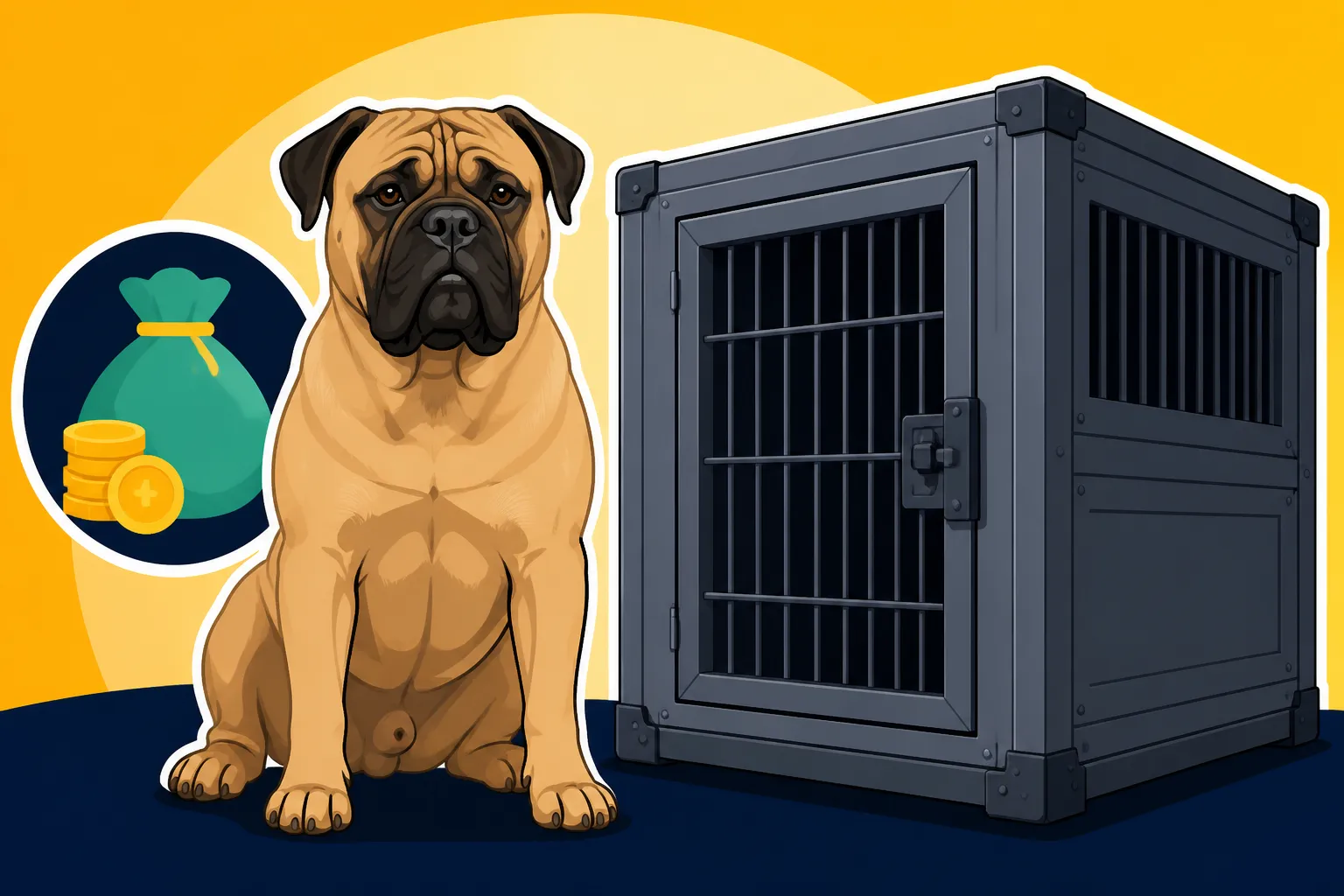
What a Giant Crate for a Bullmastiff Costs
Bringing a Bullmastiff into your life is an incredible joy, but anyone who's ever lived with one knows they come with some seriously specific needs, especially when it comes to space. You can't just pick up any old kennel for a dog that can easily outweigh an adult human! Finding a giant crate that is truly suitable for a Bullmastiff – one that's safe, durable, and actually fits them – can feel like an overwhelming quest, especially when you start looking at the price tag. This guide is here to break down exactly what goes into the cost of securing the perfect colossal den for your beloved giant.
Understanding Your Bullmastiff's Crate Size Needs
Before we even dive into specific costs, it’s crucial to understand why a giant crate isn't just a suggestion for a Bullmastiff; it's an absolute necessity. These aren't small dogs that can curl up in a cozy carrier. We're talking about a breed that often stands between 25-27 inches tall at the shoulder and can weigh anywhere from 100 to 130 pounds, sometimes more for males. Their sheer size and impressive strength mean that a crate designed for a standard large dog just won't cut it, neither for comfort nor for safety.
The primary goal of a crate is to provide a safe, secure den for your dog, a place where they can feel protected and relax. For a Bullmastiff, this means a crate large enough for them to stand up comfortably without hunching, turn around fully without snagging their hips, and stretch out completely on their side. Anything smaller than this isn't just uncomfortable; it's a potential source of anxiety and physical strain, especially for a growing puppy whose bones and joints are still developing. Imagine trying to sleep in a bed too short for you every night – that's what a too-small crate feels like to your gentle giant.
When considering a Bullmastiff puppy, many owners often make the mistake of buying a smaller crate thinking it will last for a while. However, Bullmastiff puppies grow incredibly fast, often reaching significant size by six months. While some crates come with dividers to size down for a puppy and expand as they grow, even the largest of these might not be truly giant breed appropriate for an adult. It's often a better investment to get the full-sized giant crate upfront and use a divider from day one, rather than buying multiple crates over their relatively short lifespan. Remember, How Fast a Bullmastiff Puppy Grows means they outgrow things quickly!
A Bullmastiff's need for a spacious crate isn't just about physical comfort; it's about mental well-being too. A well-sized crate prevents them from feeling confined and helps them view it as their personal sanctuary. This is particularly important because Bullmastiffs are known for their calm demeanor indoors, but they still need a designated space for rest and quiet time. When you have a massive dog, ensuring they have a proper retreat is key to a harmonious household, especially if you have guests or young children who might not always understand personal space.
Types of Giant Crates and Their Cost Implications
The world of dog crates is surprisingly diverse, and for giant breeds like the Bullmastiff, the options narrow considerably, but choices still remain. Each type comes with its own set of pros, cons, and, of course, a distinct price range.
Traditional Wire Crates
These are perhaps the most common type of dog crate you'll encounter. For a Bullmastiff, you'll need the absolute largest size available, often labeled "XXL" or "Giant."
- Pros: Wire crates offer excellent ventilation, which is crucial for a brachycephalic breed like the Bullmastiff that can overheat easily. They are typically lighter than other options, making them somewhat easier to move if needed. Many come with a removable plastic pan for easy cleaning and a divider panel for puppy training. You can often find a wide selection of these on sites like Chewy, making comparison shopping straightforward.
- Cons: While generally sturdy, not all wire crates are created equal. A determined Bullmastiff, especially one in their adolescent phase where A Bullmastiff Is Not Grown Up Until Three is still a reality, can bend or break weaker wire crates. This can lead to escape attempts, potential injury, and the need for a costly replacement. They also don't offer the enclosed, den-like feel that some dogs prefer without adding a cover.
- Cost Shape: These tend to be the most budget-friendly option for giant sizes, but prices vary significantly with brand and wire gauge. A heavier gauge wire, which offers more durability, will naturally be on the higher end of the wire crate spectrum.
Heavy-Duty and Impact Crates
When a standard wire crate just won't do – perhaps you have an escape artist, a powerful chewer, or a dog with separation anxiety – heavy-duty or impact crates become a serious consideration. These are built like tanks and are often constructed from industrial-strength steel or aluminum.
- Pros: Unparalleled security and durability. These crates are designed to withstand significant force and are virtually escape-proof for even the most determined Bullmastiff. They are an investment in peace of mind, knowing your dog is safe and contained. For a dog that needs serious containment, these are often the only reliable option. This kind of robust equipment can be vital for Training a Bullmastiff That Weighs More Than You Do, especially when managing their formidable strength.
- Cons: They are significantly heavier and often bulkier than wire crates, making them difficult to move. Ventilation might be less open than wire crates, though most designs incorporate ample airflow. The biggest drawback for many owners is the cost, which can be substantial.
- Cost Shape: These are premium products and represent a significant investment. Their cost can be several times that of a high-end wire crate. However, for some owners, the upfront cost is offset by the longevity and security they provide, potentially preventing expensive vet visits for injuries or property damage.
Plastic Crates (Airline-Approved)
Often seen for travel, these crates are made from durable plastic and resemble a hard-sided carrier.
- Pros: They offer a more den-like feel, which many dogs appreciate. They are generally easier to clean than wire crates and can be good for travel, including air travel if they meet airline specifications. Their solid sides prevent dogs from getting limbs caught, potentially reducing certain types of injuries.
- Cons: Finding one large enough for a fully grown Bullmastiff can be a challenge. Many plastic crates marketed as "extra-large" are still too small for a Bullmastiff to stand or turn comfortably. Ventilation, while present, is less abundant than in wire crates, which can be a concern for Bullmastiffs in warmer climates or during long periods of confinement. They are also usually not collapsible, making storage awkward.
- Cost Shape: Mid-range in terms of cost, typically more expensive than basic wire crates but less than heavy-duty options. The challenge is often finding a truly adequate size.
Furniture-Style Crates
For those who want their dog's crate to blend seamlessly with their home decor, furniture-style crates are an appealing option. These often look like end tables or credenzas.
- Pros: Aesthetically pleasing, they integrate into your home without looking like a traditional dog kennel. They can serve a dual purpose as furniture, which can be great in smaller living spaces.
- Cons: The biggest drawback for Bullmastiff owners is usually size and durability. Many furniture crates are not designed for the sheer size and strength of a Bullmastiff. They might not be tall enough, wide enough, or strong enough to withstand a determined dog. They are also often made of wood or composite materials that aren't chew-proof.
- Cost Shape: These are generally at the higher end of the price spectrum, especially for larger sizes, and suitable options for a Bullmastiff are rare and pricey.
Here’s a quick overview of the general cost considerations for giant Bullmastiff crates:
| Crate Type | Typical Material | Pros | Cons | General Cost Shape |
|---|---|---|---|---|
| Traditional Wire Crate | Steel wire | Good ventilation, collapsible, often budget-friendly | Can be bent/broken by strong dogs, less den-like | Budget-friendly to Mid-range |
| Heavy-Duty Crate | Industrial steel/aluminum | Extreme durability, escape-proof, very secure | Very heavy, expensive, less portable | Premium |
| Plastic Travel Crate | Hard plastic | Den-like feel, easy to clean, good for travel | Limited giant sizes, less ventilation, not collapsible | Mid-range |
| Furniture-Style Crate | Wood, composite, metal accents | Blends with decor, dual-purpose furniture | Rarely large enough for Bullmastiffs, not chew-proof, costly | Premium |
Factors Influencing the Cost of a Bullmastiff Crate
Beyond the basic type of crate, several other elements play a significant role in determining the final price you'll pay for your Bullmastiff's giant abode. Understanding these can help you make a more informed decision and avoid unexpected expenses.
Material and Construction Quality
The old adage "you get what you pay for" often rings true with dog crates, especially for a large and powerful breed. A flimsy, lightweight crate might be cheaper upfront, but it could quickly fail under the weight and strength of a Bullmastiff. Heavy-duty steel or aerospace-grade aluminum will naturally cost more than thinner, lower-grade metals or plastics. When looking at wire crates, pay attention to the gauge of the wire – a thicker gauge means more durability. For impact crates, look for reinforced welds and strong latches. Investing in quality here is like investing in a good foundation for your home; it prevents problems down the line. It's similar to how you invest in quality pet insurance from providers like Healthy Paws to cover major health events; a strong crate is an investment in your dog's daily safety.
Brand Reputation and Features
Just like with any product, certain brands have a reputation for superior quality, innovative design, and excellent customer service. These premium brands often come with a higher price tag, but they also tend to offer features that enhance safety, durability, and convenience. This might include specialized locking mechanisms, rust-resistant coatings, multiple access points, or advanced chew-proof designs. A crate from a reputable manufacturer, even if it costs more, often provides a better long-term value, lasting through your Bullmastiff's entire life rather than needing replacement every few years. When you consider the total Eight and a Half Years of a Bullmastiff, Priced Out, a durable crate is a wise investment.
Size and Dimensions
This might seem obvious, but the larger the crate, the more materials are used, and typically, the higher the cost. For a Bullmastiff, you're always looking at the absolute largest sizes available on the market. These giant crates often require specialized manufacturing processes and shipping, contributing to their higher price. Don't be tempted to skimp on size; a crate that is too small for your Bullmastiff is not only uncomfortable but can also lead to behavioral issues and an increased risk of injury. Remember, they need enough space to stand, turn, and stretch out.
Where You Purchase the Crate
The retail channel you choose can also impact the price.
- Online Retailers: Sites like Chewy or Amazon often have competitive pricing due to lower overheads and bulk purchasing power. They also offer a vast selection, making it easier to compare models and read reviews. However, shipping costs for giant, heavy crates can sometimes be substantial, so always factor that in.
- Specialty Pet Stores: Larger pet store chains might carry a limited selection of giant crates, but their prices can sometimes be higher. The advantage is being able to see the crate in person, assess its quality, and potentially take it home immediately, avoiding shipping fees.
- Direct from Manufacturer: Some heavy-duty or specialty crate manufacturers sell directly from their websites. While this might offer access to unique models, prices can be higher, and shipping is still a factor.
Always compare prices across different vendors, keeping shipping costs in mind, to ensure you're getting the best deal on the specific giant crate you've chosen.
Accessories and Hidden Crate Costs
While the crate itself is the biggest expense, the true cost of setting up a comfortable and safe den for your Bullmastiff extends beyond just the metal or plastic structure. Several accessories are either necessary or highly recommended to make the crate a true sanctuary, and these add to your overall investment. These are often the "hidden" costs when planning for What the First Year With a Bullmastiff Costs.
Comfortable Bedding
A hard plastic or metal pan is not a comfortable surface for a Bullmastiff, especially one that will spend a fair amount of time resting in their crate. Given their size and predisposition to joint issues like hip and elbow dysplasia, high-quality, orthopedic bedding is not just a luxury; it's a necessity. Look for beds that offer dense foam support and are durable, washable, and ideally, chew-resistant. Many companies offer excellent options through Chewy, and investing in a good bed can significantly reduce pressure on their joints and promote better sleep. This is directly related to Bedding and Joints for a Hundred and Thirty Pound Bullmastiff, and it's a critical expense.
Crate Covers
For many dogs, a crate cover can transform an open wire cage into a cozy, den-like space, mimicking the natural dens canines seek out. A cover can help reduce visual stimulation, promote a sense of security, and aid in relaxation, particularly important if your Bullmastiff is prone to overstimulation or needs quiet time, like when How Long a Bullmastiff Copes Alone. Covers come in various materials, from simple fabric drapes to custom-fitted, durable covers, and their prices vary accordingly.
Chew Toys and Enrichment
A Bullmastiff left in a crate with nothing to do can quickly become bored, leading to destructive chewing or anxiety. Providing appropriate chew toys and enrichment items is crucial. Look for durable, safe toys that can withstand the powerful jaws of a Bullmastiff. Kongs stuffed with frozen treats, durable Nylabones, or puzzle toys can keep them mentally stimulated and occupied, helping to prevent them from turning their attention to the crate itself. While these aren't part of the crate's core structure, they are essential for successful crating and preventing behavioral issues. Just as you invest in quality food, perhaps from a service like Ollie, choosing the right enrichment for their crate is another part of providing a safe and comfortable home.
Water and Food Bowls
If your Bullmastiff will be spending extended periods in their crate, especially during the day, having access to water is important. Attachable water bowls or bottles, designed to secure to the side of the crate, prevent spills and ensure your dog stays hydrated. Some owners also opt for attachable food bowls for meal times within the crate. These are generally inexpensive but add to the overall cost of setting up the den.
Cleaning Supplies
Accidents happen, especially with puppies. Having appropriate cleaning supplies on hand – enzymatic cleaners, deodorizers, and durable towels – is an ongoing cost associated with crate ownership. A Bullmastiff puppy can have big accidents, so being prepared is key to maintaining hygiene and preventing lingering odors.
By considering all these factors, you can build a more realistic budget for providing a truly giant, safe, and comfortable crate for your Bullmastiff.
Disclaimer
This article is for general informational purposes only and does not constitute professional advice. Laws, prices and regulations vary by location and change over time. Consult a qualified professional for guidance on your specific situation.