Which Fabric Handles a Bullmastiff’s Drool
If you share your home with a magnificent Bullmastiff, you're intimately familiar with the sheer volume of love they offer – and, let's be honest, the equally impressive volume of drool. Dealing with slobber on furniture, clothes, and car interiors is a daily reality, and choosing the right fabrics can make all the difference in keeping your home (and yourself) feeling fresh. This guide will help you navigate the world of textiles to find the best defense against Bullmastiff drool.
The Unavoidable Reality of Bullmastiff Drool: Why It Happens
Living with a Bullmastiff means accepting the glorious, gooey fact of drool. It's not a sign of poor hygiene or a messy dog; it's simply a fundamental aspect of their breed genetics and anatomy. Understanding why it happens can help you approach slobber management with empathy rather than frustration.
The Anatomy of a Drooler: Jowls and Saliva Production
Our beloved Bullmastiffs, with their majestic, expressive faces, come equipped with loose skin around their mouths, often referred to as "flews" or "jowls." These jowls, while giving them that wonderfully dignified look, don't create a tight seal around their mouth. This means that saliva, which is naturally produced in copious amounts by a dog of their size, tends to collect in these folds rather than staying neatly contained in their mouth. When they move their head, drink water, get excited, or simply open their mouth to yawn, that collected saliva is ready to make its grand exit. It's really just gravity and anatomy at play.
The sheer volume of saliva they produce is another factor. Bigger dogs generally produce more saliva, and Bullmastiffs are certainly big dogs. Think about how much you salivate when you're hungry or exercising – now imagine that magnified by a hundred pounds of dog! Whether they're anticipating dinner, playing vigorously, or just feeling a bit warm, their salivary glands are working overtime. For a deeper dive into this phenomenon, you might find Why a Bullmastiff's Jowls Hold Saliva particularly enlightening. It’s not just a little drip; sometimes it's a full-on faucet, especially after a big drink of water or an exciting trip outside.
Where the Drool Lands: Identifying Your Battle Zones
If you own a Bullmastiff, you already know the universal truth: drool gets everywhere. It doesn't discriminate. Your couch, your favorite blanket, your freshly cleaned floor, the side of your pants, the car seat, and yes, even sometimes the ceiling if they give a vigorous head shake after a drink. These are your "battle zones," the areas where you'll most frequently encounter wet spots, sticky residue, or dried crusts. The daily ebb and flow of Bullmastiff life means constantly monitoring these areas.
You’ll notice it most when they are excited to see you return home, or when they are sitting patiently (or impatiently!) watching you prepare their meal. Those moments of anticipation often lead to the most significant drool deposits. It's a hallmark of their affectionate nature, but it can certainly test the limits of your household fabrics. Knowing where the drool tends to accumulate is the first step in effective management. You might be interested in reading How Much a Bullmastiff Drools and When a Bullmastiff Drools Most to understand the patterns of this unique aspect of Bullmastiff ownership.
Conquering the Slobber: The Best Fabrics for Your Home and Life
When it comes to managing Bullmastiff drool, strategic fabric choices are your secret weapon. The goal isn't just to keep things clean, but to make cleaning easier, faster, and less of a chore. Choosing the right materials for the high-impact areas of your home can significantly reduce your daily effort and keep your living space more pleasant.
For Furniture and Dog Beds: Durability Meets Absorbency
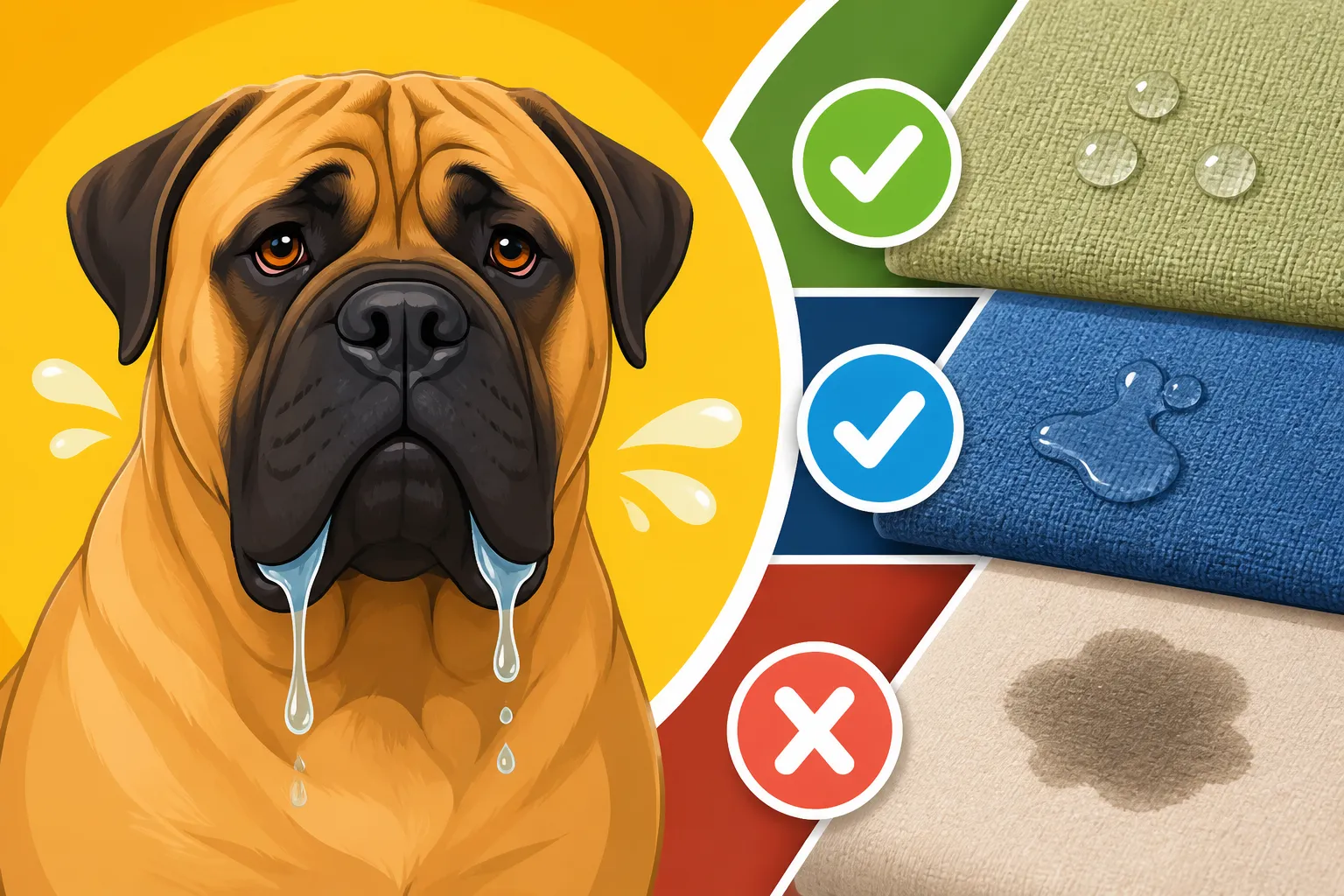
Your furniture and your Bullmastiff's bed are probably the biggest magnets for drool in your home. For furniture, investing in slipcovers or sturdy throw blankets made from easily washable materials is a game-changer. Microfiber is a fantastic choice because it's incredibly soft, yet its tight weave resists deep penetration of liquids and is often easy to wipe clean with a damp cloth. Canvas, especially heavy-duty varieties, is another excellent option. It's tough, holds up to frequent washing, and offers a good balance of absorbency for those inevitable wet spots. Look for canvas that is pre-shrunk to avoid surprises after its first wash. Outdoor performance fabrics, often used for patio cushions, are also surprisingly good indoors. They are designed to be water-resistant, stain-resistant, and can often be hosed down or spot-cleaned with minimal effort. While they might not be as soft, their practicality is unmatched.
When it comes to your Bullmastiff's own bed, a removable, washable cover is non-negotiable. Forget beds where the cover isn't easily separated from the stuffing – those are just absorbent sponges for slobber and odors. Look for covers made from ripstop nylon, which is incredibly durable and resistant to tears, or heavy-duty canvas. Even some plush synthetic blends can work if they are explicitly designed for frequent machine washing and drying. The key is to select fabrics that can withstand weekly (or even more frequent) hot water washes without falling apart. For a great selection of beds and covers designed for durability and ease of cleaning, Chewy offers a vast array of options, ensuring you can find something that fits both your dog's needs and your aesthetic preferences. Choosing the right bed means a cleaner dog, a cleaner floor, and ultimately, a happier household. You may also find insights on Which Bed a Bullmastiff Needs to further inform your decision on durable dog bedding.
For Your Wardrobe and Vehicle: Practicality is Key
Let’s be real, if you have a Bullmastiff, you're going to get drool on your clothes. It's a badge of honor, really. But you can minimize the visual impact and ease the cleanup process with smart fabric choices. When you know you'll be spending quality time with your drooler, opt for darker colored clothing or items with patterns. Solid light colors act like a spotlight for every wet patch. Denim, sturdy cotton blends, and even some performance athletic wear can be your best friends. These materials tend to be more forgiving, either resisting the drool temporarily or making it less noticeable until you can wipe it away. The key is to choose fabrics that are easy to machine wash and dry, because that's what they'll be doing a lot of.
Your car is another prime drool target, especially if your Bullmastiff is a regular passenger. Car seat covers are not just a luxury; they're a necessity. Materials like neoprene (often used for wetsuits), heavy-duty canvas, or even waterproof vinyl/plastic covers are invaluable. These create a barrier between your Bullmastiff's slobber and your car's upholstery, which is notoriously difficult to clean. Many seat covers are designed with anchor points to keep them secure, and some even have side flaps to protect door panels. Having a dedicated, easily removable and washable car seat cover means you can simply take it out, shake it off, and throw it in the wash after an outing, saving your car's interior from countless drool attacks. You can find a huge selection of durable and waterproof car seat covers, often with customer reviews that specifically mention their effectiveness for large, drooling breeds, on Amazon. This allows you to protect your investment and maintain a clean vehicle without constant detailing.
Everyday Management and Deep Cleaning Strategies
Even with the best fabric choices, drool management is an ongoing process. It's not just about what materials you choose, but how you regularly interact with and clean them. A proactive approach will always save you more time and effort than reactive damage control. Establishing a routine for everyday maintenance and understanding effective deep cleaning techniques will be crucial for maintaining a fresh home.
Quick Fixes: Wipes, Towels, and Routine Care
The golden rule of Bullmastiff drool is "act fast." Fresh drool is much easier to manage than dried, crusty residue. Keep dedicated drool towels or microfiber cloths strategically placed around your home – near the couch, by their water bowl, in the car. These aren't just for wiping up messes; they're for prevention. After your Bullmastiff takes a big drink, gently wipe their jowls and muzzle to catch excess water and saliva before they shake their head and send it flying. You’d be amazed how much this simple act can prevent! Similarly, if you notice them starting to drool in anticipation of food, a quick wipe can contain the mess.
For spots that do occur, a damp cloth can often remove fresh drool from surfaces like microfiber furniture or even quick-drying clothing. For slightly dried or sticky spots, a warm, wet cloth with a tiny dab of mild soap can usually lift it away without much fuss. The trick is to blot, not rub, to prevent spreading the stain. Creating a habit of wiping your Bullmastiff's mouth after meals or drinks, as suggested in How to Wipe a Bullmastiff's Mouth After Meals, can drastically reduce the amount of drool that ends up on your fabrics. Think of it as a constant, gentle patrol of your home, always ready to intercept the next wave of slobber.
Tackling Odor and Stains: Washing and Deodorizing
While quick wipes handle the immediate mess, regular washing is essential for truly clean fabrics and preventing odors from building up. For removable covers – be it from dog beds, furniture, or car seats – machine washing in hot water with a heavy-duty detergent is often the best approach. Don't be shy about using the "extra rinse" cycle, especially for thick fabrics, to ensure all soap and drool residue is completely removed.
When it comes to odors, simple detergent sometimes isn't enough. Enzyme cleaners are your best friend here. These specialized cleaners contain enzymes that break down the organic molecules in pet messes (like saliva, urine, or vomit), eliminating the source of the odor rather than just masking it. Follow the product instructions carefully, often requiring the cleaner to sit on the fabric for a while before washing. For stubborn dog bed odors, allowing the freshly washed cover to air dry in direct sunlight can also work wonders, as UV rays have natural deodorizing properties. Regularly rotating through two or three dog bed covers means you always have a clean one on hand. While we're talking about cleanliness, a healthy dog generally contributes to a fresher home. Though primarily a fresh dog food company, Ollie emphasizes overall pet wellness through diet, and a healthy coat and skin (supported by good nutrition) can reduce other potential sources of odor and mess that might combine with drool on fabrics. For a wide range of effective cleaning products, from enzyme sprays to laundry boosters, you'll find plenty of options at Chewy.
Fabrics to Approach with Caution (or Avoid Entirely)
Just as there are fabrics that work wonders with a Bullmastiff, there are others that will test your patience and cleaning skills to their absolute limit. Making informed choices about what materials you bring into your home can save you a world of frustration and regret in the long run.
High-Maintenance and Absorbent Materials That Become Drool Magnets
Some fabrics are simply not designed for the rigors of Bullmastiff ownership. Think about delicate materials like silk, velvet, or linen. While beautiful, these fabrics tend to absorb moisture deeply and quickly, making drool spots incredibly difficult to remove without leaving a water mark or a permanent stain. Velvet, in particular, can be a nightmare, as the nap can be crushed by wet spots, and it's notoriously hard to spot-clean. Linen, while durable, wrinkles easily and can soak up slobber like a sponge, leading to visible stains and lingering odors unless washed immediately and thoroughly. Rayon and other delicate blends often require specific washing instructions or even dry cleaning, which is simply not practical for a household with a perpetually drooling giant.
Imagine the horror of a freshly drooled-upon silk pillow or a velvet armchair marred by a sticky, drying patch. These materials not only show every single mark but also often retain odors because the saliva penetrates deep into the fibers, creating a welcoming environment for bacteria. The effort required to keep them looking pristine just isn't worth the emotional toll or the cleaning bill. It's often better to simply admire these fabrics from afar, or in rooms where your Bullmastiff is not permitted to roam freely.
Materials That Trap Hair, Odor, and Frustration
Beyond just absorbing drool, some fabrics have a terrible habit of attracting and holding onto your Bullmastiff’s hair. While their coat is short, Bullmastiffs do shed, and that hair, when combined with drool, creates a particularly stubborn cleaning challenge. Think about certain synthetic blends with static cling or heavily textured fabrics that act like velcro for loose hair. The combination of wet drool and embedded hair can create a potent, difficult-to-remove mess that builds up over time, contributing to a general "dog smell" in your home.
Furthermore, some fabrics, particularly those with a tight weave but poor breathability, can trap odors even after being cleaned. You might wash a blanket, but a faint, stale smell persists. This can be especially true for some cheap synthetic fleeces or certain dense upholstery materials. These fabrics might seem appealing for their initial price point, but the ongoing battle with lingering smells and embedded hair will quickly outweigh any initial savings. Ultimately, choosing fabrics that are difficult to machine wash, prone to shrinking, or require special care instructions for spot cleaning will only add to your workload and frustration. When dealing with a Bullmastiff, simplicity and durability in cleaning are paramount.
Here's a quick comparison of fabrics to guide your choices:
| Fabric Type | Pros for Bullmastiff Owners | Cons for Bullmastiff Owners | Best Use |
|---|---|---|---|
| Microfiber | Repels moisture, easy to wipe clean, durable, soft | Can sometimes attract static/hair if not high quality | Furniture covers, throws, cleaning cloths |
| Heavy-Duty Canvas | Extremely durable, withstands frequent washing, good absorbency | Can be a bit stiff, may require pre-shrinking | Dog bed covers, car seat covers, utility items |
| Ripstop Nylon | Very durable, tear-resistant, often water-resistant | Less absorbent, can feel less soft/cozy | Dog bed covers, outdoor gear |
| Outdoor/Performance Fabrics | Water-resistant, stain-resistant, easy to clean, quick-drying | Can be less soft, limited patterns/colors in some lines | Furniture covers, car seat covers |
| Denim/Sturdy Cotton Blends | Durable, machine washable, forgiving for everyday wear | Can absorb deeply if not treated, may fade over time | Clothing, casual throws |
| Velvet/Silk/Linen | Luxurious appearance | Highly absorbent, stains easily, difficult to clean, holds odors | Avoid for high-traffic areas |
| Rayon/Delicate Synthetics | Can be soft | Absorbs drool, difficult to spot clean, may require special care | Avoid where drool is likely |
| High-Pile Rugs/Carpets | Comfortable underfoot | Traps drool, hair, and odors; very difficult to deep clean | Use washable area rugs or avoid entirely |
Disclaimer
This article is for general informational purposes only and does not constitute professional advice. Laws, prices and regulations vary by location and change over time. Consult a qualified professional for guidance on your specific situation.