Why a Bullmastiff’s Jowls Hold Saliva
Anyone who has shared their home with a magnificent Bullmastiff knows the struggle of the "drool beard" and the ever-present slobber. It's not just a minor inconvenience; it's a daily reality that can cover walls, furniture, and even unsuspecting guests. This guide will dive deep into the fascinating anatomy and natural behaviors that make your Bullmastiff a champion drooler, and offer practical, empathetic advice for managing the mess.
The Unique Anatomy of a Bullmastiff's Jowls
The most significant reason Bullmastiffs tend to hold and then release saliva in dramatic fashion lies squarely in their distinctive facial anatomy. Unlike many other breeds, their unique build is perfectly designed, albeit inadvertently, for saliva retention. It’s not a flaw, but a characteristic integral to their breed type, stemming from their Mastiff and Bulldog heritage.
The Loose Lip Structure
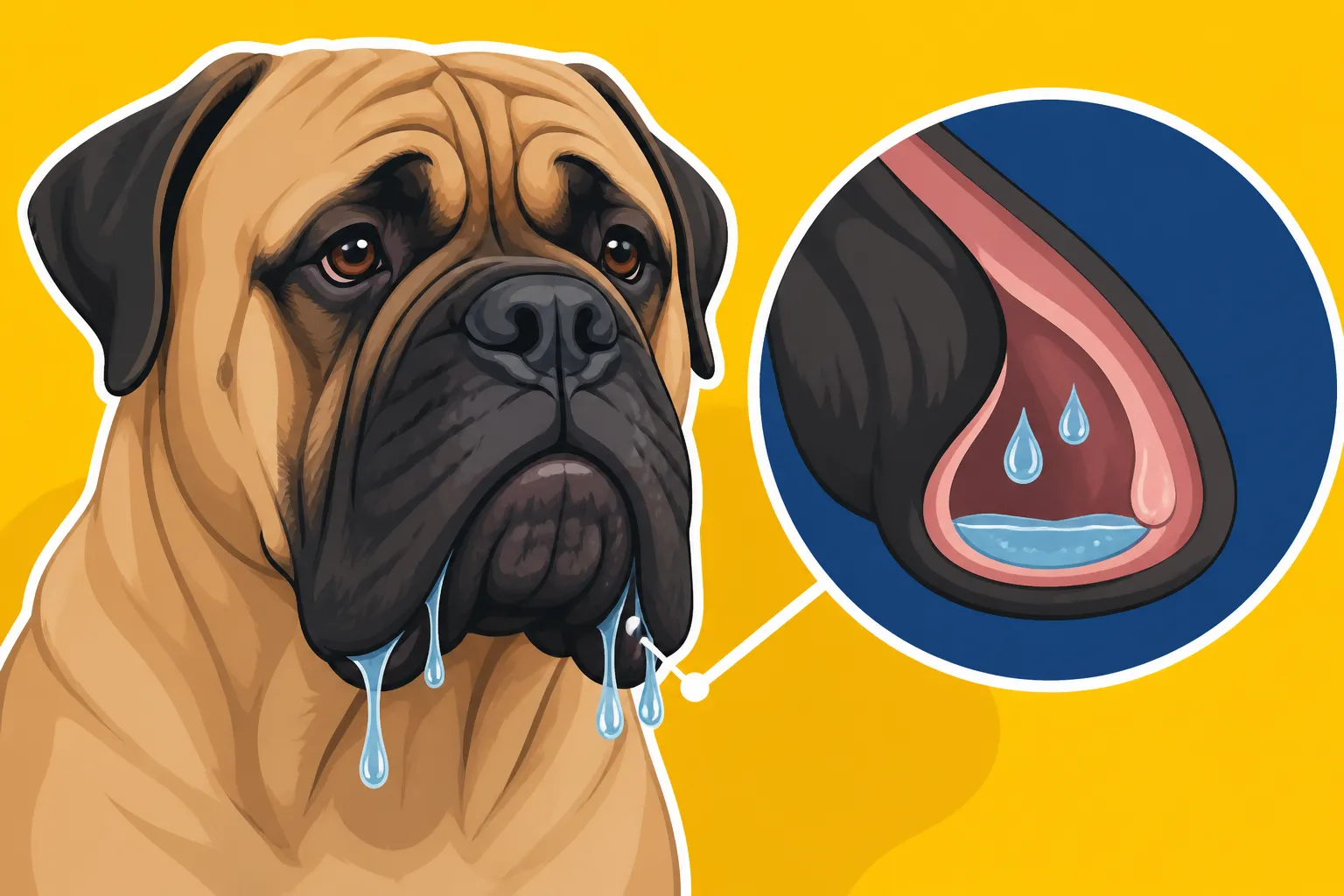
Imagine a deep, soft pouch inside the lower lip and along the jowls. That’s essentially what a Bullmastiff has. Their lips aren't tightly sealed or taut against their teeth like, say, a German Shepherd or a Labrador. Instead, they are pendulous and loose, often hanging down, especially around the corners of the mouth. This creates a natural reservoir, a little bucket if you will, where saliva can pool instead of draining away or being swallowed immediately. When they shake their head, or even just yawn or pant, that collected saliva is flung out due to centrifugal force. It's a fundamental part of How Much a Bullmastiff Drools.
Deep Oral Cavity and Palate
Beyond the external jowls, the internal structure of a Bullmastiff’s mouth also plays a role. They often have a relatively large oral cavity and a soft palate that, while not always contributing directly to holding saliva in the same way the jowls do, can influence how easily saliva moves around or is swallowed. Their broad, strong head, a hallmark of the breed, means there's ample space within for saliva production and accumulation. When they produce a lot of saliva, which they often do, there's nowhere for it to go but into those waiting jowls.
How Their Build Contributes to Drool
Think about the structure required for their original job: holding a poacher. A strong, broad muzzle with loose lips allowed for a firm, non-damaging grip, but also meant excess saliva was not an evolutionary concern for a working dog. Today, this translates into everyday life. Those pronounced jowls act like natural gutters. As saliva glands continuously produce moisture, it flows into these areas. Gravity then takes over, keeping it there until a movement or external stimulus provides the impetus for it to escape. It's not about more saliva being produced than other dogs, necessarily, but about the unique physical design that prevents it from staying neatly inside the mouth or being swallowed efficiently. This is why you’ll often find moisture building up even when your dog is calm and relaxed, simply because of how their mouth is constructed.
Natural Triggers for Saliva Production and Retention
While their anatomy sets the stage, various everyday situations act as triggers, transforming a slight build-up of saliva into a full-blown drooling event. Understanding these triggers can help you anticipate and, to some extent, manage the resulting mess.
Excitement and Anticipation
This is perhaps the most common and dramatic trigger for Bullmastiff drooling. Just like humans "mouth-water" at the thought or smell of delicious food, dogs do too, but for a Bullmastiff, the anatomical predispositions mean this often results in a river of drool. Whether it’s the sound of the treat bag crinkling, the sight of you grabbing their leash for a walk, or the sheer joy of a beloved family member returning home, their salivary glands go into overdrive. This physiological response prepares their digestive system for intake or their body for action. For a Bullmastiff, this increase in saliva production, combined with those ready-made jowl pockets, means an immediate overflow. It's often When a Bullmastiff Drools Most. You’ll notice their whole body might vibrate with excitement, and the drool is just another outward expression of that intense anticipation.
Eating, Drinking, and Food Stimulation
Naturally, mealtime is a prime drooling event. The act of eating stimulates saliva production to aid in digestion, moisten food, and begin the breakdown of starches. For a Bullmastiff, particularly one who eats quickly, the combination of increased saliva and the mechanics of chewing means a lot of that liquid ends up outside the mouth. Water intake also contributes. After taking a big drink, especially from a low bowl where they dunk their entire muzzle, the water mixes with existing saliva, and when they lift their head, it simply sloshes right out of those loose jowls. You might notice they carry a "water beard" for a few minutes after a good drink. This is a common observation, and it directly relates to Whether a Bullmastiff Drools More After Drinking. Using specialized bowls can sometimes help contain the splash, but the jowl structure will always mean some residual dampness.
Heat and Hydration Needs
Bullmastiffs, with their short muzzles and dense build, are notoriously sensitive to heat. Panting is their primary mechanism for cooling down, as they don't sweat like humans do. When a Bullmastiff pants heavily, their respiratory rate increases, and more air passes over the moist surfaces of their mouth and tongue, which helps evaporate water and cool the blood. This heavy panting naturally increases saliva production, as their body works hard to keep those surfaces moist for efficient cooling. In hot weather or after exercise, the combination of increased saliva and constant mouth movement can lead to significant drooling. It's an important signal that they might be overheating, so it’s crucial to know Signs a Bullmastiff Has Heatstroke and avoid situations where What Temperature Is Dangerous for a Bullmastiff. Providing constant access to fresh, cool water and encouraging them to stay in cooler environments are essential preventative measures during warmer months.
Practical Strategies for Managing Bullmastiff Drool
Living with a Bullmastiff means accepting a certain level of drool, but it doesn't mean resigning yourself to a perpetually slimy home. There are several practical, everyday strategies you can adopt to manage the mess and keep your dog and your home cleaner and healthier.
Routine Cleaning and Hygiene
The most straightforward approach is proactive cleaning. Keeping a supply of dedicated "drool rags" or absorbent cloths strategically placed around your home is key. Many owners keep one by the front door, another near the couch, and certainly one by the food and water bowls. Wiping your Bullmastiff's jowls after meals, drinks, and moments of high excitement can significantly reduce the spread. I personally use small, soft microfiber cloths that are super absorbent, and I buy them in bulk from places like Amazon so I always have clean ones ready.
Regular wiping isn't just about cleanliness; it's also about preventing skin irritation. The constant dampness in their lip folds can create a breeding ground for bacteria or yeast, leading to infections. How to Clean a Bullmastiff's Jowls involves gently wiping inside the folds, ensuring they are dry. Some owners use gentle, pet-safe wipes, readily available at retailers like Chewy, which can also help keep the area fresh between deeper cleans. Consistency is crucial here; a quick wipe several times a day is far more effective than an occasional scrub. Don't forget, this regular hygiene also helps prevent Why a Bullmastiff's Lip Folds Smell.
Managing Mealtime and Water Intake
How your Bullmastiff eats and drinks can have a big impact on drool. For avid gulp-eaters, a slow-feeder bowl can help. By extending mealtime, it reduces the frantic excitement that often leads to excessive drooling and allows for more saliva to be swallowed. These are widely available, and you can find many options from pet supply companies. As for water, consider a bowl with high sides or one designed to reduce splash. Some owners even put a towel under the water bowl to catch drips. It's also wise to encourage your Bullmastiff to rest for a bit after eating and drinking. A sudden burst of activity immediately after a meal can send stored saliva flying. For very excited eaters, I sometimes put their bowl in an easily washable area, like a tiled kitchen or even outside, to contain the inevitable spray.
| Trigger Event | Management Strategy | Benefit |
|---|---|---|
| Excitement | Anticipate and wipe; calm greetings | Reduces sudden drool flings; cleaner greetings |
| Mealtime | Use a slow-feeder bowl; wipe after eating | Minimizes food-related drool mess; aids digestion |
| Drinking Water | Use high-sided bowl; place mat underneath; wipe after | Contains water splash; prevents wet floors and furniture |
| Heat/Panting | Provide cool water & environment; hydrate; monitor | Prevents excessive cooling-related drool; reduces overheating risk |
| General Accumulation | Keep drool rags handy; routine jowl wiping | Maintains hygiene; prevents odors & skin irritation; cleaner home |
Environmental and Lifestyle Adjustments
Beyond direct cleaning, a few lifestyle tweaks can make a big difference. Consider what materials are on your furniture. Easily washable slipcovers or throws can be a lifesaver on couches and chairs. If your Bullmastiff likes to lean on you (and most do!), having an extra towel nearby is just part of the routine. For floors, especially hardwood or tile, keeping them clean will prevent sticky residue from building up.
If your Bullmastiff is particularly prone to drooling when over-excited by guests, you might manage their initial greeting until they've settled down, offering a quick wipe before they engage fully. Some owners even use specialized "drool bibs" for their Bullmastiffs, especially when traveling or visiting friends, to catch the worst of it. While this might sound silly, a cute bandana can be quite functional! Remember, a consistent routine helps your Bullmastiff understand expectations and helps you stay on top of the unique challenges of the breed. It's all part of the deep care involved in Caring for a Bullmastiff Past Six, too, as older dogs can sometimes be less meticulous.
When Drooling Signals a Problem
While drooling is a normal, expected part of Bullmastiff ownership, there are definitely times when it might indicate something more serious than just a healthy dog with loose jowls. It's crucial to be observant and know the difference between typical slobber and a potential health concern.
Sudden or Excessive Drooling
If your Bullmastiff suddenly starts drooling much more than usual, or if the drooling begins out of the blue with no clear excitement or food trigger, it's time to pay close attention. This is especially true if the saliva seems thicker, discolored, or has an unusual odor. Excessive drooling, medically known as ptyalism or hypersalivation, can be a symptom of various underlying issues. It could be something minor, like an object lodged in their mouth (a stick, a toy piece), or a dental problem like a broken tooth, gum infection, or a growth in the mouth. These issues can cause discomfort and stimulate increased saliva production.
More serious concerns include nausea, which can be a sign of gastrointestinal upset, organ disease, or even certain toxins. If you notice your Bullmastiff acting unusually, perhaps lethargic, trying to vomit, or pawing at their mouth, alongside the increased drooling, it's definitely a red flag. This kind of sudden change is precisely When Sudden Drooling Means Something Is Wrong and warrants an immediate call to your veterinarian. Don't wait to see if it improves, especially with a breed prone to certain health issues.
Associated Symptoms to Watch For
Beyond just the volume of drool, look for other symptoms that accompany the excessive salivation. These can help your vet narrow down the potential cause.
Consider these accompanying signs:
- Difficulty swallowing or eating: This could indicate pain in the mouth or throat, or an obstruction.
- Pawing at the mouth or face: A clear sign of discomfort or something stuck.
- Bad breath: Can be a sign of dental disease, infection, or internal issues.
- Lethargy or changes in behavior: Indicates general illness or pain.
- Vomiting or retching: Suggests nausea, digestive issues, or a severe problem like bloat. Signs a Bullmastiff Is Bloating are always an emergency.
- Swelling of the face or gums: Could be an abscess, allergic reaction, or other inflammation.
- Changes in appetite or thirst: Another general indicator of illness.
Monitoring for these symptoms alongside changes in drooling habits is essential. A healthy Bullmastiff drools, yes, but they should generally be bright, alert, and comfortable. If you see any combination of excessive drooling and these other signs, it's always best to err on the side of caution and consult with your veterinarian. They can properly diagnose the issue and get your beloved Bullmastiff feeling better, and help you understand the difference between normal breed characteristics and potential health concerns.
Disclaimer
This article is for general informational purposes only and does not constitute professional advice. Laws, prices and regulations vary by location and change over time. Consult a qualified professional for guidance on your specific situation.