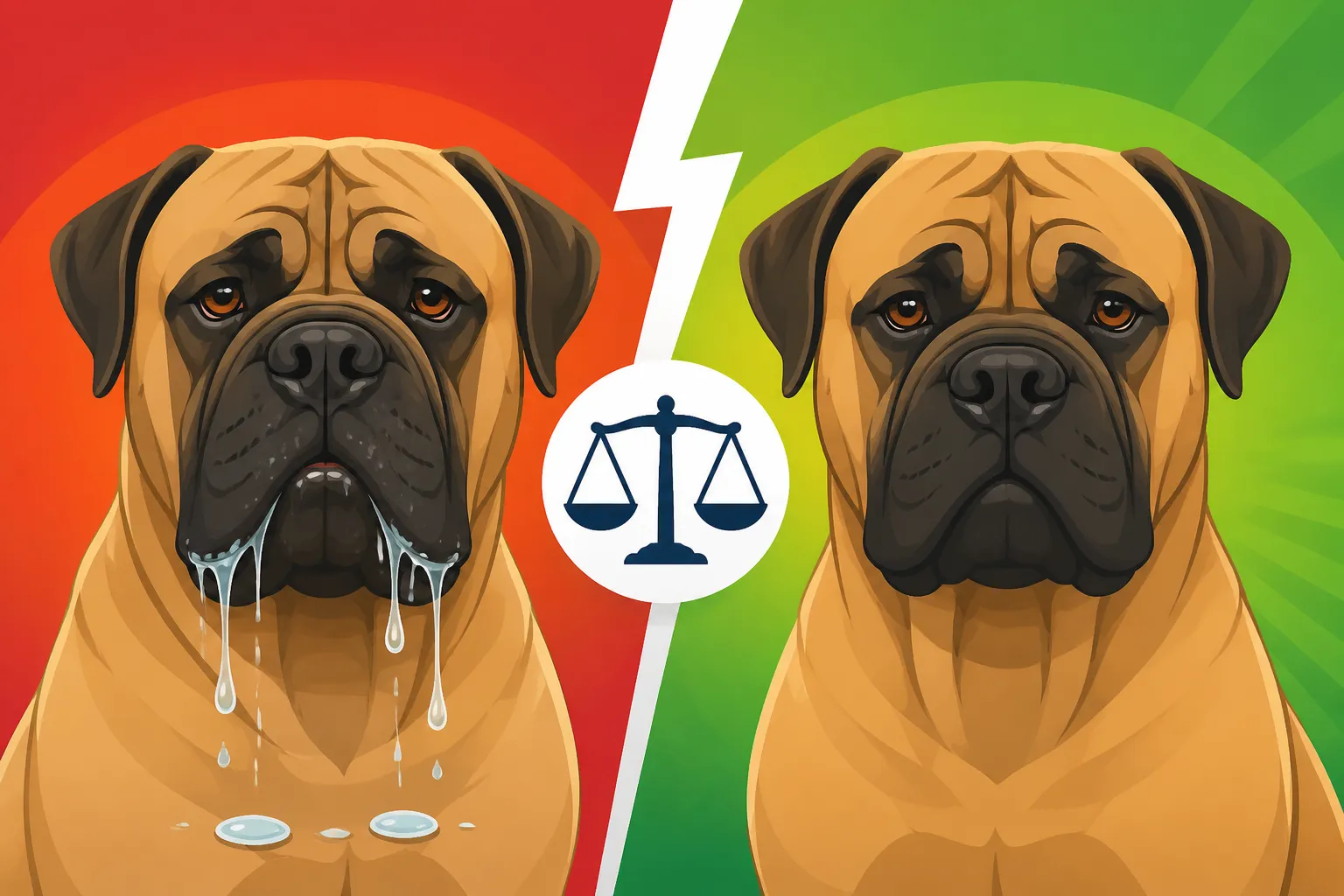
Whether a Tighter Lipped Bullmastiff Drools Less
The glorious, substantial jowls of a Bullmastiff are undeniably part of their charm, but for many owners, they also come with a somewhat less charming side effect: drool. If you've ever had to chase down a swinging jowl full of water after a drink, or found glistening trails across your floor, you've probably wondered if there's any way to mitigate the slobber. A common hope among prospective and current owners is that a "tighter-lipped" Bullmastiff might drool less. This comprehensive guide will explore the realities of Bullmastiff anatomy, breed standards, and real-world experiences to determine whether lip tightness genuinely impacts drooling, and how to manage the inevitable.
The Anatomy of Bullmastiff Drool: More Than Just Loose Lips
It’s easy to look at a Bullmastiff and assume that their drool comes simply from an abundance of loose skin around their mouth. While that's certainly part of the picture, the mechanics of why these magnificent dogs drool are a bit more nuanced. It’s a combination of their unique breed characteristics, physiological needs, and even their joyful, slobbery enthusiasm for life.
Why Bullmastiffs Are Prone to Drooling
Let's be frank: Bullmastiffs are members of the Mastiff family, and like many molosser breeds, they come equipped with a mouth structure that isn't exactly designed for neat and tidy saliva retention. Their prominent jowls, often referred to as "flews," are deep and pendulous to varying degrees. These flews, combined with the way their upper lips hang, create natural pockets and channels where saliva can easily collect. It's not just a matter of "loose lips" in the flappy sense, but the overall architecture of their oral cavity.
This design means that saliva, which is always being produced to aid digestion and keep the mouth healthy, has an easier path to escape rather than being held entirely within the mouth. Think of it like a leaky bucket; the volume of water inside doesn't necessarily dictate how much spills out, but rather the integrity of the bucket itself. For a Bullmastiff, their mouth is just naturally a bit "leaky." This becomes particularly evident after they've had a big drink of water, or during moments of excitement, anticipation of food, or when they’re panting to cool down.
It’s important to understand that this isn’t a flaw or a sign of poor health in a typical Bullmastiff; it’s simply a breed trait. Just as a Greyhound is built for speed and a Bulldog for powerful grip, a Bullmastiff's mouth structure contributes to its formidable appearance and historical function, even if it leads to a little extra housekeeping for their human companions. Embracing this characteristic is part of truly loving a Bullmastiff.
The Role of Lip and Muzzle Structure
When people talk about a "tighter-lipped" Bullmastiff, they're usually envisioning a dog whose lips fit more snugly, perhaps akin to a German Shepherd or a Labrador Retriever. However, within the Bullmastiff breed, "tight" is a relative term. The breed standard calls for certain characteristics, but none of them eliminate the natural tendency for saliva to accumulate and escape.
The Bullmastiff's muzzle should be broad and deep, with the lips meeting to form a clean line and not hanging excessively. While this description might sound like it implies a dry mouth, the reality is that the depth of the flews and the overall bulk of the head still provide ample opportunity for saliva to collect. Imagine a slightly less leaky bucket, but still a bucket with inherent openings. Saliva naturally pools in the deep pockets formed by the jowls, especially along the lower jaw and where the upper lips meet the lower.
This collection point means that any sudden movement – a head shake, a yawn, a vigorous pant – can easily dislodge that pooled saliva, sending it flying. For instance, after taking a big gulp of water, a Bullmastiff’s jowls can trap a significant amount of liquid. A quick shake of the head is then all it takes to distribute that water, often liberally, across your kitchen floor or nearby walls. This is why understanding Why a Bullmastiff's Jowls Hold Saliva is key to appreciating the physics behind the drool. So, while variations in lip and muzzle tightness exist, the fundamental architecture of a Bullmastiff's mouth means that some degree of drooling is almost always going to be part of the package.
Debunking the "Tighter Lip, Less Drool" Myth
It’s a persistent hope, isn't it? The idea that if you could just find a Bullmastiff with perfectly sealed, tighter lips, you could escape the drool. Unfortunately, this often turns out to be more wishful thinking than scientific reality. While there are certainly extremes in lip structure within the breed, and some dogs might appear "drier" than others, the fundamental design of a Bullmastiff means that significant drooling is almost always a given.
The Breed Standard and Lip Definition
To understand why "tighter lips" won't eliminate drool, let's consider what the Bullmastiff breed standard actually describes for their mouth and muzzle. The standard typically emphasizes a broad and deep muzzle, with a square appearance when viewed from the front. The lips should not be pendulous but should meet cleanly. However, "not pendulous" does not mean tight and dry like a herding breed. It simply means they shouldn't hang excessively loosely, revealing the gums or allowing the tongue to consistently loll out.
The depth of the flews is still inherent in the breed type. A Bullmastiff's muzzle is meant to be powerful and substantial, reflecting its history as a gamekeeper's dog, bred to hold poachers. This requires a certain structure that naturally includes deep lip folds where saliva can gather. Even a Bullmastiff that adheres perfectly to the breed standard regarding muzzle length and lip definition will still possess the anatomical features that contribute to drooling. It's about proportion and function within the Bullmastiff type, not striving for a completely dry mouth, which would be atypical for the breed. If you look at What a Bullmastiff's Muzzle Length Should Be, you'll see it's about balance, not reduction of jowl.
Real-World Experience and Genetic Factors
In the real world, owners quickly learn that while some Bullmastiffs might be slightly "drier" than others, none are truly drool-free. Many a hopeful owner has sought out a puppy advertised as "tighter-lipped," only to find their home still adorned with slobber art. While individual variations occur – one Bullmastiff might seem to leave fewer puddles than another – it’s often a matter of degree, not a fundamental difference in drooling tendency.
These subtle differences can be influenced by a myriad of factors beyond just lip structure: how often a dog pants, how enthusiastically they drink, their general activity level, and even their personality. An excitable Bullmastiff might drool more due to sheer anticipation, regardless of their lip conformation. Whether Every Bullmastiff Drools the Same is a topic often discussed among owners, and the consensus is usually no, but the range of difference isn't as vast as one might hope. While breeders certainly strive for the ideal breed type, including correct mouth structure, they aren't breeding for a truly "dry-mouthed" Bullmastiff, as that would deviate significantly from the established standard and potentially compromise other breed-specific traits. The genetics contributing to the Bullmastiff's characteristic jowls and salivary production mean that a certain amount of drool is simply part of owning one of these wonderful dogs.
Practical Approaches to Managing Bullmastiff Drool
So, if a "tighter lip" isn't the magic bullet for eliminating Bullmastiff drool, what can an owner do? The answer lies in proactive management and understanding that living with a Bullmastiff means embracing their charming, albeit sometimes messy, nature. While you can't stop them from producing saliva, you can certainly manage the aftermath and keep your home a bit cleaner.
Daily Management and Cleaning Routines
The most effective strategy against Bullmastiff drool is simply to be prepared and proactive. Think of it as a constant, gentle battle against gravity and liquid. Having dedicated "drool rags" strategically placed around your home is essential. These aren't just any old towels; many owners swear by soft, absorbent micro-fiber cloths which you can find readily on Amazon or at most home goods stores. Keep them near water bowls, by the front door, and next to your favorite lounging spots. You'll use them more than you think, wiping away drips before they become sticky puddles or fling marks on the wall. What to Keep on Hand for a Bullmastiff's Drool is a surprisingly comprehensive list once you start living with one.
A critical part of this routine involves wiping your Bullmastiff's mouth after they eat or drink. This might sound tedious, but a quick wipe can prevent a significant amount of post-meal drool distribution. Gently cup their jowls and blot the excess moisture. Similarly, after a drink, be ready with that drool rag. Some owners even teach their dogs to wait a moment after drinking, letting the excess drip into the bowl before they walk away. For persistent droolers, you might find that regularly wiping their jowls and folds can also help prevent odors or skin irritation that can sometimes develop in damp areas. Consider using dog-safe wipes, available at retailers like Chewy, for quick clean-ups throughout the day. Protecting your furniture and walls with washable covers or easy-to-clean surfaces can also save you a lot of effort in the long run.
Diet, Hydration, and Environmental Factors
While a Bullmastiff's diet might not directly reduce drool from their mouth structure, it can certainly influence overall oral health and hydration, which can indirectly affect drooling. Ensuring your Bullmastiff is well-hydrated is paramount. Adequate water intake means healthy saliva production; conversely, dehydration can sometimes lead to thicker, stickier saliva, which might make a dog try to clear its mouth more frequently, potentially increasing visible drool. Always provide fresh, clean water, and consider a large, heavy water bowl that won't tip easily. Some owners even question Whether a Bullmastiff's Water Bowl Should Be Raised, which is a consideration for bloat prevention, but doesn't necessarily impact drool.
When it comes to diet, feeding a high-quality, balanced diet can contribute to overall health, including good oral hygiene. While there's no magic "anti-drool" food, a diet that suits your dog well from brands like Ollie or other reputable manufacturers found on Chewy can help ensure they aren't experiencing any oral irritation from allergies or sensitivities that might lead to excessive salivation. Additionally, consider dental hygiene. Regular brushing, dental chews, or professional cleanings can prevent plaque and tartar buildup, which can cause gum inflammation and discomfort, potentially leading to increased drooling.
Environmental factors also play a significant role. Bullmastiffs are prone to overheating, and when they get too hot, they pant heavily to cool down. This vigorous panting naturally leads to a significant increase in drool. Keeping your Bullmastiff cool, especially in warmer months, is crucial for their health and for managing slobber. Provide plenty of shade, access to cool water, and avoid strenuous exercise during the hottest parts of the day. You might find your Bullmastiff drools more in summer, which ties into Whether a Bullmastiff Drools More in Heat. Similarly, moments of high excitement or stress can trigger increased salivation. Recognizing these triggers and trying to manage them can help, though some drool of joy is simply part of having a happy Bullmastiff.
When Drool Signals a Problem
While we've established that a certain amount of drool is completely normal for a Bullmastiff, it's crucial to be able to distinguish between typical slobber and drooling that might signal a health problem. A sudden, drastic increase in drooling, a change in the consistency or color of the saliva, or drooling accompanied by other symptoms like lethargy, loss of appetite, pawing at the mouth, or swelling, should always be a cause for concern. When Sudden Drooling Means Something Is Wrong is an important distinction for any Bullmastiff owner to make.
Several medical conditions can manifest with excessive drooling (ptyalism or hypersalivation). Dental issues are a common culprit; severe dental disease, abscesses, or fractured teeth can cause significant pain and irritation, leading to increased saliva production. Injuries to the mouth, such as cuts from chewing on something sharp, or foreign objects lodged in the gums or throat, can also cause acute drooling. Additionally, certain gastrointestinal problems, like nausea or stomach upset, can trigger drooling. Sometimes, a Bullmastiff might drool excessively if they've ingested something toxic or bitter.
More serious conditions, though less common, can also cause hypersalivation. Tumors in the mouth or throat, neurological disorders, or even certain metabolic diseases can present with changes in drooling patterns. If you notice any unusual or persistent drooling, particularly if it's accompanied by other concerning signs, it's always best to consult your veterinarian promptly. They can conduct a thorough examination, including checking your dog's mouth and teeth, and perform any necessary diagnostic tests to pinpoint the cause and recommend appropriate treatment. Never hesitate to seek professional advice when your Bullmastiff's health is in question.
Here's a quick look at factors that influence drooling in Bullmastiffs:
| Factor | Impact on Drool (Generally) | Notes for Bullmastiffs |
|---|---|---|
| Lip/Flew Structure | High | Breed standard allows for loose flews; inherent anatomical design means saliva collection, regardless of "tightness" variations. |
| Excitement/Anticipation | High | Common for all dogs, but often pronounced in Bullmastiffs due to their expressive nature and deep jowls. |
| Heat/Panting | High | Bullmastiffs overheat easily, leading to heavy panting and significantly increased drool for cooling. |
| Eating/Drinking | High | Saliva production increases; water splashes, food residues, and post-meal gulps contribute heavily to visible drool. |
| Oral Health/Pain (if problem) | Moderate to High | Dental issues (cavities, gum disease), foreign objects, or mouth injuries can cause abnormal and excessive drooling. |
| Nausea/Motion Sickness (if present) | High | Can trigger profuse, often stringy, drooling; common during car rides or with digestive upset. |
| Stress/Anxiety | Moderate | Can sometimes lead to increased salivation as a physiological response, although less common than excitement or heat. |
Conclusion: Embracing the Bullmastiff Slobber
The journey with a Bullmastiff is one filled with immense love, loyalty, and undeniable charm. While the idea of a "tighter-lipped" Bullmastiff that doesn't drool is an appealing fantasy, the reality is that their unique and majestic anatomy means slobber is an intrinsic part of their breed. Instead of fighting it, embracing and managing the drool becomes a normal, often endearing, aspect of Bullmastiff ownership.
Whether you're constantly armed with a drool rag, wiping down walls, or simply laughing at the impressive arc of a post-drink head shake, these incredible dogs make every bit of cleanup worth it. Understanding the "why" behind their drooling habits helps you prepare and provides the knowledge to differentiate between normal slobber and a potential health concern. So, go ahead, love your Bullmastiff, jowls and all—and maybe invest in some extra towels.
Disclaimer
This article is for general informational purposes only and does not constitute professional advice. Laws, prices and regulations vary by location and change over time. Consult a qualified professional for guidance on your specific situation.