How Fast a Bullmastiff’s Nails Grow Out
As a Bullmastiff owner, you know the struggle: one minute their nails seem fine, and the next, they're clicking on the floor like tap shoes, threatening to snag on everything and making walks uncomfortable. It's not just annoying; overgrown nails can cause real pain and long-term joint issues for these big, powerful dogs. This guide will dive deep into why your Bullmastiff's nails grow so fast, how to manage them effectively, and what you can do to keep their paws healthy and happy.
Why a Bullmastiff's Nails Seem to Grow Overnight
It often feels like Bullmastiff nails have a mind of their own, sprouting at an incredible pace. While it might seem like magic, there are several very real reasons why your big dog's claws grow quickly, and understanding these can help you manage them more effectively.
The Genetic Predisposition to Robust Nail Growth
Just like their ancestors, who needed strong, resilient claws for traversing varied terrains in their original role as gamekeeper's companions, Bullmastiffs tend to have nails that are designed for continuous growth and strength. Unlike humans whose nails might grow at a fairly consistent, manageable rate, a Bullmastiff's nails are biologically programmed for more aggressive growth. This isn't a fault; it's a feature of a working breed. Think about it: a dog that was historically expected to cover a lot of ground, often over rough woodland, would need nails that could withstand constant wear and tear, and still keep growing to replace what was lost. Today's pampered couch potato Bullmastiff still carries that genetic blueprint, but often without the natural wear that would keep those nails in check.
Many owners find themselves baffled by how quickly they need to trim their Bullmastiff's nails, sometimes feeling like they just did it last week! This rapid growth, coupled with their sheer size and strength, makes regular, diligent nail care absolutely non-negotiable. Ignoring it can lead to a host of problems, from painful paws to altered gait, which is the last thing you want for a breed already prone to joint issues.
Lifestyle Factors: Activity Levels and Surfaces
The rate at which your Bullmastiff's nails wear down is heavily influenced by their daily activities and the types of surfaces they walk on. If your Bullmastiff spends most of their time on soft surfaces like carpet, grass, or even a nice, cushy bed, their nails aren't getting the natural abrasion they need. Hard, abrasive surfaces like concrete sidewalks, asphalt, or even rough natural trails act like natural nail files.
Consider a Bullmastiff who gets a daily walk exclusively on a grassy park path. While wonderful for their joints and mental stimulation, it does little to grind down those nails. Compare that to a Bullmastiff who enjoys regular strolls around the neighborhood on concrete sidewalks or through a rocky path. The latter will naturally have shorter nails due to the constant friction. This is why even if you're active with your Bullmastiff, you still might find their nails growing out quickly if their exercise primarily takes place on soft ground. It's a tricky balance, because you also want to protect their Hips and Elbows Under a Hundred and Thirty Pound Bullmastiff from excessive impact on hard surfaces, especially when they're young. It's not about making them walk on concrete all day, but recognizing that if they don't, then you need to pick up the slack with regular trimming.
Understanding Your Bullmastiff's Paws: The Quick and the Clipper
Before you even think about picking up a pair of clippers, it's crucial to understand the anatomy of your Bullmastiff's paw and nail. This knowledge isn't just for show; it's essential for safe, stress-free trimming that avoids injury and builds trust with your dog.
The Anatomy of a Dog's Nail and the Sensitive Quick
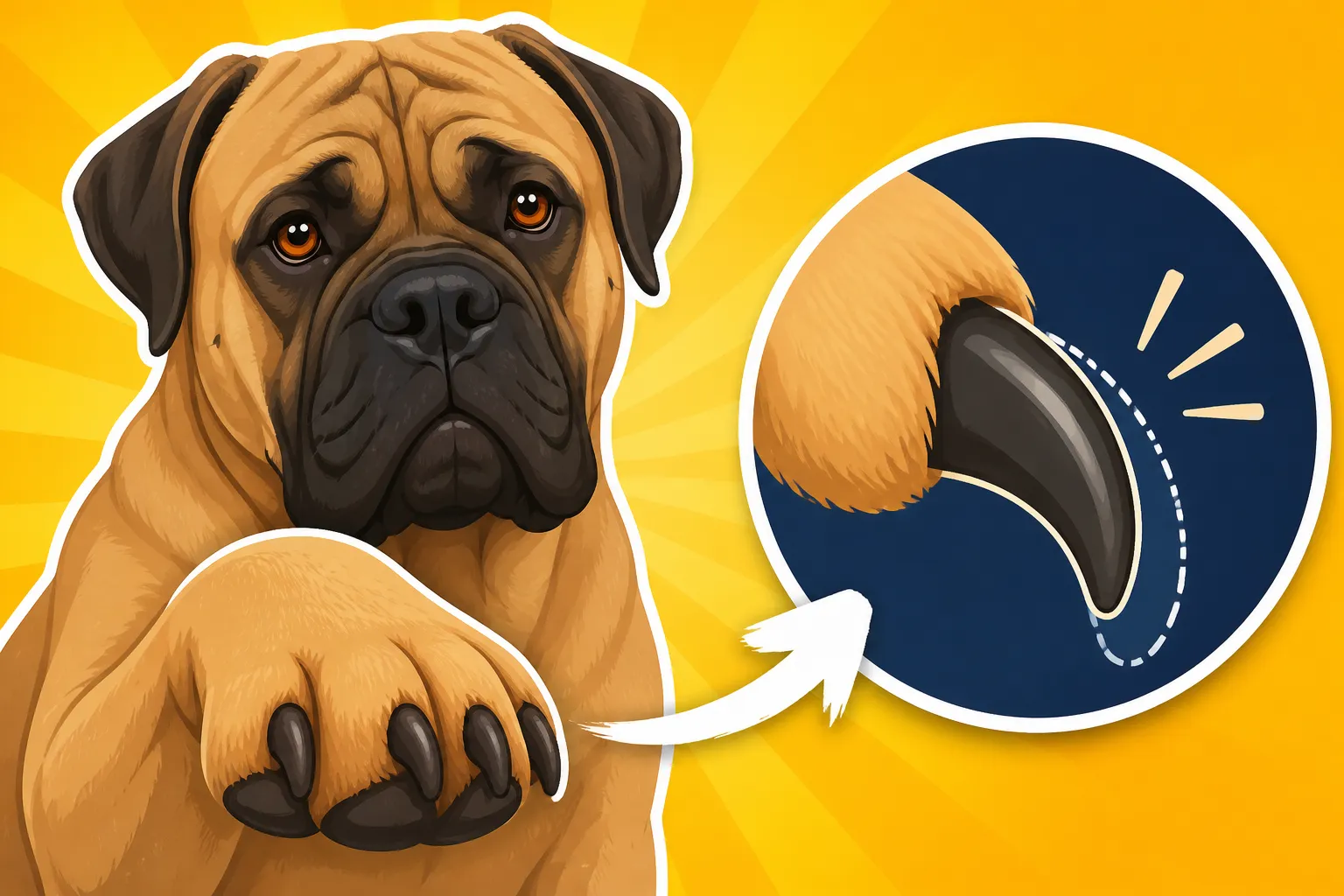
A dog's nail isn't just a dead keratin sheath like a human fingernail. Inside each nail is a blood vessel and nerve called the "quick." This quick grows with the nail, extending further down as the nail gets longer. If you cut into the quick, it's not only painful for your Bullmastiff, but it will also bleed quite a bit. Many Bullmastiffs have dark nails, making it incredibly difficult to see where the quick ends, adding a layer of challenge and anxiety for many owners.
The quick is truly a living part of the nail, and if you cut it, your dog feels it. They might yelp, pull away, or even develop a fear of nail trims, making future attempts even harder. This is why we often hear people say, "My dog hates having his nails done!" It's often because they've had a bad experience with the quick. For a big, strong dog like a Bullmastiff, a negative experience can quickly escalate into a wrestling match, which is something you definitely want to avoid. Building trust around their paws is paramount, especially when Training a Bullmastiff That Weighs More Than You Do.
The Importance of Frequent, Small Trims
Given the challenges of dark nails and the quick, the best approach is to trim frequently and take off only small amounts at a time. This method has a couple of benefits:
First, by taking off just the very tip of the nail, you reduce the risk of hitting the quick. You're aiming for a tiny snip, just enough to prevent the nail from touching the ground when your Bullmastiff stands naturally. This is often easier said than done, but with practice and consistency, it becomes second nature.
Second, frequent, small trims can actually encourage the quick to recede over time. When the nail is consistently kept short, the quick doesn't have to extend as far to protect the underlying tissue. This is a slow process, but it's incredibly effective for getting those nails to a healthy length, where they no longer click on the floor. Imagine if you only trimmed your Bullmastiff's nails once every couple of months. By then, the quick would have grown out significantly, making it almost impossible to get the nails short enough without causing pain. Aim for at least once a week, or even every few days if you're trying to get particularly long nails under control. Remember, consistency is key, and it helps your Bullmastiff get used to the routine. How Often a Bullmastiff's Nails Need Trimming is a topic that many owners wrestle with, but this consistent, small-trim approach is often the most successful.
Strategies for Keeping Those Claws in Check
Managing a Bullmastiff's nails requires a combination of the right tools, proper technique, and a whole lot of patience and positive reinforcement. Their size alone means that any struggle can become a serious challenge, so teaching them to cooperate is essential.
Choosing the Right Tools: Clippers vs. Grinders
When it comes to nail care for a Bullmastiff, you essentially have two main options: clippers or a dremel-style grinder. Both have their pros and cons, and what works best often comes down to personal preference and your dog's temperament.
- Clippers: These come in two main styles: scissor-style and guillotine-style. For a Bullmastiff's thick, strong nails, scissor-style clippers are usually more robust and provide better leverage. Brands like Safari or Resco are often recommended for large breeds. When using clippers, make sure they are sharp. Dull clippers can crush the nail, causing pain and splintering. The trick, as mentioned, is to take off very small amounts at a time. If your Bullmastiff has dark nails, you'll be looking for a small, white or gray dot in the center of the trimmed nail — that's the beginning of the quick. Stop cutting when you see this, or just before.
- Grinders (Dremels): A rotary tool, often referred to as a Dremel, sands the nail down gradually. This is an excellent option for Bullmastiffs with dark nails because it allows you to remove tiny layers at a time, making it much easier to avoid the quick. It also creates a smoother finish, which is great for preventing snagging. The main challenge with grinders is the noise and vibration, which can be alarming to some dogs. However, with gradual introduction and plenty of positive reinforcement, many Bullmastiffs adapt well. You can find quality grinders from various brands on platforms like Amazon or Chewy, and some even offer cordless, quieter versions specifically designed for pets.
Here's a quick comparison of the two main tools:
| Feature | Nail Clippers | Nail Grinder (Dremel) |
|---|---|---|
| Speed | Faster for quick trims | Slower, more gradual removal |
| Precision | Can be harder to gauge quick with dark nails | Excellent for avoiding the quick, especially with dark nails |
| Noise | Silent (just a snip sound) | Can be noisy and vibrate, may scare some dogs |
| Finish | Can leave sharp edges if not filed | Smooths and rounds the nail |
| Learning Curve | Requires confidence to avoid the quick | Requires desensitization to noise/vibration |
| Cost | Generally lower initial cost | Higher initial cost for the tool |
Regardless of your chosen tool, always have styptic powder (like Kwik Stop) on hand. If you accidentally nick the quick, this powder will stop the bleeding quickly and effectively, minimizing discomfort for your Bullmastiff.
Building Positive Associations with Nail Trims
For a Bullmastiff, whose default response to something they don't like might be to simply refuse or brace their impressive weight, positive reinforcement is not just a nice idea—it's absolutely essential. You want your Bullmastiff to associate nail trims with good things, not fear or pain. Teaching a Bullmastiff to Have Its Feet Handled should start early and continue throughout their lives.
Start by simply touching their paws and nails, praising them, and giving them high-value treats (think cheese, cooked chicken, or a dollop of peanut butter). Do this many times a day, without even bringing out the clippers or grinder. Once they're comfortable with that, introduce the tool. Let them sniff it, touch it to their nails (without actually trimming), and immediately reward them. If you're using a grinder, turn it on in another room so they hear the sound, then slowly bring it closer, associating the sound with treats.
When you're ready to trim, only do one or two nails at a time, especially in the beginning. Praise heavily and give a treat after each nail. If your Bullmastiff starts to show signs of stress or discomfort, stop. You can always try again later. The goal is to make it a quick, positive, and uneventful experience. Rushing or forcing the issue will only create a negative association, making future attempts a battle you're likely to lose against a dog of this size. Think of it as a dance, not a wrestling match.
Addressing the Bullmastiff's Stoicism and Stubbornness
Bullmastiffs are known for their quiet demeanor and often stoic nature. They can also be incredibly stubborn when they decide they don't want to do something. This combination can make nail trims particularly challenging. They might not give obvious signs of discomfort until it's too late, or they might simply plant their feet and refuse to cooperate, using their immense weight to their advantage.
If your Bullmastiff is resistant, consider these tactics:
- Location, Location, Location: Sometimes, changing where you trim can make a difference. A quiet corner of the house, perhaps with a non-slip mat, might be more comfortable than a slick kitchen floor.
- Helper Hands: Having another person to distract with treats, gently hold, or simply provide moral support can be invaluable. One person focuses on the paw, the other on the dog's head and positive reinforcement.
- High-Value Distractions: A lick mat smeared with peanut butter or plain yogurt, or a Kong filled with something delicious, can keep your Bullmastiff occupied while you work. These can be particularly effective because they combine mental stimulation with a tasty reward.
- Professional Help: Don't feel ashamed to seek professional help. A professional groomer or your veterinarian's office can often perform nail trims efficiently and safely. They have specialized equipment and experience with all sorts of temperaments. Even if you plan to do most trims yourself, a few professional sessions can help reset a negative association or get particularly long nails back to a manageable length. Sometimes, seeing how a professional handles it can also give you confidence and tips to try at home.
Building a Lifelong Nail Care Routine for Your Gentle Giant
Establishing a consistent and effective nail care routine from puppyhood will save you (and your Bullmastiff) a lot of headaches in the long run. It's about more than just aesthetics; it's about their comfort, health, and overall well-being.
Integrating Nail Trims into Regular Grooming
Think of nail trims as just another part of your Bullmastiff's regular grooming, alongside ear cleaning, wrinkle care, and brushing. Consistency is what makes it routine and less of a dramatic event. If you only pull out the clippers once every six weeks, it will always feel like a big deal. If it's a quick, weekly check and snip (or grind), it simply becomes part of their normal life.
A good rule of thumb is to check their nails weekly. If you can hear them clicking on hard floors, they're too long. Ideally, you want to get to a point where the nail just barely clears the ground when they're standing. This means the weight of their foot is distributed across their paw pads, as it should be, rather than being pushed back by long nails. Over time, long nails can force their toes up and back, putting strain on their paw joints and even affecting their leg structure further up, potentially exacerbating issues like Hip Dysplasia in a Bullmastiff or Elbow Dysplasia in a Bullmastiff. This can lead to pain, arthritis, and difficulty walking, especially as they age and you begin Caring for a Bullmastiff Past Six.
The Impact of Overgrown Nails on Mobility and Health
The consequences of consistently overgrown nails can be severe for a large breed like a Bullmastiff. It's not just a cosmetic issue or a matter of comfort.
- Pain and Discomfort: Long nails push the toes upwards, putting constant pressure on the nail bed and toe joints. Imagine walking in shoes that are too small and push your toes back – that's what it feels like. This can lead to chronic pain, reluctance to walk or play, and even limping.
- Altered Gait: To compensate for long nails, Bullmastiffs might shift their weight or walk differently. This unnatural gait can strain their leg muscles, tendons, and ligaments, and misalign their joints. For a breed that already carries a lot of weight, any additional stress on their skeletal structure is detrimental.
- Splayed Feet: Over time, long nails can cause the toes to splay apart, weakening the structure of the paw. This makes them more susceptible to injury and further discomfort.
- Infections: Nails that grow too long can sometimes curl and grow into the paw pad, causing painful ingrown nails and opening the door to bacterial infections. Debris and moisture can also get trapped under excessively long nails, leading to fungal issues.
- Falls and Injuries: Long nails can get caught on carpets, furniture, or rough terrain, leading to painful tears, avulsions (where the nail is pulled off), or even falls, which can be devastating for a heavy dog.
Preventing these issues is a cornerstone of responsible Bullmastiff ownership. It's a fundamental part of What Care a Bullmastiff Needs Its Whole Life. Tools and supplies for nail care, along with high-quality dog food to support overall health (like offerings from Ollie or other premium brands you might find on Chewy), are investments in your Bullmastiff's longevity and comfort.
When to Seek Professional Guidance
Sometimes, despite your best efforts, managing your Bullmastiff's nails can feel overwhelming. Don't hesitate to seek professional help if:
- You're Nervous: If the thought of trimming your Bullmastiff's nails makes you anxious, you're more likely to have a negative experience. A professional can help you learn proper technique or simply handle the task for you.
- Your Bullmastiff Is Extremely Resistant: If your dog becomes aggressive, overly anxious, or simply too strong to safely manage, a professional can often work wonders with their experience and specialized setup. They can also help identify if there's a pain issue contributing to the resistance.
- The Nails Are Severely Overgrown: If the nails are so long that they're curling into the paw pad or are extremely close to the quick, it might be safer to have a vet or experienced groomer tackle the initial severe trim. They might even recommend sedation for the first session to ensure it's done safely and without causing trauma.
- You're Noticing Lameness or Pain: If you suspect your Bullmastiff's long nails have already caused issues, a vet check is crucial. They can assess the extent of the damage, rule out other underlying problems, and advise on the best course of action.
Remember, responsible pet ownership means recognizing when you need an extra hand. Your Bullmastiff relies on you for their well-being, and proper nail care is a vital component of that, ensuring they can move comfortably and enjoy their lives to the fullest.
Disclaimer
This article is for general informational purposes only and does not constitute professional advice. Laws, prices and regulations vary by location and change over time. Consult a qualified professional for guidance on your specific situation.