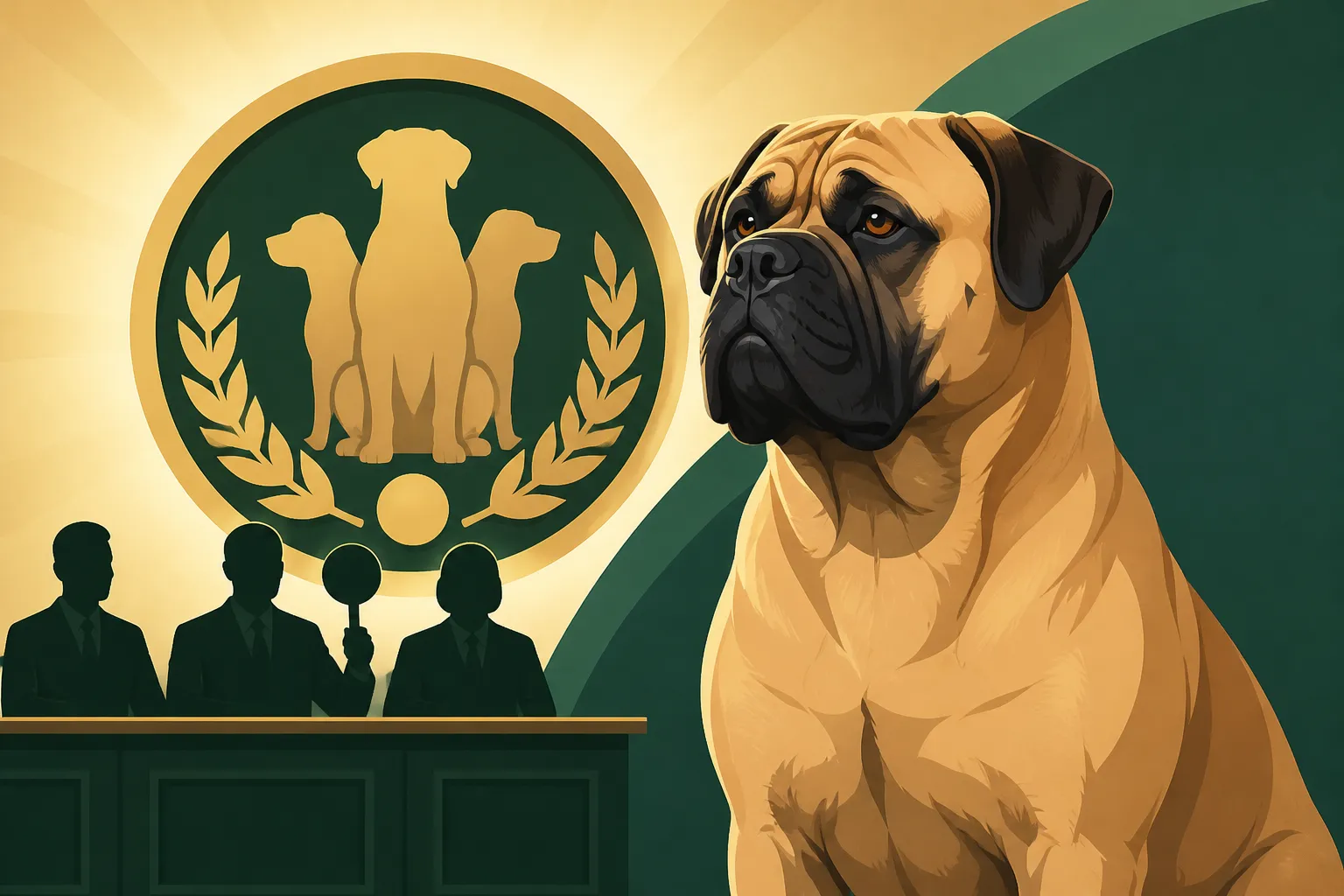
When the Kennel Club Recognized the Bullmastiff
It’s easy to look at a majestic breed like the Bullmastiff today, seeing them registered and recognized by major kennel clubs, and assume they’ve always been a distinct, well-defined breed. But the truth is, every breed has a unique journey from its origins to formal recognition, often taking decades, if not longer, to be officially acknowledged. This guide will walk you through the fascinating history of the Bullmastiff, exploring the pivotal moments and key players that led to its official acceptance by the Kennel Club, forever changing its status in the dog world.
The Bullmastiff's Unofficial Beginnings: Before Formal Recognition
Before the Bullmastiff was ever stamped with an official breed standard or recognized by a prestigious kennel club, it existed as a working dog, born out of necessity in the rugged English countryside. This wasn't a breed created for the show ring or companion comfort; it was a tool, a silent partner to gamekeepers tasked with protecting vast estates from poachers. Understanding this foundational role is crucial to appreciating its eventual path to recognition.
The Gamekeeper's Need and the Original Purpose
Imagine the sprawling estates of 19th-century England, teeming with game but also ripe for the picking by desperate poachers. These estates were often huge, covering many miles, and a single gamekeeper might be responsible for patrolling vast stretches of land under the cloak of darkness. They needed a dog that could cover ground silently, track a human, catch them without mauling them, and hold them until the gamekeeper arrived. A traditional Mastiff, while powerful, was often too slow for the pursuit, and a Bulldog, though tenacious, lacked the size and reach to apprehend a man effectively. This specific, urgent need laid the groundwork for a new type of canine protector.
Gamekeepers found themselves in a precarious position. Confronting a poacher could be dangerous, and a dog that would simply attack and injure the individual was not ideal, as it led to legal complications. What was truly needed was a "silent catcher," a dog that could track, pin, and hold a person, often by the scruff of the neck or arm, without inflicting serious harm. This required a delicate balance of power, speed, intelligence, and a specific temperament that understood control and restraint. This highly specialized job defined the Bullmastiff's earliest characteristics long before any formal recognition was even a dream. The breed's entire existence was shaped by the shadows of the woods and the need for a non-lethal deterrent. You can learn more about this in The Bullmastiff Was Built to Catch Poachers in the Dark.
The Genesis: Mastiff and Bulldog Blend
To meet this precise demand, ingenious gamekeepers began to cross the powerful, heavy-boned English Mastiff with the tenacious, agile Old English Bulldog. This wasn't a scientific breeding program by modern standards; it was pragmatic, often relying on trial and error with local dogs. The goal was quite specific: combine the Mastiff’s size, strength, and guarding instincts with the Bulldog’s courage, lower center of gravity, and ability to hold. The ideal blend was often cited as 60% Mastiff and 40% Bulldog, a ratio that was thought to give the perfect balance of attributes for their unique job. This calculated mix produced a dog that was large enough to intimidate and hold an adult man, but agile enough to track and reach them quickly.
The resulting "Gamekeeper's Night Dog" was quite effective. They inherited the Mastiff's impressive bulk and protective nature, but gained the Bulldog's tenacity and determination. The dark brindle coats, often favored in early lines, also served a practical purpose, allowing them to blend seamlessly into the night, making them even more formidable silent guardians. This careful selection, driven by pure function, slowly but surely molded the physical and temperamental traits that would later become the bedrock of the Bullmastiff breed standard. This combination of breeds was a purposeful genetic cocktail designed for a very specific, demanding occupation, a testament to the ingenuity of the gamekeepers who pioneered the breed. Find out more about its composition in The Bullmastiff Is Sixty Percent Mastiff and Forty Percent Bulldog.
Early Efforts Towards Formalization
As the 20th century dawned, the nature of gamekeeping began to change, and with it, the role of the gamekeeper's night dog. What was once a purely utilitarian crossbreed, known only among those who worked the land, started to gain admirers beyond the estates. People began to see the potential in these powerful, protective, yet surprisingly docile dogs, leading to the first tentative steps towards formalizing them as a distinct breed. This was a critical shift, moving the Bullmastiff from an informal working type to a recognized pedigree.
Moving Beyond a "Crossbreed" Status
For decades, the "Bullmastiff" was simply a descriptive term for a type of dog, not a recognized breed with a consistent lineage. They were known as "gamekeeper's night dogs" or "keeper's dogs," and while their function was clear, their genetic makeup was often a mix-and-match depending on the needs and available stock of individual estates. However, as certain lines consistently produced dogs of excellent type and temperament, a growing desire emerged to standardize these animals. Fanciers, recognizing the unique qualities of these dogs, felt they deserved to be more than just a cross; they deserved to be recognized as a legitimate breed. This ambition fueled efforts to move past the inconsistent breeding practices and establish a clear, repeatable standard.
This movement involved meticulous record-keeping and a more selective approach to breeding, aiming for uniformity in appearance and temperament. The concept of "purity" became incredibly important. Enthusiasts wanted to ensure that future generations would consistently display the desired traits, rather than varying wildly based on parental combinations. This was a long, arduous process of convincing kennel clubs and fellow dog fanciers that the Bullmastiff was not just a passing fad or a mongrel, but a distinct entity with its own valuable characteristics. It was about proving consistency, health, and a stable temperament that could be reliably reproduced, establishing a heritage rather than a mere blend. You can delve deeper into this concept by reading What Purity Meant for the Bullmastiff in 1924.
Key Figures and Their Influence
No breed achieves formal recognition without dedicated champions, and the Bullmastiff was no exception. Several influential figures played pivotal roles in gathering support, establishing breeding programs, and advocating for the breed's acceptance. Among them, Samuel Stone, a gamekeeper from Nottingham, England, is widely credited as one of the most significant. Stone systematically bred Mastiffs and Bulldogs, meticulously tracking his pairings and the resulting offspring, striving for consistency and the ideal "60/40" balance. His efforts, often involving generations of careful selection, helped to solidify the characteristics that would define the breed.
Other breeders and fanciers soon joined the cause, forming clubs and associations dedicated to the Bullmastiff. These groups worked tirelessly to promote the breed, document its history, and showcase its capabilities. They organized unofficial gatherings and competitions, demonstrating the dogs' unique ability to "hold" rather than "bite," emphasizing their intelligence and control. These individuals dedicated their lives to proving that the Bullmastiff was not only a valuable working dog but also a loyal and discerning companion. Their collective passion and persistent advocacy were instrumental in presenting a unified front to the Kennel Club, showing that the breed had a committed following and a clear identity worthy of official status.
The Landmark Year: Kennel Club Recognition
The culmination of decades of hard work by gamekeepers and dedicated fanciers finally arrived when the British Kennel Club, the oldest kennel club in the world, officially recognized the Bullmastiff as a distinct breed. This moment marked a turning point, elevating the breed from an informal type to a pedigreed animal with a future.
The British Kennel Club's Decision
The pivotal year for the Bullmastiff in its homeland was 1924. After extensive campaigning by enthusiasts and the establishment of a clear, consistent breed standard, the British Kennel Club formally recognized the Bullmastiff. This wasn't a snap decision; it was the result of years of demonstrable consistency in type, temperament, and health across numerous breeding lines. The club needed to be convinced that the Bullmastiff was a true breed, capable of reproducing itself with predictable characteristics, rather than an arbitrary cross. They reviewed pedigrees, observed dogs, and assessed the commitment of the nascent breed clubs.
The recognition meant that Bullmastiffs could now be officially registered, participate in conformation shows, and have their lineage formally documented. This process brought a new level of legitimacy and prestige to the breed. It also necessitated the formalization of the breed standard, a written description of the ideal Bullmastiff's physical attributes, temperament, and movement. This standard served as a blueprint for breeders, guiding their efforts to produce dogs that conformed to the established ideal, and provided judges with criteria for evaluating dogs in the show ring. The recognition was a validation of the gamekeepers' original vision and the fanciers' unwavering dedication. Learn more about the specific historical milestones in How Long Gamekeepers Used Bullmastiffs Before 1924.
What Recognition Meant for the Breed
Official recognition by the Kennel Club had profound implications for the Bullmastiff. Firstly, it legitimized the breed, giving it a respected place among other established breeds. This newfound status opened doors for wider public awareness and acceptance. No longer just a working dog for a niche purpose, the Bullmastiff could now be admired and owned by a broader audience interested in pedigree dogs. It brought a sense of pride and unity to breeders who had toiled to create and preserve the breed.
Secondly, and perhaps most importantly, recognition fostered a push for even greater standardization and improvement within the breed. With a formal standard in place, breeders had clear goals. They could focus on refining desirable traits, addressing any conformational weaknesses, and preserving the Bullmastiff's unique temperament – a blend of unwavering loyalty, quiet confidence, and protective instinct. The ability to track formal pedigrees also allowed for better health management and line breeding, further solidifying the breed's characteristics. This marked the beginning of the modern Bullmastiff, moving beyond its purely utilitarian origins into the world of competitive dog shows and dedicated breed preservation.
The American Journey: AKC Recognition
While the British Kennel Club recognition was a monumental step, the Bullmastiff's journey didn't stop there. For a breed to truly flourish globally, it often needs acceptance across different continents, and for the Bullmastiff, the United States was the next significant frontier. The breed's unique qualities quickly captured the attention of American enthusiasts, paving the way for its eventual recognition by the American Kennel Club (AKC).
The Bullmastiff's Arrival in America
The initial presence of Bullmastiffs in the United States was sparse, primarily brought over by individuals who had encountered the breed in England or were intrigued by its reputation as a formidable yet gentle protector. These early imports, occurring in the decades following its British recognition, often served as personal guard dogs or family companions for those in the know. They weren't immediately widespread, but word of their impressive qualities began to spread among dog fanciers and working dog enthusiasts.
The Bullmastiff's quiet confidence, imposing presence, and deep loyalty resonated with American owners looking for a dog that was both a deterrent and a devoted family member. These early pioneers faced the challenge of establishing the breed in a new country, often starting with limited breeding stock. They were responsible for showcasing the breed's merits, educating the public, and building a foundation for future generations of Bullmastiffs in America. This period was crucial for garnering interest and laying the groundwork for a formal breed club that would champion its cause before the AKC.
From British Recognition to American Acceptance
The path to AKC recognition mirrored many aspects of the British journey, requiring a sustained effort from dedicated fanciers. After the breed gained a foothold with passionate owners and emerging breeding programs in the U.S., the American Bullmastiff Association (ABA) was founded in 1933. This national club was instrumental in consolidating efforts, establishing an American breed standard, and advocating for the breed's official acceptance. They worked to present a consistent, healthy, and well-tempered population of Bullmastiffs to the AKC.
Finally, in 1933, the American Kennel Club granted official recognition to the Bullmastiff. This meant that Bullmastiffs could now be registered with the AKC, compete in all-breed shows across the United States, and become part of the larger American dog fancy. This recognition solidified the breed's presence and allowed for its structured growth and development within the country. It also provided a formal framework for breeding and exhibiting, contributing to the breed's eventual rise in popularity, making it a recognized member of the AKC's Working Group. This significant milestone truly brought the Bullmastiff into the mainstream of American purebred dogs. You can discover more about this milestone in When the AKC Recognized the Bullmastiff.
The Evolution of the Bullmastiff Standard
With official recognition came the necessity for a universally accepted breed standard. This document, meticulously crafted and periodically updated, serves as the definitive description of the ideal Bullmastiff. It ensures consistency in breeding efforts and provides a benchmark for judges, defining what a Bullmastiff should be, both in appearance and temperament.
Defining the Ideal Bullmastiff
The initial breed standard, developed by early fanciers in both Britain and America, sought to capture the essence of the gamekeeper's night dog while formalizing its characteristics for the show ring. It emphasized traits essential for its original purpose: strength, agility, and a fearless but controlled temperament. Key physical attributes included a powerful, symmetrical build, a short muzzle (but not excessively so), a strong skull, and a deep chest. The standard articulated the importance of a watchful, intelligent expression and a confident demeanor, reflecting its history as a silent guardian. It specified acceptable colors – fawn, red, or brindle – and, crucially, the presence of a dark mask, which further camouflaged the dog during its nocturnal duties.
The temperament section of the standard was equally vital. It described a dog that was courageous, reliable, and active, but also docile and affectionate with its own family. The ability to "hold" rather than "bite" was embedded in its ideal nature, signifying control and discrimination rather than indiscriminate aggression. This comprehensive description ensures that breeders aim for a whole dog, balancing physical prowess with a stable, confident character. Understanding this original vision is key to appreciating why certain physical traits are valued over others, all stemming from its unique historical role. A Bullmastiff judge, for example, puts their hand on the dog's build and evaluates its overall balance, paying close attention to musculature and bone, reflecting its powerful heritage. What a Bullmastiff Judge Puts a Hand On First is a good read on this.
Changes and Interpretations Over Time
While the core tenets of the Bullmastiff standard have remained remarkably consistent, there have been subtle shifts and interpretations over the decades, reflecting evolving breeding goals, scientific understanding, and even cultural preferences. Early standards might have been slightly more ambiguous in certain areas, allowing for a wider range of acceptable types. As the breed matured and bloodlines became more established, the standard was often refined to provide clearer guidelines, narrowing the acceptable variations in certain features.
For example, while the breed has always been substantial, there can be slight differences in emphasis on weight versus athleticism. Some periods might have seen a push for heavier dogs, while others have re-emphasized the breed's working agility, ensuring it doesn't become overly cumbersome. Similarly, specific details about muzzle length, eye shape, or tail set might see slight clarifications to combat trends that could detract from the breed's health or function. These adjustments are typically made by the parent breed clubs in conjunction with the Kennel Clubs, always with the intent of preserving the breed's unique identity, health, and original purpose, ensuring it remains true to its heritage.
The Lasting Impact of Recognition
Official recognition by major kennel clubs transformed the Bullmastiff from a regional working dog to an internationally admired breed. This status brought both opportunities and challenges, shaping the breed's trajectory in the modern dog world and highlighting the ongoing responsibility of breeders and owners to uphold its legacy.
Growth and Challenges in the Modern Era
Following recognition, the Bullmastiff experienced periods of growth in popularity, particularly as people discovered its unique blend of power and placidity. This exposure brought new enthusiasts to the breed, increasing demand and diversifying its geographic distribution. However, popularity can also bring challenges. As with many breeds, increased demand can sometimes lead to less scrupulous breeding practices, where profit might take precedence over health and temperament. This risk highlights the importance of responsible breeding, focusing on health clearances and adherence to the breed standard.
Modern Bullmastiff owners also face the reality of the breed's specific health considerations, many of which were not fully understood or screened for in the early days. Conditions like hip and elbow dysplasia, certain cancers, and cardiac issues require diligent screening and responsible breeding choices. The average lifespan of a Bullmastiff, while generally shorter than many smaller breeds, also means owners must be prepared for the concentrated cost and emotional commitment. Reputable breeders actively engage in health testing and transparently share information to mitigate these challenges, helping prospective owners make informed decisions.
Preservation of the Breed's Heritage
Despite the shifts in its primary role from gamekeeper's assistant to family companion and show dog, the preservation of the Bullmastiff's heritage remains a central focus for dedicated breeders and breed clubs. The original purpose of the "silent catcher" continues to influence the breed standard and the ideal temperament. Breeders strive to produce dogs that retain the courage, intelligence, and protective instincts that defined their ancestors, while ensuring they are well-socialized and adaptable family members.
Efforts to preserve the breed's heritage include promoting responsible breeding practices, supporting health research, and educating the public about the Bullmastiff's true nature. Breed clubs often encourage participation in working dog events, obedience trials, and even therapy dog work, which showcase the breed's versatility and intelligence beyond just conformation. For example, ensuring proper nutrition for these large, rapidly growing dogs is crucial for their long-term joint health, and resources from retailers like Chewy often provide specific large breed puppy foods designed to support slow, steady growth. This holistic approach ensures that the Bullmastiff remains a robust, healthy, and temperamentally sound breed, honoring the legacy of the gamekeepers who first envisioned this magnificent canine. Whether it's sourcing quality food, or an orthopedic bed for their large frame, responsible ownership today often involves navigating a wealth of information, much of which can be found through online retailers such as Chewy, which makes finding specialized items much easier for owners.
The Bullmastiff's journey from the shadows of English estates to the spotlight of international kennel club recognition is a testament to its enduring qualities. It’s a story of necessity, careful breeding, passionate advocacy, and the timeless appeal of a truly noble dog.
Here’s a snapshot of key recognition milestones:
| Event | Date | Significance |
|---|---|---|
| First Gamekeeper Crosses | ~1860s | Unofficial creation of the "Gamekeeper's Night Dog" |
| British Kennel Club Recognition | 1924 | Official recognition in the UK, establishing the breed standard |
| Formation of American Bullmastiff Assoc. | 1933 | Established a dedicated breed club in the U.S. to promote and protect the Bullmastiff |
| American Kennel Club (AKC) Recognition | 1933 | Official recognition in the U.S., allowing AKC registration and participation in events |
| FCI (Fédération Cynologique Int.) Recognition | 1954 | International recognition, facilitating worldwide pedigrees and showing |
Disclaimer
This article is for general informational purposes only and does not constitute professional advice. Laws, prices and regulations vary by location and change over time. Consult a qualified professional for guidance on your specific situation.