Whether a Bullmastiff Has Won Westminster
A Bullmastiff has not won Westminster Kennel Club’s Best in Show title. That can be confusing because a dog may compete successfully in its breed class or Working Group without taking the final prize. Here’s how Westminster judging works, what a Bullmastiff can win along the way, and why the breed’s absence from the top spot says less about its quality than you might think.
Has a Bullmastiff won Westminster Best in Show?
The short answer about the top prize
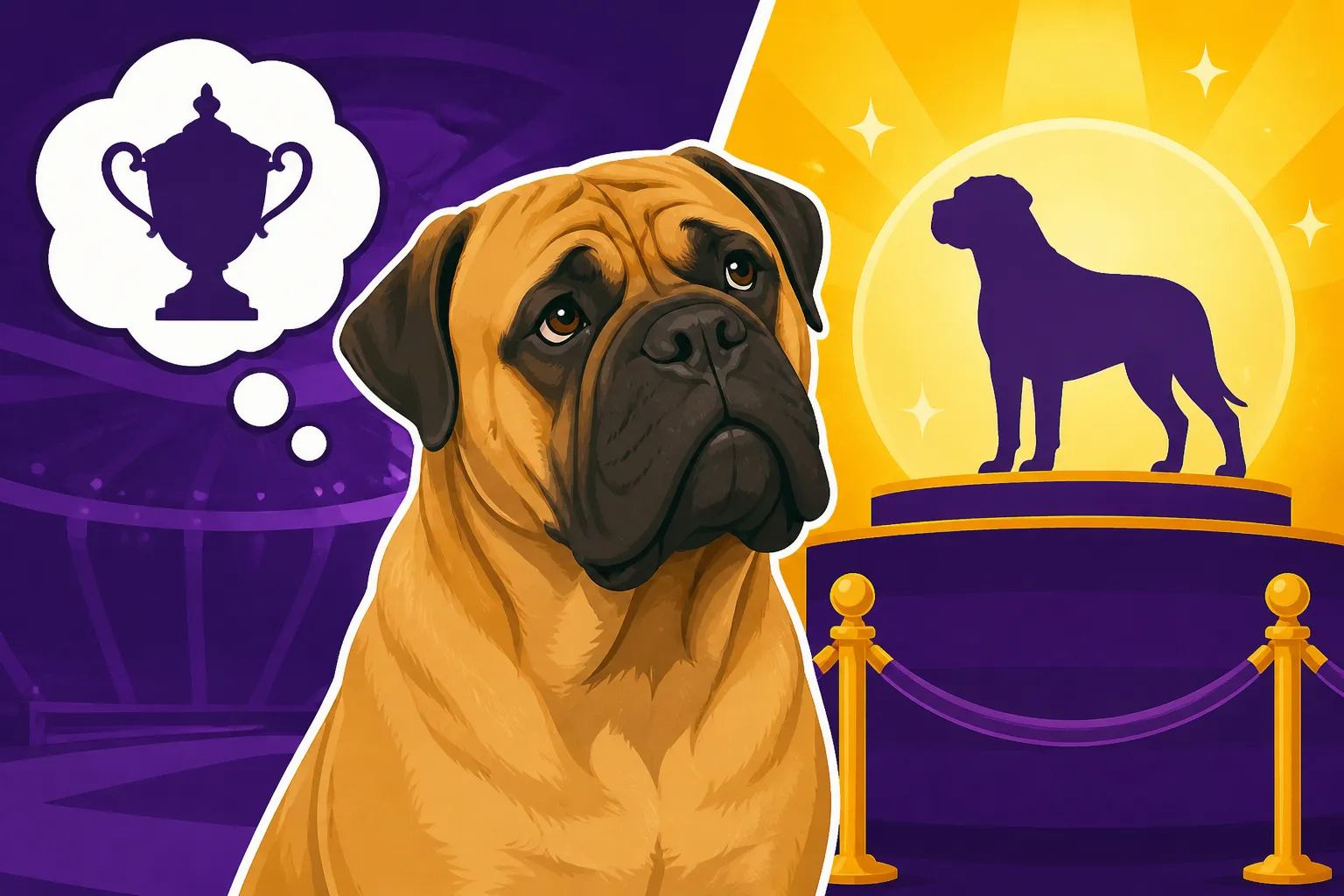
No Bullmastiff has taken Westminster’s Best in Show title. The distinction matters because people often use “won Westminster” to mean a dog won the whole event, when it might instead mean the dog won its breed class or placed in its group.
Westminster is a conformation dog show. Judges assess how closely each dog matches its breed’s written standard, including structure, movement, coat, and overall presentation. They are not choosing the most lovable pet, the best family companion, or the dog with the most impressive trick.
A Bullmastiff can be a confident, healthy, well-loved companion and still never win Best in Show. The top award goes to one dog from the entire finalist group, representing many breeds with very different histories and physical traits.
What “winning Westminster” can mean
At a large show, there are several levels of competition. A Bullmastiff might compete against other Bullmastiffs, then potentially advance to the Working Group. The group winner moves on to compete for Best in Show. Each step is an achievement, but only the last one means winning the overall title.
| Show result | What it means |
|---|---|
| Class win | The dog wins against other dogs entered in a specific class |
| Best of Breed | The dog is selected as the strongest Bullmastiff in that competition |
| Working Group placement | The dog places among breeds in the Working Group |
| Working Group winner | The dog is selected to represent that group in Best in Show |
| Best in Show | The dog wins the final competition against the other group winners |
This distinction is useful when you read a show report or watch a clip online. A headline saying a Bullmastiff “wins at Westminster” may refer to a breed-level result, not the overall crown. Look for the exact award: Best of Breed, group placement, group winner, or Best in Show.
Why a Bullmastiff is eligible to compete
The Bullmastiff is recognized as a breed by the American Kennel Club and competes in the Working Group. That group includes breeds developed for work such as guarding, hauling, and other demanding tasks. For more background, see When the AKC Recognized the Bullmastiff and Why the Bullmastiff Is in the Working Group.
Eligibility does not guarantee a particular result. A dog has to be entered, shown, evaluated, and selected at each stage. A breed’s long history or imposing presence does not automatically carry it through the competition.
How Westminster judging works for a Bullmastiff
First, the judge compares Bullmastiffs
At breed judging, the judge evaluates Bullmastiffs against the breed standard. The standard describes the overall type and structure the breed is intended to have. It is not a checklist where one dramatic feature—such as size, head shape, or color—wins the day on its own.
A judge may look at proportions, balance, movement, condition, and temperament in the ring. The dog is also examined by hand so the judge can assess features that may not be obvious from across the ring. If you’re curious about that process, What a Bullmastiff Judge Puts a Hand On First explains the kinds of qualities a judge may evaluate.
This can be surprising to people who are used to judging dogs by appearance alone. A very large Bullmastiff is not automatically a better show dog than a more moderate one. The goal is not simply to reward the heaviest dog or the broadest head; the dog should be a sound example of the breed overall.
The breed winner enters the Working Group
If a Bullmastiff wins Best of Breed, the next opportunity is the Working Group competition. The judge then compares that Bullmastiff with dogs from other Working Group breeds. The challenge changes: the dog is no longer being judged only against other Bullmastiffs, but alongside dogs with different outlines, coats, movement, and breed purposes.
A calm, capable presence can help a Bullmastiff make a strong impression, but a show ring is not a protection test. Judges are evaluating conformation and presentation, not asking which dog would be the most effective guard at home. The breed’s history helps explain its character, but show results are determined by the judging criteria in the ring.
Group judging also helps explain why a Best of Breed win is not the same as being close to Best in Show. A dog must first be selected as the strongest entry in its breed, then stand out among a diverse group of breeds, and finally be chosen from the group winners.
The final round is a separate competition
The group winners advance to Best in Show. At that point, the judge selects one dog from the finalists. The Bullmastiff would need to win its breed competition and the Working Group before it could reach that final round.
That is a demanding route, and it helps put the “has this breed won Westminster?” question in perspective. A breed can have excellent representatives, respected breeders, and successful show dogs without producing a Best in Show winner. The final prize is a single outcome from a wide field, not an overall verdict on the worth of every breed.
What the Bullmastiff’s Westminster record does and does not tell you
It does not measure the breed’s value as a companion
A Westminster title is a show result, not a recommendation for which dog to bring home. The traits that make a Bullmastiff a rewarding companion—such as a close bond with its household and a steady, thoughtful nature—are not what Best in Show directly measures.
If you’re choosing a dog, practical fit matters much more than a breed’s show record. Consider the dog’s size, exercise needs, training, health, and your ability to manage a powerful adult. The breed’s outline and physical traits are covered in topics such as How Tall a Bullmastiff Stands and How Broad a Bullmastiff's Skull Should Be, but a show-ring appearance cannot tell you whether an individual dog suits your home.
Likewise, a Best in Show title would not prove that every dog of that breed is healthy or easy to live with. A show award is one dog’s result in one competition. It should not replace thoughtful breeder research, health discussions, or a realistic look at daily care.
It does not mean Bullmastiffs cannot compete successfully
Not having won Best in Show is different from being unable to compete. Bullmastiffs can enter conformation shows and be evaluated against the breed standard. Individual dogs may earn recognition at breed and group levels, even if no Bullmastiff has taken Westminster’s final title.
Show success depends on the individual dog, its physical condition, training, handling, and the judge’s assessment on that day. A well-prepared dog can be a strong representative of its breed without becoming the overall winner. That is true in a competition where each finalist is already a standout among many entries.
Breed standards also set boundaries around what is considered correct. For example, color and size are judged within the breed’s established requirements, rather than according to personal preference. Helpful related reading includes Which Colors the Bullmastiff Standard Accepts and Whether an Oversized Bullmastiff Can Be Shown.
It does not tell the whole story of breed popularity
A breed’s presence—or absence—in the final spotlight is not a reliable measure of how many people own it, how devoted its owners are, or whether it is becoming more or less common. Westminster is a particular event, and the results reflect the dogs entered and judged there.
Bullmastiffs are distinctive dogs, but a dramatic appearance is not a guarantee of a Best in Show win. Nor does a lack of the top trophy mean that the breed is overlooked everywhere. For broader context on how breed visibility can change, see Whether the Bullmastiff Is Losing Ground.
If you’re watching the show because you’re considering a Bullmastiff, treat the event as an introduction to conformation—not a complete guide to ownership. Meeting adult dogs, speaking with responsible breeders or breed-rescue volunteers, and learning about everyday care will tell you far more about what life with one is like.
If you want to see a Bullmastiff in the show ring
Follow the exact award, not just the headline
When reading results, check the stage of competition and the award name. If a post says a Bullmastiff “won,” find out whether it won its breed, placed in the Working Group, won the group, or took Best in Show. That small distinction prevents a lot of confusion.
It can also help to watch more than the final broadcast. Breed judging shows how the judge compares dogs of the same breed, while group judging shows how a Bullmastiff is assessed alongside other Working Group breeds. Those are different comparisons, so each gives you a different view of the event.
For a first-time viewer, focus on how the dog moves and carries itself rather than trying to guess a winner by size alone. The handler’s presentation matters, but the judge is evaluating the dog against the standard. A composed, balanced Bullmastiff may make a stronger impression than a dog that looks more imposing but is less sound or less comfortable in the ring.
Understand the work behind a polished appearance
Show dogs are trained to stand, walk, and be examined calmly. Handlers practice moving at a pace that lets the judge assess the dog’s gait, and dogs learn to tolerate close attention from unfamiliar people. That preparation takes time; it is not simply a matter of bringing a handsome dog into the ring.
Owners who are preparing a dog for showing should start with breed-club guidance and an experienced mentor. Everyday grooming supplies can help with routine coat care, and some owners compare options at retailers such as Chewy when assembling basic brushes or cleaning products. Choose items suitable for the individual dog’s coat and skin, and ask a veterinarian or knowledgeable groomer if a skin concern is involved.
Travel and show-day organization matter too. A dog may need familiar food, water, a secure lead, and a comfortable place to rest between activities. Chewy can be one option for finding practical pet supplies, but check that any crate, bed, or travel equipment is large and sturdy enough for your Bullmastiff before relying on it away from home.
Keep the dog’s comfort ahead of the trophy
A show can be busy, noisy, and tiring. Build up the dog’s comfort with handling and new environments gradually, and give it breaks rather than expecting it to stand around for long stretches without rest. A confident performance is more likely when the dog understands what is being asked and feels safe.
Basic coat maintenance is usually more useful than trying to transform the dog’s appearance. If you shop for grooming essentials through Chewy or another retailer, prioritize products made for dogs and avoid using a new product on irritated skin without professional advice. A tidy, comfortable dog is a better goal than an elaborate routine.
Finally, remember what the result means. Westminster’s top award is prestigious, but it is not the only meaningful outcome for a dog or its owner. A Bullmastiff that represents the breed well, handles the ring calmly, and enjoys the experience can make a memorable showing without winning the final ribbon.
Disclaimer
This article is for general informational purposes only and does not constitute professional advice. Laws, prices and regulations vary by location and change over time. Consult a qualified professional for guidance on your specific situation.