Whether a Bullmastiff Can Be Fawn and Brindle Both
A Bullmastiff can absolutely look both fawn and brindle: brindle is a striped coat pattern that appears over a lighter ground color, often fawn or red. That can make the two descriptions sound like competing color labels when they are not. This guide explains how to describe the coat, what breed standards generally mean, and when a color concern is actually worth asking a breeder or veterinarian about.
How fawn and brindle fit together
Fawn describes the ground color, while brindle describes a pattern
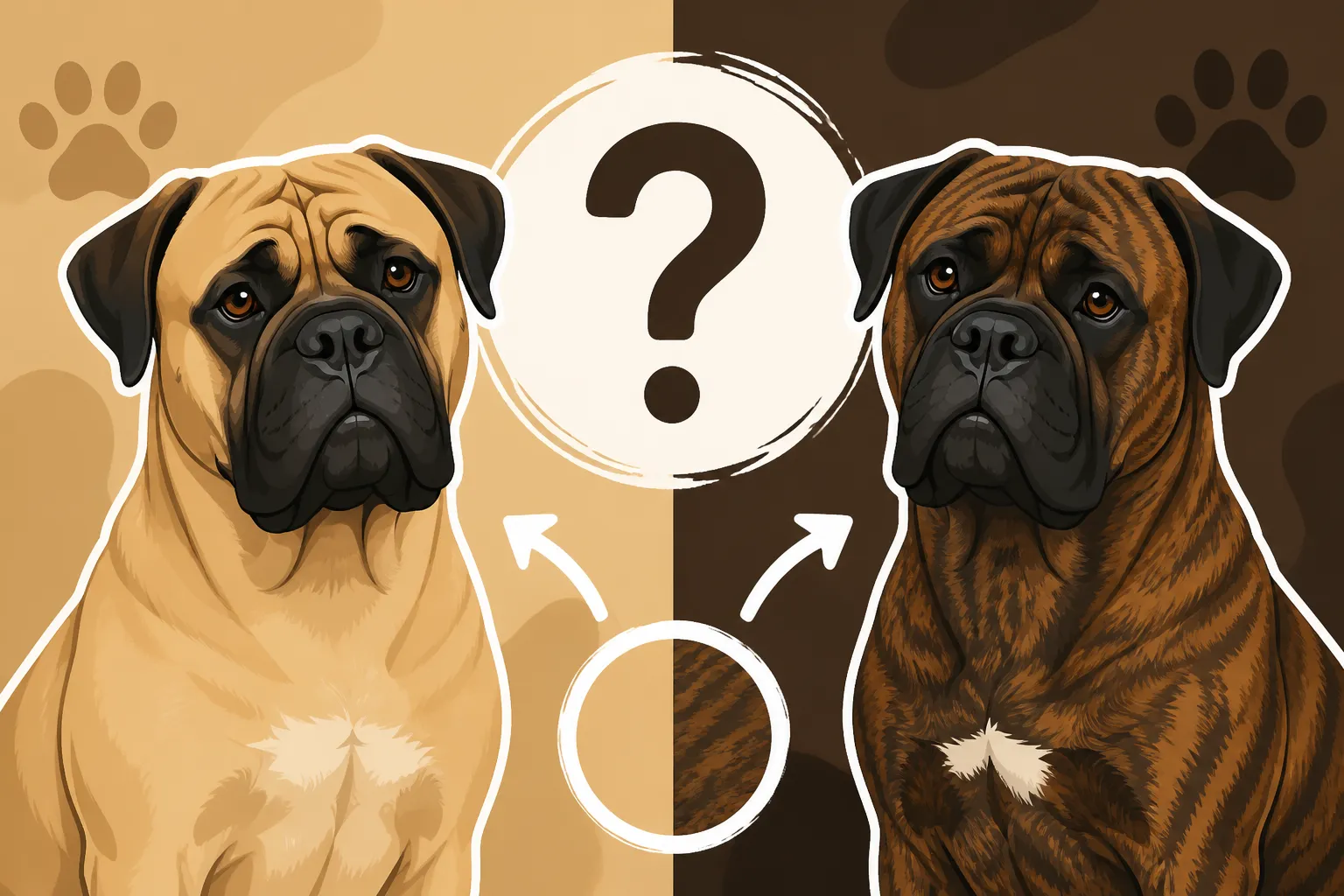
Fawn is a coat color: a shade of light tan that may range from pale cream-tan to a deeper golden or reddish tan. Brindle describes a pattern of darker stripes over a lighter background. A Bullmastiff with a fawn ground color and dark stripes can therefore be described as a fawn brindle.
The easiest way to picture it is to imagine a tan coat with darker streaks running through it. The streaks might be obvious across the shoulders and sides, or faint enough that they are more noticeable in bright daylight than indoors. In either case, the dog can have a fawn base and a brindle pattern at the same time.
Red can also be part of the conversation. It refers to another accepted shade of coat color, and a red Bullmastiff may also have brindling. Owners sometimes use “fawn,” “red,” and “brindle” as though they were three completely separate coat options, but the first two describe ground shades while brindle describes a pattern. For a broader look at the recognized coat descriptions, see Fawn, Red or Brindle: the Only Colors a Bullmastiff Comes In.
Why people may describe the same dog differently
Two people looking at the same Bullmastiff might use different labels. One may call the dog fawn because the lighter ground color is what stands out. Another may call the dog brindle because the dark striping is the first feature they notice. Both descriptions can be reasonable if they are emphasizing different parts of the coat.
Lighting and coat condition also affect what you see. A brindle pattern may look stronger outdoors, where natural light makes the contrast easier to pick out. In a dim room, or when the coat is dusty or wet, the stripes can seem less distinct. Short hair does not hide the pattern, but the direction of the hair and the dog’s posture can make some markings harder to see.
When describing a dog, it helps to be specific rather than trying to choose only one word. “Fawn brindle with a black mask,” for example, tells someone more than “fawn” or “brindle” alone. If you are comparing a puppy with adult relatives, remember that the visible balance of light and dark can change as the coat matures. Which Colors a Bullmastiff Comes In offers another useful overview of the common color terms.
| Coat description | What the words describe | What you might see |
|---|---|---|
| Fawn | A lighter tan ground color | A mostly tan coat, with or without darker markings |
| Red | A deeper, warmer ground shade | A coat that looks reddish tan or rich reddish brown |
| Brindle | A pattern of darker stripes | Dark streaks over a lighter fawn or red ground |
| Fawn brindle | A fawn ground color with brindle striping | Tan areas crossed by darker stripes |
| Red brindle | A red-toned ground color with brindle striping | A warmer, deeper base with darker streaking |
What a brindle Bullmastiff’s coat can look like
Brindle stripes vary in contrast and coverage
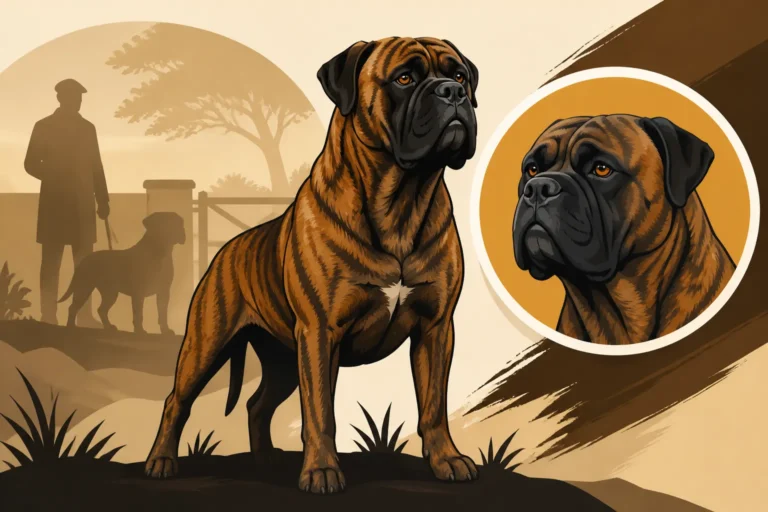
Brindle is not one fixed-looking pattern. On one Bullmastiff, the stripes may be crisp and easy to see. On another, they may be broad, broken, or so subtle that the coat appears almost solid until you look closely. The background may read as pale fawn, warm tan, or a deeper reddish shade, while the stripes may be dark brown or nearly black.
The amount of visible striping varies too. Some dogs show a strong pattern across much of the body; others have a few darker areas concentrated on the back, shoulders, or legs. A dog does not need identical stripes on both sides to be brindle. Natural coat patterns are not painted-on designs, and unevenness by itself does not mean anything is wrong.
Brindle has a long association with the breed. Historically, a darker brindle coat could blend into shadowed surroundings, which made it useful for a dog working at night. For more on that history, read Why Brindle Was the Original Bullmastiff Color. That background can explain why brindle is familiar in the breed, but it does not mean every Bullmastiff should have the same stripe pattern or darkness.
A puppy’s coat may not look exactly the same later
A puppy’s early coat can make it difficult to settle on a description. As the dog grows, the proportions of its body change, the coat develops, and the visible contrast between the ground color and stripes may become more or less noticeable. A puppy that looks strongly striped in one photograph might appear more uniformly tan in another, especially if the lighting differs.
That does not necessarily mean the dog has changed from one recognized coat pattern into another. Often, the pattern was present all along, but its visibility shifts with coat development, lighting, and the way the hair lies. If you are choosing a puppy, ask the breeder how they describe the puppy’s color and whether they can show photos of the parents or older relatives. Photos taken in natural light can be more informative than a single indoor snapshot.
Color descriptions are also not a reliable way to predict temperament, health, or adult size. A buyer who loves brindle may prefer a clearly striped puppy, but the dog’s care needs and personality should not be judged from its markings. How a Bullmastiff Puppy's Color Changes explores why puppy coats can be confusing, while Whether Coat Color Predicts a Bullmastiff's Temperament addresses the common assumption that color tells you what a dog will be like.
How breed standards and color descriptions are used
A coat can be both fawn and brindle without being an unusual color
Breed descriptions commonly list fawn, red, and brindle among the accepted Bullmastiff colors. That wording can sound like a menu of mutually exclusive choices, but in ordinary coat description, a brindle dog still has a ground color. Calling a dog “fawn brindle” simply makes that relationship clearer.
If you are filling out paperwork, entering a show, or talking with a breeder, follow the terminology requested by the organization or form. A form may ask for one main color, while a conversation allows a more detailed description. The exact wording can differ, so it is sensible to check the applicable breed standard or event guidance when the distinction matters. The practical answer remains the same: fawn and brindle can describe different aspects of the same coat.
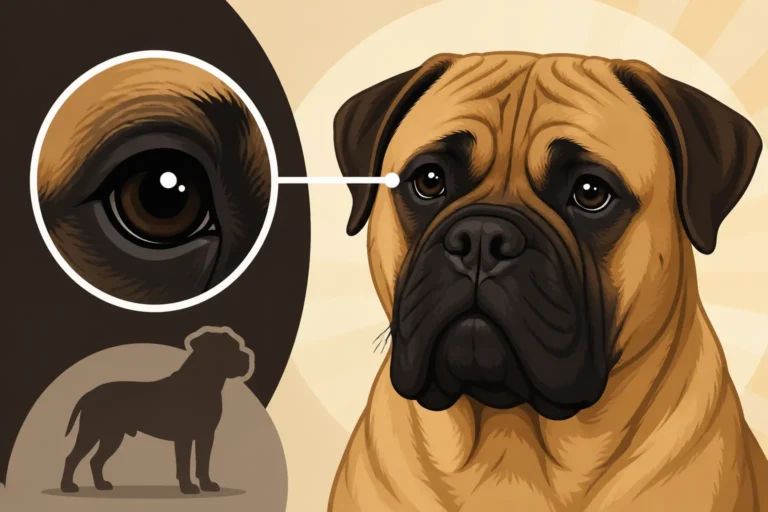
A black mask is another feature people often mention alongside coat color. It refers to the darker coloring around the muzzle and face, not to the brindle stripes on the body. A fawn brindle Bullmastiff may have a black mask, and the mask is described separately from the ground color and pattern. See What a Bullmastiff's Black Mask Should Look Like for more on that feature.
When a color claim deserves a closer look
A seller may use an unfamiliar color label to make a puppy sound rare or especially valuable. Be cautious about paying extra simply because someone advertises a “special” shade. Ask what the seller means by the term, whether the parents’ colors are known, and what health information is available. A striking pattern can be beautiful, but color alone does not establish a dog’s quality, health, or responsible breeding.
If a puppy’s color appears outside the usual descriptions, that is a reason to ask clear questions, not to make an instant judgment. A photograph can distort color, and informal labels can be imprecise. A breeder should be able to explain the puppy’s appearance plainly and provide relevant records. For a wider guide to accepted markings, see Whether White Markings Disqualify a Bullmastiff and How Dark a Red Bullmastiff Can Be.
Color is generally a cosmetic description, not a medical diagnosis. If a coat suddenly changes texture, becomes patchy, or loses hair, focus less on whether the dog is fawn or brindle and more on the skin and coat change itself. Itching, redness, sores, odor, or sudden hair loss are good reasons to contact a veterinarian. Routine coat supplies such as a suitable brush or dog shampoo can be found through retailers such as Chewy, but persistent skin symptoms need veterinary guidance rather than a change in grooming products alone.
Caring for a fawn brindle Bullmastiff
Keep coat care simple and observe the skin
A Bullmastiff’s short coat is relatively straightforward to maintain. Regular brushing helps remove loose hair and gives you a chance to notice changes in the skin, small wounds, or new lumps. It also makes it easier to see the brindle pattern clearly, though there is no special grooming technique needed to preserve the color.
When choosing grooming supplies, use products intended for dogs and avoid assuming that a darker or lighter coat needs a special treatment. If you shop online through Chewy or another retailer, check that a product suits your dog’s coat and skin needs rather than buying based only on a color-related claim. A veterinarian can help if your dog develops recurring irritation or an unusual coat change.
Some Bullmastiffs have facial folds that need attention in addition to ordinary coat brushing. Keep folds clean and dry, and pay attention to redness, odor, or tenderness. These care issues are separate from whether the dog is fawn, red, or brindle. The same basic observation routine applies to all coat colors: notice what is normal for your dog so that a genuine change is easier to spot.
Describe the coat clearly when speaking with a professional
If you are contacting a breeder, veterinarian, groomer, or registry, a concise description helps. You might say, “My Bullmastiff has a light fawn ground color with dark brindle striping and a dark mask.” If you are unsure whether the base looks more fawn or red, explain what you see rather than trying to force a label. A clear photo taken in daylight can help others understand the pattern.
For adoption listings or family records, it is also fine to use plain language: “tan with dark stripes.” The point of a color term is to communicate, not to pass a test. If a form offers only one choice, select the closest available option and ask the organization how it wants mixed descriptions recorded.
When choosing a puppy, give more weight to responsible breeding, health information, sound early socialization, and a good fit for your household than to a precise shade of fawn. A brindle Bullmastiff can be striking, but the coat pattern does not tell you whether the breeder has prioritized health or whether the puppy will suit your lifestyle. Keep the color in perspective, ask questions, and enjoy the individual dog in front of you.
Disclaimer
This article is for general informational purposes only and does not constitute professional advice. Laws, prices and regulations vary by location and change over time. Consult a qualified professional for guidance on your specific situation.