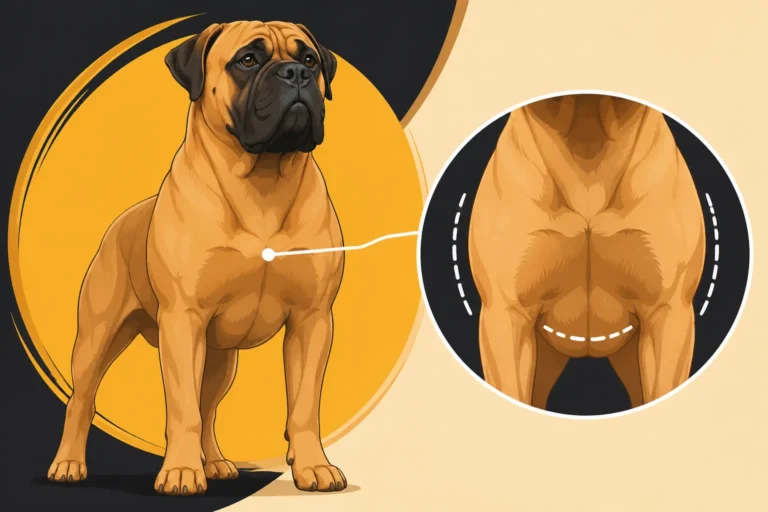
The Bullmastiff Reputation That Does Not Match the Dog
A Bullmastiff can look intimidating enough to make strangers cross the street, yet at home he may be a quiet shadow who leans against your leg and snores through the afternoon. That contrast can confuse prospective owners. This guide separates the breed’s real traits from its reputation, so you can understand what living with a Bullmastiff is actually like.
Why the Bullmastiff’s reputation can be misleading
A powerful build is not the same as an aggressive temperament
Bullmastiffs are large, strong dogs with a history as estate guardians. Their size and serious expression can make people assume they are naturally dangerous or constantly looking for a reason to confront someone. But physical power does not tell you what an individual dog is feeling or how he will behave. Temperament, early experiences, training, health, and the situation all matter.
The breed was developed to stop and hold intruders, rather than to pursue and attack them. That background helps explain why a Bullmastiff may be watchful and physically imposing without being noisy or frantic. It does not mean every modern Bullmastiff will behave the same way, or that historical purpose is a substitute for training. A dog who is poorly socialized, frightened, or allowed to rehearse threatening behavior can still become difficult to manage.
A well-raised Bullmastiff is often steady and affectionate with his family, but “steady” does not mean automatically comfortable with every stranger, dog, or chaotic situation. Owners need to guide introductions and take the dog’s size seriously. For more on the breed’s original work, see The Bullmastiff Was Built to Catch Poachers in the Dark and How Protective a Bullmastiff Is.
Quiet does not mean unaware
People sometimes expect a guardian breed to bark at every passing car, delivery driver, or neighbor. Many Bullmastiffs are comparatively quiet indoors. They may watch a visitor arrive, stand near their person, or place themselves between family and something unfamiliar rather than announce every event with a burst of barking.
That quiet presence can be easy to misread. A Bullmastiff who is not barking may still be alert, uncertain, or deciding whether he feels comfortable. Don’t assume a still dog is relaxed just because he is silent. Look at the whole picture: posture, facial tension, movement, ability to disengage, and whether he can respond to a familiar cue.
Thoughtful introductions help prevent ordinary visits from becoming stressful. Give the dog a comfortable place to settle, use a leash or barrier when needed, and ask guests not to crowd, lean over, or immediately reach for him. The practical details of those first moments are covered in How a Bullmastiff Greets a Stranger.
A family dog still needs sensible boundaries
The breed’s affectionate reputation can be just as misleading as the frightening one if people interpret it as a promise that every Bullmastiff will be easy in every household. Individual personalities differ. Some are outgoing; others are reserved. Some tolerate a busy home well, while others need more space and predictable routines.
With children, the concern is often less about a dog being intentionally rough than about the consequences of a large body moving without much awareness. A happy turn, a quick step, or a lean against a small child can knock them over. Children should be taught not to climb on, disturb, corner, or take food from a dog, and an adult should supervise interactions. A Bullmastiff should not be left alone with young children, even if he has been gentle with them before.
Household fit depends on the dog, the people, and the management plan—not on a breed label alone. The related guides Whether a Bullmastiff Suits a Family and How a Bullmastiff Behaves With Children can help you think through the day-to-day realities.
What living with a Bullmastiff is really like
Calm indoors, but not a decorative couch ornament
Bullmastiffs are often described as low-energy, and many adults do enjoy long stretches of resting near their people. That can make them appealing to someone who doesn’t want a dog that needs hours of intense activity every day. Still, a calm adult needs regular movement, opportunities to sniff and explore, and some mental engagement.
Think of a typical day as a few manageable outings, short training moments, and time to relax—not as a marathon run or a full day of inactivity. The right amount depends on age, health, fitness, weather, and the individual dog. Puppies and adolescents need particular care: their enthusiasm can exceed what their developing joints are ready to handle. Ask your veterinarian for guidance on exercise during growth and as your dog ages.
Hot weather deserves special attention. A Bullmastiff’s heavy build and short muzzle can make cooling himself less efficient than it is for some other dogs. On warm days, choose cooler walking times, keep outings gentle, and make sure fresh water and a cool indoor resting place are available. How Much Exercise a Bullmastiff Needs and Why a Bullmastiff's Short Muzzle Cannot Cool It offer more detail on balancing activity and comfort.
Independent does not mean untrainable
A Bullmastiff may understand a cue and still take a moment to decide whether it seems worthwhile. That pause can look like stubbornness, especially when you’re trying to move a dog who outweighs you. But repeated shouting or physical pressure usually makes a frustrating situation worse, not better.
Training works best when it is consistent, brief, and rewarding. Practice useful skills early, before the dog is fully grown: walking politely on leash, waiting at doors, coming when called, settling on a mat, and allowing gentle handling. Reward the behavior you want with food, play, praise, or another motivator your dog genuinely values. If your Bullmastiff refuses a cue, consider whether the environment is distracting, the task is uncomfortable, or the reward is not compelling enough.
A well-fitted harness may make walks easier to manage, but equipment does not replace leash skills. If you are comparing options, take your dog’s body shape and comfort into account; retailers such as Chewy can be one place to browse harnesses and basic training supplies. For the training side, see How Trainable a Bullmastiff Is and Why a Bullmastiff Pauses Before Obeying.
The daily mess is part of the package
The short coat can give the impression that a Bullmastiff is a low-maintenance dog. Grooming is often fairly straightforward, but owners should still expect shedding, regular nail care, ear checks, and attention to the folds around the face. Some Bullmastiffs also drool, particularly after drinking, eating, exercise, or excitement. The amount varies from dog to dog, but a towel near the water bowl can spare your walls and furniture a little wear.
A small routine makes care less of a battle. Wipe the mouth or folds gently when needed, then dry damp skin rather than leaving moisture trapped in the creases. Check ears and nails regularly, and get your dog used to being handled while he is young. If you are stocking up on everyday items such as washable towels, grooming tools, or a suitable brush, Chewy is one possible retailer to compare with local pet shops. For a closer look at the realities of drool, read How Much a Bullmastiff Drools.
The reputation versus the reality
A reputation can contain a grain of truth and still leave out the most important context. Bullmastiffs can be protective, strong, and reserved with unfamiliar people. They can also be affectionate, quiet companions who prefer a comfortable spot near their family. Those traits can coexist in the same dog.
| Common assumption | More realistic picture | What owners can do |
|---|---|---|
| A Bullmastiff is naturally aggressive | Individual behavior varies; size and guarding history do not determine temperament by themselves | Choose carefully, socialize thoughtfully, and seek qualified help for concerning behavior |
| A Bullmastiff needs intense exercise | Many adults are moderate in their activity needs, though daily movement and enrichment still matter | Build a steady routine and adjust it for age, health, and weather |
| A quiet dog has no concerns | A dog may be watchful or uncomfortable without barking | Observe body language and give him space to settle |
| A gentle dog is automatically safe around children | Even friendly dogs can accidentally knock over a child | Supervise closely and teach respectful interactions |
| A short coat means little maintenance | Shedding, drool, nail care, and face-fold care can still be part of the routine | Keep simple supplies handy and make handling familiar |
A Bullmastiff is not a ready-made guard dog
Some people are drawn to the breed because they assume a large guardian-type dog will protect a home without much input. That is an unfair expectation to put on the dog and a risky way to choose a companion. A Bullmastiff’s presence may be a deterrent, but no dog should be encouraged to make independent decisions about who is a threat.
The safer goal is a dog who can remain composed around ordinary visitors, follow household routines, and be managed reliably. That takes responsible breeding, socialization, training, and adult supervision. If a dog begins to growl, lunge, guard resources, or react intensely to visitors, do not dismiss it as “just the breed.” Avoid punishment that may suppress warning signals without changing the underlying feeling, and consult a qualified, reward-based behavior professional.
This approach also protects the dog. A Bullmastiff who is repeatedly put into situations he cannot handle may become more anxious or defensive. Calmly managing distance, using gates or a leash when appropriate, and giving him a predictable retreat can make everyday life safer for everyone.
The biggest practical challenge may be size
People often focus on whether a Bullmastiff is intimidating, but ordinary logistics can be a bigger adjustment. A full-grown dog needs room to turn around comfortably, a bed that supports his body, equipment that fits, and a way to travel safely. If he becomes ill or injured, moving him may be difficult. Families should also consider whether everyone who walks him can manage the leash if he stops suddenly or pulls toward something interesting.
A puppy gives you time to teach manners before the dog reaches adult strength, but it does not make the commitment small. Plan for training, veterinary care, food, grooming supplies, and safe transport. A sturdy bed and nonslip surfaces can be useful, especially for a heavy dog who has trouble getting up on slick floors. Chewy may help you compare everyday pet supplies, while your veterinarian or trainer can advise on health and equipment needs specific to your dog.
Before bringing one home, consider your schedule, home layout, finances, and experience with large dogs. The guide What Nobody Tells You Before Buying a Bullmastiff is a useful companion read for weighing those practical details.
Is the Bullmastiff a good match for you
Look beyond the intimidating first impression
The Bullmastiff may suit someone who wants a devoted companion with a generally calm presence and is prepared to guide a powerful dog thoughtfully. A good match is not necessarily a person with a huge house or a large yard. It is someone who can provide routine, training, supervision, reasonable exercise, and a plan for the dog’s physical needs.
It may be a poor fit if you want a dog who naturally welcomes every stranger, can be handled casually by anyone, or needs no training because he is supposedly “protective.” It may also be challenging if household members are unable to manage a large dog safely, if your housing rules exclude the breed, or if you cannot provide cool, comfortable conditions during hot weather.
When meeting a Bullmastiff, ask about behavior in ordinary situations rather than relying on broad claims like “good with everyone” or “a natural guard.” Ask how the dog handles visitors, handling, other dogs, and being left alone. Observe whether he can settle, recover after a surprise, and take guidance from the person with him. No short visit can reveal everything, but specific questions are more useful than a label.
Focus on the individual dog and the life you can offer
A breed description is a starting point, not a guarantee. A Bullmastiff’s experiences, health, age, and training all shape the dog you live with. If you are considering a puppy, look for a breeder who can discuss health and temperament honestly and who raises puppies with appropriate care. If you are considering rescue, ask what the organization knows about the dog’s behavior and what support it offers after adoption.
It helps to picture a normal Tuesday rather than an idealized version of dog ownership. Who walks the dog when it rains? Where does he sleep? How will you handle a visitor when you are busy? Can you keep him cool in summer and help him into a vehicle if he cannot jump? Practical answers reveal more about compatibility than the breed’s dramatic appearance does.
For the right household, a Bullmastiff can be a deeply affectionate, steady companion. The dog behind the reputation is not a cartoon villain or a perfectly behaved guardian. He is an individual with a large body, real needs, and a temperament that deserves patient, responsible handling.
Disclaimer
This article is for general informational purposes only and does not constitute professional advice. Laws, prices and regulations vary by location and change over time. Consult a qualified professional for guidance on your specific situation.