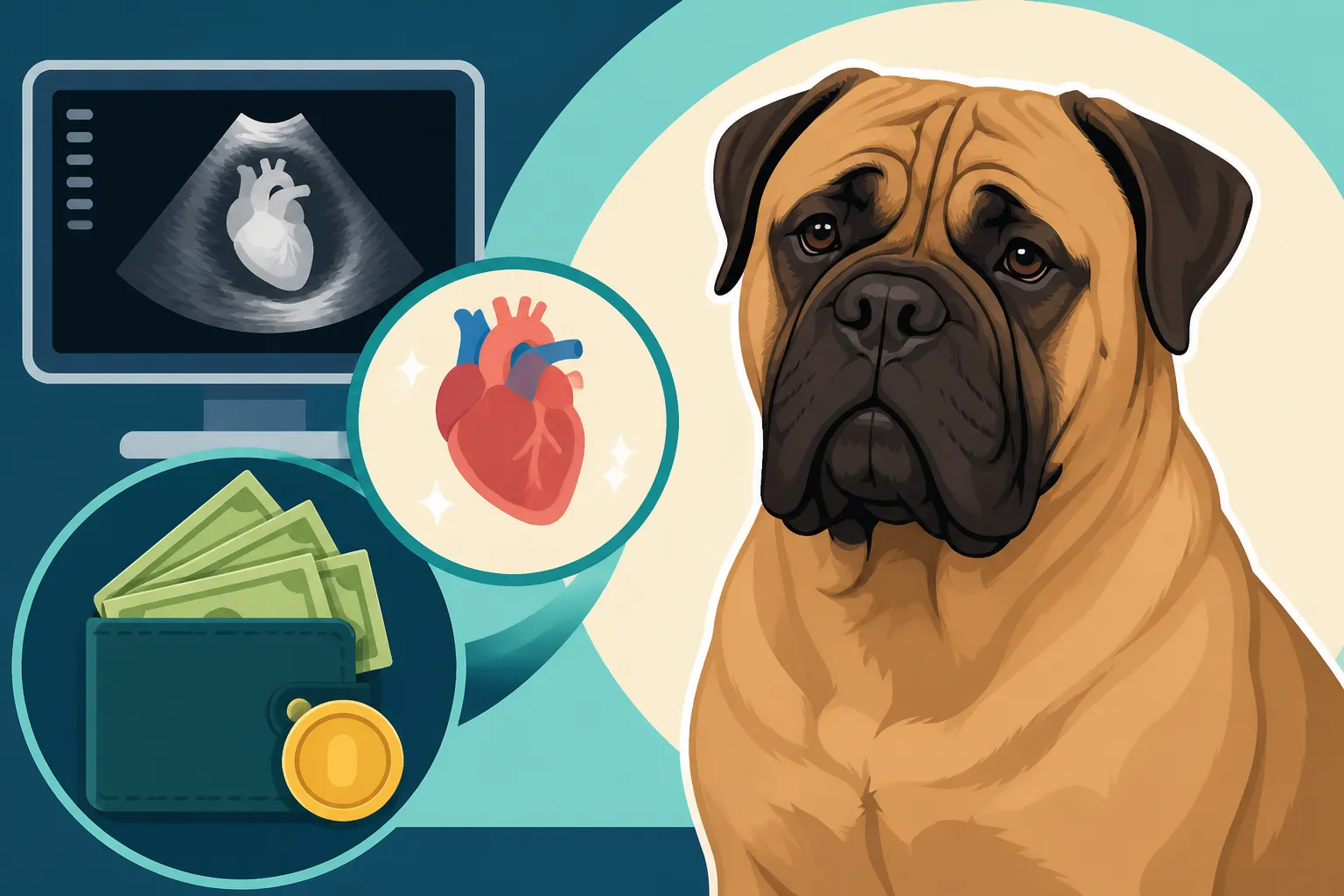
What an Echocardiogram Costs on a Bullmastiff
One of the hardest parts of owning a beloved Bullmastiff is facing those moments when their health takes an unexpected turn, especially when it comes to something as vital as their heart. Hearing your vet mention a heart murmur or potential cardiac issues can send a wave of panic through you, and right after that, the worry about diagnostic costs often kicks in. This guide is here to walk you through what an echocardiogram involves for your Bullmastiff and help you understand the financial realities of this crucial diagnostic tool.
Why a Bullmastiff Might Need an Echocardiogram
It’s heartbreaking to think your gentle giant might have a heart problem, but sadly, certain breeds, including our beloved Bullmastiffs, are prone to specific cardiac conditions. An echocardiogram isn't usually the first test, but it's often the definitive one that gives us a clear picture of what's going on inside.
Recognizing Signs of Heart Issues
Bullmastiffs are notoriously stoic, which can make spotting subtle signs of discomfort or illness a real challenge. They're big dogs, and sometimes we attribute their slowness to their size or breed characteristics rather than a medical issue. However, if you start noticing your Bullmastiff tiring more easily on walks, panting excessively even when it's not hot, or coughing, especially at night, these could be red flags. Other signs might include a decreased appetite, weight loss, or even fainting spells. It's so important to trust your gut when it comes to your dog's health, because they can't tell us what's wrong. If something feels off, even if you can't quite put your finger on it, a trip to the vet is always warranted. Early detection can make a world of difference.
Common Bullmastiff Heart Conditions
When it comes to Bullmastiffs, there are a couple of heart conditions that unfortunately pop up more frequently than we'd like. One of the most common is Subaortic Stenosis Is There Before a Bullmastiff's First Birthday, often abbreviated as SAS. This is a congenital condition, meaning it's present from birth, where a fibrous ring or ridge forms just below the aortic valve, making it harder for the heart to pump blood out to the body. It's a serious condition that can range from mild to severe. Another concern for larger breeds like the Bullmastiff is Dilated Cardiomyopathy in a Bullmastiff (DCM), where the heart muscle becomes thin and weak, leading to an enlarged heart and inefficient pumping. Both of these conditions can lead to heart failure if not managed, highlighting why a thorough diagnosis is so vital. Your vet might suspect one of these based on a physical exam, particularly if they hear a murmur.
The Role of a Cardiac Exam in Early Detection
Before any talk of echocardiograms, your regular vet will typically perform a comprehensive physical and Why a Bullmastiff Puppy Needs a Cardiac Exam if they suspect a heart issue. This often starts with listening to your Bullmastiff's heart with a stethoscope. If they hear an abnormal sound – a heart murmur – that's usually the first clue. Murmurs are graded based on their loudness and location, and while some are benign, others can indicate underlying structural problems. A strong, persistent murmur in a Bullmastiff puppy or adult is a significant red flag. Beyond listening, your vet might also check pulse quality, feel for fluid accumulation in the abdomen, or check gum color. These initial steps are crucial for determining whether further, more specialized diagnostics like an echocardiogram are truly necessary.
What an Echocardiogram Actually Involves
If your vet detects a heart murmur or other signs of cardiac disease, the next logical step, especially for a breed like the Bullmastiff, is often an echocardiogram. Think of it as an ultrasound for the heart – it’s a non-invasive way for specialists to see the heart in action.
The Procedure Itself
When your Bullmastiff goes in for an echocardiogram, it's a relatively straightforward procedure from a technical standpoint, though it might sound daunting. Your dog will typically lie on a padded table, often on their side with a small section of fur shaved on their chest to allow for good contact with the ultrasound probe. A special gel is applied, and then the cardiac specialist uses the probe to capture real-time images of the heart. What's amazing about this is that they can see the heart's chambers, valves, and major blood vessels in motion. They'll measure wall thickness, chamber size, and assess blood flow, looking for any abnormalities. It’s usually painless, though some dogs might find the positioning a bit awkward. It usually takes anywhere from 30 minutes to an hour, depending on how cooperative your Bullmastiff is and how complex the findings are.
What Information the Echocardiogram Provides
This isn't just a fancy picture; an echocardiogram provides a wealth of crucial information that simpler tests like X-rays or EKGs can't. It allows the vet to precisely identify the nature and severity of any heart condition. For instance, with What Subaortic Stenosis Does to a Bullmastiff, the echocardiogram can confirm the presence of the fibrous ring, measure its severity, and assess how much it's impeding blood flow. For DCM, it can show how thinned the heart muscle is and how poorly the heart is contracting. It also helps detect fluid around the heart, identify congenital defects, and gauge the overall pumping efficiency. This detailed information is absolutely vital for guiding treatment decisions and providing an accurate prognosis, telling you Whether a Bullmastiff With Mild Stenosis Lives Normally or if it's more severe.
The Specialists Involved
While your general practice veterinarian might be excellent, echocardiograms for complex cardiac conditions in large breeds like Bullmastiffs are usually performed and interpreted by a board-certified veterinary cardiologist. These are specialists who have undergone extensive additional training beyond veterinary school, focusing specifically on animal heart health. They have the specialized equipment and the deep knowledge required to accurately diagnose and manage complex cardiac diseases. Your vet will likely provide a referral to one of these specialists. It’s worth remembering that this expertise comes with a cost, but it ensures you’re getting the most accurate diagnosis and the best possible care plan for your Bullmastiff's unique situation.
Factors Influencing the Cost of an Echocardiogram
The phrase "vet bill" can strike fear into any pet owner's heart, and when it comes to specialized diagnostics like an echocardiogram, the costs can vary quite a bit. It’s not a one-size-fits-all price tag.
Geographic Location and Clinic Type
Just like human healthcare, the cost of veterinary services, including echocardiograms, can differ significantly based on where you live. A procedure performed in a major metropolitan area or a high cost-of-living region like parts of California or the Northeast will almost certainly be more expensive than the same procedure in a rural area or a state with a lower cost of living. Think of it this way: real estate, staff salaries, and overhead are all higher in those areas, and those costs naturally get passed on. The type of clinic also plays a role. A state-of-the-art veterinary specialty hospital, which often houses the cardiologists and advanced equipment, will typically charge more than a smaller, independent clinic that might refer out for such services. It's often worth asking your general vet for an estimated range, but also be prepared to call the specialty clinic directly for their most current figures.
Sedation and Additional Tests
While an echocardiogram itself is non-invasive, keeping a large, sometimes anxious, Bullmastiff perfectly still for 30 to 60 minutes can be a challenge. Because cooperation is essential for clear imaging, mild sedation is often required. The cost of this sedation will be added to your bill, and it can vary based on your Bullmastiff’s weight (more medication for a bigger dog!) and the type of sedative used. Additionally, the cardiologist might recommend other diagnostic tests either before, during, or after the echocardiogram to get a complete picture. This could include blood work to assess overall health and organ function, a chest X-ray to look at lung fields and overall heart size, or an EKG (electrocardiogram) to evaluate the heart's electrical activity. Each of these supplementary tests adds to the total cost. You might find a package deal for a cardiac workup, or these might be itemized separately.
Consultation Fees
Beyond the actual procedure and any sedation, you'll also factor in consultation fees. This typically includes the initial consultation with the veterinary cardiologist, where they review your Bullmastiff's history, perform a physical exam, and discuss the suspected issues. There will also be a follow-up consultation where the cardiologist goes over the echocardiogram results, explains the diagnosis, and outlines a treatment plan. This is a critical part of the process, as it's where you gain clarity on your dog's condition and what the future might hold. These fees cover the specialist's time, expertise, and their detailed report, which is invaluable. Sometimes, clinics will bundle the initial exam and the echocardiogram cost, while others separate them. Always ask for a detailed breakdown of all potential charges when you schedule the appointment.
Here's a simplified look at potential cost components:
| Cost Component | Description | Variability Factors |
|---|---|---|
| Initial Consultation | Cardiologist's examination and history review | Clinic, specialist's experience, location |
| Echocardiogram | The ultrasound procedure and interpretation | Equipment, specialist's fee, region, complexity |
| Sedation | Medication to keep the Bullmastiff still and comfortable | Dog's weight, type of sedative, duration |
| Ancillary Tests | X-rays, EKG, bloodwork (if needed for comprehensive assessment) | Number of tests, clinic pricing |
| Follow-up Consultation | Discussion of results, diagnosis, and treatment plan | Clinic, specialist's time |
Financial Planning for Unexpected Vet Bills
Let's be real, no one enjoys unexpected expenses, and vet bills, especially for specialized procedures, can be substantial. For Bullmastiff owners, this is a topic that comes up all too often. Proactive financial planning can really soften the blow.
Pet Insurance and Coverage
Pet insurance can be an absolute lifesaver, especially for a breed like the Bullmastiff that unfortunately faces certain health challenges, including heart conditions. If you've enrolled your Bullmastiff in an insurance plan like Healthy Paws or similar providers early on—ideally as a puppy, before any signs of illness appear—there's a good chance a significant portion of the echocardiogram and subsequent treatment costs could be covered. Most comprehensive pet insurance plans cover unexpected illnesses and accidents. However, it’s critical to understand your specific policy: what your deductible is, what percentage of the vet bill they reimburse, and most importantly, what constitutes a pre-existing condition. If your Bullmastiff had a heart murmur diagnosed before you got insurance, it might be considered pre-existing and therefore excluded. That’s why it's always recommended that Why a Bullmastiff Should Be Insured From Eight Weeks old. Always review the policy details or call the provider directly to understand what a What Annual Limit a Bullmastiff's Policy Needs and what is covered for cardiac issues.
Emergency Savings and Payment Plans
Even with insurance, there's usually an out-of-pocket component, and if you don't have insurance, the entire bill rests on you. This is why having an emergency fund specifically for your pet is so incredibly important. Think of it as your Bullmastiff’s "rainy day" fund, dedicated to unexpected medical expenses. Setting aside a little bit each month into a separate savings account can build up to a substantial safety net. Beyond savings, many veterinary specialty clinics understand the financial strain these situations can cause and offer payment plans or work with third-party financing options. Don't be afraid to ask about these options; most clinics want to help you get your pet the care they need. Sometimes, spreading out a large bill over a few months can make it much more manageable than paying it all at once.
Discussing Costs with Your Vet
It might feel awkward to talk about money with your vet, but it's an absolutely essential conversation to have. Before any procedure, always ask for an estimate of the costs involved, including the echocardiogram, consultation fees, sedation, and any recommended additional tests. Don't hesitate to ask for a breakdown so you understand exactly what you're paying for. If the initial estimate is overwhelming, be open with your vet about your financial constraints. There might be alternative, less expensive diagnostic paths (though perhaps less definitive) or ways to phase treatment. For example, some non-profits or breed-specific rescues might offer financial aid for certain conditions. A good vet understands these concerns and will work with you to explore all possibilities to ensure your Bullmastiff receives the best possible care within your means. Thinking about What a Bullmastiff Costs Per Month in general can help you budget for these big expenses.
Making the Decision: Is the Cost Worth It?
This is perhaps the toughest question of all when facing a significant vet bill. For our Bullmastiffs, who capture our hearts so completely, weighing financial cost against their quality of life is an intensely personal and often agonizing decision.
Understanding the Prognosis
The primary reason for performing an echocardiogram is to get a precise diagnosis, which then allows the veterinary cardiologist to give you a clearer prognosis. This prognosis isn't just a guess; it's an educated assessment of the likely course of your Bullmastiff's disease, how well they might respond to treatment, and their anticipated lifespan with and without intervention. For a severe case of Subaortic Stenosis, for example, the prognosis might be guarded even with medication, while a milder case might allow for a near-normal life. Understanding this outlook is crucial. It helps you decide whether the financial investment in the diagnostic and subsequent treatment is likely to yield a meaningful improvement in your Bullmastiff’s life, or if you're looking at a very short window of benefit for a significant cost. The cardiologist should explain this thoroughly, allowing you to ask all your questions, no matter how hard they are to voice.
Quality of Life Considerations
Beyond the prognosis, perhaps the most important factor to consider is your Bullmastiff's quality of life. An echocardiogram helps identify the exact issue, which then informs the treatment plan. Will the proposed treatment alleviate pain, improve their breathing, increase their energy, and allow them to enjoy their favorite activities, even if it's just a lazy afternoon nap on their favorite Chewy bed? Or will the treatment involve difficult medications, frequent vet visits, and side effects that might actually diminish their daily enjoyment? For a dog like a Bullmastiff, who thrives on comfort and companionship, their ability to participate in the family's routine without undue suffering is paramount. We want them to have good days, filled with happy moments, even if those moments are fewer as they age. This is a conversation you need to have openly with your vet and, importantly, with your family.
The Emotional Toll on Owners
Let's not pretend these decisions are purely clinical. Owning a Bullmastiff is a deep emotional investment, and facing serious health issues takes a tremendous emotional toll. The guilt, the fear, the sadness, and the overwhelming responsibility can be crushing. Deciding on an echocardiogram, or any expensive treatment, isn't just about the money; it's about grappling with the finite nature of our time with these wonderful dogs. It’s okay to feel overwhelmed. Many owners regret it if they feel Whether Uninsured Bullmastiff Owners Regret It and cannot afford care. Support groups for owners of dogs with chronic conditions can be invaluable, offering a safe space to share fears and advice. Whether you decide to proceed with advanced diagnostics and treatment, or if you choose a path focused on palliative care to maximize comfort, know that your decision is made out of love. Resources like Ollie, or similar pet food services, can sometimes help by taking one worry off your plate by delivering quality food if you're already stressed by other decisions. Ultimately, you know your Bullmastiff best, and your goal is to ensure their well-being and dignity.
Disclaimer
This article is for general informational purposes only and does not constitute professional advice. Laws, prices and regulations vary by location and change over time. Consult a qualified professional for guidance on your specific situation.