Whether a Bullmastiff Should Be Crated When Guests Come
The moment your doorbell rings, a unique challenge arises for many Bullmastiff owners: how do you gracefully manage the greeting ritual of a massive, protective dog and your eagerly arriving guests? It’s a common frustration, the tension between your gentle giant's natural guarding instincts and the desire for a calm, welcoming home environment. This guide is here to walk you through the various approaches to managing your Bullmastiff when company calls, from strategic crating to thoughtful alternatives, ensuring a smoother experience for everyone involved.
Understanding Your Bullmastiff's Guest Protocol
Bullmastiffs are truly magnificent creatures, renowned for their loyalty and their impressive stature. But these very qualities can make guest visits a bit of a tightrope walk. It’s not just about managing their size; it’s about understanding their inherent nature and how it translates into their interactions with unfamiliar faces.
Why Your Bullmastiff Might React to Guests
Let's be honest, your Bullmastiff isn't usually trying to be a menace when someone new walks in. More often than not, their reactions stem from their deeply ingrained guardian instincts. This breed was purposefully developed to guard estates, to be watchful and protective. When that doorbell rings, or a new person steps across your threshold, your Bullmastiff often perceives it as a potential disruption to their territory and, more importantly, to their family. They might not be aiming to be aggressive, but rather to assess the situation, to hold the stranger until they deem them safe. This historical role is crucial to remember; A Bullmastiff Was Bred to Hold a Man, Not Bite Him, but that doesn't mean a polite, calm greeting is always their first instinct.
Their sheer size alone can be intimidating, even if your dog's intentions are nothing but curious or playful. A hundred and thirty pounds of muscle and enthusiasm can easily overwhelm a small child or an elderly visitor. They might lean into guests, block their path, or try to herd them, all behaviors that, while not malicious, can be unsettling for someone unfamiliar with the breed. It’s important to remember that what seems like an overreaction to us might just be your Bullmastiff's way of doing their job – protecting their pack and their home.
The Importance of Early Socialization and Training
Managing guest interactions doesn't start the moment the doorbell chimes; it's a marathon, not a sprint, built on a foundation laid much earlier. Exposing your Bullmastiff puppy to a wide variety of people, sounds, sights, and situations from a young age is paramount. Think about inviting different types of people over regularly – men, women, children, people in hats, people with canes, even people who smell different (like those who work with other animals). Each positive interaction, no matter how brief, helps to build a broad understanding of "normal" for your dog.
Beyond just exposure, consistent and clear training is the bedrock. Teaching commands like "sit," "stay," "place," and a solid "leave it" are not just party tricks; they are vital tools for managing a large, powerful dog in real-world scenarios. A Bullmastiff can be quite deliberate in their responses, often pausing to consider if your request is truly worth their effort, which is why patience and consistency are key. You'll find that Training a Bullmastiff That Weighs More Than You Do requires a different approach than with smaller, more biddable breeds. Starting early, during their formative puppy months, can set them up for a lifetime of more relaxed interactions, reducing the likelihood of intense or unwanted guest reactions down the line.
When Crating is a Good Option (and When it's Not)
The question of whether to crate your Bullmastiff when guests arrive is one many owners grapple with. It’s not a one-size-fits-all answer, and the best approach really depends on your individual dog, your home environment, and your guests.
Benefits of Crating During Guest Visits
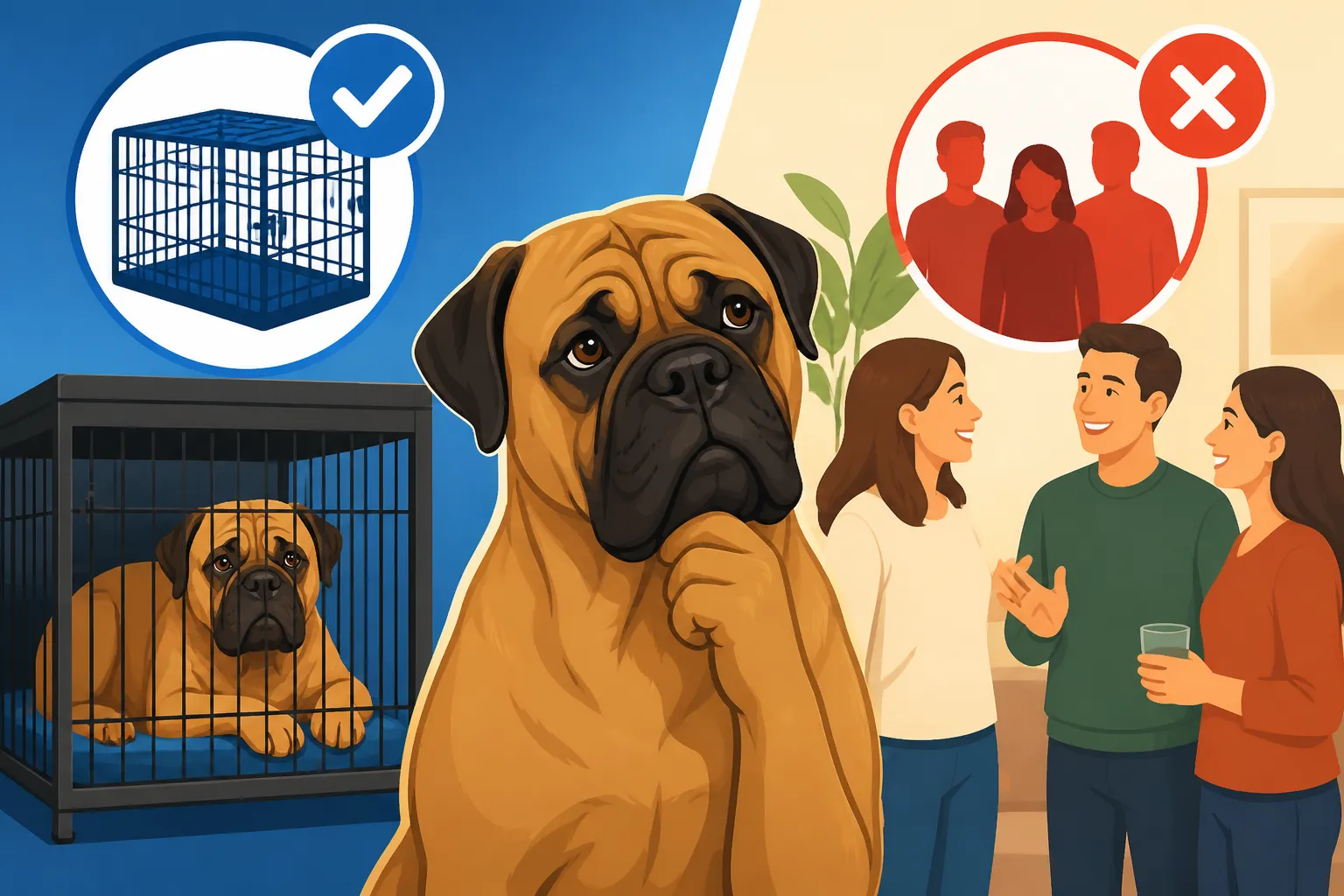
For many Bullmastiff owners, the crate can be an absolute lifesaver during guest visits. One of the primary benefits is the undeniable increase in safety, both for your guests and for your dog. Imagine a small child running excitedly through the house, only to be accidentally bowled over by a boisterous Bullmastiff who meant no harm. Crating prevents such incidents, giving you peace of mind and ensuring everyone stays safe. This is especially true for elderly visitors who might be less steady on their feet or those who are simply uncomfortable around large dogs.
Beyond physical safety, crating can significantly reduce stress for both you and your Bullmastiff. If your dog gets overly excited, anxious, or becomes a persistent beggar when people are around, being in their familiar, secure crate can offer a calm retreat. It allows them to relax without feeling the pressure to perform or constantly be "on guard." For you, it means you can enjoy your company without constantly managing your dog's behavior, redirecting jumping, or shooing them away from the buffet table. It prevents unwanted behaviors like counter-surfing, body blocking guests from moving freely, or the sometimes overwhelming "Bullmastiff lean" that can pin a guest to a wall. A large, sturdy crate, easily found on platforms like Amazon, becomes their personal den, a safe haven rather than a punishment.
Situations Where Crating Might Be Counterproductive
While crating offers many advantages, it's crucial to acknowledge when it might actually do more harm than good. The most important factor is your Bullmastiff's relationship with their crate. If your dog hasn't been properly crate trained and views the crate as a punishment or a place of isolation, then forcing them into it when guests arrive will only exacerbate their anxiety. It could lead to increased stress, barking, destructive behavior inside the crate, or even a negative association between the arrival of guests and their confinement. Crating should be a positive experience, a comfortable den, not a jail cell.
Additionally, consider the frequency of your guest visits. If you entertain regularly, crating your Bullmastiff for every single visitor might become counterproductive. They need to learn how to exist politely around guests. If they are always removed from the situation, they never get the chance to practice appropriate greetings and learn that guests are not a threat. How a Bullmastiff Greets a Stranger can vary greatly depending on their exposure and training. For some Bullmastiffs, being crated might lead to frustration or a heightened sense of territoriality, making future interactions even more challenging as they haven't learned to trust the "all clear" signal from you. It's about balance and ensuring the crate is used as a tool, not a default solution that avoids necessary training.
Alternatives and Strategies for Guest Management
Crating isn't the only tool in your Bullmastiff guest management toolbox. There are many other effective strategies that can help your dog learn to be a polite host, building their confidence and your peace of mind.
Managed Introductions and Controlled Interactions
One of the most effective strategies is to carefully manage introductions. Don't just open the door and let chaos ensue. Before guests even step inside, take your Bullmastiff for a good, vigorous walk to burn off some of that initial energy. How Much Exercise a Bullmastiff Needs might be less than you think, but a tired Bullmastiff is usually a calmer Bullmastiff.
When guests arrive, keep your Bullmastiff on a leash. A sturdy leash and collar, perhaps even a head halter if needed for better control, will be invaluable. Have your Bullmastiff sit or lie down a short distance from the door. Ask your guests to enter calmly, ignoring your dog completely at first. No eye contact, no petting, no excited greetings. Once everyone is settled, and your Bullmastiff is calm, you can initiate a controlled introduction. Instruct guests to offer a treat gently, without reaching over the dog's head, and to continue to allow the dog to approach them. Websites like BAXTER & Bella offer excellent resources and training modules that can help you practice these controlled greeting scenarios, providing step-by-step guidance on teaching your dog impulse control around new people.
You can also use commands like "place" or "stay" to direct your Bullmastiff to a designated mat or bed in the same room where guests are. This allows them to be part of the activity, but within a structured boundary. Reward them heavily for remaining in their place, gradually increasing the duration as they get more comfortable. Teaching a Bullmastiff to Wait at a Door is a vital life skill that extends beyond just guest arrivals.
Creating a "Safe Zone" Without a Crate
Sometimes, a full crate isn't necessary, but a designated "safe zone" or separate space can work wonders. This could be another room in the house, a utility room, or even a section of a large room blocked off with a sturdy baby gate or an ex-pen. The key is that this space is not seen as a punishment but as a comfortable, enriching retreat.
Before guests arrive, prepare this safe zone with a comfy bed, fresh water, and high-value chew toys or a stuffed Kong. These mental enrichment activities can keep your Bullmastiff happily occupied and distracted from the commotion of guests. Consider using an ambient noise machine or soft music to further muffle sounds and create a calming atmosphere. A trusted family member can also take on the role of "dog supervisor," spending time with the Bullmastiff in this separate area, offering comfort and company. This ensures your dog still feels part of the family, even if they aren't directly interacting with guests. This approach is particularly useful if How Long a Bullmastiff Takes to Warm to a Visitor is longer than your average visit, giving them space to relax until they feel ready.
Consistent Training and Behavior Modification
Long-term success in managing guest interactions with your Bullmastiff comes down to consistent training and behavior modification. This isn't just about managing the moment, but about changing your dog's underlying emotional response to guests. Desensitization and counter-conditioning are powerful tools. Start by identifying triggers – the doorbell, a knock, the sound of car doors. Practice these triggers in a controlled environment, pairing them with high-value treats and praise. Ring the doorbell, then immediately reward your dog for remaining calm. Gradually increase the intensity and realism of the "guest arrival" scenario.
Focus on teaching your Bullmastiff polite greetings. If they tend to jump, turn your back the moment they do, withholding attention until all four paws are on the floor. Reward only calm, polite behavior. It takes time, patience, and a united front from everyone in the household. Remember that a Bullmastiff isn't truly mature until around three years of age, so consistent effort over their younger years is crucial. A Bullmastiff Is Not Grown Up Until Three reminds us that their adolescent phases can be particularly challenging. Enrolling in advanced obedience classes or working with a professional trainer experienced with large breeds can provide invaluable guidance and support in shaping these behaviors.
Practical Tips for a Smooth Guest Experience
Even with the best training and a solid plan, hosting guests with a Bullmastiff can still feel like a big undertaking. A few practical tips can make a world of difference in ensuring everyone, including your beloved dog, has a positive experience.
Preparing Your Bullmastiff and Your Home
Preparation is absolutely key. As mentioned, a well-exercised Bullmastiff is often a more manageable one. Plan a good sniffy walk or a play session in the yard before guests are due to arrive. This helps to deplete some of that boundless energy and allows them to be more settled when company is over.
Equip your home for success. Have plenty of high-value treats on hand – small, soft, irresistible rewards your Bullmastiff doesn't get every day. If you're using a safe zone, ensure it's stocked with water, appropriate chew toys, and maybe even a puzzle feeder to keep them engaged. Crucially, communicate with your guests beforehand. Let them know your plan for managing your Bullmastiff. Explain that you might ask them to ignore your dog initially or follow specific instructions for polite interaction. This sets expectations and prevents misunderstandings or accidental reinforcement of unwanted behaviors. After all, you don't want a guest encouraging jumping when you've been working so hard to discourage it!
Monitoring Your Bullmastiff's Body Language
Your Bullmastiff's body language is a window into their emotional state. Learning to read these subtle cues can help you intervene before a situation escalates or before your dog becomes overly stressed. Look for signs of stress or discomfort: lip licking, excessive yawning, averted gaze, a stiff posture, tail tucked low or stiffly held, raised hackles, or excessive panting when not hot. Even a seemingly minor behavior, like repeatedly shaking their head, could indicate unease. Bullmastiffs are known for being stoic, and How a Bullmastiff Hides Pain or discomfort can be quite subtle, so observing them closely is vital.
If you notice any of these signs, it's time to intervene. This might mean gently redirecting your dog to their crate or safe zone, giving them a time-out in a quiet room, or simply creating more distance between them and the guests. The goal is to prevent them from becoming overwhelmed or from resorting to unwanted behaviors out of stress. Removing them from the situation proactively is always better than reacting after an incident has occurred.
Long-Term Management for a Well-Adjusted Bullmastiff
The journey of managing your Bullmastiff around guests isn't about a single visit; it's about fostering a confident, well-adjusted dog who can navigate the world calmly. The ultimate goal isn't just to survive guest visits, but for your Bullmastiff to genuinely thrive in a variety of social situations. This means committing to ongoing socialization and training throughout their entire life, not just during puppyhood. Continue to expose them to new people and environments, always making these experiences positive and rewarding.
Understanding and respecting your Bullmastiff's inherent nature is paramount. They are guardians by breed, and while you can shape their responses, you can't entirely erase that instinct. How Protective a Bullmastiff Is means you'll always have a watchful eye in your home, and that's a wonderful thing. It’s about channeling that protectiveness into appropriate, polite behavior rather than allowing it to become a source of stress or conflict. With consistent effort, clear communication, and plenty of love, your Bullmastiff can become a wonderful, albeit imposing, host.
Here’s a quick overview of the different approaches to managing your Bullmastiff during guest visits:
| Strategy | Pros | Cons | Best Suited For |
|---|---|---|---|
| Crating | Maximum safety; dog's relaxation; owner peace of mind | Dog must be crate trained; can create negative association | Dogs with high excitement/anxiety; short visits; safety concerns |
| Managed Introductions | Teaches polite greetings; builds confidence; dog is present | Requires owner vigilance; guests must cooperate; slower process | Well-socialized dogs; owners committed to training; regular guests |
| Separate Safe Zone | Dog comfort & enrichment; prevents unwanted behaviors | Dog is not with guests; requires dedicated space & preparation | Dogs needing quiet space; long visits; owner wants less direct management |
No matter which strategy or combination of strategies you choose, remember that consistency and positive reinforcement are your greatest allies. Your Bullmastiff wants to please you, and with clear guidance, they can learn to be the perfect, if slightly oversized, host. Even if guests are staying for a longer period, remember that [How a Bullmastiff Behaves With Guests Who Stay Over] can be an ongoing training exercise, not a one-time event.
Disclaimer
This article is for general informational purposes only and does not constitute professional advice. Laws, prices and regulations vary by location and change over time. Consult a qualified professional for guidance on your specific situation.