Feeding a Bullmastiff Puppy So It Grows Slowly
One of the biggest worries for new Bullmastiff puppy parents, and a common mistake we all want to avoid, is encouraging our gentle giants to grow too quickly. It’s natural to want your puppy to fill out and look impressive, but rapid growth, especially in large and giant breeds, can actually set them up for a lifetime of painful joint problems and other health issues. This comprehensive guide will walk you through exactly how to feed your Bullmastiff puppy to support healthy, slow, and steady development, safeguarding their future well-being.
Why Slow Growth Matters So Much for Bullmastiff Puppies
It's easy to look at a Bullmastiff puppy and marvel at how quickly they're gaining size, but this rapid expansion can be a hidden enemy. Unlike smaller breeds that mature quickly without significant structural stress, a Bullmastiff's skeletal system needs time – a lot of time – to properly ossify and strengthen. Pushing them to grow too fast puts immense pressure on still-developing bones and joints, which can lead to heartbreaking consequences down the line. We want a strong, sound adult Bullmastiff, and that starts with understanding the biology of their unique growth.
The Dangers of Rapid Weight Gain and Development
When a Bullmastiff puppy gains weight and size too quickly, their bones, joints, and soft tissues simply can't keep up. Imagine building a huge skyscraper with materials meant for a smaller building; the foundation would buckle. In puppies, excessive calories and certain nutrient imbalances can lead to a growth spurt that outpaces the development of cartilage and bone density. This can manifest as conditions like hip dysplasia, elbow dysplasia, and osteochondrosis dissecans (OCD), where cartilage fails to properly develop into bone, causing painful flaps and inflammation. These aren't just minor aches; they can lead to debilitating arthritis and a severely reduced quality of life, often requiring expensive surgeries and lifelong pain management. Why a Bullmastiff Puppy Should Not Grow Fast delves deeper into these specific risks.
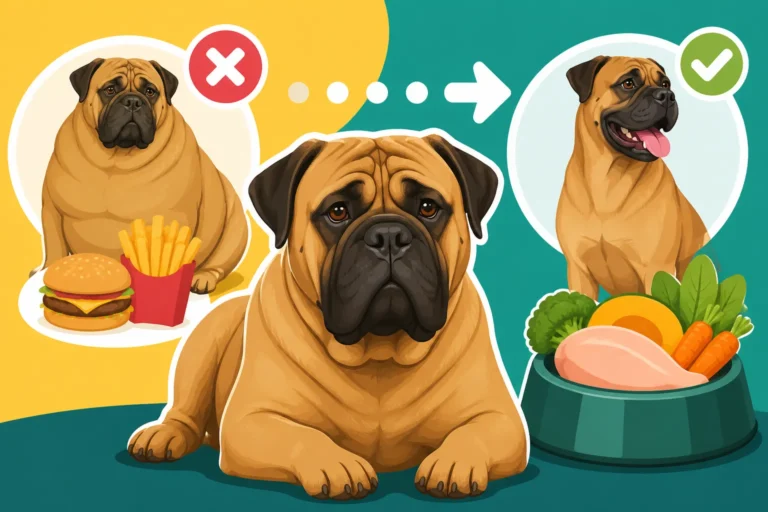
It’s a frustrating paradox: we want our puppies to be big and strong, but rushing that process actually makes them weaker. Owners often unknowingly contribute to this by feeding adult dog food too early, offering too many treats, or simply overfeeding "large breed puppy" food based solely on the bag's recommendations without accounting for individual puppy metabolism. The goal isn't to starve them or keep them small, but to ensure they reach their genetic potential for size at a rate that allows their skeleton to mature soundly, rather than stretching it prematurely.
Understanding Growth Plate Vulnerability in Giant Breeds
A puppy's bones don't grow uniformly from end to end like a tree. Instead, they lengthen from specialized areas called growth plates (epiphyseal plates), located near the ends of long bones. These plates are made of soft, developing cartilage, and they remain open and vulnerable until the puppy reaches skeletal maturity – which in a Bullmastiff can be as late as 18 to 24 months, or even three years for full "fill out." During this time, these growth plates are much weaker than the surrounding bone.
Rapid weight gain or excessive exercise puts enormous stress on these delicate cartilaginous plates. A sudden impact or even sustained heavy activity can damage them, leading to uneven growth, permanent deformities, or even premature closure of the plate. Once a growth plate is damaged, it can affect the overall limb length and alignment, predisposing the dog to arthritis and lameness later in life. This is why managing their diet and exercise carefully during this critical period is paramount for a Bullmastiff's long-term soundness. Think of it as protecting the crucial scaffolding of a building until the concrete is fully set.
Choosing the Right Food: Large Breed Puppy Formulas Are Key
Selecting the right diet for your Bullmastiff puppy isn't just about picking a brand; it's about understanding the specific nutritional profile that supports slow, steady growth. Generic puppy foods are often too high in calories, calcium, and phosphorus for giant breeds, inadvertently encouraging rapid development. This is why "large breed puppy" formulas were created, and they are absolutely essential for a Bullmastiff. These specialized foods are formulated with precise balances to mitigate the risks associated with fast growth.
Essential Nutrients and Balanced Ratios (Calcium/Phosphorus)
For a Bullmastiff puppy, the devil is in the details, specifically in the calcium and phosphorus ratios. Too much calcium, or an imbalanced calcium-to-phosphorus ratio, is a major culprit in developmental orthopedic diseases. While calcium is vital for bone health, too much can interfere with proper bone mineralization and cartilage formation. Large breed puppy formulas typically have slightly lower calcium levels and a tighter calcium-to-phosphorus ratio (usually between 1.1:1 and 1.5:1, with ideal calcium levels often around 0.8% to 1.2% on a dry matter basis) compared to regular puppy foods. This careful balance helps ensure that bones grow at a moderate pace, allowing growth plates to mature properly.
Beyond minerals, these foods also provide a moderate protein and fat content. While high protein diets used to be wrongly blamed for skeletal problems, current research points more towards excess calories and imbalanced minerals. A good large breed puppy food offers adequate, but not excessive, protein for muscle development and energy, without pushing for rapid weight gain. Always look for a formula specifically labeled for "large breed puppies" or "giant breed puppies." Which Calcium and Phosphorus Levels a Bullmastiff Needs elaborates on these crucial nutritional considerations.
Deciphering Dog Food Labels for Giant Breed Puppies
Understanding a dog food label can feel like reading a foreign language, but for your Bullmastiff's health, it's a skill worth mastering. When you pick up a bag, first confirm it explicitly states "large breed puppy" or "giant breed puppy" on the front. Then, turn to the guaranteed analysis. You're looking for the percentages of calcium and phosphorus. As mentioned, ideal ranges for calcium are often between 0.8% and 1.2% on a dry matter basis, with phosphorus closely correlated. If the label provides "as fed" percentages, you'll need to do a quick calculation to convert to dry matter basis if the moisture content is high (divide the nutrient percentage by the dry matter percentage, which is 100 minus the moisture percentage).
Also, pay attention to the calorie count. While we don't want to underfeed, we definitely don't want to overfeed. A large breed puppy formula will have a calorie density appropriate for moderate growth. Don't be swayed by marketing jargon; focus on the actual numbers and the ingredient list. Look for whole meat as the first ingredient, followed by digestible carbohydrates and healthy fats. Brands like Purina Pro Plan Large Breed Puppy, Royal Canin Large Breed Puppy, or even specialized fresh food options from companies like Ollie (ensuring they meet large breed puppy nutritional guidelines) are often well-regarded for their precise formulations. Many dedicated Bullmastiff owners find it convenient to order their preferred large breed puppy food from online retailers like Chewy or Amazon, ensuring a consistent supply.
Portion Control: It's Not About Free-Feeding
Once you've chosen the right food, portion control becomes the most critical aspect of managing your Bullmastiff puppy's growth. It's incredibly tempting to leave food out all day, especially with a growing puppy, but free-feeding is a recipe for disaster in a giant breed. Your puppy should eat measured meals, and those meals should be adjusted frequently based on their individual needs, not just a static recommendation on the bag. This active management ensures they get enough nutrition without the detrimental effects of overfeeding.
Daily Feeding Guidelines and How to Adjust Them
Dog food bags provide a general guideline based on age and anticipated adult weight, but these are just starting points. Every Bullmastiff puppy is an individual, with varying metabolism and activity levels. It's crucial to start with the bag's recommendation for their current weight and age, then critically observe your puppy's body condition. You want them lean, almost a bit skinny. You should be able to easily feel their ribs with light pressure, but not see them prominently. When viewed from above, there should be a discernible waist. From the side, a tuck-up at the belly.
Adjust their daily food intake up or down in small increments (about 1/4 to 1/2 cup) every few days, if necessary, to maintain that lean condition. If they seem too thin, increase slightly. If they are getting plump, reduce slightly. This isn't a set-it-and-forget-it task; it requires regular assessment. Remember, growth is about bone development, not packing on pounds. Regularly weighing your puppy and assessing their body condition will be your guiding lights. For a practical guide on ideal weights, check out What a Bullmastiff Puppy Should Weigh by Month.
The Pitfalls of Overfeeding a Bullmastiff Puppy
Overfeeding a Bullmastiff puppy, even with a specially formulated large breed puppy food, remains one of the fastest routes to orthopedic problems. It's not just the type of food, but the sheer quantity of calories that can push them into an unhealthy growth trajectory. Excess calories translate directly to faster weight gain, which then puts undue stress on those vulnerable growth plates and developing joints. This can exacerbate any genetic predispositions to conditions like hip or elbow dysplasia, turning a mild tendency into a severe problem.
Beyond skeletal issues, overfeeding leads to a puppy carrying excess fat. While a little puppy chub might look cute, it's unhealthy. An overweight puppy can develop habits that are hard to break, and early obesity can set the stage for adult obesity, which brings its own host of health problems including diabetes, heart disease, and a shortened lifespan. Think of every extra pound on a growing Bullmastiff as an extra burden on a fragile scaffold. It’s far easier to add weight to a thin adult Bullmastiff than to remove it from an overweight one, or to reverse joint damage caused by rapid growth. Whether a Bullmastiff Puppy Should Eat Free Choice explains why this method is particularly risky for growing giants.
Meal Schedules and Eating Habits
How you feed your Bullmastiff puppy is almost as important as what you feed them. Establishing a consistent meal schedule not only aids in digestion and house-training but also plays a crucial role in preventing potential health emergencies common to deep-chested breeds like bloat. Bolting food, or eating too quickly, is a habit we want to avoid from the very beginning.
The Importance of Multiple Meals Per Day
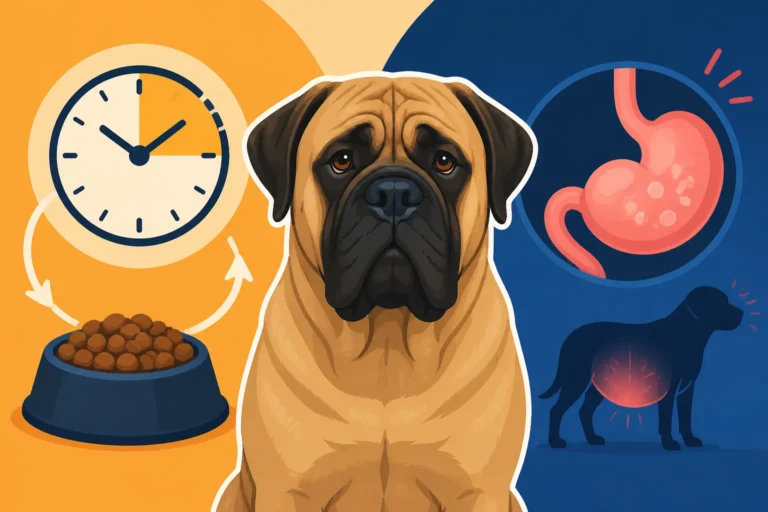
Instead of one or two large meals, Bullmastiff puppies should be fed three to four smaller meals throughout the day. This approach helps in several ways. Firstly, it keeps their metabolism more stable, avoiding large spikes and drops in blood sugar. Secondly, and critically for a breed predisposed to bloat (Gastric Dilatation-Volvulus or GDV), smaller, more frequent meals reduce the amount of food and gas in the stomach at any one time. This lessens the risk of the stomach distending and potentially twisting, a life-threatening emergency.
A consistent schedule also makes house-training much easier, as puppies tend to relieve themselves shortly after eating. Plus, it provides regular opportunities for training and bonding. As they mature, you might transition to two to three meals, but for the crucial puppy stage, multiple meals are best. For more detailed guidance, see How Many Meals a Bullmastiff Should Have.
Preventing Bolting and Its Associated Risks
Many puppies, especially those who come from litters where food was competitive, can develop a habit of eating their food incredibly fast – a behavior known as "bolting." For a Bullmastiff, this is a dangerous habit. Rapid eating can lead to indigestion, vomiting, and, most seriously, it is considered a risk factor for bloat. When a dog eats quickly, they often swallow a lot of air along with their food, which contributes to stomach distension.
To combat bolting, several strategies can be employed:
- Slow Feeder Bowls: These bowls have internal obstacles or ridges that force the puppy to eat around them, significantly slowing down their intake. You can find many effective slow feeder designs on Amazon.
- Food Spreading: Instead of putting all the food in one pile, spread it out on a large, flat baking sheet or a snuffle mat. This forces the puppy to search for individual kibble pieces, making eating a more engaging and slower process.
- Food Puzzles: Incorporate puzzle toys that dispense food as the puppy manipulates them. This turns mealtime into a mental exercise and extends the duration of eating.
- Separate Feeding: If you have multiple dogs, feed your Bullmastiff puppy in a quiet, separate area to reduce any perceived competition that might encourage fast eating.
After any meal, and especially a large one, it's vital that your Bullmastiff puppy has a quiet rest period. No vigorous exercise, playing, or running for at least an hour before and, ideally, two hours after eating. This helps reduce the risk of bloat by allowing the stomach to digest food without being jostled. Why a Bullmastiff Should Rest After Meals offers further insights into this critical post-meal routine.
Monitoring Your Puppy's Growth: What to Look For
You can read all the articles and listen to all the advice, but ultimately, the best guide for your Bullmastiff puppy's growth will be your own careful observation and a keen eye for their body condition. It's not about comparing them to the biggest puppy in the litter or aiming for a certain number on the scale; it's about fostering healthy development within their individual genetic blueprint. This means regularly checking their body condition and knowing when to seek professional advice.
The Body Condition Score: Your Best Tool
Forget the scale for a moment; your hands are your most powerful tool for monitoring your Bullmastiff puppy's growth. The Body Condition Score (BCS) is a standardized method used by veterinarians to assess an animal's fat reserves. It's usually a scale of 1 to 9, where 1 is emaciated and 9 is obese, with 4 or 5 being ideal. For a growing Bullmastiff puppy, you want them on the leaner side, aiming for a 4.
Here's how to check your puppy's BCS:
- Ribs: Gently run your hands along their sides. You should be able to easily feel their ribs, almost like feeling knuckles under a thin layer of skin. You shouldn't see them prominently sticking out, but you also shouldn't have to press hard to locate them through a layer of fat.
- Waist: Look down at your puppy from above. There should be a distinct indentation or "waist" behind their rib cage. If they look like a straight block from neck to tail, they're carrying too much weight.
- Abdominal Tuck: View your puppy from the side. Their abdomen should tuck up slightly from their chest, not hang low or be flat.
If your puppy is too plump, reduce their food slightly. If they are too thin (ribs very prominent, no fat whatsoever), increase their food marginally. Consistency in checking this weekly will help you make timely adjustments. What a Lean Bullmastiff Looks Like provides visuals and further descriptions to help you master this assessment.
When to Consult Your Veterinarian About Growth
While you're the front-line observer, your veterinarian is your essential partner in managing your Bullmastiff puppy's growth. Regular vet visits are crucial for overall health monitoring, but specifically for growth, they can offer objective assessments and catch potential issues early. Don't hesitate to reach out if you have concerns.
You should consult your vet if:
- Your puppy seems consistently too thin or too heavy, despite your best efforts at adjusting food portions. There might be an underlying health issue affecting their metabolism.
- You notice any lameness, stiffness, or reluctance to move. This could be an early sign of orthopedic disease, and early intervention is key.
- Your puppy is growing unevenly, perhaps one leg appears longer than the other, or they have an unusual gait.
- They show any signs of discomfort after eating, such as excessive drooling, unproductive retching, or a distended abdomen, which could indicate bloat.
- You're simply unsure about their body condition score, and would like a professional assessment and guidance on feeding amounts.
Your vet can provide tailored advice, calculate calorie needs based on activity levels, and perform diagnostic tests if needed. They are there to help ensure your Bullmastiff puppy grows into a healthy, robust adult.
Beyond Food: Other Factors Influencing Healthy Growth
While nutrition is arguably the most critical component of fostering slow, healthy growth in a Bullmastiff puppy, it's not the only piece of the puzzle. Other environmental and care factors also play a significant role in their skeletal development and overall well-being. Overlooking these aspects can undermine even the most perfectly balanced diet.
Appropriate Exercise Levels for Growing Bullmastiffs
This is where many well-meaning owners make another common mistake: thinking a big, active puppy needs endless exercise. For a Bullmastiff puppy, excessive or inappropriate exercise can be just as damaging as overfeeding. Their growth plates are soft and vulnerable, and repetitive high-impact activities or long periods of strenuous movement can cause microtrauma or even significant injury to these delicate structures. Imagine a toddler being forced to run a marathon every day – it's simply too much for their developing body.
Focus on low-impact, free-play activities. Short, leashed walks (5-10 minutes per month of age, twice a day, as a general rule) on soft surfaces like grass are ideal. Allow them supervised playtime in a secure yard, letting them set their own pace. Avoid:
- Forced running: No running alongside a bike, jogging with you, or long runs on hard surfaces.
- Jumping: Limit jumping off furniture, out of cars, or intense fetch with high jumps.
- Stairs: Minimize stair climbing until they are older, carrying their heavy puppy bodies up and down can strain joints. The Exercise Limit for a Bullmastiff Puppy provides specific guidelines. Why a Bullmastiff Puppy Should Not Run on Concrete also highlights the particular dangers of hard surfaces.
The goal is controlled, gentle activity that promotes muscle development and coordination without stressing vulnerable joints. Mental stimulation through training and puzzle toys is often more beneficial than physical exertion for a Bullmastiff puppy.
The Role of Supplements and When They Are Unnecessary
The world of dog supplements is vast and often confusing, with many appealing promises. For a Bullmastiff puppy on a high-quality, complete, and balanced large breed puppy food, additional supplements are generally unnecessary and can even be detrimental. Remember the delicate balance of calcium and phosphorus? Adding extra calcium through supplements can easily throw off this critical ratio, leading to developmental orthopedic diseases. Whether a Bullmastiff Puppy Needs Extra Calcium underscores this point.
A well-formulated large breed puppy food already contains all the vitamins, minerals, and other nutrients your puppy needs for healthy growth. Unless specifically recommended by your veterinarian for a diagnosed condition, resist the urge to add:
- Calcium supplements: These are particularly risky.
- Multivitamins: These can lead to overdosing certain vitamins if already present in their food.
- Joint supplements (glucosamine/chondroitin): While popular for adult dogs with arthritis, their preventative use in puppies is not universally supported by science, and starting too early might not be beneficial. If your vet recommends a joint supplement due to a specific concern, they will guide you on the appropriate product and dosage.
Always discuss any potential supplements with your veterinarian before introducing them to your Bullmastiff puppy’s diet. More is not always better when it comes to nutrition; balance and completeness are key.
Transitioning to Adult Food: Timing is Everything
Just as there's a specific window for feeding large breed puppy food, there's also an optimal time to transition your Bullmastiff to an adult formula. Making the switch too early can rob them of essential growth nutrients, while waiting too long can lead to overnutrition and continued risk of rapid growth if they are still on a calorie-dense puppy food. It's a balance, and understanding your Bullmastiff's unique maturation schedule is key.
Identifying the Right Age for the Switch
Bullmastiffs mature much slower than smaller breeds. While a small dog might switch to adult food at 9-12 months, a Bullmastiff puppy typically needs to remain on a large breed puppy formula until they are between 18 and 24 months of age. This extended period ensures their large frame has enough time to develop fully and their growth plates have properly closed. Some lines or individuals might even benefit from staying on puppy food a little longer if they are still showing signs of significant growth, but always consult with your vet.
The key indicators for readiness to transition include:
- Age: Generally past 18 months, nearing two years.
- Skeletal Maturity: While they may not be fully "filled out" yet, their major bones should be largely formed, and growth plates closed. Your vet can confirm this if you have concerns.
- Body Condition: They should still be maintaining a lean body condition on their current large breed puppy food. If they are starting to get too heavy on puppy food even with strict portion control, it might be an earlier sign they need the lower calorie density of an adult formula.
When a Bullmastiff Moves to Adult Food provides additional context on this transition period.
The Gradual Process of Food Transition
Once you've determined it's time to switch, the transition should always be gradual. A sudden change in diet can upset your Bullmastiff's digestive system, leading to stomach upset, vomiting, or diarrhea. This is true for any dog, but especially for those with sensitive stomachs, which many large breeds can have.
A typical transition schedule lasts about 7-10 days:
| Day | Old Puppy Food Percentage | New Adult Food Percentage |
|---|---|---|
| 1-2 | 75% | 25% |
| 3-4 | 50% | 50% |
| 5-6 | 25% | 75% |
| 7-10+ | 0% | 100% |
Observe your Bullmastiff closely during this period for any signs of digestive upset. If they experience loose stools or vomiting, slow down the transition. You might need to hold at a certain percentage for a few extra days until their system adjusts before moving to the next step.
When choosing the adult food, ideally, stick with the same brand family if they offer a suitable large breed adult formula. This often ensures a similar ingredient base, making the transition smoother. Again, look for "large breed adult" formulas, which continue to offer appropriate nutrient levels and calorie density for their massive adult frames, especially those formulated to support joint health. Online retailers like Chewy make it easy to buy both your puppy and adult food from the same brand.
Disclaimer
This article is for general informational purposes only and does not constitute professional advice. Laws, prices and regulations vary by location and change over time. Consult a qualified professional for guidance on your specific situation.