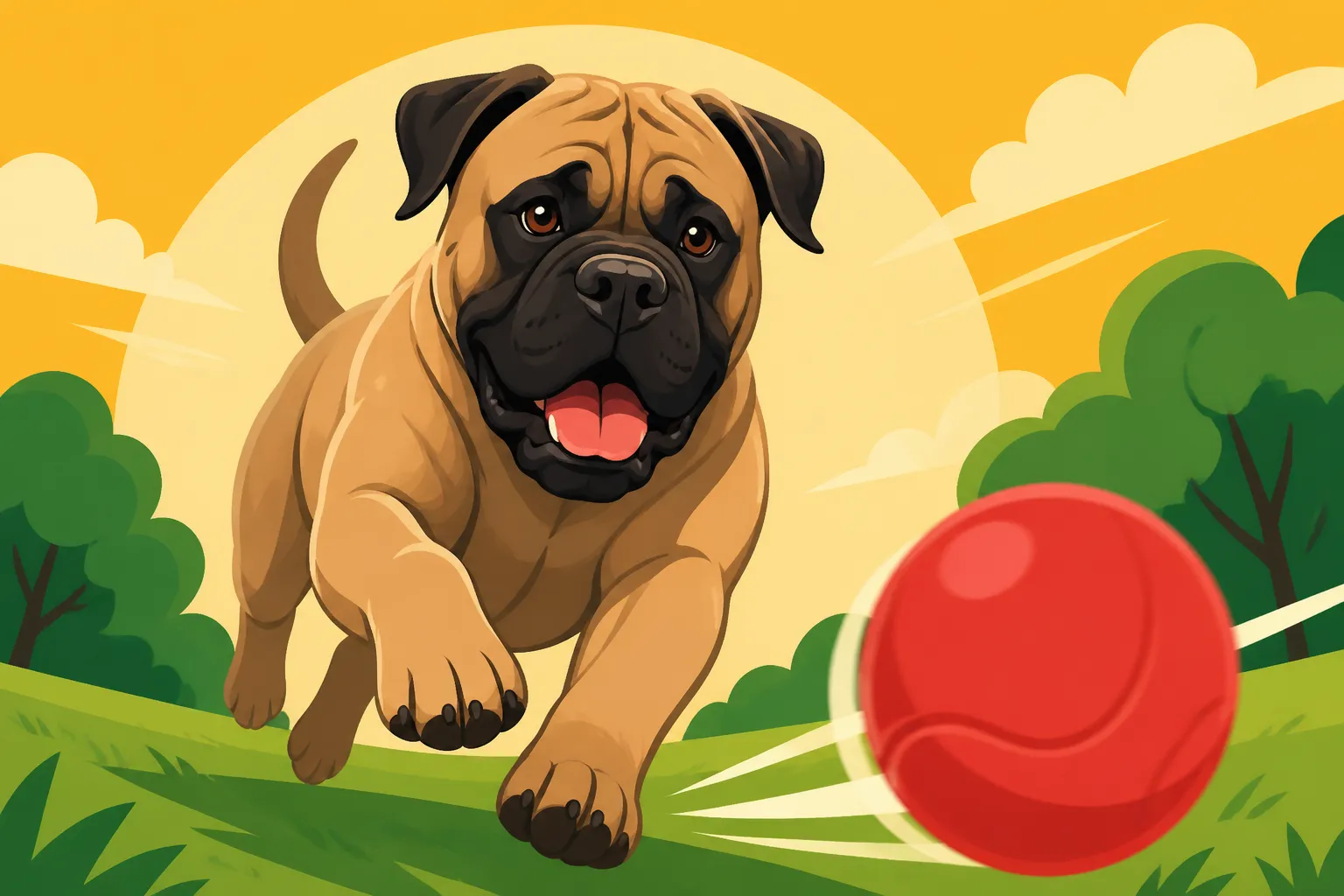
How a Bullmastiff Plays Fetch
If you’ve ever pictured endless rounds of enthusiastic fetch with your Bullmastiff, only to find them giving you a skeptical side-eye after the first toss, you're not alone. Many Bullmastiff owners quickly discover that their noble giants have a rather unique, and often quite selective, approach to the classic game of fetch. This guide will explore why Bullmastiffs play fetch differently, manage your expectations, and help you discover ways to engage your steadfast companion in play that truly suits their impressive build and thoughtful personality.
Understanding the Bullmastiff's Approach to Play
Unlike some high-energy breeds that live to chase and retrieve, a Bullmastiff’s play style is rooted deeply in its history and physical makeup. They weren't bred for endless hours of running; they were bred for bursts of controlled strength and unwavering focus. This means their version of "fetch" might look a little different than what you're used to, and understanding this is key to successful play.
The Original Purpose and Its Impact on Play
The Bullmastiff was developed to be a "Gamekeeper's Night Dog"—a silent, powerful guardian that could track and hold poachers without mauling them. This historical role emphasized short bursts of intense activity, immense strength, and a thinking, deliberate nature, rather than sustained, high-speed running. They needed stamina for patrolling but not for endless sprints. This ingrained purpose translates into their modern-day play habits. They tend to conserve energy, acting more like a thoughtful bouncer than a tireless athlete. When you throw a ball, their instinct might be to observe, evaluate, and then decide if the effort is truly worth it. They might retrieve it once or twice, but don't expect them to be your personal ball-shuttle for an hour straight. They're more about quality over quantity in their physical exertion, and that's something we need to respect.
Physical Limitations and Energy Levels
Let's be real: a hundred and thirty pounds of Bullmastiff isn't built for agility course records or marathon fetching sessions. Their massive frame, short muzzle, and often deep chest mean they can overheat easily and put significant strain on their joints with excessive, repetitive impact. This is particularly true in warmer weather or if they are not conditioned properly. Their energy levels, while respectable for their size, are generally lower than those of a Labrador or a Border Collie. They thrive on moderate exercise, like a good walk or a ponderous wander around the yard, not endless sprints after a thrown object. Pushing a Bullmastiff too hard in fetch can actually be detrimental, leading to exhaustion, overheating, or even exacerbating existing joint issues. You want to keep play fun and safe, which means recognizing their physical limits. Why a Bullmastiff Overheats So Easily is a good read to understand more about their heat tolerance.
The Bullmastiff's "Thoughtful" Nature
One of the most charming, yet sometimes frustrating, aspects of a Bullmastiff is their deliberate nature. They are often described as having a "thinking" temperament. When you throw a toy, they might not immediately bolt after it. Instead, they might watch it land, turn their head, and seem to weigh the pros and cons of exerting themselves. Is it truly interesting enough? Is it within a convenient distance? Do they really feel like moving right now? This isn't stubbornness, exactly, but a deep-seated inclination to assess before acting. It's part of The Bullmastiff That Pauses to Decide Whether You Are Worth It. They aren't trying to be difficult; they're just being wonderfully, quintessentially Bullmastiff. This thoughtfulness extends to their retrieval, too; sometimes they'll bring it back halfway, drop it, and look at you expectantly, as if to say, "Your turn now!"
Tailoring Fetch to a Bullmastiff's Temperament and Body
Since your Bullmastiff isn't likely to be a natural-born fetch prodigy, it's up to us, their human companions, to adapt the game to suit their unique needs and preferences. This means focusing on short, rewarding sessions, using appropriate toys, and making it more of a cooperative activity than a high-octane sport.
Short, Strategic Play Sessions
Instead of aiming for long, continuous fetch games, think in terms of short, burst-like sessions. Five to ten minutes, a few times a day, is often much more effective and safer for a Bullmastiff. These brief intervals prevent them from overheating or over-exerting their joints. After a few throws, take a break. Engage in some gentle praise, offer a drink of water, or simply switch to a different type of interaction, like a quick training cue. This approach keeps the game novel and exciting without turning it into a grueling chore for your dog. For puppies, it’s even more critical to limit strenuous activity to protect their developing joints. The Exercise Limit for a Bullmastiff Puppy offers excellent guidance on this. Always monitor their breathing and enthusiasm. If they start panting heavily or lose interest, it's time to stop.
Choosing the Right Toys for a Gentle Giant
The wrong toy can turn fetch from a fun game into a hazard. Fragile tennis balls can be easily shredded and ingested, posing a choking risk or intestinal blockage. Small toys are simply lost in their large mouths. For a Bullmastiff, you need durable, appropriately-sized toys that can withstand their powerful jaws but are also comfortable to carry. Think large, solid rubber balls or robust rope toys. Soft frisbees designed for dogs can also be a good option as they don't require the same high-impact catching as a hard frisbee.
Consider toys from brands like Kong, known for their extreme durability, or large, thick rubber balls. Always supervise play, especially with new toys, to ensure they hold up to your Bullmastiff’s strength. Toys that squeak or have a crinkly texture might also spark their interest more than a plain ball, engaging their predatory instincts without encouraging aggression. You can find a wide variety of suitable toys on platforms like Amazon, but always check reviews for durability specifically for large, powerful chewers.
The Art of the "Soft Toss"
Forget Olympic throws. For a Bullmastiff, a "soft toss" is often best. Instead of flinging the toy across a vast field, aim for shorter distances in your backyard or a secure, flat park area. The goal is to encourage a gentle retrieve, not a full-speed dash. A soft toss means less impact on their joints, especially their hips and elbows, which can be prone to issues like dysplasia. It also makes the game more appealing to their energy-conserving nature. You might even roll the toy a short distance along the ground, making it less demanding than an airborne catch. This also turns fetch into more of an interactive game of engagement rather than just pure physical exertion.
| Fetch Style Characteristic | High-Energy Retriever (e.g., Labrador) | Bullmastiff's Preferred Style |
|---|---|---|
| Duration | Long, sustained sessions | Short bursts, 5-10 minutes |
| Distance of Throw | Far, encouraging sprints | Short, gentle tosses/rolls |
| Pace of Play | Fast, continuous | Deliberate, observational |
| Motivation | Innate drive to retrieve, high prey drive | Interaction, specific toy, praise |
| Toy Preference | Tennis balls, frisbees | Large, durable rubber toys, rope toys |
| Focus | Repetitive action | Engagement, mental stimulation |
Making Fetch More Engaging for Your Bullmastiff
Even if your Bullmastiff isn't a natural fetch enthusiast, there are strategies to increase their interest and make the game more rewarding for both of you. It's all about understanding their motivations and making it a shared experience.
Incorporating Training and Rewards
Bullmastiffs are intelligent and respond well to positive reinforcement. Turn fetch into a mini-training session. Ask for a "sit" or "stay" before you throw the toy. When they retrieve it, ask for a "drop" or "give." Reward them with praise, a small treat, or even just another gentle toss. This adds a mental component to the physical activity, which can be very stimulating for them. Online training resources, like those offered by BAXTER & Bella, can provide excellent guidance on incorporating structured play and positive reinforcement into your daily routine.
Some Bullmastiffs are highly food-motivated, so a toy that can dispense treats, or a small training treat given upon return, can be a powerful incentive. This transforms fetch from a mindless chore into a rewarding puzzle. Remember, they are always evaluating the "worth" of an activity, and a guaranteed treat or beloved toy makes the payoff much clearer.
Variety is the Spice of Life (and Fetch)
Monotony can quickly lead to disinterest, especially for a thoughtful Bullmastiff. Vary your fetch routine. Don't always use the same toy, or throw from the same spot, or even play in the same yard every time. Introduce new textures or types of toys. Sometimes, a squeaky toy will ignite their playful side more than a silent ball. Other times, a tug toy might be the perfect prelude to a few short fetches.
You could hide the toy first and then ask them to "find it," adding a scent work element before the retrieve. This engages their powerful nose and adds an element of mental challenge. For a breed that was [Bred to Catch Poachers in the Dark], engaging their senses can be far more interesting than simple repetition. Even varying the location – a park, a friend’s yard, or a different section of your own property – can make the game feel fresh and exciting.
Focus on Interaction, Not Just Retrieval
For many Bullmastiffs, the real joy isn't in the act of retrieving, but in the interaction with you. Instead of just throwing and waiting, get involved. Chase the toy with them for a few steps, make excited noises, or engage in a brief game of tug before releasing the toy for them to "fetch." When they bring the toy back, celebrate their accomplishment with genuine enthusiasm, even if they drop it five feet away.
Think of fetch as a bonding experience. It's an opportunity for connection, physical activity, and mental stimulation. If your Bullmastiff brings the toy back and simply wants to chew on it next to you, that's still a win! It shows they enjoy being with you and engaging with the toy you provided. Sometimes, the most successful "fetch" session is one where the ball gets thrown twice, and then you both settle down for a good chew on the tug rope.
Troubleshooting Common Fetch Challenges with Your Bullmastiff
Even with the best intentions and tailored strategies, you might encounter some common challenges when trying to play fetch with your Bullmastiff. Don't get discouraged; these are often breed-typical behaviors that can be managed with patience and understanding.
"You Threw It, You Get It" Syndrome
This is perhaps the most classic Bullmastiff fetch dilemma. You toss the toy, they watch it land, and then they look at you as if to say, "And…?" They might even walk over to it, sniff it, and then walk away. This isn't necessarily disobedience; it's often a lack of perceived value or motivation.
- Increase Motivation: As mentioned before, incorporate treats or high-value toys. Make the act of bringing it back incredibly rewarding. Every single time they even approach the toy, offer praise.
- Start Small: Begin by just rolling the toy a few feet away. When they go to investigate, encourage them to pick it up. If they do, offer a treat and praise. Gradually increase the distance.
- Use a Leash: In a controlled environment, you can use a long leash to gently guide them towards the toy and back to you. This helps them understand the desired action without force. This is also a great opportunity to practice Teaching a Bullmastiff to Walk on Leash in a fun context.
The "Keep Away" Game
Sometimes, a Bullmastiff will retrieve the toy, but instead of bringing it directly back to you, they'll circle, or lie down just out of reach, initiating a game of "keep away." This can be frustrating, but it's often a sign of playfulness or a desire for more interaction on their terms.
- Avoid Chasing: Never chase your Bullmastiff to get the toy back. This reinforces the "keep away" behavior and teaches them that running from you is part of the game.
- Trade Up: Have a second, even higher-value toy or treat ready. When they're just out of reach with the first toy, show them the second item. Most Bullmastiffs will drop the first to investigate the new, exciting offering.
- "Drop It" Command: Work on a solid "drop it" or "give" command outside of fetch. Practice this with less exciting toys first, rewarding generously when they release the item. Then, introduce it into fetch. The BAXTER & Bella online puppy school or similar training platforms can provide structured lessons for this.
Disinterest in Toys or Play
Some Bullmastiffs simply aren't very toy-motivated. They might prefer human interaction, cuddles, or just observing their surroundings. If your Bullmastiff shows persistent disinterest in fetch, don't force it. There are many other ways to bond and exercise.
- Explore Other Activities: Consider other forms of enrichment. What a Bullmastiff Does All Day often involves a lot of napping, but they also enjoy scent games, short walks, puzzle toys, or even just sitting next to you while you read.
- Focus on Mental Stimulation: Bullmastiffs are thinkers. Hide-and-seek with treats, basic obedience training, or learning new tricks can be incredibly rewarding and engaging for them.
- Monitor Health: If a previously playful Bullmastiff suddenly loses interest, it's always worth a quick check-up with your vet. A subtle ache or pain, perhaps in their joints, could be making movement uncomfortable. Bullmastiffs are known to How a Bullmastiff Hides Pain, so pay close attention to any changes in behavior or mobility, especially as they get older. Caring for an Aging Bullmastiff often involves adjusting their activity levels.
Ultimately, playing fetch with a Bullmastiff is less about achieving athletic feats and more about understanding and celebrating their unique, dignified personality. It’s about creating moments of joyful connection, tailored to their impressive stature and thoughtful spirit.
Disclaimer
This article is for general informational purposes only and does not constitute professional advice. Laws, prices and regulations vary by location and change over time. Consult a qualified professional for guidance on your specific situation.