Which Americans Imported the First Bullmastiffs
Bullmastiffs arrived in the United States after being developed in Britain as estate dogs, but “the first importer” is not as clear-cut as a single name on a shipping record. John D. Rockefeller is often credited with bringing early Bullmastiffs to America. This guide explains what that credit means, how the breed crossed the Atlantic, and why the early history is difficult to pin down.
Who brought the first Bullmastiffs to the United States
John D. Rockefeller is the name most often credited
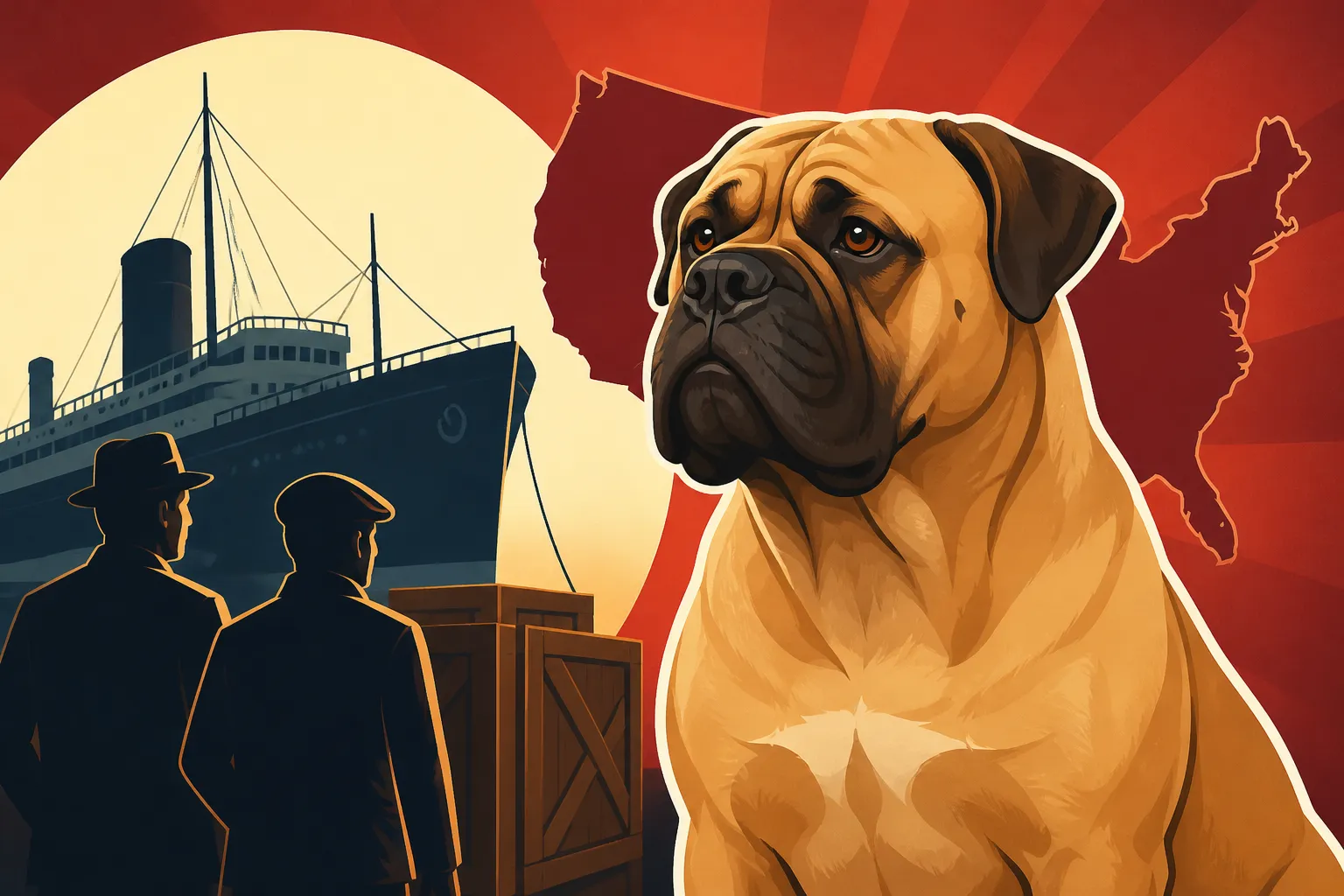
John D. Rockefeller is commonly named as the American who first brought Bullmastiffs to the United States. Accounts connect the early dogs with his estate in Tarrytown, New York, where a substantial dog suited to guarding property would have made practical sense. Rockefeller is therefore the key name to know when asking who imported the first Bullmastiffs.
It is worth being precise about what “credited” means here. The claim appears in breed histories as a widely repeated account of the breed’s early arrival, rather than as a complete, easily checked list of every dog, importer, and arrival date. Early dogs could be brought privately, before American interest in the breed was organized around clubs and formal records.
That distinction matters because “first Bullmastiff in America” can mean several things: the first dog privately imported, the first dog kept at a known estate, the first dog entered in a registry, or the first dog used to establish a breeding program. Those milestones need not belong to the same person or dog. Rockefeller is the best-known name associated with the early American introduction, but that does not automatically settle every version of the “first” question.
Why a single definitive list is hard to give
The breed was still becoming established as a distinct type when it began attracting attention outside Britain. Early imports were not necessarily public events, and a dog could arrive as a private guard or companion without being recorded in the kind of organized way later fanciers would expect. That makes the earliest period less tidy than a modern breed-registration timeline.
There is also a difference between importing a dog and building a breed community. An individual might bring over one or more dogs, while other Americans later imported additional animals, bred them, showed them, or helped promote the breed. Those later contributions are important, but they should not be confused with the commonly repeated Rockefeller credit for the earliest American arrival.
So, if you need a short answer, Rockefeller is the American most often credited with importing the first Bullmastiffs. If you are looking for a complete roster of everyone involved in the earliest imports, the historical record is less definitive. It is safer to distinguish the widely recognized early-import story from the later, better-organized development of Bullmastiffs in the United States.
Why Bullmastiffs crossed the Atlantic
The breed’s original job shaped its appeal
Bullmastiffs were developed in Britain for work connected with protecting estates from poachers. Gamekeepers needed dogs that could locate and stop an intruder, often in darkness, without behaving like animals bred simply to attack. The breed’s background is closely tied to the demands of that work, as explained in What English Game Laws Had to Do With the Bullmastiff and What a Gamekeeper Needed a Night Dog For.
A large, strong dog that could stay close to its handler and deter unwanted visitors had obvious appeal to wealthy landowners elsewhere. That does not mean every American import was used in precisely the same way as a British gamekeeper’s dog. A dog arriving at a private estate could be valued as a guard, a companion, or both, depending on the household and its needs.
The Bullmastiff’s history is also part of a broader story of how working breeds traveled. Buyers and owners did not always seek a dog because they planned to recreate its original job exactly. Sometimes the draw was the combination of physical presence, steadiness, and a reputation for guarding. For context on the breed’s working background, see How Long Gamekeepers Used Bullmastiffs Before 1924 and Which Estates Kept Bullmastiffs.
The breed was already taking shape in Britain
Bullmastiffs were not simply an old, unchanged breed that happened to be shipped overseas. They developed through the blending of earlier types, with the aim of producing a dog that could perform a particular estate-guarding role. The familiar account describes a mix of Mastiff and Bulldog ancestry, though the historical development of the breed was more practical and gradual than a single neat formula suggests. Which Breeds Went Into the Bullmastiff gives more background on that ancestry.
The breed’s move across the Atlantic happened while its identity was becoming more formal. Britain recognized the Bullmastiff as a distinct breed in the early twentieth century, and the American Kennel Club recognized it later. That timeline helps explain why the earliest American dogs may have preceded a mature system of U.S. breed registration and organized competition. See When the Bullmastiff Stopped Being a Crossbreed for more on the transition from working cross to recognized breed.
It is helpful not to imagine that an official recognition date marks the exact moment a breed first appeared in a country. Dogs can arrive before clubs, registries, or a large breeding population exist. Recognition is evidence that an organized breed community has developed; it is not necessarily proof of the first individual dog’s arrival.
| Historical milestone | What it tells us | What it does not prove |
|---|---|---|
| Early private import to an American estate | Bullmastiffs were present in the United States before the breed had a broad public profile | That the dog was the first one ever brought into the country |
| Development and recognition in Britain | The breed was becoming established as a distinct type | That every early imported dog had identical ancestry or registration |
| American Kennel Club recognition | Bullmastiffs had gained an organized place in American purebred dog circles | That the first imports arrived only after recognition |
| Later breeding and showing | American fanciers were building a sustained breed community | That those fanciers were necessarily the earliest importers |
From private imports to an American breed community
Imports and recognition were separate steps
An imported dog could attract interest without immediately producing a large population. Establishing a breed in a new country takes more than bringing in one impressive animal: breeders need compatible dogs, reliable records, interested owners, and opportunities to show or otherwise promote their stock. Those steps often unfold over years rather than all at once.
For Bullmastiffs, American Kennel Club recognition in 1933 is a useful marker in the breed’s U.S. history. It shows that the breed had moved beyond isolated private ownership and into organized American dog circles. The recognition date is not the same as the date of the first import, but it gives readers a firm point in the breed’s formal development. The timeline is covered in When the AKC Recognized the Bullmastiff.
This also helps explain why accounts can appear to disagree. One author may focus on the earliest arrival, another on the first registered dog, and another on the breeders who made the breed more established. Those are different historical questions. When comparing sources, check what each one means by “first” before treating the names as contradictory.
Why American estates suited the breed’s reputation
The Rockefeller connection is especially memorable because it links the breed with a recognizable American figure and a large estate. A dog bred for estate work in Britain could make sense in a similar setting across the ocean, where an owner might value a watchful presence around private property. The story also made a strong, easy-to-repeat link between the Bullmastiff and American wealth.
That association should not be stretched into a claim that Bullmastiffs became widespread across American estates immediately. A few early imports and a famous owner do not establish broad popularity. The breed’s presence expanded through the combined efforts of importers, owners, and breeders, and the pace of that growth was not necessarily the same everywhere. Whether Bullmastiffs Guarded American Estates explores the distinction between their British working roots and their American lives.
The breed’s American story therefore has two parts: an early arrival associated especially with Rockefeller, followed by the slower work of making Bullmastiffs known and established. That pattern is common in breed history. A single household may bring attention to a dog, but lasting recognition depends on a wider community of people willing to import, breed, care for, and promote it.
How to read claims about the earliest imports
Separate the famous story from the documented milestone
When a history says that Rockefeller brought the first Bullmastiffs to America, read it as the commonly accepted early-import account, not necessarily as proof that no other dog arrived around the same time. A famous owner’s name can survive in popular retellings more easily than the names of every private importer or individual dog.
For a careful account, keep three questions separate: Who is most often credited with introducing the breed? When did Bullmastiffs become formally recognized in the United States? Who helped build the breed’s later American population? Rockefeller answers the first question in many accounts; AKC recognition answers the second; the third involves a broader group of fanciers and breeders.
This approach is useful for other breed histories, too. A breed’s origin, its first appearance in another country, and its official recognition are related but distinct events. The Decade the Bullmastiff Crossed the Atlantic offers another angle on the breed’s move from Britain to the United States.
What the early story means for today’s owners
For a modern Bullmastiff owner, the import story is more than a trivia question. It helps explain why the breed is often described through its history as a quiet, substantial guardian rather than an endlessly active working dog. But historical purpose does not predict every individual dog’s temperament, and it should not be used as a substitute for responsible training, socialization, or thoughtful management.
The breed’s original role also makes it worth learning how it was expected to behave. Bullmastiffs were associated with stopping and holding rather than indiscriminate aggression. That background is explored in Why the Bullmastiff Was Bred Not to Kill. Knowing the history can add context, but it does not make a modern dog automatically suited to guarding, nor does it remove the owner’s responsibility to guide the dog around visitors and unfamiliar situations.
The clearest answer remains that John D. Rockefeller is the American most often credited with bringing the first Bullmastiffs to the United States, with his Tarrytown estate frequently linked to the story. The broader history is less about a fully documented list of first importers and more about the shift from private early arrivals to organized recognition and a lasting American breed community.
Disclaimer
This article is for general informational purposes only and does not constitute professional advice. Laws, prices and regulations vary by location and change over time. Consult a qualified professional for guidance on your specific situation.