Whether Bullmastiffs Guarded American Estates
Bullmastiffs crossed from Britain into the United States as a purpose-bred guardian, but that does not mean every American estate kept one or that they served in a formal, uniform role. This guide explains what the breed was originally used for, how its work changed after the Atlantic crossing, and what “guarding an estate” likely meant in an American setting.
What Bullmastiffs were bred to do in Britain
The gamekeeper’s quiet night dog
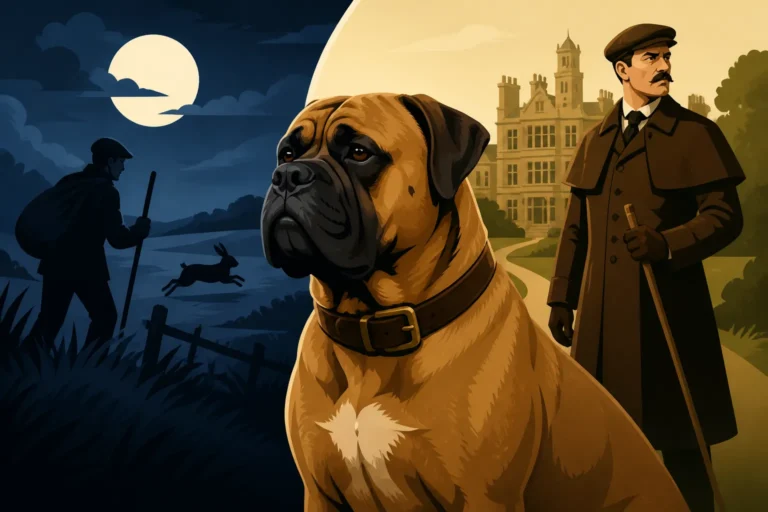
The Bullmastiff’s best-known early job was protecting English estates from poachers. Gamekeepers needed a powerful dog that could find and stop an intruder in darkness, often across large grounds. The desired dog had to be strong and steady, but not indiscriminately aggressive. The historic aim was to catch and hold a person until the gamekeeper arrived, rather than to kill or maul.
That working role shaped the breed’s reputation. A Bullmastiff’s substantial body could physically block or restrain someone, while its relative quietness made it less likely to alert a poacher from a distance. Its usefulness depended not only on strength but also on control and training. The breed was expected to respond to a handler and work in a setting where people, livestock, and property might all be close by.
The history is worth separating from modern ideas about guard dogs. A Bullmastiff’s ancestry does not mean an individual dog automatically knows how to assess a threat or behave safely around visitors. Breed history can explain traits, but responsible handling and training still matter. For more on the original role, see How a Gamekeeper Used a Bullmastiff on a Poacher and Why the Bullmastiff Was Bred Not to Kill.
A working estate dog was not simply a lawn ornament
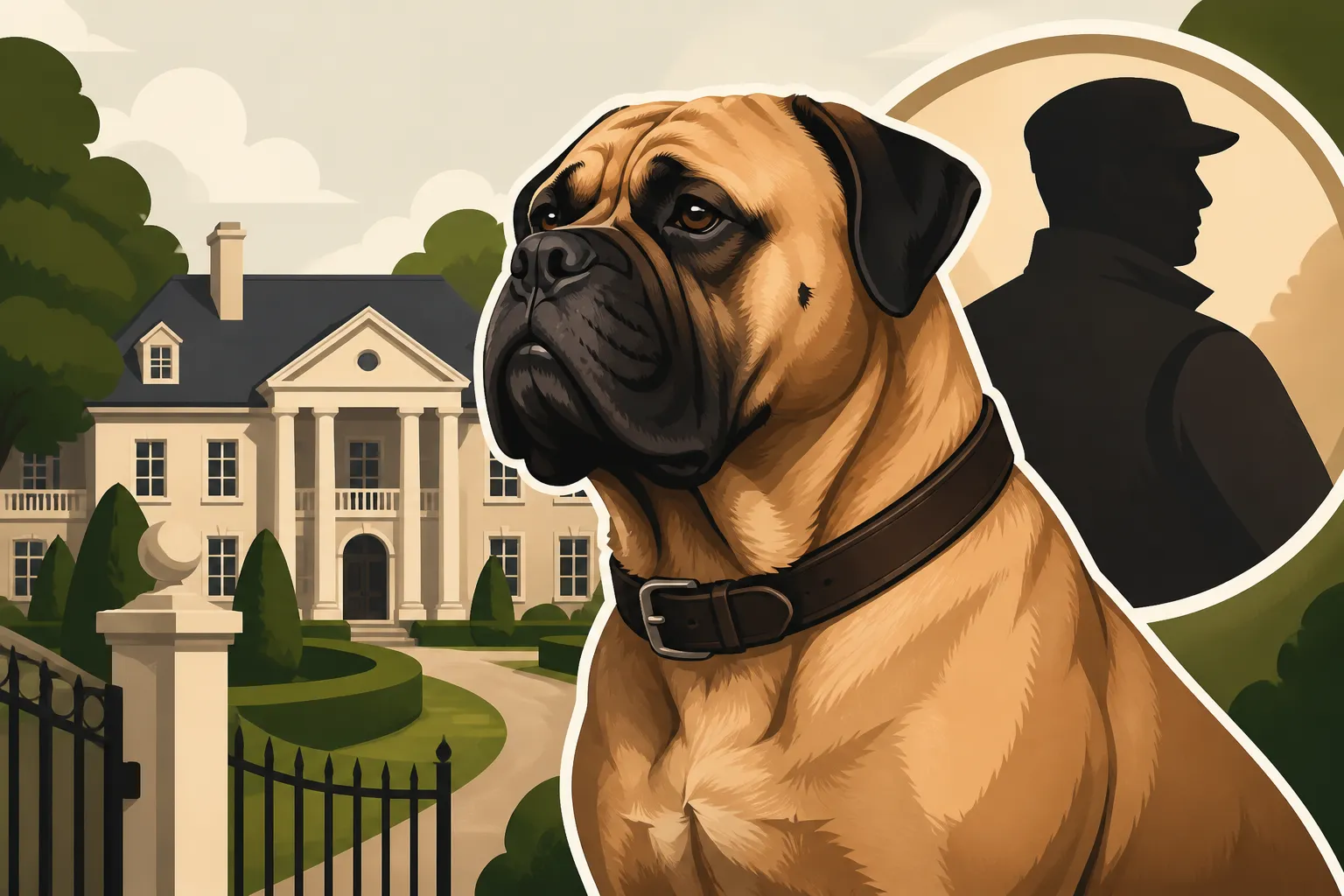
The word “estate” can bring to mind a grand house, long driveway, and dog stationed at the front gate. The original British setting was more practical. Gamekeepers managed land and wildlife, and poaching could threaten the estate’s game. A dog used for that work was part of a working arrangement involving a handler, the property, and a specific task.
Some accounts describe Bullmastiffs being sent after poachers, sometimes alone and sometimes alongside another dog. But the essential point is the working relationship: the dog’s job was to locate and hold, while the human handler remained responsible for the situation. It was not a license for the dog to decide on its own who belonged on the property.
That distinction helps answer the American-estate question. When Bullmastiffs later became known as property guardians in the United States, people were drawing on the breed’s established image as a quiet, imposing protector. The American role could resemble the broad purpose of guarding land, without duplicating the gamekeeper’s specific night patrol and anti-poaching work. The history of the working method is explored in How a Bullmastiff Was Sent After a Poacher and Whether Bullmastiffs Worked in Pairs.
How Bullmastiffs reached the United States
From British working type to recognized breed
The Bullmastiff began as a working type developed in Britain, rather than as a fully standardized breed from the outset. Over time, breeders worked toward a more consistent appearance and temperament. The breed’s formal recognition in Britain helped establish it as more than a useful cross, and that growing identity made it easier for people elsewhere to seek out Bullmastiffs as a distinct breed.
The Atlantic crossing brought the dog into a different social landscape. American owners could be interested in a Bullmastiff as a guardian, a companion, or both. The dog’s size and reputation made it a natural fit in the public imagination for protecting a large property, but that does not establish that it was routinely employed in the same way as an English gamekeeper’s dog.
The breed’s early development and move beyond Britain are part of the wider story covered in The Decade the Bullmastiff Crossed the Atlantic, Which Americans Imported the First Bullmastiffs, and When the Bullmastiff Stopped Being a Crossbreed. These histories help place American Bullmastiffs in context: they arrived with a recognizable working heritage, but their day-to-day jobs depended on the people who owned them.
What “guarding an American estate” could mean
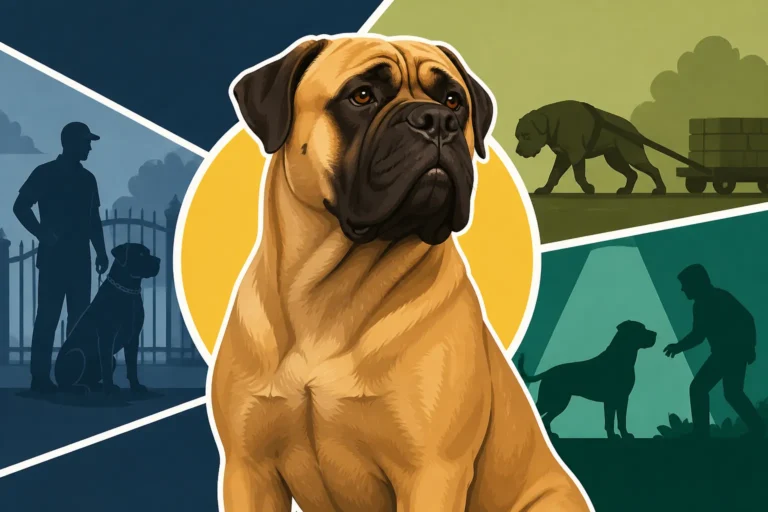
In an American setting, an estate guardian might be expected to deter trespassers, stay near the home or grounds, and alert or respond when something unusual happened. A Bullmastiff’s size and presence could make it an effective visual deterrent. Its calm, watchful nature could also suit a household that wanted a dog close to family and property rather than one constantly barking at every passerby.
Still, “guarded an estate” is a broad phrase. It might refer to a dog living on private grounds, accompanying an owner outdoors, or being kept as a deterrent—not necessarily a formally trained patrol dog with a documented working record. Historical references to a breed’s use can be much clearer about its reputation than about how widely a particular job was performed in a particular country.
So the most careful answer is: Bullmastiffs could and did serve as guardians on American properties, but the claim should not be inflated into “Bullmastiffs were standard estate guards across the United States.” They were imported as a breed with a guarding background, and private owners could put that background to use in ways that suited their homes and land.
| Question | Careful answer |
|---|---|
| Were Bullmastiffs bred for guarding? | Yes. Their British working heritage included protecting estates and helping gamekeepers stop poachers. |
| Did they reach the United States? | Yes. Bullmastiffs were imported from Britain and became established as a recognized breed in the United States. |
| Did some guard American properties? | Yes, private owners could use them as estate or home guardians. |
| Were they widely used in a standardized American patrol role? | That is harder to establish. The breed’s reputation is clearer than the extent of any uniform working practice. |
| Does heritage make every Bullmastiff a reliable guard dog? | No. Individual temperament, socialization, training, and responsible management matter. |
How the American role differed from the British one
Deterrence and companionship often went together
A large dog can change how a property feels to a visitor before the dog does anything at all. A Bullmastiff standing beside an owner or watching from a porch may be enough to discourage someone from approaching casually. That kind of deterrence is different from sending a dog to pursue and hold an intruder, and it is a more sensible way to understand many private-home guarding roles.
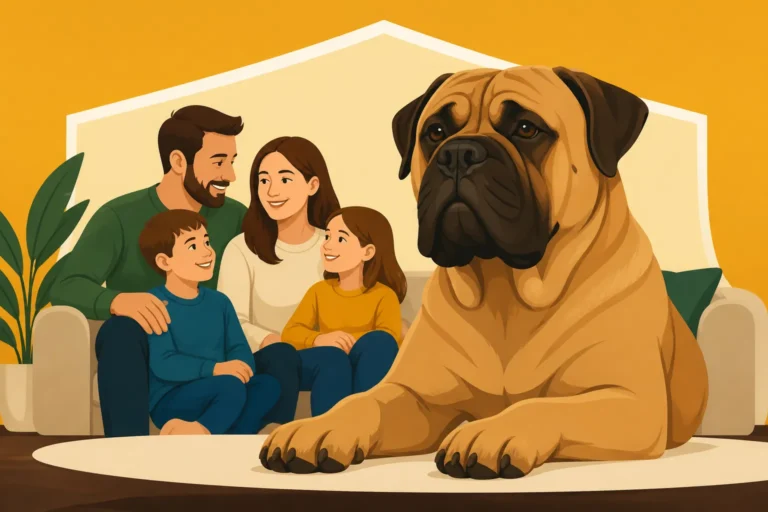
The breed’s reputation also made it attractive to owners who wanted a companion that looked formidable but could live closely with a family. That combination requires boundaries. A dog can be affectionate at home and still need careful introductions to guests, delivery workers, repair crews, and children’s friends. A property guardian should not be left to make high-stakes decisions without human supervision.
For modern owners, historical purpose is useful background—not a training plan. A Bullmastiff should learn basic cues, calm greetings, leash manners, and how to settle when visitors arrive. Those skills make the dog easier to manage and reduce the chance that a normal visitor becomes a confusing or stressful event. Related reading includes How Protective a Bullmastiff Is and How a Bullmastiff Greets a Stranger.
Guarding is not the same as protection training
People sometimes assume a breed with a guarding history needs formal protection training. That is not automatically true. Encouraging a powerful dog to confront people can create risks for the dog, the household, visitors, and anyone who misreads its behavior. Most homes benefit more from dependable control and predictable routines than from an attempt to intensify guarding instincts.
A Bullmastiff should be taught what to do when someone comes to the door, how to move away from a gate, and how to stay with its handler in public. Training should reward calm responses and provide clear alternatives to rushing, blocking, or barking. If a dog shows fear or serious reactivity, a qualified behavior professional can help assess the situation rather than relying on breed stereotypes.
The historical story is about a dog working with a human, not a dog replacing human judgment. That remains a useful lesson for owners today. The practical question is less “Will this dog guard my property?” and more “Can I guide this dog safely when people enter its space?” For further context, see Why Protection Training Is Unnecessary for a Bullmastiff and How a Bullmastiff Decides Someone Is a Threat.
What the history means for owners today
Match the dog’s living setup to its size and needs
An estate-sized property is not a requirement for owning a Bullmastiff. A suitable home is one where the dog can rest comfortably, move safely, and be managed around visitors and outdoor spaces. Secure fencing, clear household routines, and enough room for a large dog to turn and lie down matter more than the property’s acreage.
Owners may also need to plan for the practical realities of a giant breed: sturdy equipment, a comfortable bed, and a vehicle setup that makes trips manageable. If you are comparing large-breed supplies, retailers such as Chewy can be one place to look at size options for beds, crates, and walking gear; check measurements carefully, since “large” labels do not always mean a product will suit a Bullmastiff. Chewy may also be useful when comparing everyday care items, but fit and safety should guide the choice rather than branding.
The same planning applies to visitors. A dog that spends time near a gate or front door needs a safe way to be separated when workers arrive, packages are delivered, or children are playing outside. A secure room, gate, or other suitable barrier can prevent awkward encounters and make the dog’s routine less stressful. When selecting basic household equipment, Chewy is one retailer owners may check for options, but measure the dog and the space before buying.
Keep the story in perspective
Bullmastiffs have a genuine connection to guarding land, particularly through their British gamekeeper history. Their later presence in the United States made them appealing as imposing home and property companions, and some undoubtedly guarded private American grounds. But the available historical picture does not support treating every Bullmastiff as a uniform, professionally deployed estate guard.
That nuance matters because a breed’s past can shape expectations. Someone picturing a self-directed patrol dog may overlook the work required to raise a calm, manageable companion. Someone expecting a dog to automatically distinguish a welcome visitor from a real threat may be disappointed—or put the dog in an unfair position.
A more realistic expectation is a loyal, watchful dog whose appearance may deter strangers, while its behavior depends on individual temperament, upbringing, and the owner’s choices. The Bullmastiff’s historic role is part of its identity, but responsible modern ownership means guiding the dog rather than asking it to recreate an old working job. Chewy can help owners compare practical supplies for daily care, but no product replaces supervision, thoughtful introductions, or consistent training.
Disclaimer
This article is for general informational purposes only and does not constitute professional advice. Laws, prices and regulations vary by location and change over time. Consult a qualified professional for guidance on your specific situation.